


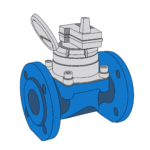
ما هو مستقبل قياس المياه?
إن فقدان الماء ليس مجرد مشكلة فنية. أرى أنها أصبحت مشكلة الفواتير, مسألة ثقة, وتكلفة المرافق على المدى الطويل.
مستقبل عدادات المياه ينتقل من القراءة اليدوية إلى القراءة المتصلة, الأنظمة المبنية على البيانات. أتوقع عمرو, عامي, عدادات المياه إنترنت الأشياء, إنذار, المنصات السحابية, والبيانات الميدانية للعمل معًا حتى تتمكن المرافق من تقليل الخسائر, تحسين الفواتير, وإدارة الأصول بتحكم أفضل.
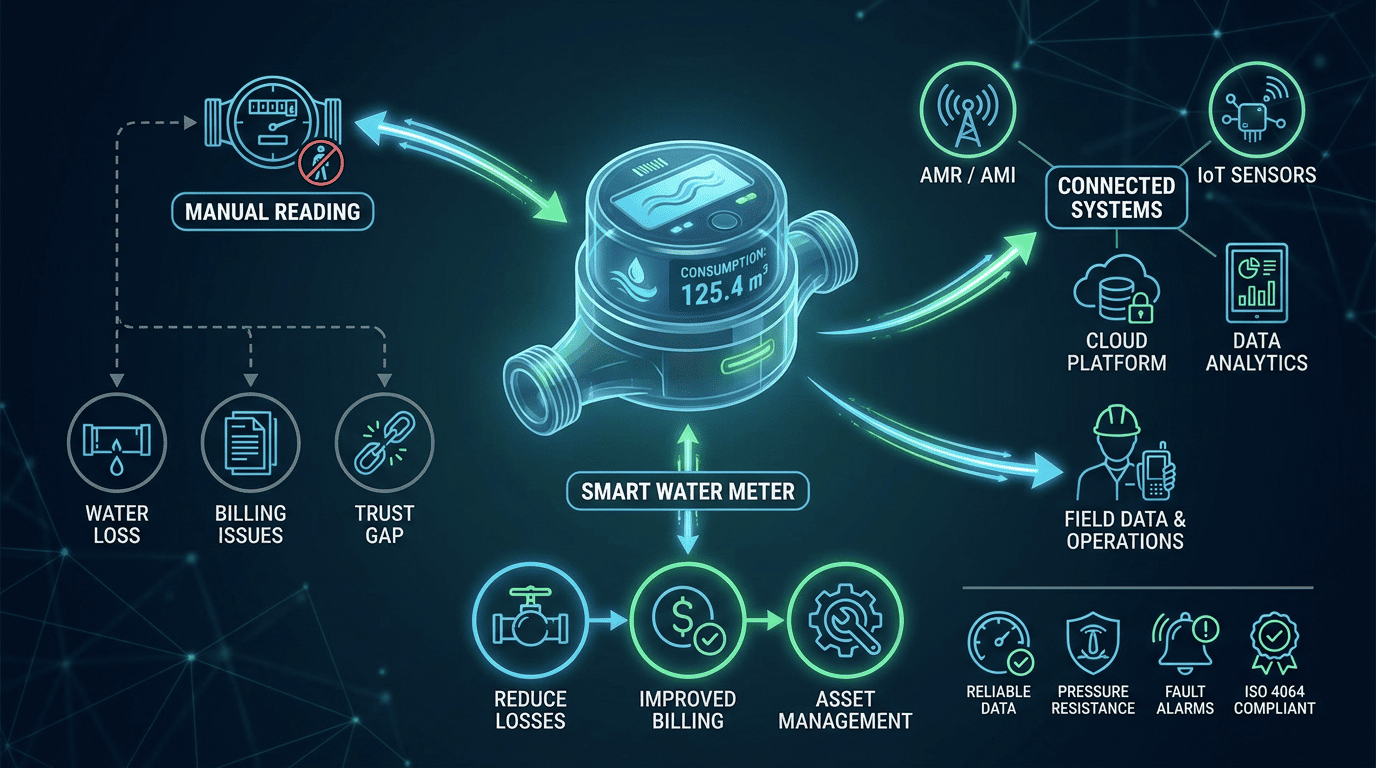
لا أرى أن القياس الذكي بمثابة ترقية بسيطة من عداد ميكانيكي إلى عداد رقمي. أرى أنه تغيير في كيفية قراءة الأداة المساعدة, الشيكات, يحافظ, ويدير شبكتها. لا يزال يتعين على العداد الذكي قياس المياه بشكل صحيح. كما يجب عليها عرض البيانات بوضوح, مقاومة الضغط, حماية الأداء المترولوجي, إرسال بيانات موثوقة, والإبلاغ عن الأخطاء عند الحاجة. ISO 4064 يعالج أيضًا الأجهزة الإلكترونية, إشارة, القراءة عن بعد, اختبار, ومقاومة الضغط هي أجزاء خطيرة من أداء عداد المياه, ليست كملحقات صغيرة.
لماذا يحتاج قياس المياه إلى التغيير؟?
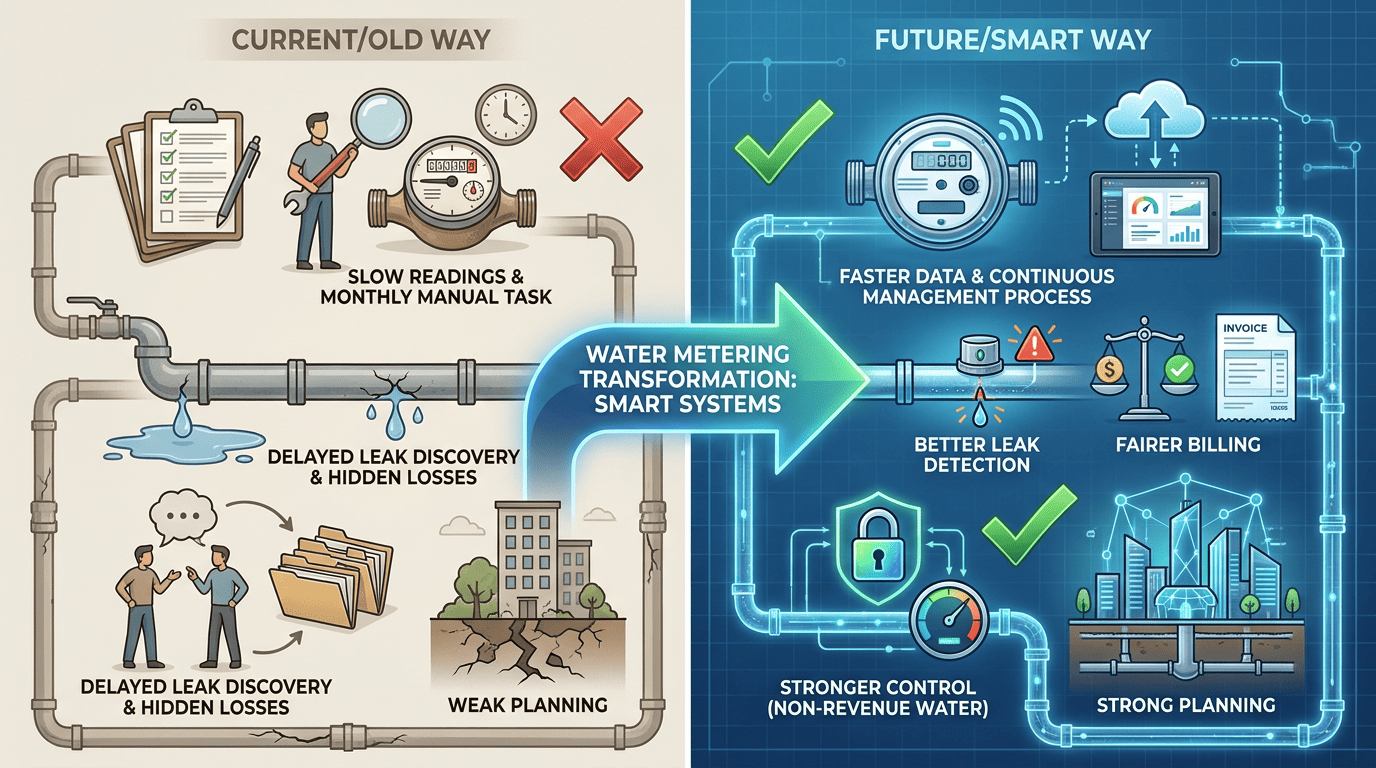
لا تزال العديد من مرافق المياه تعتمد على القراءات البطيئة, تأخير اكتشاف التسرب, والسجلات الميدانية غير كاملة. أرى أن هذا يخلق نزاعات, الخسائر الخفية, وضعف التخطيط.
يجب تغيير قياسات المياه لأن المرافق تحتاج إلى بيانات أسرع, أفضل اكتشاف تسرب, فواتير أكثر عدالة, وسيطرة أقوى على المياه غير المدرة للدخل. تساعد الأنظمة الذكية على نقل قراءة العدادات من مهمة يدوية شهرية إلى عملية إدارة مستمرة.
من قراءة العدادات إلى إدارة بيانات المياه
أرى عداد المياه القديم كنقطة قياس. أرى عداد المياه الجديد كنقطة بيانات. هذا الاختلاف مهم. يسجل العداد التقليدي الحجم. يقوم العداد الذكي بتسجيل الحجم ويمكنه أيضًا دعم الأحداث, إنذار, تواصل, وتشغيل طويل الأمد.
ما زلت أحترم العدادات الميكانيكية. إنها بسيطة, ثبت, ومفيد في العديد من المشاريع. لكن العديد من الشبكات تحتاج الآن إلى أكثر من رقم شهري. إنهم بحاجة إلى تنبيهات التسرب. إنهم بحاجة إلى تحذيرات تدفق غير طبيعي. إنهم بحاجة إلى معلومات التدفق العكسي. إنهم بحاجة إلى بيانات يمكنها دعم الفواتير, صيانة, وخدمة العملاء.
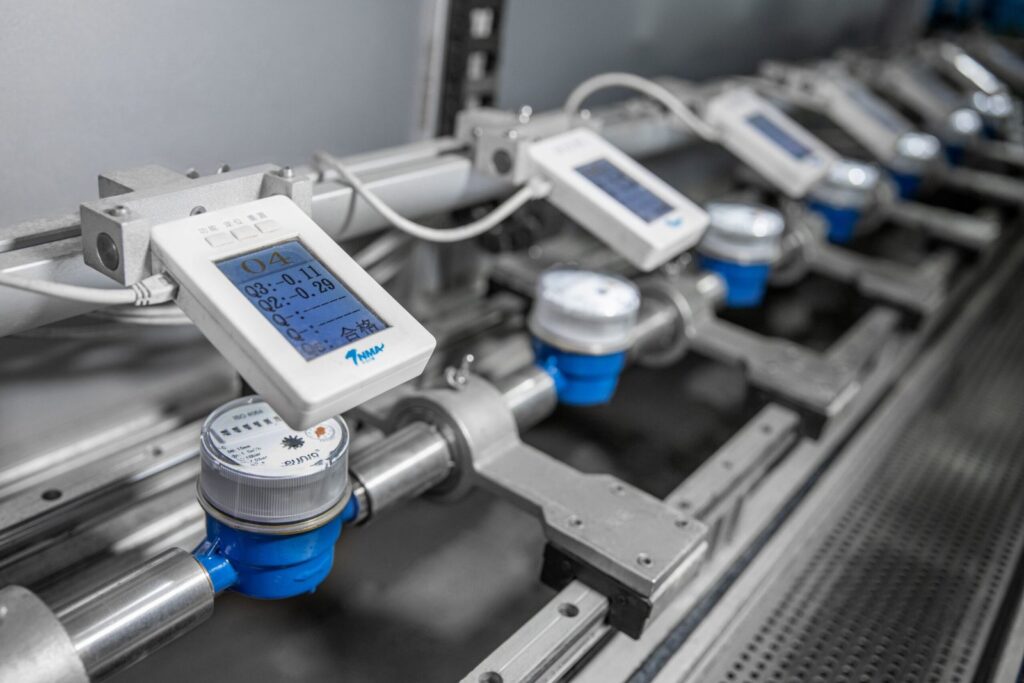
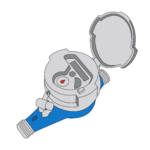
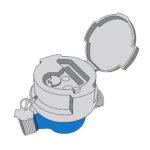
يمكن أن يوفر المقياس الذكي بالموجات فوق الصوتية الحديث نطاق قياس واسع مثل Q3/Q1 = R400, تدفق بداية منخفض للغاية وصولاً إلى 0.001 م³/ساعة, كشف التسرب, كشف الأنابيب الجافة, مراقبة التدفق العكسي, عرض التنبيه, وخيارات الاتصال مثل M-Bus اللاسلكية وNB-IoT. أرى هذه الوظائف كأدوات عملية, ليست كلمات تسويقية.
| التركيز القياس القديم | تركيز القياس في المستقبل |
|---|---|
| القراءة اليدوية | القراءة عن بعد |
| رقم الفاتورة الشهرية | البيانات اليومية أو كل ساعة |
| اكتشاف التسرب المتأخر | كشف أسرع للتسرب |
| متر كجهاز | متر كأصل البيانات |
| عرض الحجم الأساسي | مقدار, تدفق, إنذار, وبيانات الحدث |
| الصيانة التفاعلية | الصيانة المخططة |
ما هو دور مقاومة مضادات الميكروبات في نظام قياس المياه الحالي؟?
غالبًا ما تكون مقاومة مضادات الميكروبات هي الخطوة الرقمية الأولى, لكنني لا أتعامل معها كخطوة أخيرة. أنه يحسن كفاءة القراءة, ولكنها قد لا تخلق ذكاءً كاملاً للشبكة.
عمر, أو القراءة الآلية للعدادات, يسمح للمرافق بجمع بيانات العدادات دون قراءة كل عداد يدويًا. أنه يقلل من العمالة, يحسن سرعة القراءة, ويقلل من الخطأ البشري, ولكنها عادةً ما توفر تحكمًا ثنائي الاتجاه أقل من AMI.
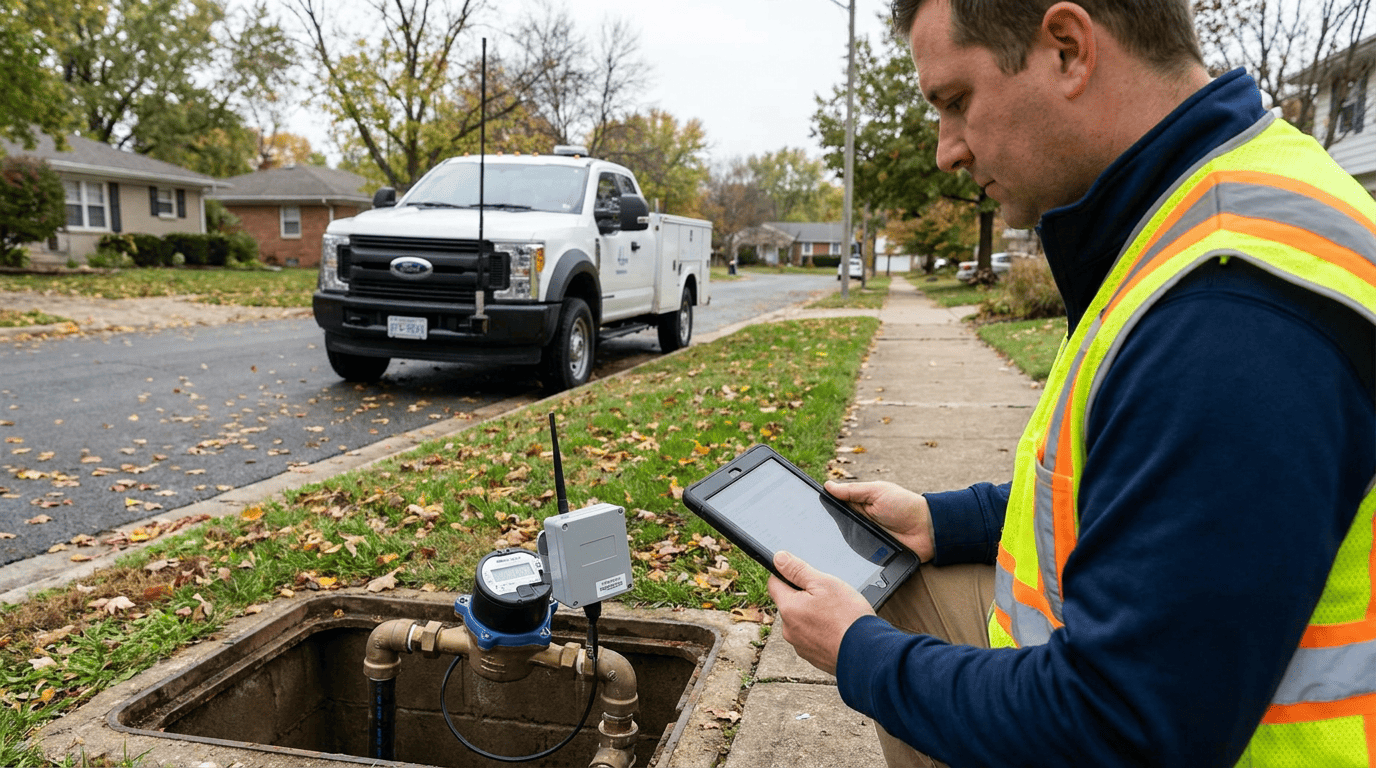
لماذا لا تزال مقاومة مضادات الميكروبات مهمة؟
أرى AMR كجسر بين القراءة اليدوية والقياس الرقمي المتقدم. قد تبدأ الأداة المساعدة بالمشي, القيادة, الترددات اللاسلكية, إم باص, لورا, أو وسائل الاتصال الأخرى. الهدف الرئيسي بسيط. تريد الأداة المساعدة جمع القراءات بشكل أسرع وبأخطاء أقل.
مقاومة مضادات الميكروبات يمكن أن تقلل من تكلفة الزيارات الميدانية. ويمكنه أيضًا تقليل الفواتير المقدرة. يمكن أن يساعد المرافق في بناء قاعدة بيانات القراءة الأساسية. يعد هذا مفيدًا عندما لا تكون الأداة المساعدة جاهزة للاستثمار الكامل في AMI.
لكن مقاومة مضادات الميكروبات لها حدود. تدعم العديد من أنظمة AMR القراءة في اتجاه واحد بشكل أساسي. وقد لا يقدمون بيانات فاصلة متكررة. وقد لا تدعم الإنذارات المتقدمة في الوقت الفعلي. وقد يعتمدون أيضًا على طرق القراءة المحلية. لذلك أنا لا أسأل, "هل مقاومة مضادات الميكروبات جيدة أم سيئة؟?"أسأل, "هل تتوافق مقاومة مضادات الميكروبات مع الهدف الحالي للأداة؟?"
| قوة عمرو | الحد من مقاومة مضادات الميكروبات |
|---|---|
| انخفاض عبء عمل القراءة اليدوية | قد لا توفر رؤية في الوقت الحقيقي |
| دقة قراءة أفضل | قد لا تزال تتطلب طرق القراءة |
| دورة فوترة أسرع | إدارة الإنذارات المحدودة في بعض الأنظمة |
| استثمار أول أقل من AMI الكامل | أقل فائدة للتحكم النشط في الشبكة |
لماذا أصبح AMI هو الاتجاه الرئيسي?
تقوم AMI بتغيير جهاز القياس من نقطة قراءة سلبية إلى عقدة نظام نشطة. أرى أن هذا هو التحول الحقيقي في قياس المياه في المستقبل.
عامي, أو البنية التحتية المتقدمة للقياس, يربط متر, شبكات الاتصالات, ومنصات الإدارة. وهو يدعم جمع البيانات بشكل متكرر, إنذار, تحليل, وقرارات فائدة أفضل.
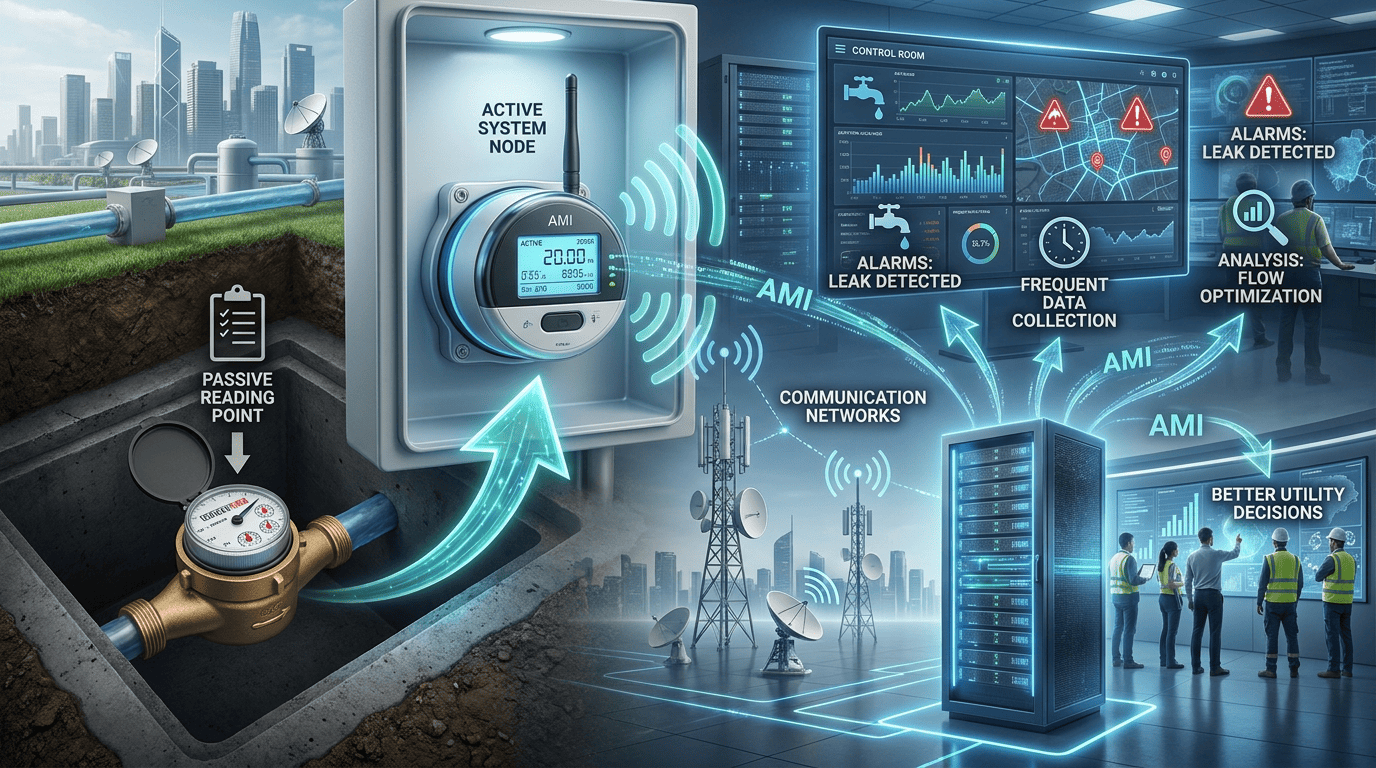
AMI ليس مجرد نظام اتصالات
أنا لا أعرّف AMI فقط من خلال تكنولوجيا الاتصالات. NB-Iot, لوروان, حافلة M اللاسلكية, والشبكات الأخرى ليست سوى جزء من النظام. تتضمن AMI أيضًا جهاز القياس, وحدة الاتصالات, منصة البيانات, قواعد التنبيه, عملية الصيانة, والأشخاص الذين يستخدمون البيانات.
يجب أن يساعد مشروع AMI الجيد المؤسسة في الإجابة على الأسئلة الواضحة. أين يحدث التدفق الليلي غير الطبيعي? التي متر توقفت عن الإبلاغ? المنطقة التي لديها تسرب محتمل? أي عميل لديه استهلاك غير عادي? أي متر يظهر الأنبوب الجاف أو التدفق العكسي?
أجهزة القياس لا تزال مهمة. ISO 4064 تنص على أن الاتصالات بين الأجزاء الإلكترونية, مثل محول القياس, آلة حاسبة, وجهاز الإشارة, يجب أن تكون موثوقة ودائمة. قرأت هذا كتذكير بأن القياس الذكي يعتمد على التواصل والتصميم الداخلي المستقر.
| طبقة AMI | ما أتحقق |
|---|---|
| متر | دقة, تصنيف الضغط, عرض, بطارية, ختم |
| تواصل | NB-Iot, لوروان, حافلة M اللاسلكية, قوة الإشارة |
| منصة | رؤية البيانات, إنذار, رسم خرائط الأصول |
| عملية ميدانية | تثبيت, التنشيط, التكليف |
| سير عمل المرافق | الفواتير, صيانة, خدمة العملاء |
| السيطرة على المخاطر | أمن البيانات, حفظ السجلات, استجابة الفشل |
ما الذي يجعل عداد المياه الذكي ذكيًا حقًا؟?
جهاز القياس ليس ذكيًا فقط لأنه يحتوي على وحدة اتصال. أبحث عن استقرار القياس, كشف الحدث, وضوح العرض, والموثوقية الميدانية.
يجب أن يقيس عداد المياه الذكي بدقة, التواصل بشكل موثوق, عرض معلومات مفيدة, سجل الأحداث, الكشف عن الظروف غير الطبيعية, ودعم التشغيل طويل الأمد في البيئات الميدانية الحقيقية.
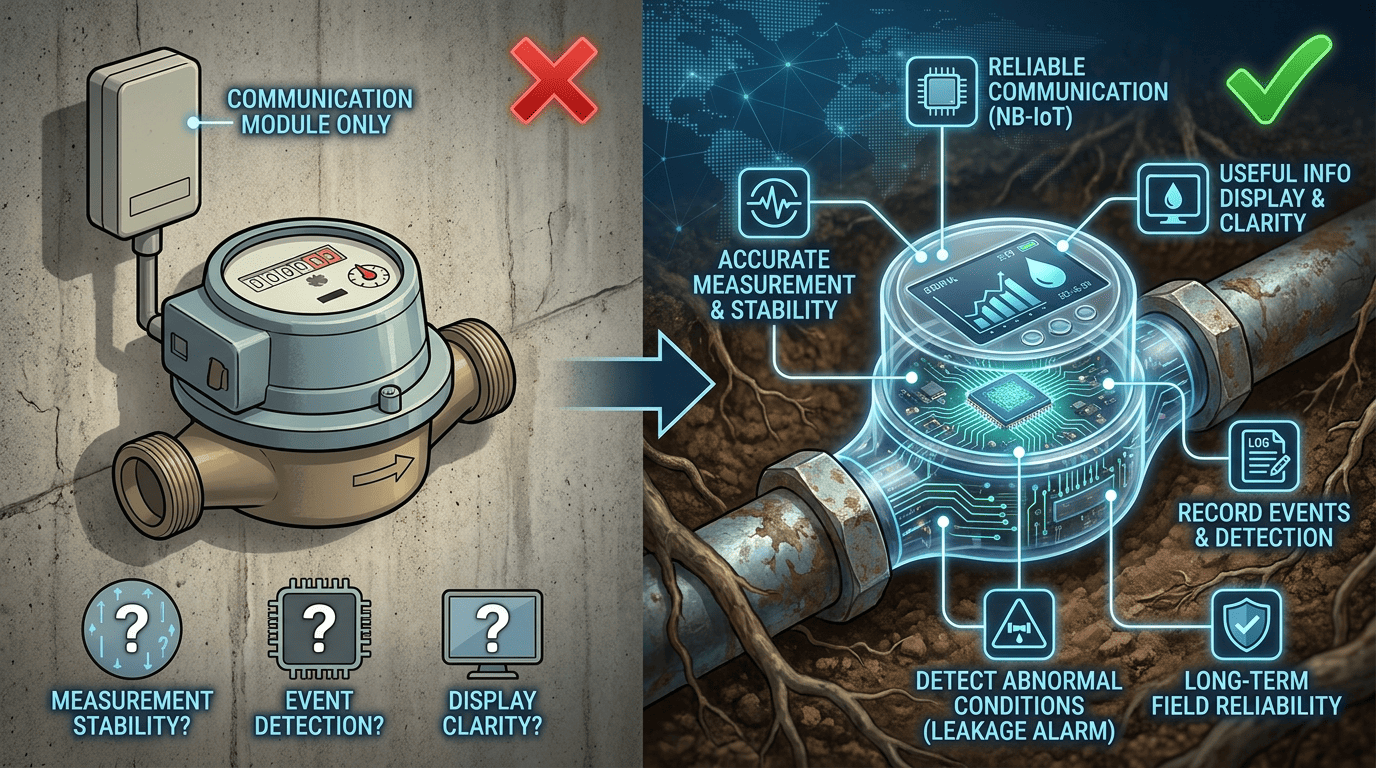
الذكية تعني قابلة للقياس, قابلة للقراءة, وقابلة للتشخيص
أرى ثلاثة مستويات من قيمة العداد الذكي. المستوى الأول هو القياس. يجب أن يقوم العداد بقياس الماء بشكل صحيح. المستوى الثاني هو التواصل. يجب أن يرسل العداد البيانات إلى النظام. المستوى الثالث هو التشخيص. يجب أن يساعد جهاز القياس المرافق على فهم ما يحدث في الميدان.
يتم وصف أجهزة القياس الذكية بالموجات فوق الصوتية YOUNIO بدون أجزاء قابلة للتآكل, الاستقرار على المدى الطويل, أكثر من 10 سنوات من عمر البطارية, حماية غاطسة IP68, كشف التسرب, كشف الأنابيب الجافة, قياس التدفق ثنائي الاتجاه, وشاشة LCD كبيرة تعرض الحجم التراكمي, تدفق لحظي, ومعلومات التنبيه. أرى أن هذا المزيج مهم لأن موثوقية المجال تعتمد على أكثر من ميزة واحدة.
العرض مهم أيضا. ISO 4064 ينص على أن جهاز الإشارة يجب أن يعرض مستوى الصوت بشكل مستمر, بشكل دوري, أو حسب الطلب, وأنه يجب أن يكون متاحًا للقراءة بسهولة. وهذا يعني أن القراءة المحلية لا تزال مهمة, حتى في حالة وجود القراءة عن بعد.
| خاصية العداد الذكي | قيمة عملية |
|---|---|
| نطاق قياس واسع | التقاط أفضل للتدفق المنخفض |
| انخفاض تدفق البداية | رؤية أفضل للتسرب |
| حماية IP68 | أداء أفضل للغرفة |
| عمر بطارية طويل | انخفاض عبء الصيانة |
| عرض التنبيه | تشخيص ميداني أسرع |
| NB-IoT أو الاتصالات اللاسلكية | القراءة والمراقبة عن بعد |
| كشف التدفق العكسي | تحليل أفضل للعبث والشبكة |
| كشف الأنابيب الجافة | تحكم أفضل في الحالة غير الطبيعية |
كيف يغير إنترنت الأشياء قياس المياه?
تجعل إنترنت الأشياء عدادات المياه جزءًا من نظام تشغيل أكبر. أرى أن هذه هي النقطة التي تصبح فيها بيانات العدادات مفيدة للتخطيط, خدمة, وإدارة الأصول.
يقوم قياس المياه عبر إنترنت الأشياء بتوصيل العدادات بالمنصات السحابية وسير عمل المرافق. فهو يسمح للبيانات بالانتقال من جهاز القياس إلى الأشخاص والأنظمة التي تحتاج إليها.
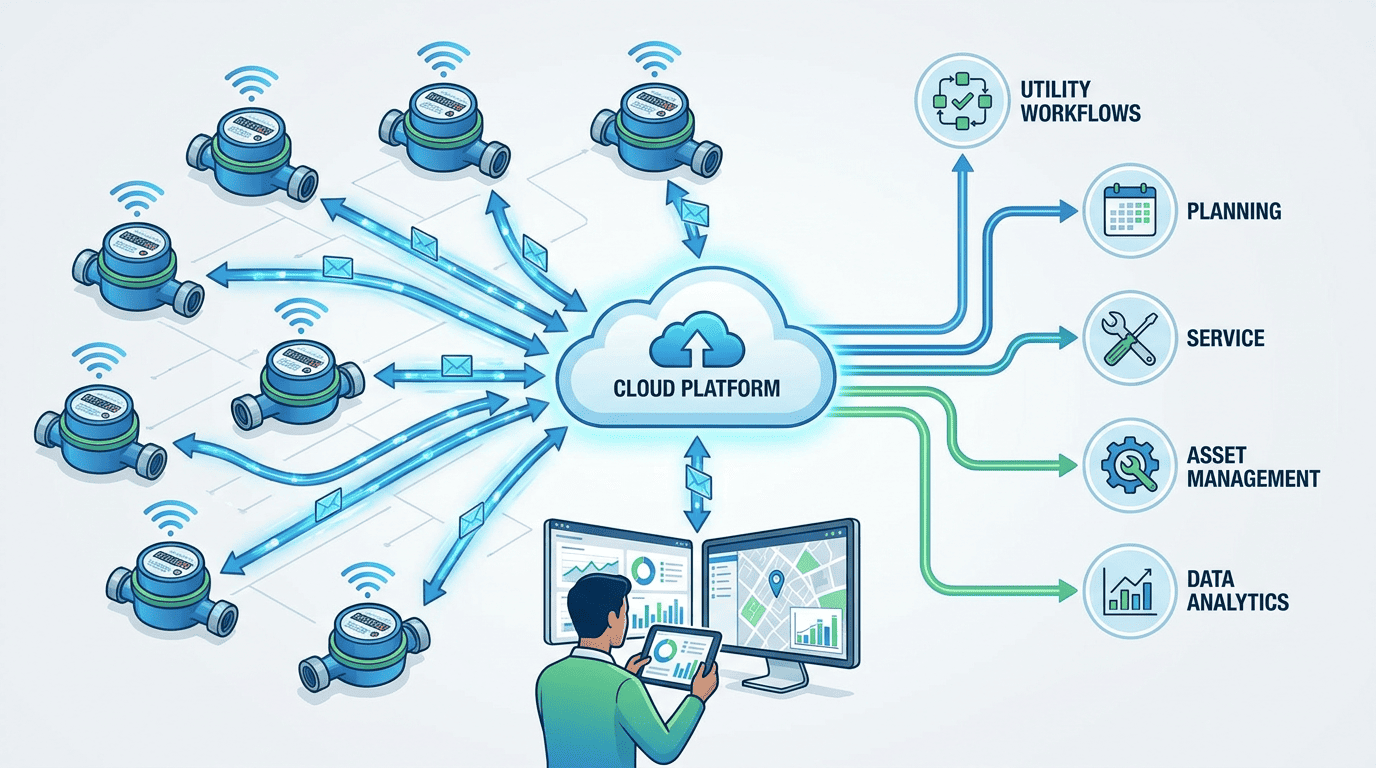
يقوم إنترنت الأشياء بتحويل الأحداث الميدانية إلى إشارات إدارية
لا أعتقد أن إنترنت الأشياء ذو قيمة فقط لأنه حديث. أعتقد أنها ذات قيمة لأنها يمكن أن تجعل الأحداث الميدانية مرئية. ولم يعد يتم اكتشاف التسرب إلا بعد تقديم شكوى. لم يعد العداد المتوقف مخفيًا حتى دورة الفاتورة التالية. يمكن أن تصبح حالة الأنبوب الجاف بمثابة إنذار للنظام. يمكن أن يصبح حدث التدفق العكسي حالة صيانة.
وهذا هو سبب أهمية الإبلاغ عن الأخطاء. ISO 4064 يتطلب ذلك عندما يقوم عداد المياه بنقل البيانات إلى المعدات الطرفية, ويجب أن يكون الإرسال مصحوبا برسالة تشير إلى وجود خطأ عند وجود خطأ. أرى أن هذا مبدأ أساسي للقياس الذكي. يجب ألا تبدو البيانات صالحة عندما يقوم جهاز القياس بالإبلاغ عن مشكلة.
يحتاج النظام أيضًا إلى إرسال إنذار آمن عند تكرار القيم المقاسة في محطة بعيدة. يعد هذا أمرًا مهمًا لأن الأداة المساعدة قد تتخذ قرارات الفوترة أو الصيانة بناءً على البيانات البعيدة. إذا ضاع المنبه, يمكن أن يكون القرار خاطئا.
| وظيفة إنترنت الأشياء | فائدة المنفعة |
|---|---|
| تحميل البيانات عن بعد | قراءة يدوية أقل |
| نقل التنبيه | استجابة أسرع للمشكلة |
| تسجيل الحدث | معالجة أفضل للنزاع |
| اتجاه الاستهلاك | تحليل الطلب بشكل أفضل |
| حالة البطارية | تخطيط أفضل للخدمة |
| لوحة القيادة السحابية | رؤية أفضل للإدارة |
ما هي الفوائد التي يجب أن تتوقعها المرافق من قياس المياه في المستقبل؟?
أتوقع أن يؤدي القياس المستقبلي إلى تحسين الفواتير, تقليل فقدان الماء, دعم الحفظ, وجعل خدمة العملاء أكثر استنادا إلى الأدلة.
يمكن لقياس المياه في المستقبل أن يوفر بيانات أفضل للفوترة, كشف أسرع للتسرب, انخفاض تكلفة القراءة, سيطرة أقوى على الأصول, ومعلومات استهلاك أكثر وضوحًا لكل من المرافق والعملاء.
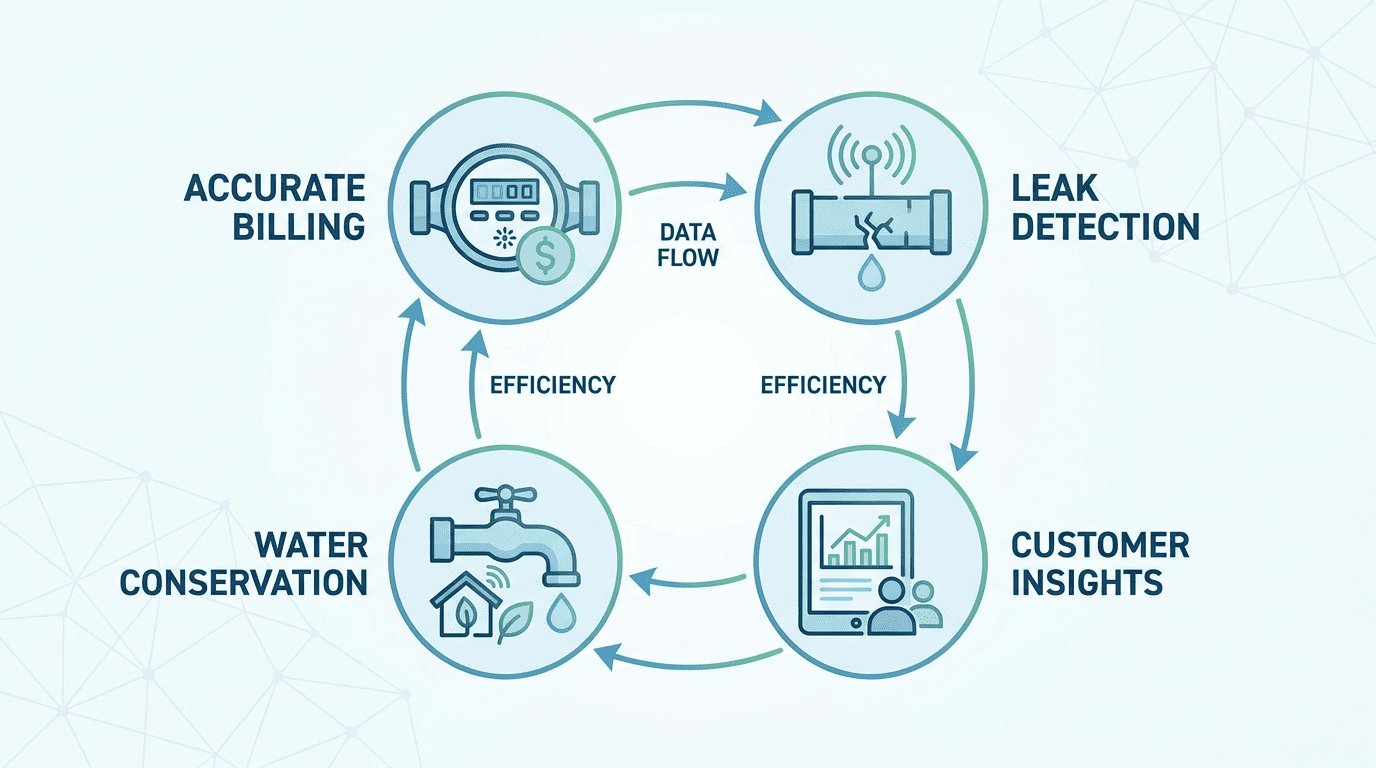
البيانات الأفضل تخلق قرارات أفضل
أذكّر دائمًا فرق المشروع بأن القياس الذكي لا يخلق قيمة في حد ذاته. تأتي القيمة عندما تستخدم الأداة المساعدة البيانات. منصة مليئة بالإنذارات غير المقروءة ليست ذكية. لوحة القيادة التي لا يتحقق منها أحد ليست ذكية. إن العداد الذي يقوم بتحميل البيانات ولكن لا يحتوي على سير عمل للصيانة يخلق قيمة محدودة.
عندما يكون سير العمل واضحا, الفوائد تصبح حقيقية. يمكن لفريق الفوترة تقليل القراءات المقدرة. يمكن لفريق الصيانة العثور على حالات الفشل الصامتة بشكل أسرع. يمكن لفريق خدمة العملاء شرح الفواتير غير العادية بالبيانات. يمكن لفريق التخطيط رؤية اتجاهات الطلب حسب المنطقة. يمكن لفريق NRW مقارنة أنماط الاستهلاك وإشارات التسرب.
ISO 4064 تذكرني طرق الاختبار أيضًا أن اختبار الأداء يعتمد على القيم المسجلة, أبعاد, والملاحظات. أطبق نفس الفكرة على المشاريع. إذا كانت الأداة تريد قيمة طويلة الأجل, يجب أن يسجل بيانات التثبيت, بيانات الإشارة, بيانات التكليف, إنذار, وتاريخ الخدمة.
| فائدة | ما الذي يجعلها حقيقية |
|---|---|
| فواتير أكثر عدالة | بيانات العداد دقيقة ورسم الخرائط الصحيحة |
| انخفاض NRW | كشف التسرب وتحليل الاستهلاك |
| انخفاض تكلفة القراءة | جمع البيانات عن بعد |
| صيانة أفضل | الإنذارات وسجلات الأحداث |
| خدمة عملاء أفضل | مسح سجلات الاستهلاك |
| تخطيط أفضل | بيانات الاتجاه على مستوى المنطقة |
ما هي التحديات التي يمكن أن توقف مشاريع القياس الذكية؟?
أرى أن العديد من مشكلات القياس الذكي تبدأ قبل التثبيت. قد يكون المنتج جيدًا, لكن عملية المشروع قد تكون ضعيفة.
يمكن أن تفشل مشاريع القياس الذكية بسبب المواصفات الخاطئة, الشيكات إشارة سيئة, التحكم في التثبيت ضعيف, التكليف غير واضح, ضغط التكلفة العالية, وضعف التخطيط لأمن البيانات.
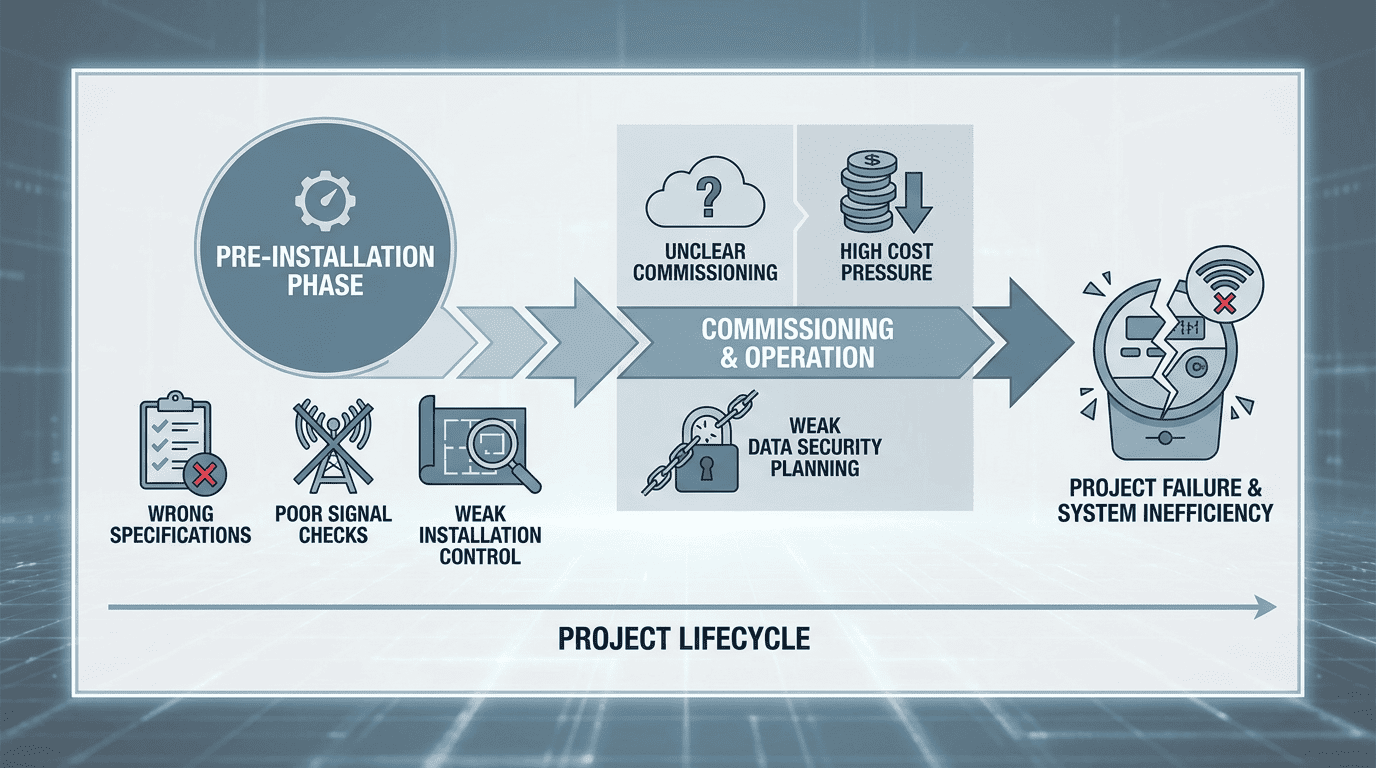
عادة ما تكون أكبر المخاطر عملية
لقد رأيت الفرق تركز كثيرًا على بروتوكول الاتصال والقليل جدًا على الأساسيات. ينسون معايير الاتصال. إنهم يتخطون فحص الضغط. أنها لا تؤكد إشارة داخل الغرف. ولا يسجلون القراءات الأولية. أنها لا تطابق الأرقام التسلسلية للغرف بشكل صحيح. إنهم لا يقومون بتدريب فريق الصيانة.
الضغط هو أحد العناصر الأساسية التي لا يمكن تجاهلها. ISO 4064 يتطلب عداد مياه لتحمله 1.6 أضعاف الحد الأقصى للضغط المسموح به 15 دقائق وضعف الحد الأقصى للضغط المسموح به 1 دقيقة دون تسرب أو ضرر. أستخدم هذا كتذكير بأن العدادات الذكية لا تزال منتجات هيدروليكية في المقام الأول.
شروط التثبيت والاختبار مهمة أيضًا. ISO 4064 تشمل أوصاف تركيب الاختبار إمدادات المياه, الأنابيب, أجهزة تنظيم التدفق, عزل الصمامات, قياس درجة الحرارة, قياس الضغط, وغيرها من الأجهزة المستخدمة للتحقق من التدفق, مدة الدورة, وعدد الدورات. وينص المرجع نفسه أيضًا على أنه يجب تفريغ العدادات وأنابيب التوصيل من الهواء بشكل مناسب. أرى أن هذا بمثابة تحذير واضح للفرق الميدانية. هواء, أنابيب سيئة, والتكليف السيئ يمكن أن يضر بالأداء.
| مخاطر المشروع | إجراء التحكم |
|---|---|
| شفة أو خيط خاطئ | الموافقة على الرسومات قبل الطلب |
| إشارة ضعيفة | اختبار الإشارة قبل التثبيت |
| مطرقة المياه | افتح الصمامات ببطء |
| الهواء في الأنابيب | ينزف الهواء أثناء التكليف |
| سوء رسم خرائط البيانات | مطابقة معرف العداد, غرفة, وسجل المنصة |
| أجهزة الإنذار المفقودة | تحقق من نقل التنبيه |
| خطة صيانة ضعيفة | تحديد التفتيش ومراجعة البطارية |
كيف ينبغي للمشترين اختيار جهاز القياس المناسب والجاهز للمستقبل?
لا أختار المتر إلا بالسعر. اخترت ذلك عن طريق التطبيق, مخاطرة, مسار الشهادة, حاجة البيانات, وواقع الصيانة.
يجب على المشترين اختيار عدادات المياه عن طريق مطابقة نوع العداد, نطاق التدفق, تصنيف الضغط, مستوى الحماية, طريقة الاتصال, بيئة التثبيت, واحتياجات النظام الأساسي للمشروع الفعلي.
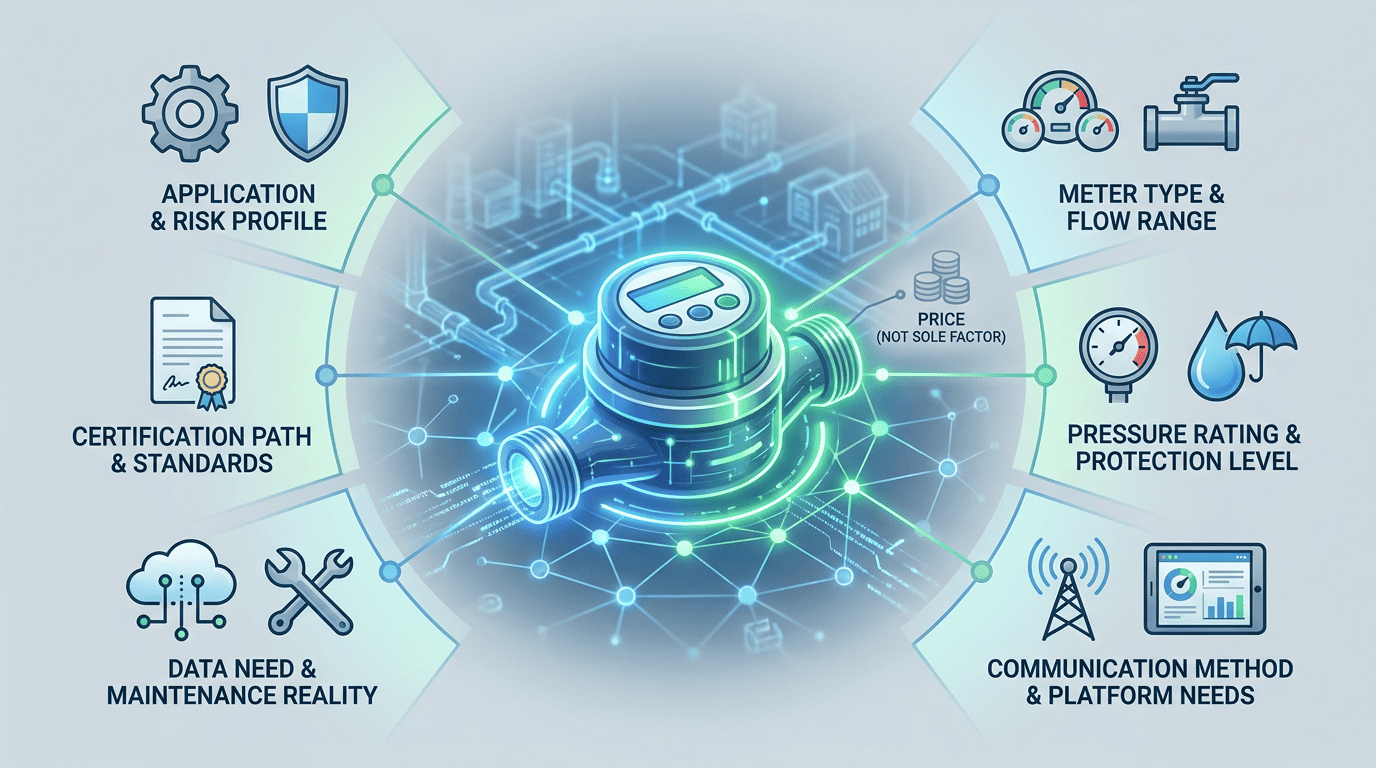
العداد المناسب هو العداد الذي يناسب المشروع
قد يحتاج مشروع الشقق السكنية إلى عدادات مدمجة, حساسية قوية للتدفق المنخفض, ورسم خرائط بسيطة للمنصة. قد يحتاج الموقع الصناعي إلى أحجام أكبر, ارتفاع ضغط الثقة, وسجلات الأحداث القوية. قد تحتاج الغرفة المغمورة بالمياه إلى حماية IP68. قد يحتاج المشروع على مستوى المدينة إلى عمر بطارية طويل واتصال مستقر.
لقياس السكنية بالموجات فوق الصوتية, أنا أهتم بقياس واسع النطاق, تدفق البداية منخفضة, عمر البطارية, خيارات الاتصال, عرض التنبيه, كشف التسرب, كشف الأنابيب الجافة, وقياس التدفق العكسي. تساعد هذه الميزات عندما تحتاج الأداة المساعدة إلى بيانات الفوترة والرؤى التشغيلية.
أتحقق أيضًا مما إذا كانت ملحقات القراءة عن بعد تؤثر على القياس. ISO 4064 يسمح بأجهزة القراءة عن بعد حيث تسمح اللوائح الوطنية بذلك, ولكن إضافة مثل هذه الأجهزة يجب ألا يغير الخصائص المترولوجية لجهاز القياس. هذه الجملة مهمة جدا. يجب أن يدعم جهاز الاتصال جهاز القياس, لا تغير كيفية قياسه.
| عنصر الاختيار | سؤال أطرحه |
|---|---|
| نطاق التدفق | هل يلتقط المقياس التدفق المنخفض؟? |
| ضغط | هل يتطابق مع حالة الشبكة? |
| حماية | هل يمكنها البقاء على قيد الحياة في الغرفة? |
| تواصل | هل تعمل الإشارة في الموقع؟? |
| عرض | هل يمكن للفريق الميداني التحقق من القراءات? |
| إنذار | هل يمكن أن يظهر التسرب, الأنابيب الجافة, أو التدفق العكسي? |
| بطارية | هل تتوافق خطة الصيانة مع عمر البطارية؟? |
| منصة | يمكن للأداة استخدام البيانات بسهولة? |
ما هي وجهة نظري العملية للمستقبل؟?
لا أعتقد أن مستقبل قياس المياه يتعلق فقط بالأجهزة الذكية. أعتقد أن الأمر يتعلق بقرارات أفضل مبنية على بيانات ميدانية أفضل.
سوف يجمع مستقبل قياس المياه بين العدادات الدقيقة, اتصالات موثوقة, المنصات السحابية, منطق التنبيه, الانضباط الميداني, والصيانة على المدى الطويل.
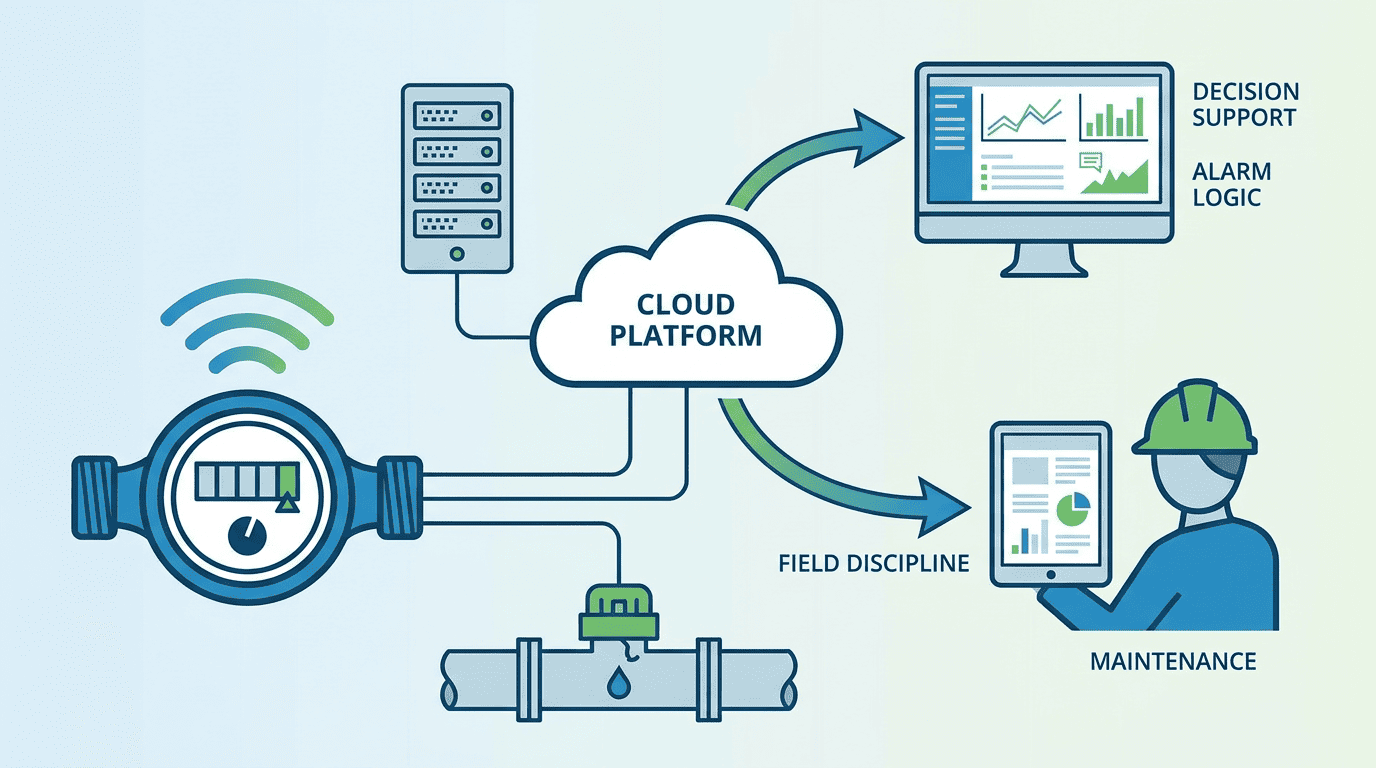
القياس الذكي هو النظام, ليس اختصارا
أرى المستقبل الأقوى في الأنظمة التي تربط الهندسة, الفواتير, صيانة, وخدمة العملاء. المقياس وحده لا يمكنه حل مشكلة NRW. لا يمكن للمنصة وحدها إصلاح التسرب. لا يمكن لوحدة الاتصال وحدها تحسين الفواتير. يجب أن يعمل النظام بأكمله معًا.
يبدأ مشروع قياس المياه الجيد الجاهز للمستقبل باختيار المنتج الصحيح. ويستمر مع عمليات فحص الموقع. ذلك يعتمد على التثبيت النظيف. يصبح مفيدًا بعد التشغيل. فهو ينشئ قيمة طويلة المدى فقط عندما تستخدم الأداة المساعدة البيانات.
ولهذا السبب أتعامل مع قياس المياه الذكي باعتباره مشروعًا تقنيًا ومشروعًا إداريًا. الجانب الفني يحتاج إلى دقة القياس, مقاومة الضغط, إلكترونيات موثوقة, العرض المناسب, الاتصالات المحمية, وبيانات الاختبار المسجلة. يحتاج الجانب الإداري إلى سير عمل واضح, الناس المدربين, ملكية البيانات, ومسؤولية الخدمة.
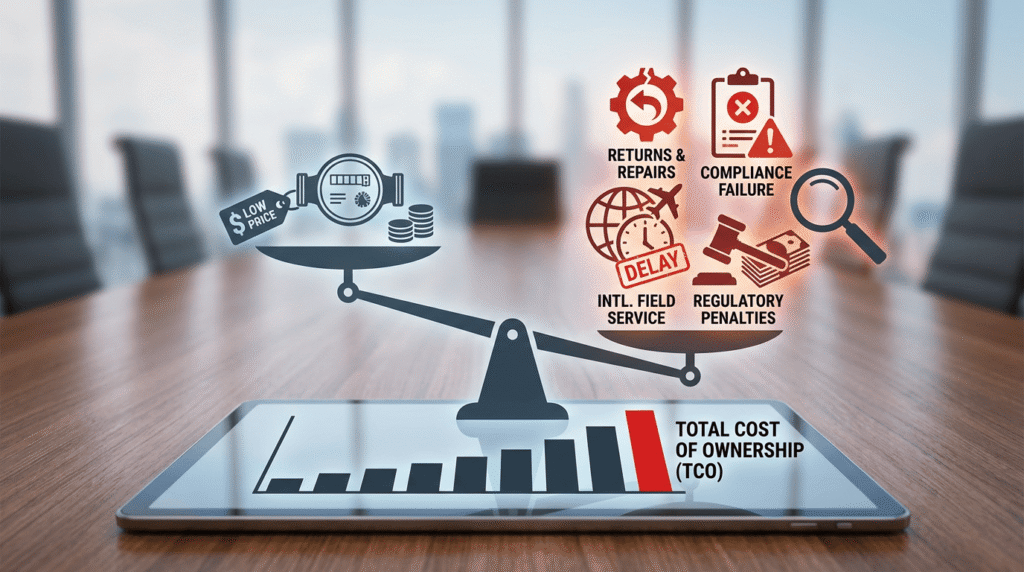
إذا كان فريق المشروع يريد فقط عدادًا أرخص, يمكنني فقط تقليل تكلفة الشراء. إذا كان فريق المشروع يريد نظام قياس أفضل, يمكنني المساعدة في تقليل مخاطر دورة الحياة.
خاتمة
مستقبل قياس المياه متصل, تعتمد على البيانات, وعملية. أرى أفضل النتائج عند استخدام العدادات الذكية, تواصل, تثبيت, التكليف, وأعمال الصيانة كنظام واحد.
لديك مشروع يحتاج إلى مواصفات العداد الصحيحة?
أرسل متطلباتك - حجم الأنبوب, ملف تعريف التدفق, نوع التطبيق, سلطة التصديق المحلية وبروتوكول الاتصال - إلى ليون مباشرة. We’ll review and respond within 24 ساعات مع توصية فنية مكتوبة.
يونيو العدادات الذكية: DN15-DN500 | NB-Iot, لورا, إم باص
الشهادات: منتصف ب + د (التشيكية CMI) | جبهة الخلاص الوطني/ANSI 61+372 | ACS (فرنسا)
📧 leon@younio.com | 📱 واتساب: +86-13666800173