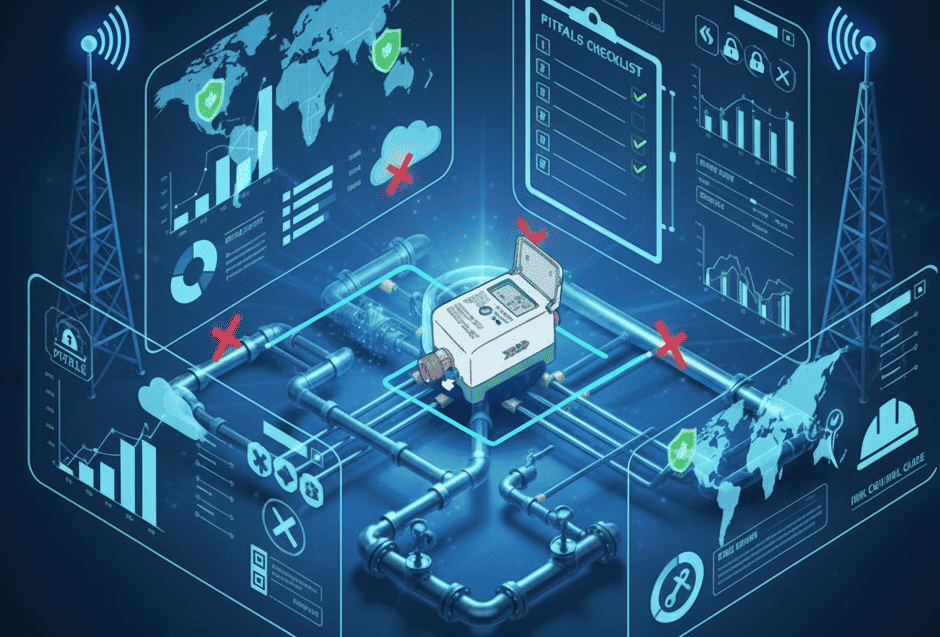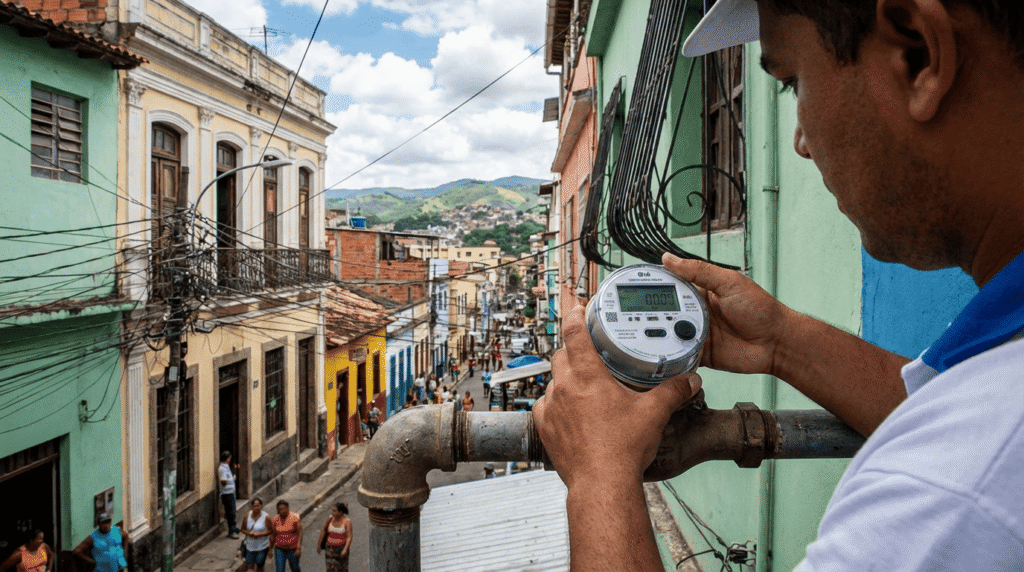
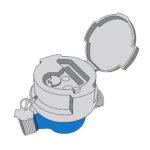

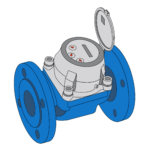

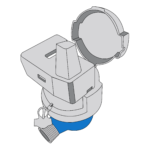

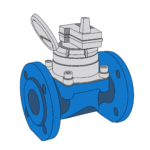

Viele Ultraschallmessgeräte für „kaltes Wasser“ landen in Leitungen mit einer Temperatur von 70–80 °C. Sechs Monate später, jemand nennt sie „schlechte Qualität“. In den meisten Fällen, Die Hauptursache ist eine falsche Anwendung, nicht die Technologie. I will show you how to avoid this trap and protect your project over the full lifecycle.
Ultrasonic water meter field performance relies on the transit‑time principle, stable signal processing, and correct application class selection under ISO 4064/OIML R49/MID, supported by AMR/AMI alarms for early diagnostics. Choosing the right temperature and environment class is as important as the meter itself.
If you want predictable accuracy and low TCO, keep reading. I will cover the working principle, proven strengths, the common hot‑line mistake, and a practical selection checklist you can reuse.

What Is an Ultrasonic Water Meter?
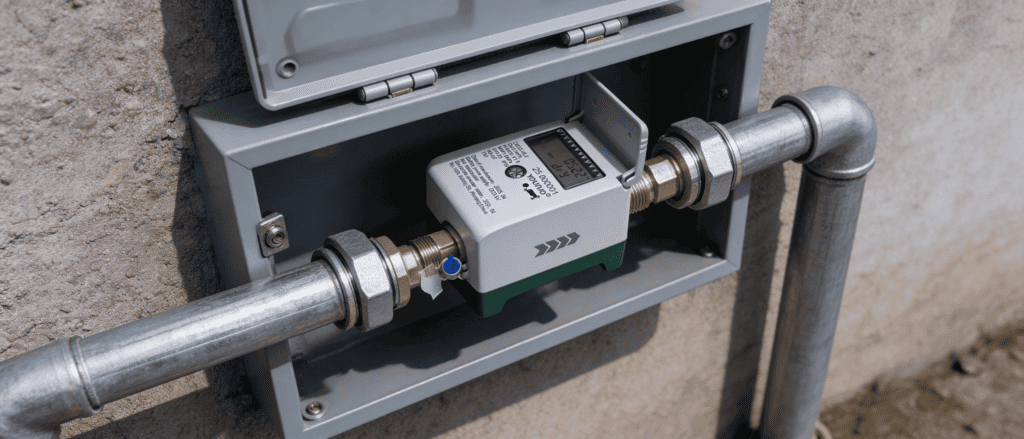
An ultrasonic water meter measures flow using the transit‑time method and integrates measurement, calculation, and display in one compact instrument. The design uses micro‑power electronics; a standard ER26500 battery supports more than eight years of operation, and ER34615 is available when longer life is required. The LCD shows a round‑robin menu with instantaneous flow, cumulative volume, meter address, cumulative working hours, date, und mehr, which speeds field checks.
Unlike mechanical meters, the meter body has no moving parts, so there is no wear from bearings or rotors, and pressure loss stays low thanks to a simple flow tube structure. The transducers use high‑performance piezoelectric elements, and the calculator processes signals (including temperature input when used) for accurate totalization and display. For smart projects, you can connect meters via LoRa to a collector and backhaul through GSM or Ethernet to your management system.
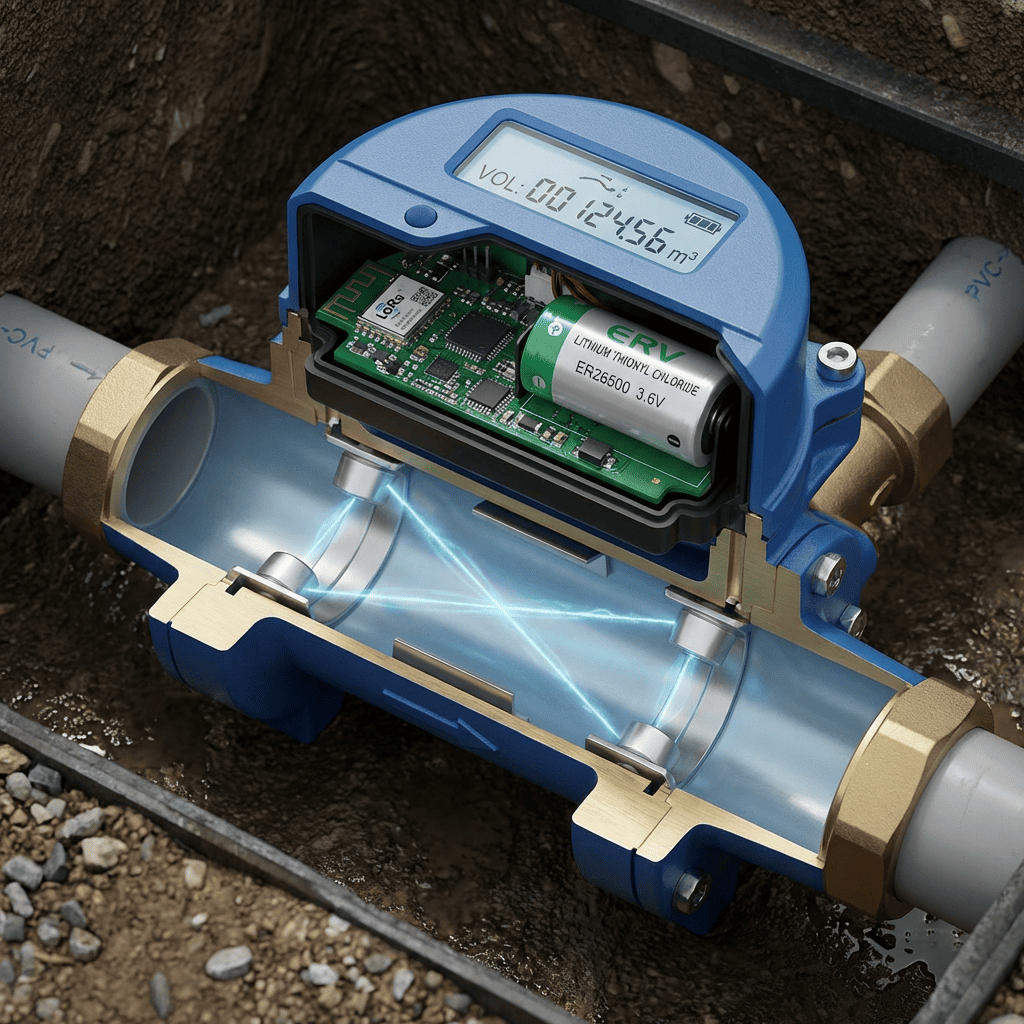
![IMAGE_PLACEHOLDER_2: 16:9 cutaway illustration of an ultrasonic water meter with transducers and reflector, showing signal paths, no text]
Core features to expect
- Transit‑time ultrasonic measurement with integrated measurement, calculation, and display.
- Minimum flow accuracy down to 0.01 m³/h according to OIML R49/MID, useful for leak detection.
- Keine beweglichen Teile, low pressure loss, and resistance to ripple flow disturbances.
- Battery life typically beyond eight years (ER26500 default; ER34615 optional).
- Round‑robin LCD for field checks; remote reading and active abnormal reporting via GSM/LoRa/Ethernet.
Time‑of‑Flight Working Principle Explained
The principle is simple but precise. Two transducers send pulses in both directions across the flow. The meter measures the time difference between upstream and downstream paths, which is proportional to velocity, and converts this to volumetric flow and cumulative consumption.
The calculator unit receives signals from the flow sensors (and temperature sensors where applicable), executes the transit‑time algorithm, stores totals, and updates the LCD [3]. This architecture delivers stable performance when installed within the specified application class and environmental limits.
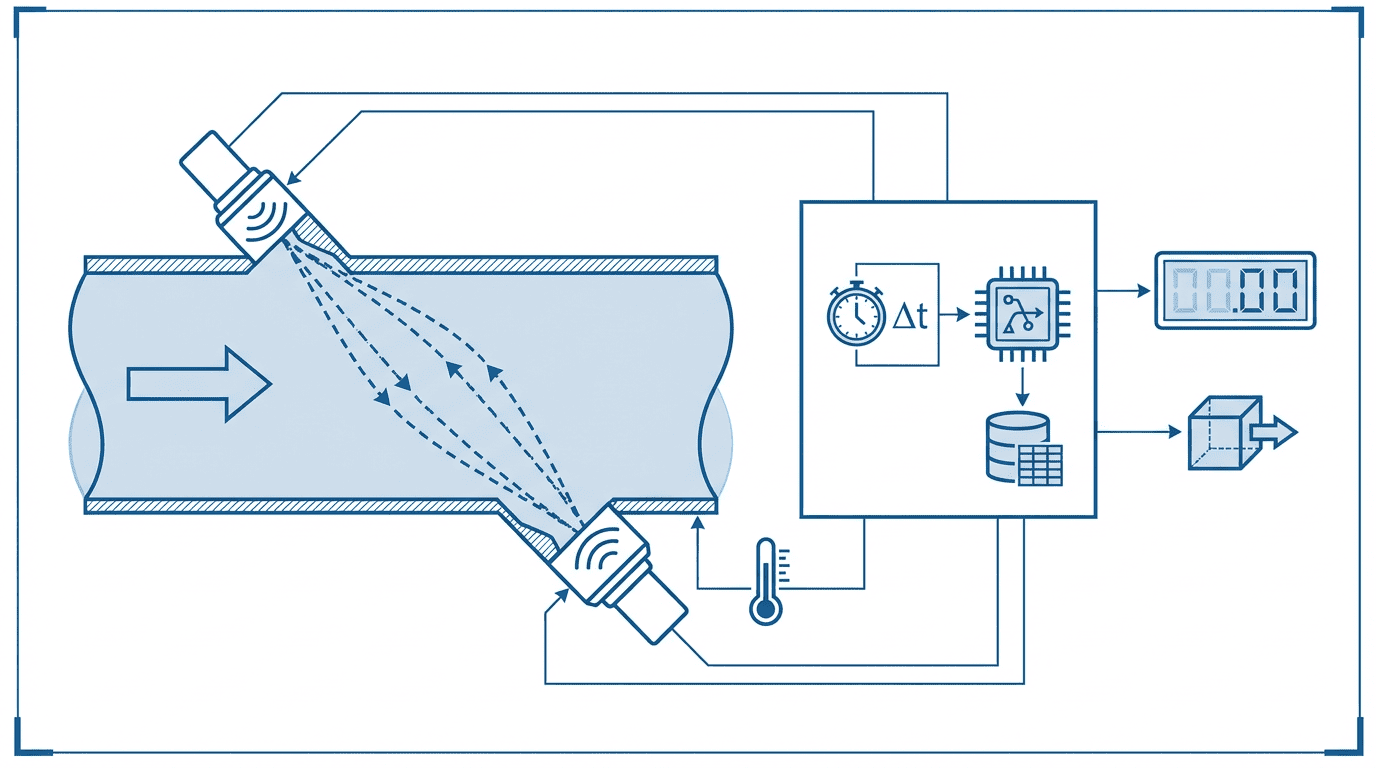
Step‑by‑step flow calculation
- The upstream transducer emits an ultrasonic pulse across the water path.
- The downstream transducer receives the pulse and the meter records the travel time.
- The downstream transducer emits a return pulse upstream and the time is recorded.
- The calculator computes the differential time and converts it to velocity.
- The instrument integrates velocity over the cross‑section to compute volume, stores the data, and drives the display.
Advantages vs Mechanical Meters in Theory
Ultrasonic meters avoid the wear and drift of moving parts. With no rotor or bearings, there is no friction to cause accuracy changes, and the simple flow tube keeps pressure loss low in operation. This makes long‑term stability achievable when you match the meter to the actual site conditions.
They also read very low flows credibly. Minimum flow down to 0.01 m³/h, validated under OIML R49/MID, supports leak analytics and revenue protection in residential and small commercial deployments. At the system level, they fit naturally into AMR/AMI: meters can report anomalies, and data can flow via LoRa to a collector and on to your management system through GSM or Ethernet.
Where theory meets practice
- Accurate low‑flow measurement for leak detection and fair billing (0.01 m³/h).
- Keine beweglichen Teile, low pressure loss, and resistance to ripple‑flow disturbances.
- Remote reading and alarms (leak, burst, reverse installation, no water/transducer signal).
- Alignment with ISO 4064, OIML R49/MID and GB/T 778 series supports compliance in tenders.
What Our Long‑Term Field Data Says
Across utilities and contractors I support, I see three recurring truths. First, when you select the correct temperature class and environment rating, accuracy tracks the datasheet over the lifecycle. Second, installation quality matters; straight‑run, level, and orientation must follow the rules. Third, AMR/AMI alarms prevent big problems if you act on them early.
The “bad quality” label usually appears when a cold‑water model is installed on hot service lines. Sechs Monate später, complaints arrive. The technology is blamed, but the product was never rated for that temperature. Proper tender language and conformance checks prevent this costly cycle. If you combine correct selection, a disciplined install, and active alarm handling, ultrasonic water meter field performance is very stable in real‑world use.
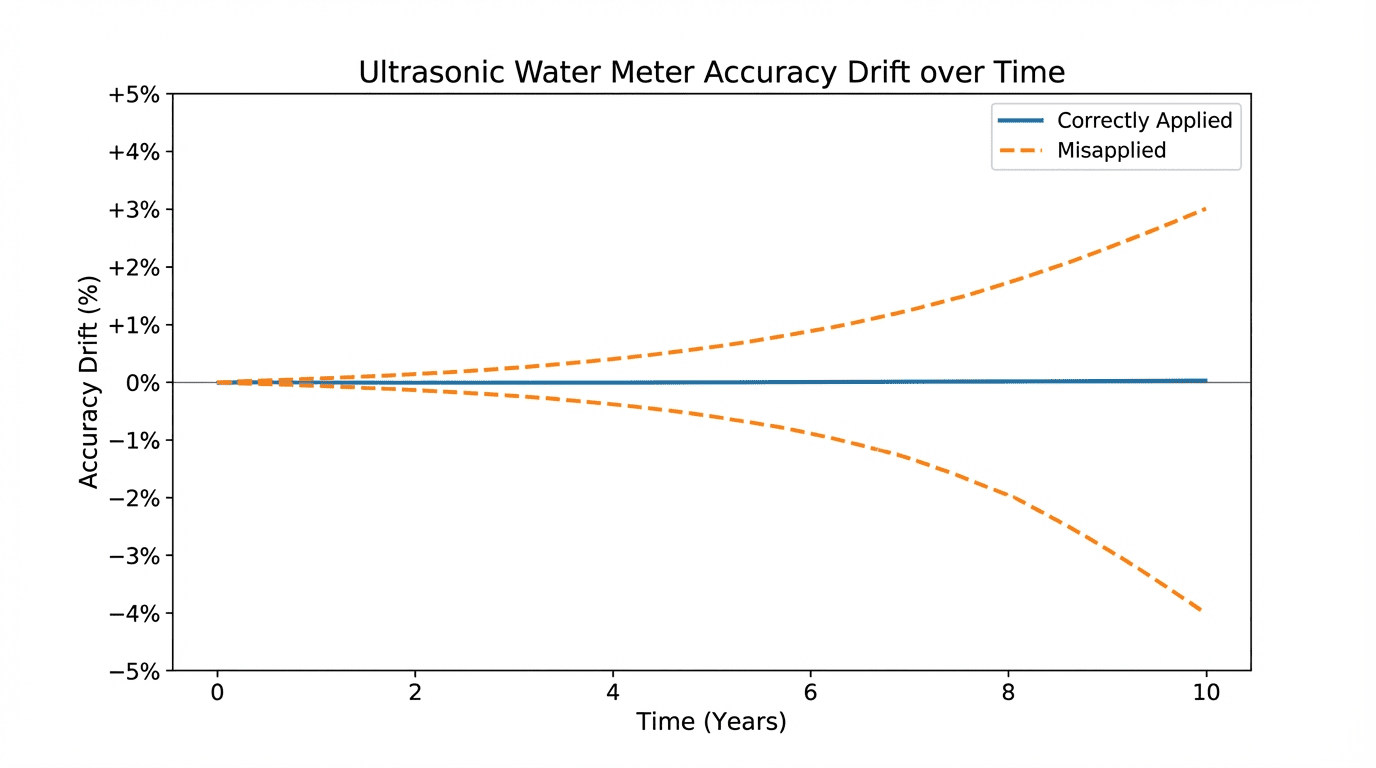
High‑Temperature and High‑Pressure Misapplications
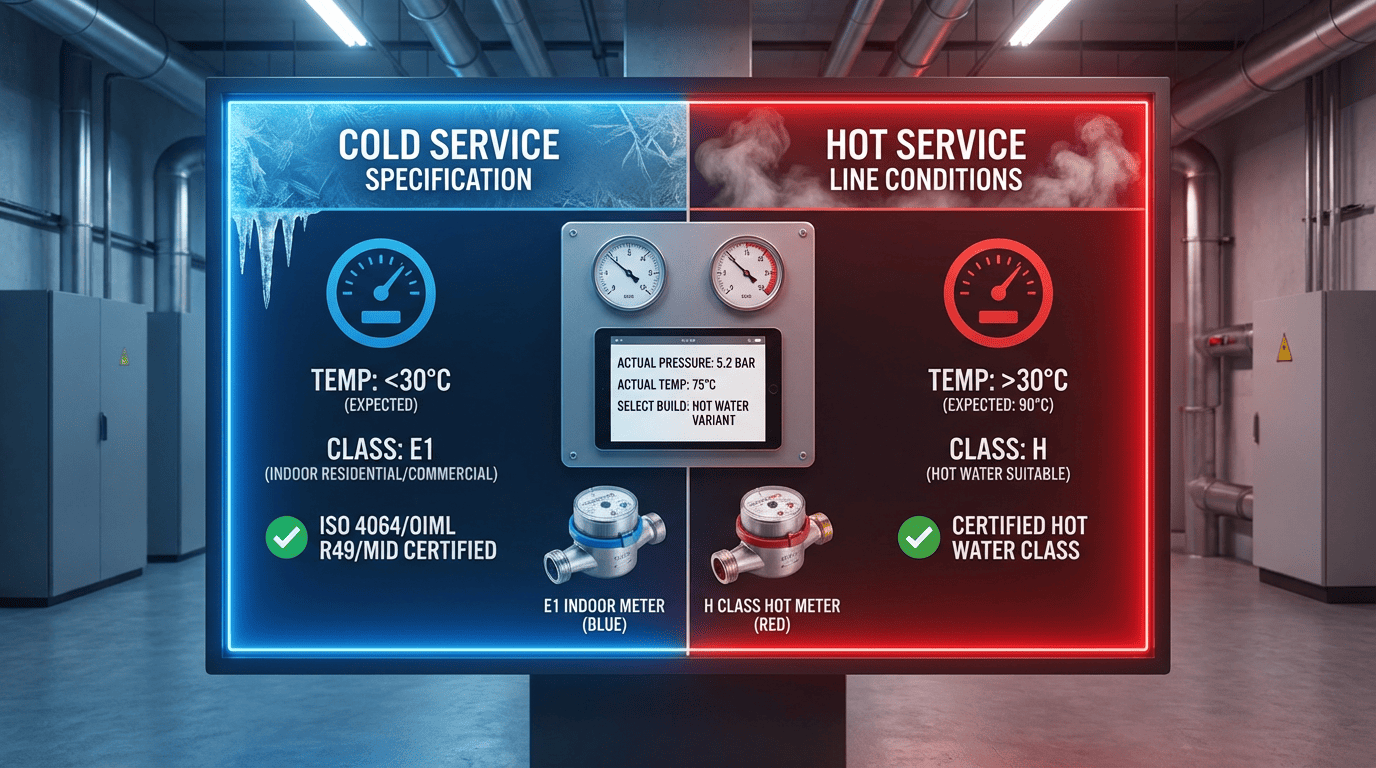
Here is the core misconception. A purchase order specifies “cold water meters,” but the contractor installs them on 70–80°C hot lines. After a short time, accuracy and stability degrade and the meter takes the blame. In reality, standards distinguish cold and hot water meters, and your specification must match actual temperature and environment.
Documentation for ultrasonic meters lists ISO 4064 and OIML R49/MID, and the GB/T 778 series further separates specifications, installation requirements, and test methods for cold and hot water meters. The typical residential/commercial/light‑industry application rating is E1, installed indoors, which must be respected in design and deployment. Some internal materials, such as stainless steel reflectors, provide wear and temperature resistance, but material choice does not alter the product’s certified service class or its suitability for hot‑water lines unless ordered and certified as such.
How to prevent misapplication
- State cold vs hot service explicitly in the tender, list expected temperature, and verify conformance to ISO 4064/OIML R49/MID or GB/T 778 series as applicable.
- Match the environment class to the site (for example, E1 indoor for residential/commercial/light industry) and do not deploy outside it without the correct product variant.
- Do not rely on “high‑temperature‑resistant components” as proof of hot‑water suitability; check the product’s declared class and certificates.
- Record actual line pressure and temperature during design and commissioning, and select the build that matches those conditions.
Typical Failure Modes and How to Avoid Them
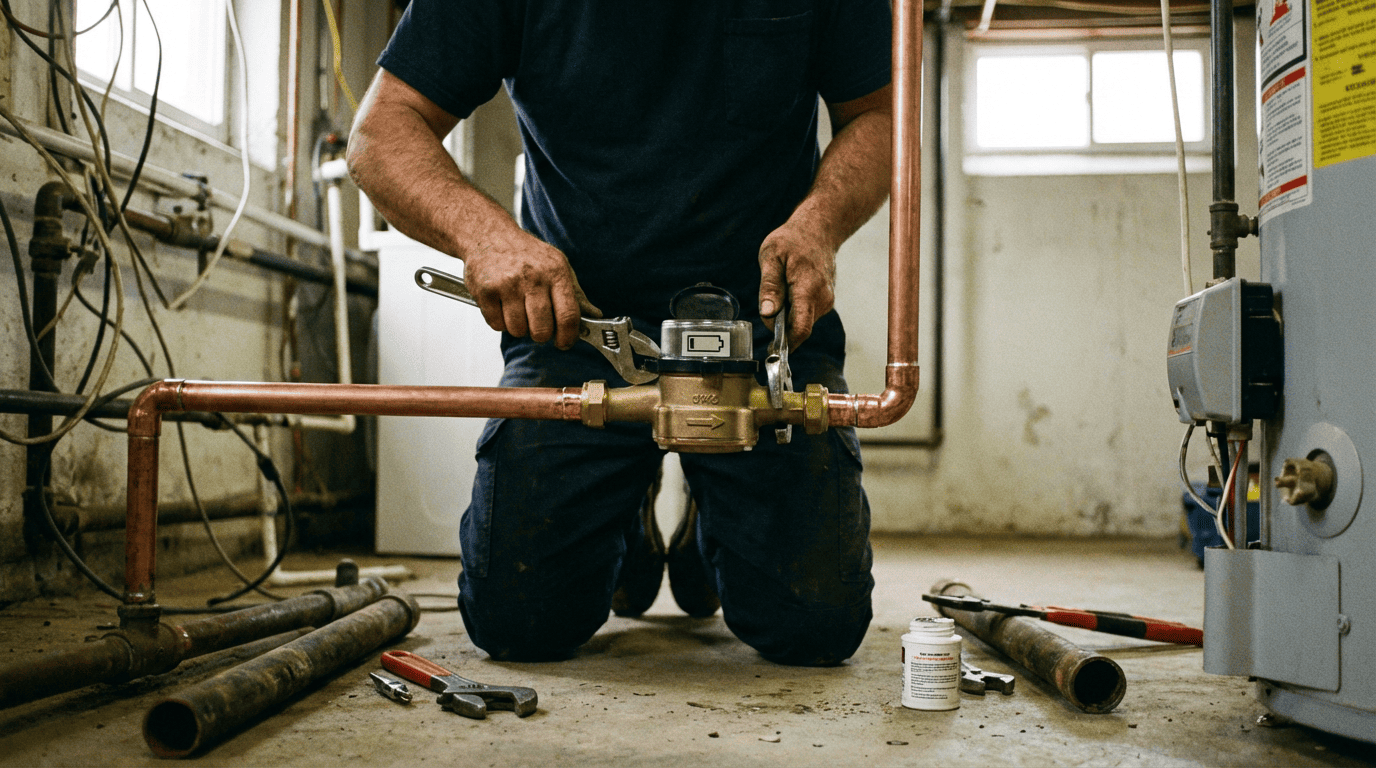
Most reported issues are preventable with basic checks. If a meter shows a negative totalizer or reverse flow, verify the installation direction first, because the platform can flag reverse installation as an alarm. If a cold‑water installation shows random or unstable readings on the LCD, look for short straight runs, big upstream bends, wrong installation level, or abrupt diameter changes before the meter; these disturb the flow profile and signal stability.
Use the built‑in diagnostics. The system can alarm when no water is present and the transducer sees no signal, when long‑running low flow suggests a leak, when sustained high flow indicates a burst, and when the meter is installed in the wrong direction. The LCD also shows a low‑battery icon and reports it upstream so you can plan a replacement before shutdown.
Quick diagnostic list
- Negative reading or reverse flow? Check the orientation and flow arrow; reverse installation alarms can confirm it.
- “Beating” or unstable display on a cold‑water meter? Increase straight‑run, remove sharp upstream bends, and avoid sudden diameter transitions at the inlet.
- Continuous low flow? Treat it as a leak alarm and investigate downstream fixtures or network leaks.
- Sustained high flow over thresholds? Treat it as a burst alarm, isolate, and repair.
- Battery icon on LCD? Schedule a proactive battery swap (ER26500 default; ER34615 optional).
Best‑Fit Applications for Ultrasonic Meters
Ultrasonic meters are well suited to household measurement in residential quarters and similar indoor projects, with low pressure loss and accuracy that fits utility billing needs. The common environment rating is E1 and installation is indoors in fixed positions, which aligns with residential, kommerziell, and light‑industry use cases. In these conditions, you can deploy at scale with predictable performance.
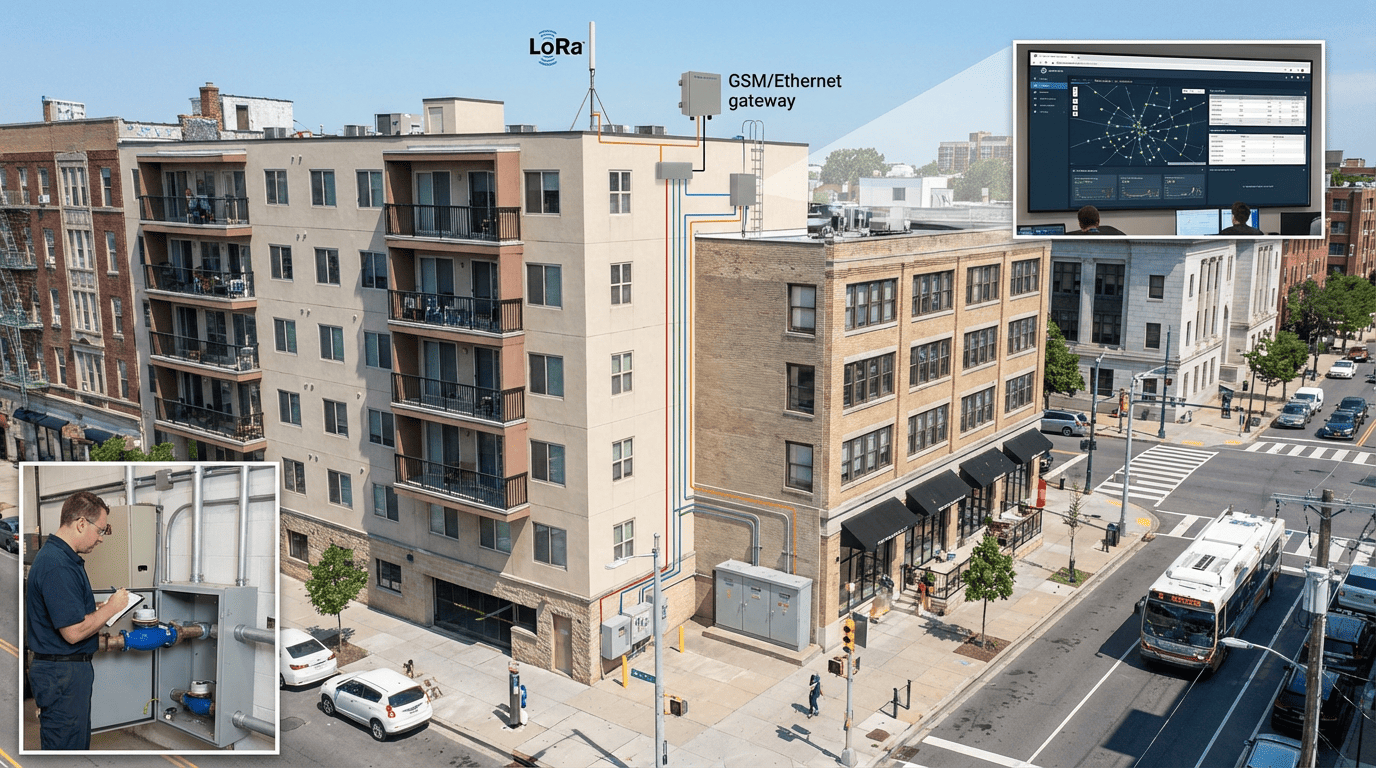
For smart metering, the architecture is proven: meters connect via LoRa to a concentrator; the wireless collector uses GSM or Ethernet for backhaul to your management system; and the platform actively reports abnormal information from all connected devices to reduce OPEX. This model scales from buildings to districts with minimal field visits.
Where they deliver maximum value
- Apartment blocks and mixed‑use buildings where low‑flow accuracy strengthens leak analytics and revenue protection.
- Indoor commercial and light‑industrial sites that match E1 conditions for long‑term reliability.
- AMR/AMI deployments using LoRa for local collection and GSM/Ethernet for backhaul, with active network‑wide abnormal reporting.
- District and sub‑district monitoring points where burst and long‑running flow alarms cut response time and NRW.
Selection Checklist for Engineers
Use this checklist before you order. It prevents most on‑site problems I encounter and protects ultrasonic water meter field performance over time.
Technical and environmental fit
- Declare cold vs hot service and the expected temperature range; require conformance to ISO 4064, OIML R49/MID, or GB/T 778 series in your tender.
- Match environment class (for example, E1 indoor) to site conditions; do not deploy outside the rating without an appropriate product variant.
- Verify layout for straight‑run availability and avoid big upstream bends or sudden diameter changes before the inlet.
- Confirm expected line pressure and compatibility of meter body and couplings with your standard drawings and specs.
Installation and integration
- Issue installation drawings showing orientation, straight lengths, and transitions; mark the flow direction clearly on site.
- Define AMR/AMI topology: LoRa from meter to collector/repeater; GSM or Ethernet from collector to the management system.
- Configure alarms (no water/transducer signal, long‑running low flow, burst, reverse installation) and integrate them into your O&M workflows and SLAs.
Operations and maintenance
- Use the LCD round‑robin screens for quick diagnostics: momentaner Fluss, cumulative volume, address, cumulative working time, and date.
- Monitor battery status; when the low‑battery icon appears, plan a swap (ER26500 default; ER34615 optional).
- Log cumulative working time and alarm history in your asset system to plan replacements and upgrades.
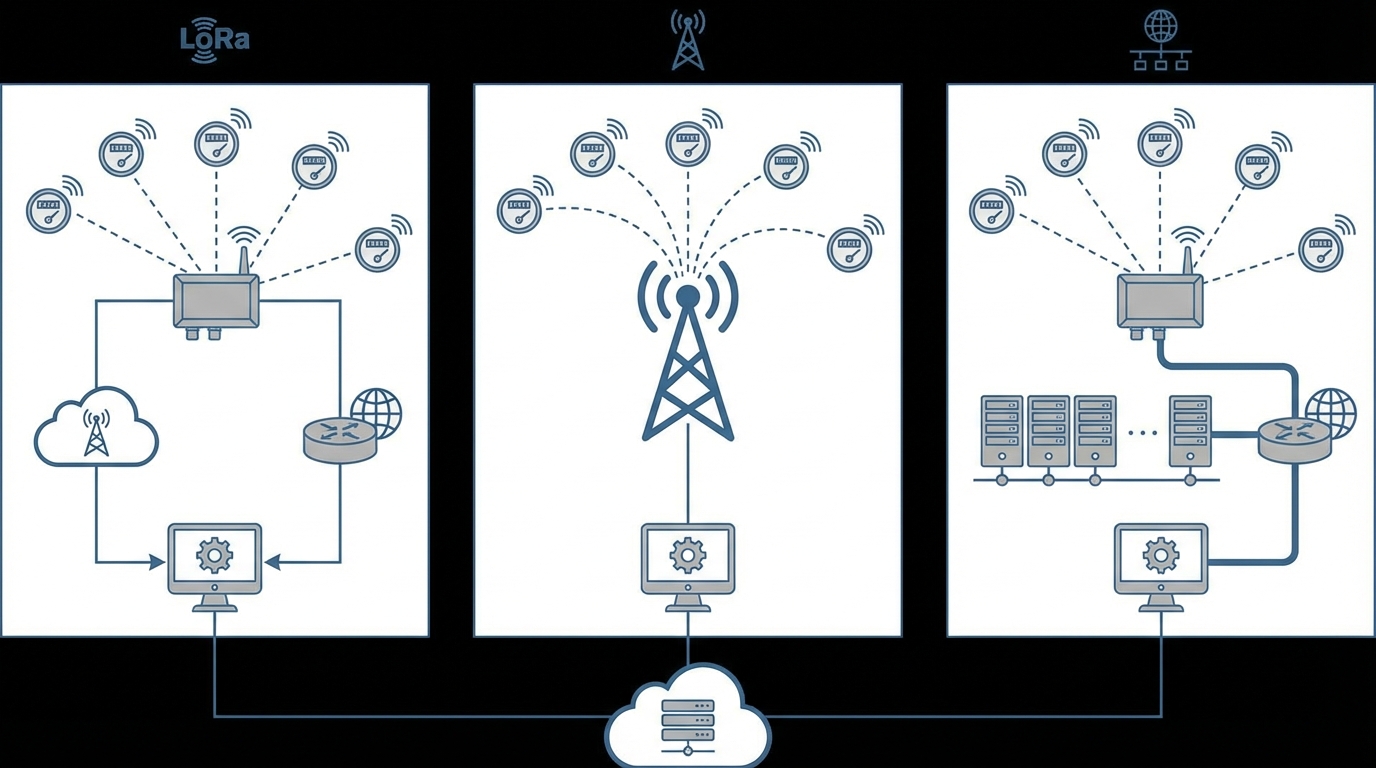
Communication options table
| Option | Local topology | Backhaul | Typical use case | Notes |
|---|---|---|---|---|
| LoRa | Meter → collector/repeater | Collector → GSM/Ethernet | Dense urban blocks and campuses | Standard AMR path; part of a system with concentrator and management platform. |
| GSM | Meter → public GSM network | Direct to management | Distributed sites without local RF network | Enables remote reading and active abnormal reporting. |
| Ethernet | Collector → wired network | Utility LAN/Internet | Sites with stable IT infrastructure | Used by wireless collectors for reliable backhaul. |
Procurement notes that save time
- Specify battery model and expected life (ER26500 default; ER34615 optional).
- Require documentation of minimum flow accuracy per OIML R49/MID (0.01 m³/h capability).
- Include installation drawings that define straight‑run and pipe transitions to stabilize the flow profile.
- Specify AMR/AMI integration and alarm handling (leak, burst, reverse, no water/transducer signal) with your management system from day one.
Abschluss
Ultrasonic meters deliver reliable performance for years when you match the product to the right temperature class and environment, install it correctly, and act on AMR/AMI alarms early. Most “quality issues” I meet in the field start with misapplication—especially cold‑water variants on hot lines—followed by basic installation gaps and ignored alarms.
If you want a quick, practical review, send me your pipeline temperatures, pressures, installation drawings, and communication plan. I will recommend a compliant configuration and a pilot AMR/AMI plan tailored to your project, so your ultrasonic water meter field performance aligns with your targets.