



Was ist die Zukunft der Wassermessung??
Wasserverlust ist nicht nur ein technisches Problem. Ich sehe, dass es sich um ein Abrechnungsproblem handelt, ein Vertrauensproblem, und langfristige Betriebskosten.
Die Zukunft der Wassermessung geht von der manuellen Ablesung hin zur vernetzten Messung, datengesteuerte Systeme. Ich erwarte AMR, AMI, IoT-Wasserzähler, Alarm, Cloud-Plattformen, und Felddaten zusammenarbeiten, damit Versorgungsunternehmen Verluste reduzieren können, Abrechnung verbessern, und verwalten Sie Vermögenswerte mit besserer Kontrolle.
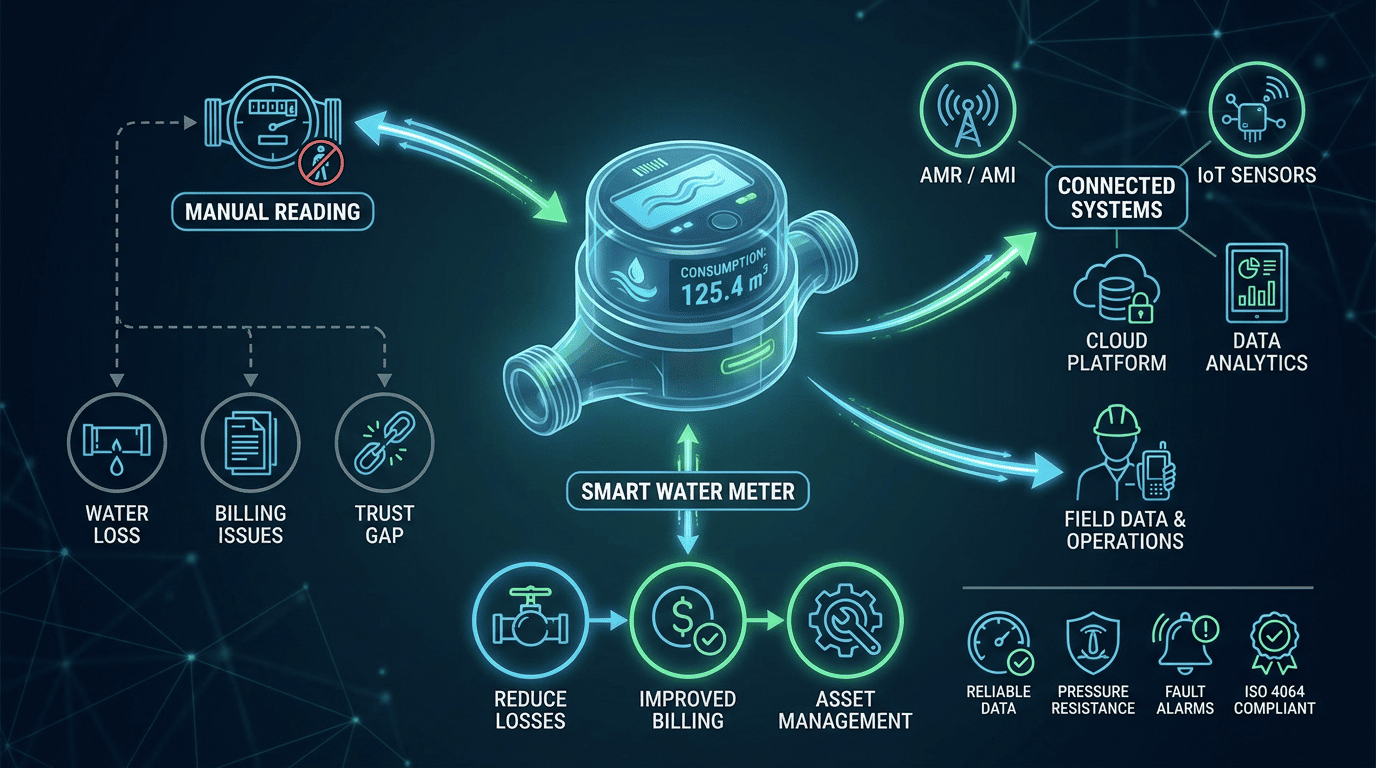
Ich sehe Smart Metering nicht als einfache Umrüstung von einem mechanischen Zähler auf einen digitalen Zähler. Ich sehe es als eine Änderung in der Art und Weise, wie ein Dienstprogramm liest, Schecks, pflegt, und verwaltet sein Netzwerk. Ein Smart Meter muss Wasser immer noch richtig messen. Außerdem müssen die Daten übersichtlich dargestellt werden, Druck widerstehen, Schutz der messtechnischen Leistung, Versenden Sie zuverlässige Daten, und bei Bedarf Fehler melden. ISO 4064 behandelt auch elektronische Geräte, Anzeige, Fernablesung, Testen, und Druckfestigkeit als wichtige Bestandteile der Leistung von Wasserzählern, nicht als kleines Zubehör.
Warum muss sich die Wassermessung ändern??
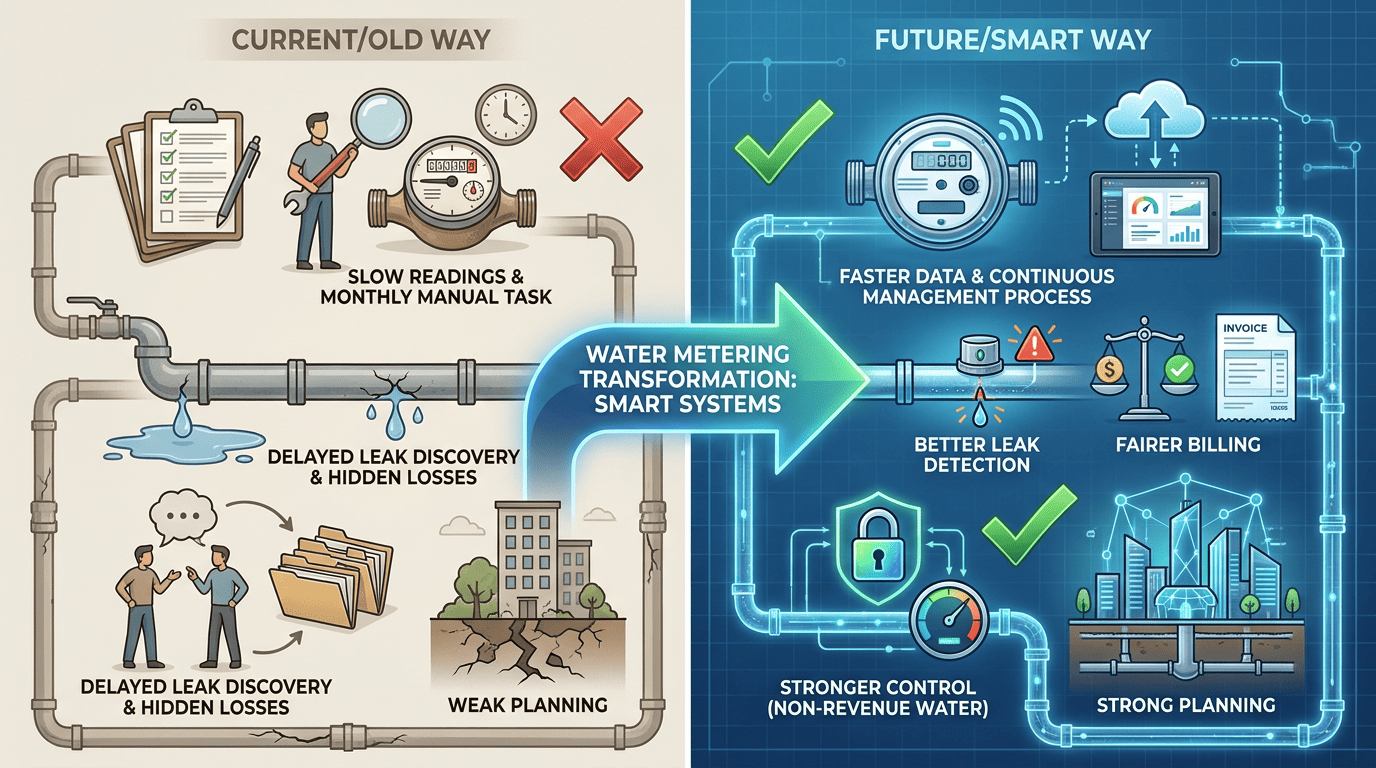
Viele Wasserversorger sind immer noch auf langsame Messwerte angewiesen, verzögerte Leckentdeckung, und unvollständige Feldaufzeichnungen. Ich sehe, dass dies zu Streitigkeiten führt, versteckte Verluste, und schwache Planung.
Die Wassermessung muss geändert werden, da die Versorgungsunternehmen schnellere Daten benötigen, bessere Leckerkennung, gerechtere Abrechnung, und eine stärkere Kontrolle von nicht gewinnbringendem Wasser. Intelligente Systeme helfen dabei, die Zählerablesung von einer monatlichen manuellen Aufgabe zu einem kontinuierlichen Managementprozess zu machen.
Von der Zählerablesung bis zur Verwaltung von Wasserdaten
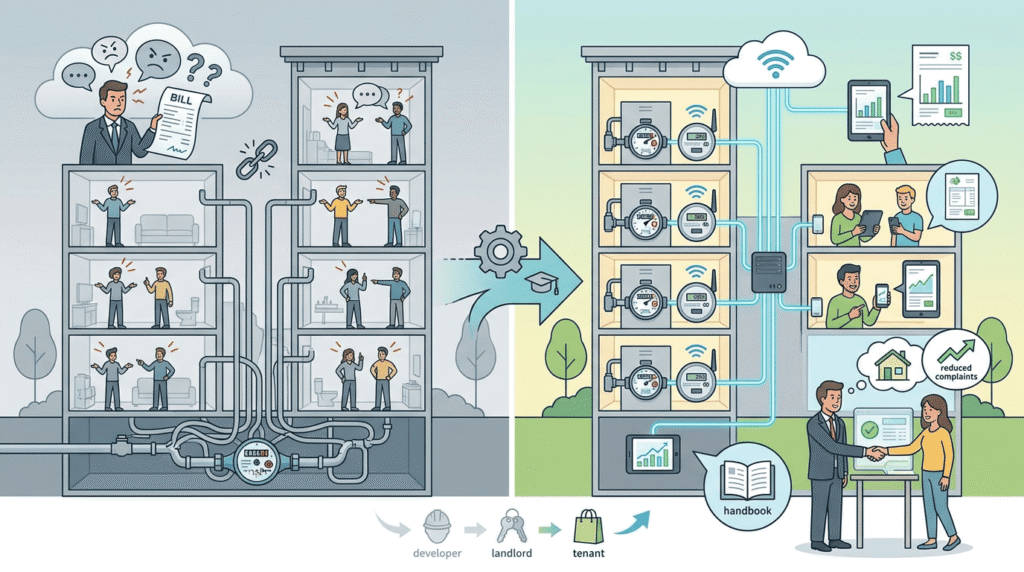
Als Messpunkt sehe ich den alten Wasserzähler. Ich sehe den neuen Wasserzähler als Datenpunkt. Dieser Unterschied ist wichtig. Ein herkömmliches Messgerät zeichnet die Lautstärke auf. Ein Smart Meter erfasst das Volumen und kann auch Ereignisse unterstützen, Alarm, Kommunikation, und Langzeitbetrieb.
Ich respektiere immer noch mechanische Messgeräte. Sie sind einfach, bewiesen, und in vielen Projekten nützlich. Doch viele Netzwerke benötigen mittlerweile mehr als eine monatliche Zahl. Sie brauchen Leckwarnungen. Sie benötigen Warnungen bei abnormalem Durchfluss. Sie benötigen Rückflussinformationen. Sie benötigen Daten, die die Abrechnung unterstützen können, Wartung, und Kundenservice.
Ein moderner Ultraschall-Smart-Meter kann einen großen Messbereich wie Q3/Q1 = R400 bieten, ein extrem niedriger Anfangsdurchfluss bis hin zu 0.001 m³/h, Leckerkennung, Trockenrohrerkennung, Rückflussüberwachung, Alarmanzeige, und Kommunikationsoptionen wie Wireless M-Bus und NB-IoT. Ich sehe diese Funktionen als praktische Werkzeuge, keine Marketingwörter.
| Alter Messfokus | Zukünftiger Messschwerpunkt |
|---|---|
| Manuelles Lesen | Fernlesung |
| Monatliche Abrechnungsnummer | Tägliche oder stündliche Daten |
| Späte Leckentdeckung | Schnellere Leckerkennung |
| Messgerät als Gerät | Messgerät als Datenressource |
| Grundlegende Lautstärkeanzeige | Volumen, fließen, Alarm, und Ereignisdaten |
| Reaktive Wartung | Geplante Wartung |
Welche Rolle spielt AMR im aktuellen Wassermesssystem??
AMR ist oft der erste digitale Schritt, aber ich betrachte es nicht als den letzten Schritt. Es verbessert die Leseeffizienz, es entsteht jedoch möglicherweise keine vollständige Netzwerkintelligenz.
AMR, oder automatisierte Zählerablesung, ermöglicht es Versorgungsunternehmen, Zählerdaten zu sammeln, ohne jeden Zähler manuell ablesen zu müssen. Es reduziert die Arbeit, verbessert die Lesegeschwindigkeit, und verringert menschliches Versagen, aber es bietet normalerweise weniger bidirektionale Kontrolle als AMI.
Warum AMR immer noch wichtig ist
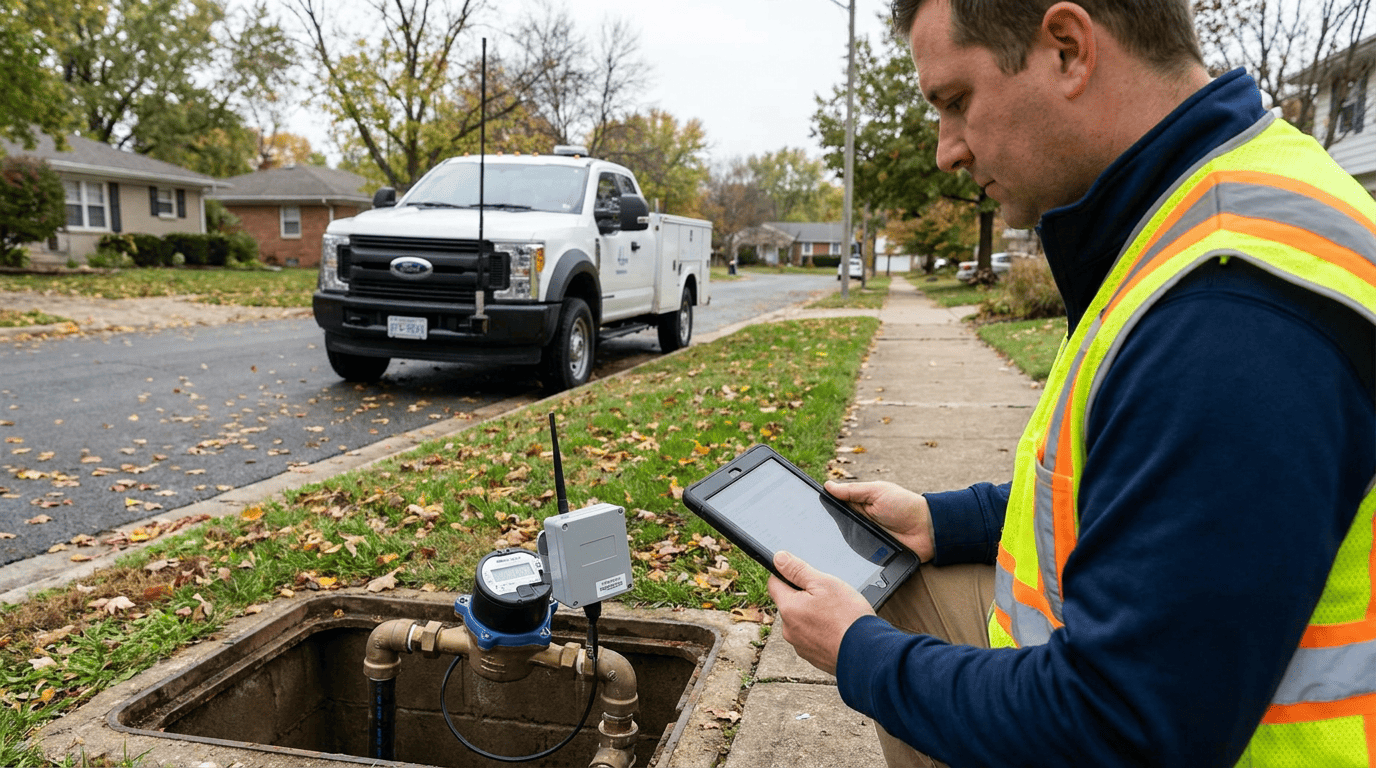
Ich sehe AMR als eine Brücke zwischen manueller Messung und fortschrittlicher digitaler Messung. Ein Dienstprogramm kann mit Walk-by beginnen, Vorbeifahren, RF, M-Bus, LoRa, oder andere Kommunikationsmethoden. Das Hauptziel ist einfach. Das Versorgungsunternehmen möchte Messwerte schneller und mit weniger Fehlern erfassen.
AMR kann die Kosten für Feldbesuche senken. Es kann auch die geschätzten Rechnungen reduzieren. Es kann Versorgungsunternehmen dabei helfen, eine grundlegende Lesedatenbank aufzubauen. Dies ist nützlich, wenn ein Versorgungsunternehmen nicht für eine vollständige AMI-Investition bereit ist.
Aber AMR hat Grenzen. Viele AMR-Systeme unterstützen hauptsächlich das Lesen in eine Richtung. Sie stellen möglicherweise keine häufigen Intervalldaten bereit. Sie unterstützen möglicherweise keine erweiterten Alarme in Echtzeit. Sie können auch von lokalen Leserouten abhängig sein. Also frage ich nicht, „Ist AMR gut oder schlecht??„, frage ich, „Entspricht AMR dem aktuellen Ziel des Energieversorgers??”
| AMR-Stärke | AMR-Beschränkung |
|---|---|
| Geringerer manueller Leseaufwand | Bietet möglicherweise keinen Einblick in Echtzeit |
| Bessere Lesegenauigkeit | Möglicherweise sind weiterhin Leserouten erforderlich |
| Schnellerer Abrechnungszyklus | Eingeschränkte Alarmverwaltung in einigen Systemen |
| Geringere Erstinvestition als vollständiges AMI | Weniger nützlich für die aktive Netzwerksteuerung |
Warum wird AMI zur Hauptrichtung??
AMI verwandelt den Zähler von einem passiven Ablesepunkt in einen aktiven Systemknoten. Ich betrachte dies als den eigentlichen Wandel in der Wassermessung der Zukunft.
AMI, oder fortschrittliche Messinfrastruktur, verbindet Zähler, Kommunikationsnetzwerke, und Managementplattformen. Es unterstützt eine häufigere Datenerfassung, Alarm, Analyse, und bessere Versorgungsentscheidungen.
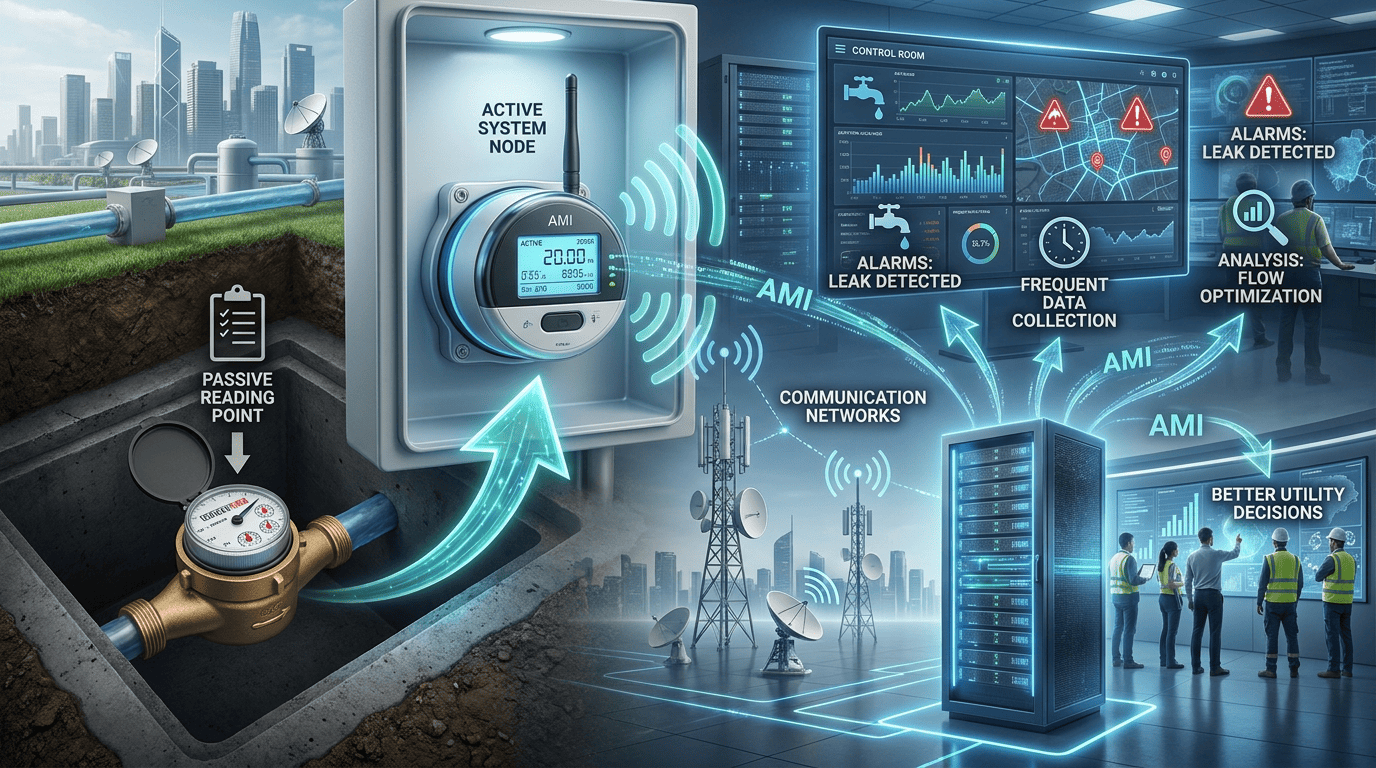
AMI ist nicht nur ein Kommunikationssystem
Ich definiere AMI nicht nur durch die Kommunikationstechnologie. NB-IoT, LoRaWAN, drahtloser M-Bus, und andere Netzwerke sind nur ein Teil des Systems. AMI beinhaltet auch das Messgerät, Das Kommunikationsmodul, die Datenplattform, die Alarmregeln, den Wartungsprozess, und die Menschen, die die Daten nutzen.
Ein gutes AMI-Projekt sollte einem Energieversorger dabei helfen, klare Fragen zu beantworten. Wo kommt es zu einem abnormalen Nachtfluss?? Welche Zähler haben aufgehört zu melden?? In welchem Bereich kann es zu Undichtigkeiten kommen?? Welcher Kunde hat ungewöhnlichen Konsum?? Welches Messgerät zeigt Trockenrohr oder Rückfluss an??
Die Hardware des Messgeräts ist immer noch wichtig. ISO 4064 besagt, dass Verbindungen zwischen elektronischen Teilen, wie zum Beispiel der Messumformer, Kalkulator, und Anzeigegerät, müssen zuverlässig und langlebig sein. Ich lese dies als Erinnerung daran, dass Smart Metering sowohl auf Kommunikation als auch auf einem stabilen internen Design basiert.
| AMI-Schicht | Was ich überprüfe |
|---|---|
| Meter | Genauigkeit, Druckstufe, Anzeige, Batterie, Versiegelung |
| Kommunikation | NB-IoT, LoRaWAN, drahtloser M-Bus, Signalstärke |
| Plattform | Datensichtbarkeit, Alarm, Asset-Mapping |
| Feldprozess | Installation, Aktivierung, Inbetriebnahme |
| Utility-Workflow | Abrechnung, Wartung, Kundendienst |
| Risikokontrolle | Datensicherheit, Aufzeichnungen führen, Fehlerreaktion |
Was einen intelligenten Wasserzähler wirklich intelligent macht?
Ein Zähler ist nicht nur deshalb intelligent, weil er über ein Kommunikationsmodul verfügt. Ich achte auf Messstabilität, Ereigniserkennung, Klarheit anzeigen, und Feldzuverlässigkeit.
Ein intelligenter Wasserzähler sollte genau messen, zuverlässig kommunizieren, nützliche Informationen anzeigen, Ereignisse aufzeichnen, Erkennen Sie abnormale Zustände, und unterstützen den langfristigen Betrieb in realen Feldumgebungen.
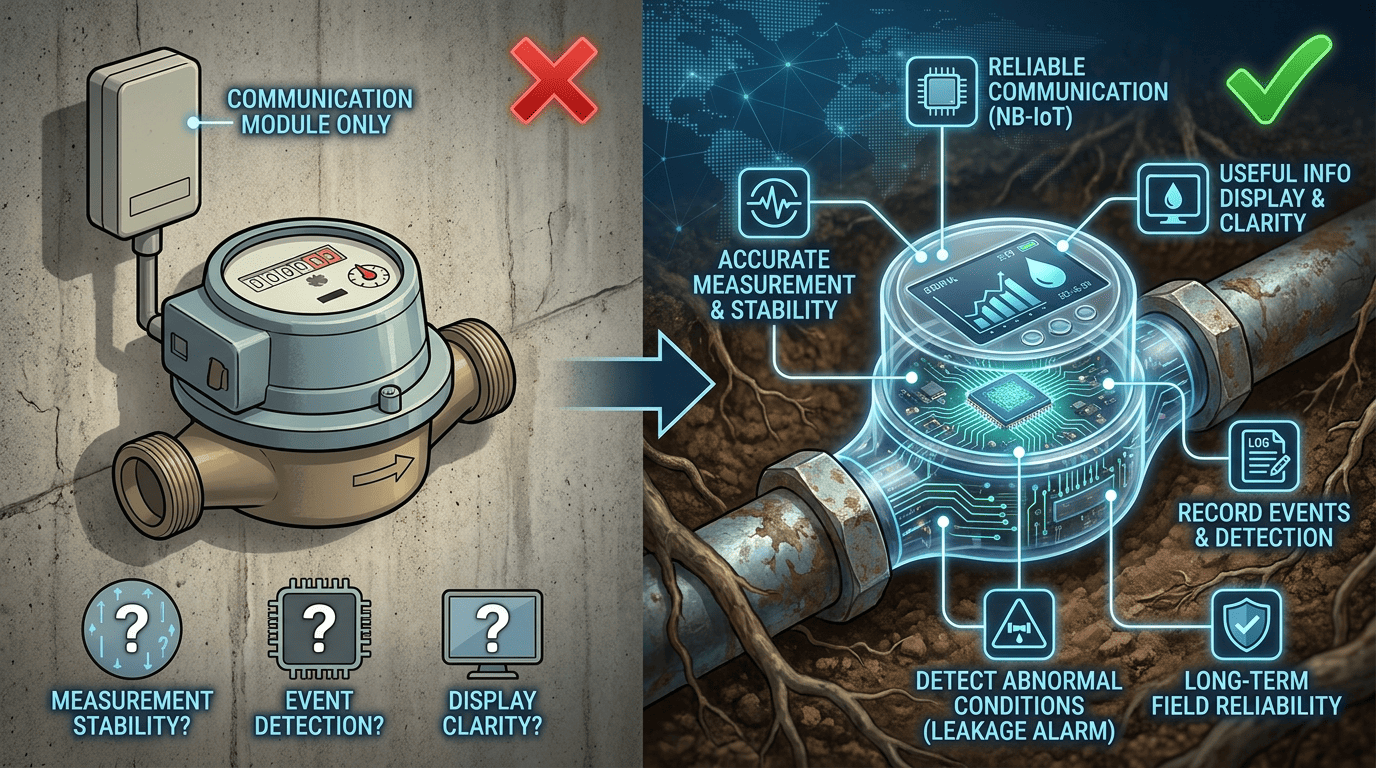
Smart bedeutet messbar, lesbar, und diagnostizierbar
Ich sehe drei Stufen des Smart-Meter-Wertes. Die erste Ebene ist die Messung. Das Messgerät muss Wasser korrekt messen. Die zweite Ebene ist die Kommunikation. Der Zähler muss Daten an das System senden. Die dritte Ebene ist die Diagnose. Das Messgerät muss dem Energieversorger helfen, zu verstehen, was vor Ort passiert.
Die intelligenten Ultraschallzähler von YOUNIO werden ohne Verschleißteile beschrieben, Langzeitstabilität, mehr als 10 Jahre Batterielebensdauer, IP68-Tauchschutz, Leckerkennung, Trockenrohrerkennung, bidirektionale Durchflussmessung, und ein großes LCD, das die kumulierte Lautstärke anzeigt, momentaner Fluss, und Alarminformationen. Ich halte diese Kombination für wichtig, da die Feldzuverlässigkeit von mehr als einer Funktion abhängt.
Auch die Anzeige ist wichtig. ISO 4064 besagt, dass das Anzeigegerät die Lautstärke kontinuierlich anzeigen muss, periodisch, oder auf Anfrage, und dass es leicht lesbar sein muss. Das bedeutet, dass die lokale Lesart immer noch wichtig ist, auch wenn Fernauslesung vorhanden ist.
| Smart-Meter-Funktion | Praktischer Wert |
|---|---|
| Großer Messbereich | Bessere Erfassung bei geringem Durchfluss |
| Niedriger Anfangsdurchfluss | Bessere Sichtbarkeit von Leckagen |
| Schutzart IP68 | Bessere Kammerleistung |
| Lange Akkulaufzeit | Geringerer Wartungsaufwand |
| Alarmanzeige | Schnellere Felddiagnose |
| NB-IoT oder drahtlose Kommunikation | Fernauslesung und -überwachung |
| Rückflusserkennung | Bessere Manipulations- und Netzwerkanalyse |
| Erkennung trockener Rohre | Bessere Kontrolle des abnormalen Status |
Wie verändert IoT die Wassermessung??
IoT macht Wasserzähler zu einem Teil eines größeren Betriebssystems. Ich sehe dies als den Punkt an, an dem Zählerdaten für die Planung nützlich werden, Service, und Vermögensverwaltung.
IoT-Wassermessung verbindet Messgeräte mit Cloud-Plattformen und Versorgungsabläufen. Dadurch können Daten vom Messgerät zu den Personen und Systemen übertragen werden, die sie benötigen.
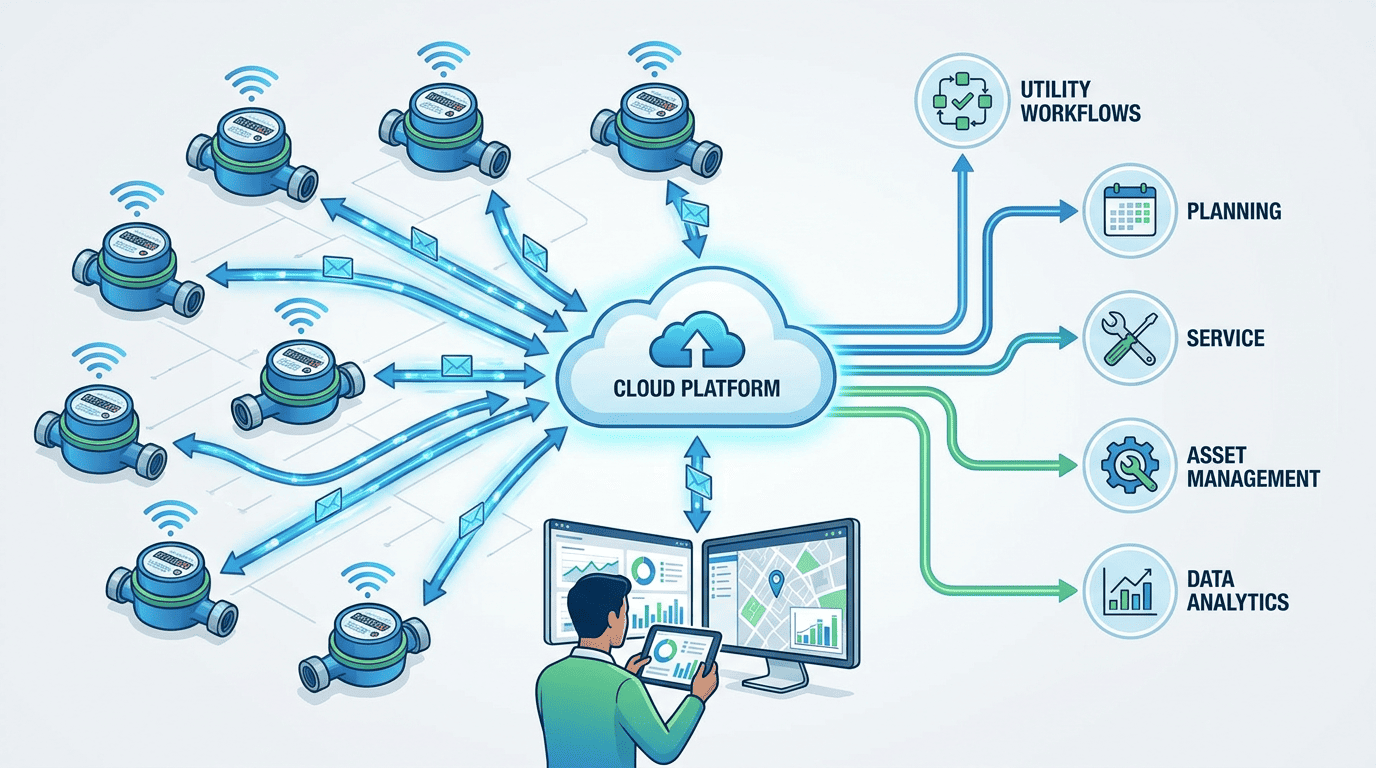
IoT verwandelt Feldereignisse in Managementsignale
Ich glaube nicht, dass IoT nur deshalb wertvoll ist, weil es modern ist. Ich halte es für wertvoll, weil es Feldereignisse sichtbar machen kann. Ein Leck wird nicht mehr erst nach einer Reklamation gefunden. Ein gestoppter Zähler wird bis zum nächsten Abrechnungszyklus nicht mehr ausgeblendet. Ein trockener Rohrzustand kann zu einem Systemalarm werden. Ein Rückflussereignis kann zu einem Wartungsfall werden.
Aus diesem Grund ist die Fehlerberichterstattung wichtig. ISO 4064 erfordert dies, wenn ein Wasserzähler Daten an Peripheriegeräte überträgt, Bei Vorliegen eines Fehlers muss der Übertragung eine Meldung beiliegen, die auf das Vorliegen eines Fehlers hinweist. Ich sehe darin ein zentrales Prinzip für Smart Metering. Die Daten sollten nicht gültig aussehen, wenn das Messgerät ein Problem meldet.
Auch bei wiederholten Messwerten an einer entfernten Station benötigt das System eine sichere Alarmübertragung. Dies ist wichtig, da ein Versorgungsunternehmen möglicherweise Abrechnungs- oder Wartungsentscheidungen auf der Grundlage von Ferndaten trifft. Wenn der Alarm verloren geht, Die Entscheidung kann falsch sein.
| IoT-Funktion | Nutzenvorteil |
|---|---|
| Remote-Daten-Upload | Weniger manuelles Lesen |
| Alarmübertragung | Schnellere Problemreaktion |
| Ereignisaufzeichnung | Bessere Streitbeilegung |
| Konsumtrend | Bessere Bedarfsanalyse |
| Batteriestatus | Bessere Serviceplanung |
| Cloud-Dashboard | Bessere Managementtransparenz |
Welche Vorteile können Versorgungsunternehmen von der zukünftigen Wassermessung erwarten??
Ich gehe davon aus, dass die zukünftige Messung die Abrechnung verbessern wird, Wasserverlust reduzieren, den Naturschutz unterstützen, und den Kundenservice evidenzbasierter gestalten.
Zukünftige Wasserzähler können bessere Abrechnungsdaten liefern, schnellere Leckerkennung, geringere Lesekosten, stärkere Vermögenskontrolle, und klarere Verbrauchsinformationen für Versorgungsunternehmen und Kunden.
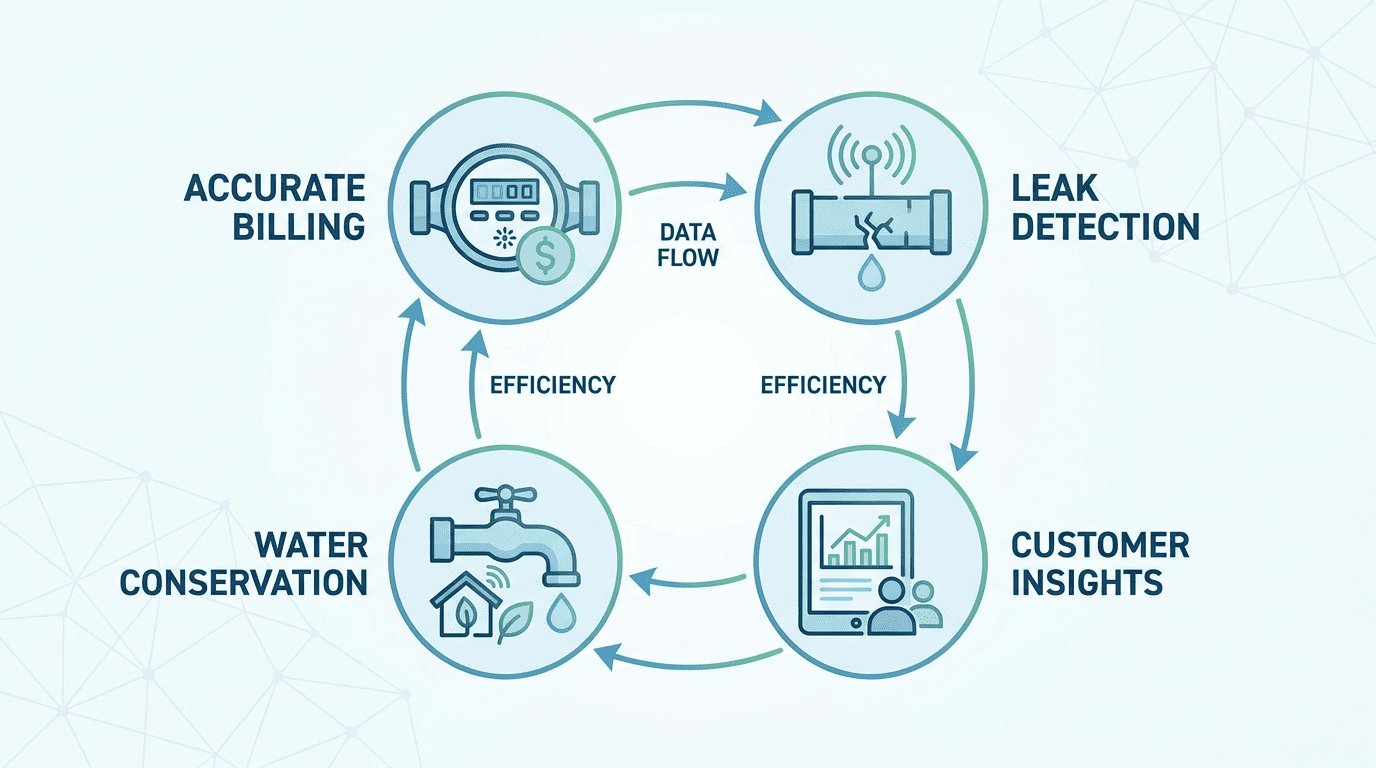
Bessere Daten führen zu besseren Entscheidungen
Ich erinnere Projektteams immer daran, dass Smart Metering allein keinen Wert schafft. Der Wert entsteht, wenn das Dienstprogramm die Daten verwendet. Eine Plattform voller ungelesener Alarme ist nicht intelligent. Ein Dashboard, das niemand überprüft, ist nicht intelligent. Ein Zähler, der Daten hochlädt, aber über keinen Wartungsworkflow verfügt, schafft nur begrenzten Wert.
Wenn der Arbeitsablauf klar ist, Die Vorteile werden real. Das Abrechnungsteam kann die geschätzten Messwerte reduzieren. Das Wartungsteam kann stille Fehler schneller finden. Das Kundendienstteam kann ungewöhnliche Rechnungen mit Daten erklären. Das Planungsteam kann Nachfragetrends nach Gebieten erkennen. Das NRW-Team kann Verbrauchsmuster und Leckagesignale vergleichen.
ISO 4064 Testmethoden erinnern mich auch daran, dass Leistungstests auf aufgezeichneten Werten basieren, Abmessungen, und Beobachtungen. Ich wende die gleiche Idee auf Projekte an. Wenn ein Energieversorger einen langfristigen Wert anstrebt, Es sollte Installationsdaten aufzeichnen, Signaldaten, Inbetriebnahmedaten, Alarm, und Servicehistorie.
| Nutzen | Was macht es real? |
|---|---|
| Fairere Abrechnung | Genaue Zählerdaten und korrekte Zuordnung |
| Unteres NRW | Lecksuche und Verbrauchsanalyse |
| Niedrigere Lesekosten | Ferndatenerfassung |
| Bessere Wartung | Alarme und Ereignisprotokolle |
| Besserer Kundenservice | Übersichtliche Verbrauchsaufzeichnungen |
| Bessere Planung | Trenddaten auf Gebietsebene |
Welche Herausforderungen können Smart-Metering-Projekte stoppen?
Ich sehe, dass viele Smart-Metering-Probleme bereits vor der Installation beginnen. Das Produkt kann gut sein, aber der Projektprozess kann schwach sein.
Smart-Metering-Projekte können an falschen Spezifikationen scheitern, Schlechte Signalprüfungen, schwache Installationskontrolle, unklare Inbetriebnahme, hoher Kostendruck, und schwache Datensicherheitsplanung.
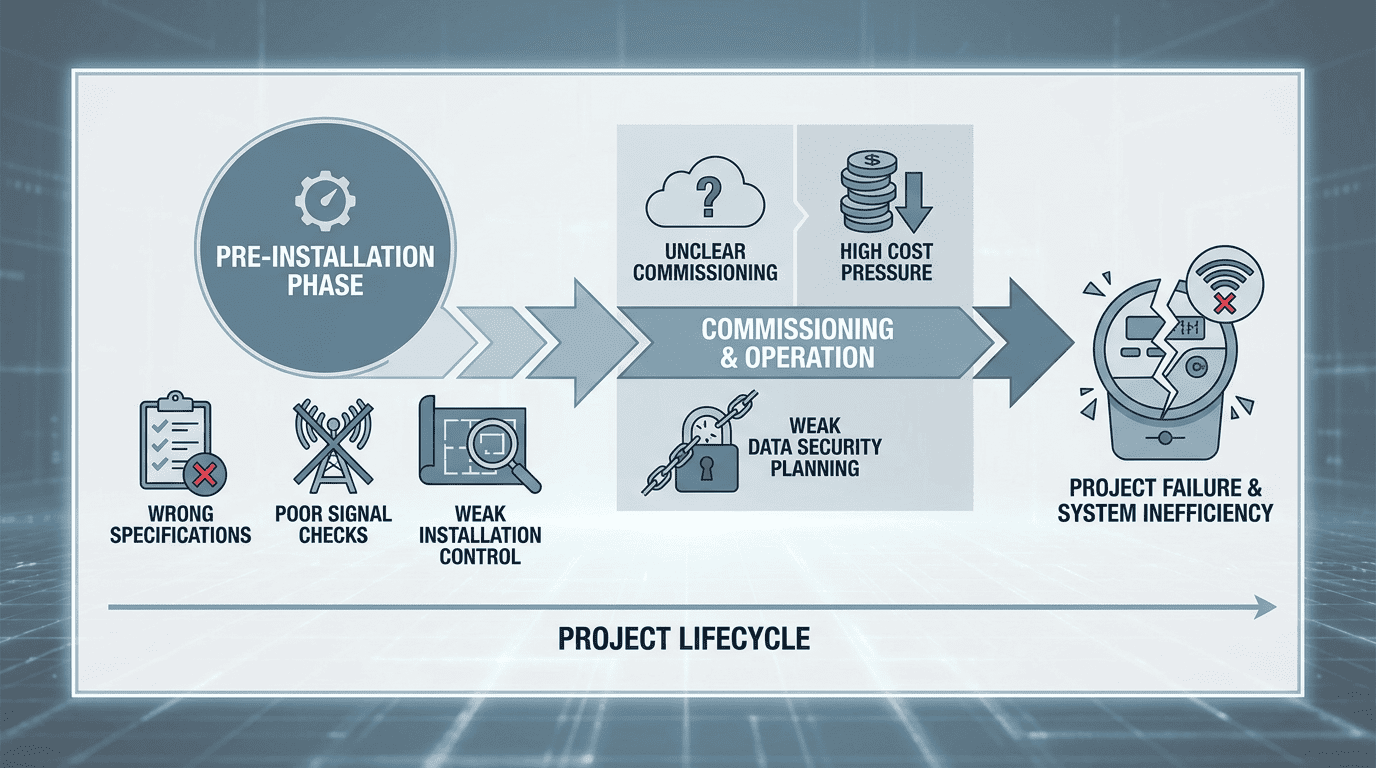
Die größten Risiken sind in der Regel praktischer Natur
Ich habe gesehen, dass sich Teams zu sehr auf das Kommunikationsprotokoll und zu wenig auf die Grundlagen konzentrierten. Sie vergessen Verbindungsstandards. Sie überspringen Druckprüfungen. Sie bestätigen kein Signal innerhalb der Kammern. Sie zeichnen keine ersten Messwerte auf. Sie ordnen die Seriennummern den Zimmern nicht korrekt zu. Sie schulen das Wartungsteam nicht.
Druck ist ein grundlegender Faktor, der nicht ignoriert werden kann. ISO 4064 erfordert einen Wasserzähler, um standzuhalten 1.6 mal der maximal zulässige Druck für 15 Minuten und das Doppelte des maximal zulässigen Drucks für 1 Minute ohne Leckage oder Beschädigung. Ich nutze dies als Erinnerung daran, dass es sich bei intelligenten Zählern in erster Linie immer noch um hydraulische Produkte handelt.
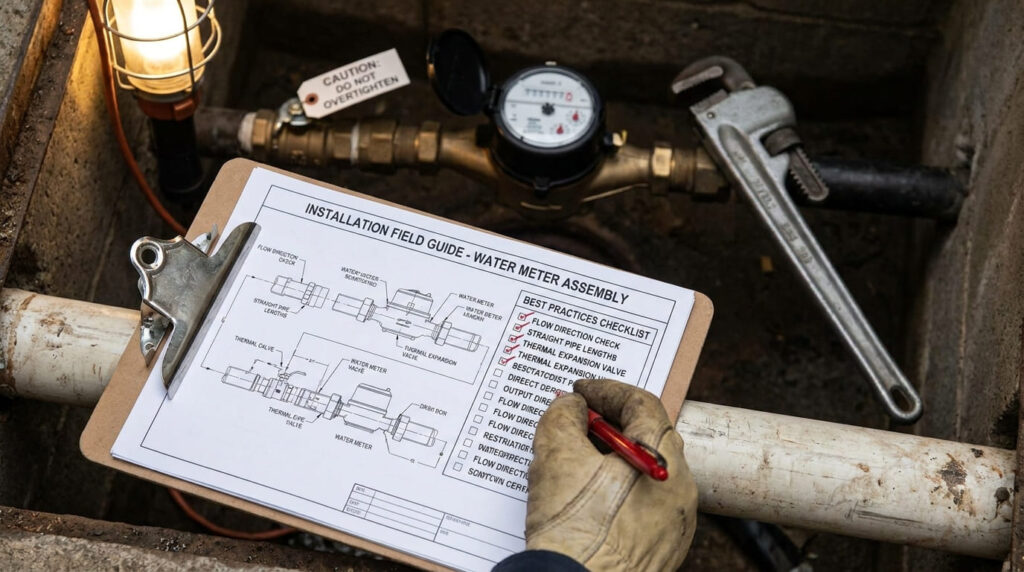
Auch die Installations- und Testbedingungen spielen eine Rolle. ISO 4064 Beschreibungen der Testinstallation umfassen auch die Wasserversorgung, Rohrleitungen, Durchflussregulierende Geräte, Absperrventile, Temperaturmessung, Druckmessung, und andere Geräte zur Durchflusskontrolle, Zyklusdauer, und Zyklenzahl. In derselben Referenz heißt es auch, dass Messgeräte und Verbindungsrohre ordnungsgemäß entlüftet werden sollten. Ich sehe dies als klare Warnung für die Außendienstteams. Luft, schlechte Rohrleitungen, und eine schlechte Inbetriebnahme kann die Leistung beeinträchtigen.
| Projektrisiko | Kontrollaktion |
|---|---|
| Falscher Flansch oder Gewinde | Zeichnungen vor der Bestellung genehmigen |
| Schwaches Signal | Testsignal vor der Installation |
| Wasserschlag | Ventile langsam öffnen |
| Luft im Rohr | Entlüften Sie während der Inbetriebnahme |
| Schlechte Datenzuordnung | Zähler-ID abgleichen, Zimmer, und Plattformaufzeichnung |
| Alarme verloren | Alarmübertragung prüfen |
| Schwacher Wartungsplan | Definieren Sie Inspektion und Batterieüberprüfung |
Wie sollten Käufer das richtige zukunftsfähige Messgerät auswählen??
Ich wähle einen Zähler nicht nur nach dem Preis aus. Ich wähle es nach Anwendung, Risiko, Zertifizierungspfad, Datenbedarf, und Wartungsrealität.
Käufer sollten Wasserzähler entsprechend dem Zählertyp auswählen, Durchflussbereich, Druckstufe, Schutzniveau, Kommunikationsmethode, Installationsumgebung, und Plattformanforderungen an das eigentliche Projekt anzupassen.
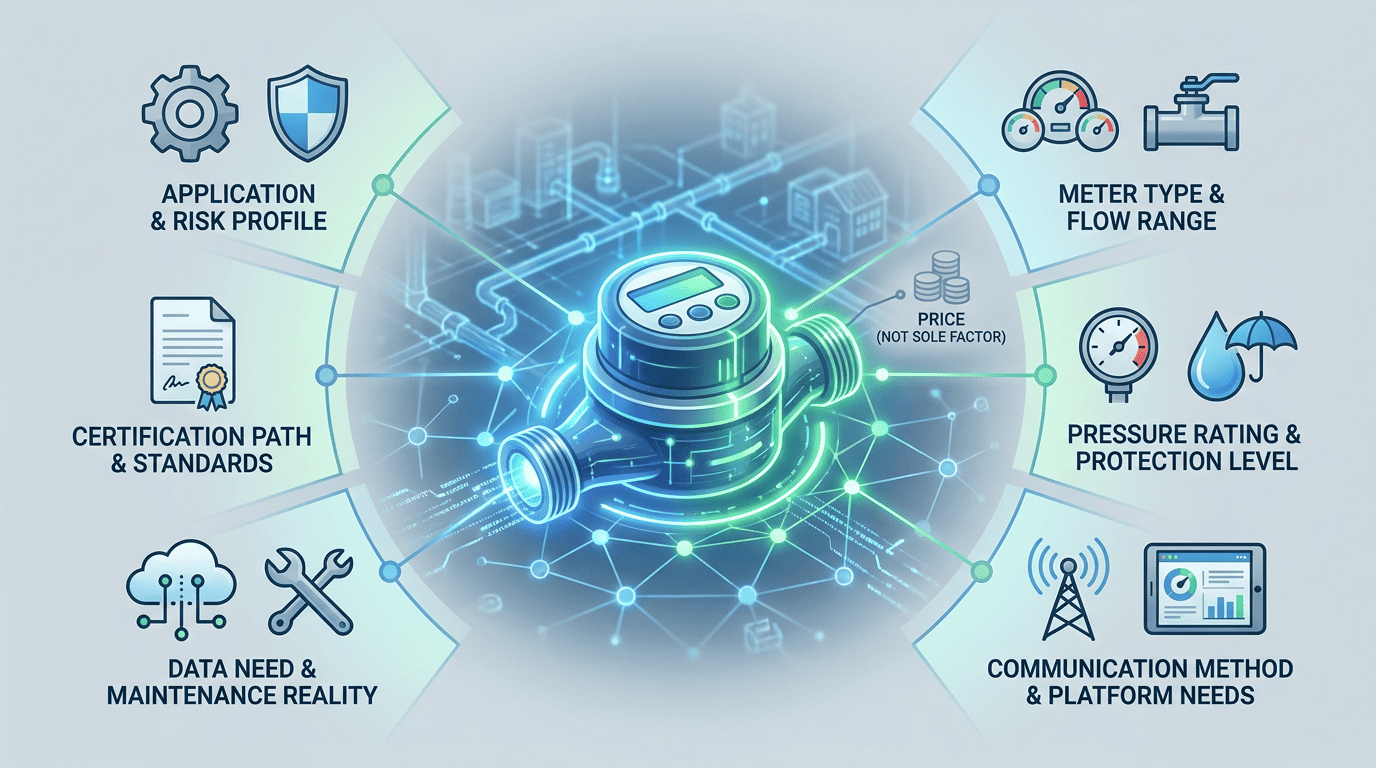
Der richtige Zähler ist der Zähler, der zum Projekt passt
Für ein Wohnprojekt sind möglicherweise kompakte Zähler erforderlich, starke Empfindlichkeit bei geringem Durchfluss, und einfache Plattformzuordnung. Ein Industriestandort benötigt möglicherweise größere Abmessungen, höheres Druckvertrauen, und starke Veranstaltungsrekorde. Eine überflutete Kammer benötigt möglicherweise IP68-Schutz. Ein stadtweites Projekt erfordert möglicherweise eine lange Akkulaufzeit und eine stabile Kommunikation.
Für Ultraschall-Haushaltszähler, Ich achte auf Weitbereichsmessung, geringer Anfangsdurchfluss, Akkulaufzeit, Kommunikationsmöglichkeiten, Alarmanzeige, Leckerkennung, Trockenrohrerkennung, und Rückflussmessung. Diese Funktionen sind hilfreich, wenn das Versorgungsunternehmen sowohl Abrechnungsdaten als auch Einblicke in den Betrieb benötigt.
Außerdem prüfe ich, ob Fernauslesezubehör die Messung beeinflusst. ISO 4064 ermöglicht Fernlesegeräte, sofern nationale Vorschriften dies zulassen, Das Hinzufügen solcher Geräte darf jedoch die messtechnischen Eigenschaften des Messgeräts nicht verändern. Dieser Satz ist sehr wichtig. Ein Kommunikationsgerät sollte das Messgerät unterstützen, nicht ändern, wie es misst.
| Auswahlelement | Frage, die ich stelle |
|---|---|
| Durchflussbereich | Erfasst das Messgerät einen geringen Durchfluss?? |
| Druck | Entspricht es den Netzwerkbedingungen?? |
| Schutz | Kann es die Kammer überleben?? |
| Kommunikation | Funktioniert das Signal vor Ort?? |
| Anzeige | Kann das Außendienstteam die Messwerte überprüfen?? |
| Alarm | Kann es Undichtigkeiten aufweisen?, trockenes Rohr, oder Rückfluss? |
| Batterie | Entspricht der Wartungsplan der Batterielebensdauer?? |
| Plattform | Kann das Versorgungsunternehmen die Daten problemlos nutzen?? |
Was ist meine praktische Sicht auf die Zukunft??
Ich glaube nicht, dass die Zukunft der Wassermessung nur in intelligenten Geräten liegt. Ich glaube, es geht um bessere Entscheidungen, die auf besseren Felddaten basieren.
Die Zukunft der Wassermessung wird präzise Messgeräte kombinieren, zuverlässige Kommunikation, Cloud-Plattformen, Alarmlogik, Felddisziplin, und langfristige Wartung.
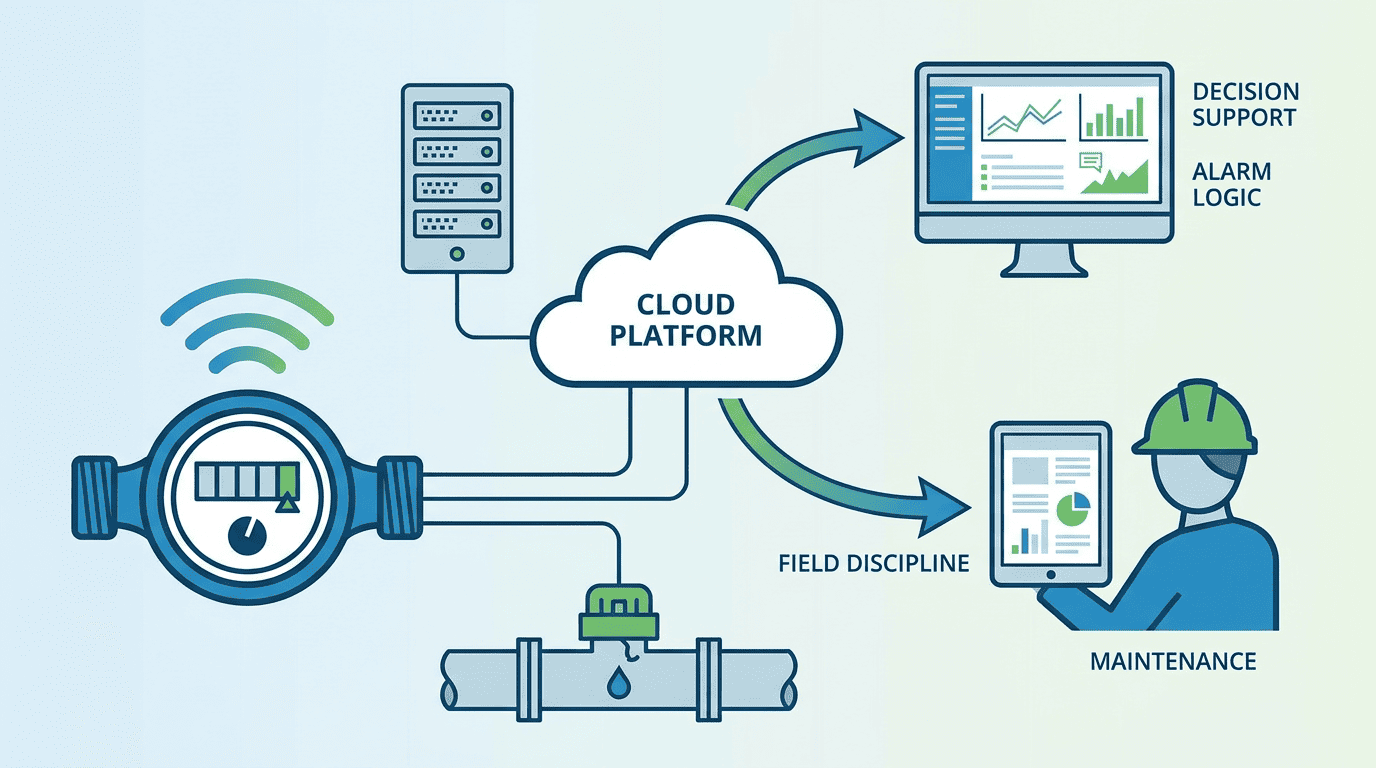
Smart Metering ist ein System, keine Abkürzung
Ich sehe die stärkste Zukunft in Systemen, die Technik verbinden, Abrechnung, Wartung, und Kundenservice. Ein Meter allein kann NRW nicht lösen. Eine Plattform allein kann Leckagen nicht beheben. Ein Kommunikationsmodul allein kann die Abrechnung nicht verbessern. Das gesamte System muss zusammenarbeiten.
Ein gutes, zukunftssicheres Wassermessprojekt beginnt mit der richtigen Produktauswahl. Weiter geht es mit Site-Checks. Es kommt auf eine saubere Installation an. Es wird nach der Inbetriebnahme nützlich. Es schafft nur dann einen langfristigen Wert, wenn das Versorgungsunternehmen die Daten nutzt.
Deshalb betrachte ich intelligente Wassermessung sowohl als technisches Projekt als auch als Managementprojekt. Auf der technischen Seite kommt es auf die Genauigkeit der Dosierung an, Druckfestigkeit, zuverlässige Elektronik, richtige Anzeige, geschützte Kommunikation, und aufgezeichnete Testdaten. Die Managementseite braucht klare Arbeitsabläufe, ausgebildete Leute, Dateneigentum, und Serviceverantwortung.
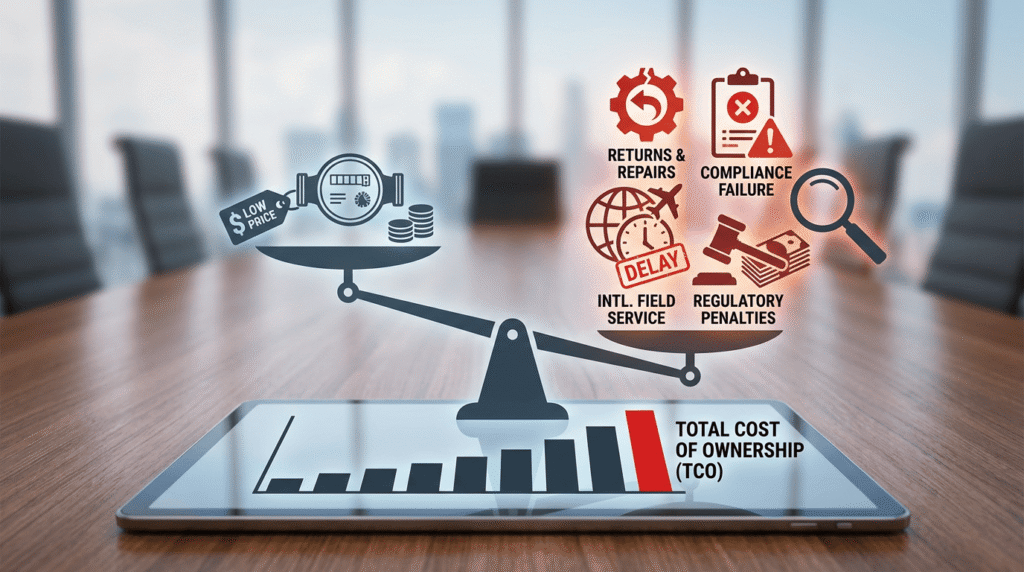
Wenn ein Projektteam nur ein günstigeres Messgerät möchte, Ich kann nur die Anschaffungskosten reduzieren. Wenn ein Projektteam ein besseres Messsystem wünscht, Ich kann dazu beitragen, das Lebenszyklusrisiko zu reduzieren.
Abschluss
Die Zukunft der Wassermessung ist vernetzt, datengesteuert, und praktisch. Die besten Ergebnisse sehe ich bei Smart Metern, Kommunikation, Installation, Inbetriebnahme, und Wartungsarbeiten als ein System.
Sie haben ein Projekt, das die richtige Zählerspezifikation benötigt?
Senden Sie uns Ihre Anforderungen – Rohrgröße, Strömungsprofil, Anwendungstyp, lokale Zertifizierungsstelle und Kommunikationsprotokoll – direkt an Leon. We’ll review and respond within 24 Stunden mit einer schriftlichen technischen Empfehlung.
Intelligente Zähler von YOUNIO: DN15–DN500 | NB-IoT, LoRa, M-Bus
Zertifizierungen: MITTEL B+D (Tschechisches CMI) | NSF/ANSI 61+372 | ACS (Frankreich)
📧 leon@younio.com | 📱 WhatsApp: +86-13666800173