



수도 시설은 공급되었지만 청구되지 않은 유량으로 인해 매년 수익을 잃습니다.. 관망에서만 이런 문제가 보이지는 않습니다. 계기의 저유량 측정 경계에서 자주 보입니다..
R400 초음파 수량계는 측정 가능한 저유량 범위를 낮추기 때문에 무수수 절감을 지원할 수 있습니다.. Q3 =인 DN15 미터의 경우 2.5 m³/h, R80은 Q1 =을 제공합니다. 31.25 L/h, R400은 Q1 =을 제공합니다. 6.25 L/h. 비교는 동일한 미터 크기와 Q3 값에서 이루어져야 합니다..
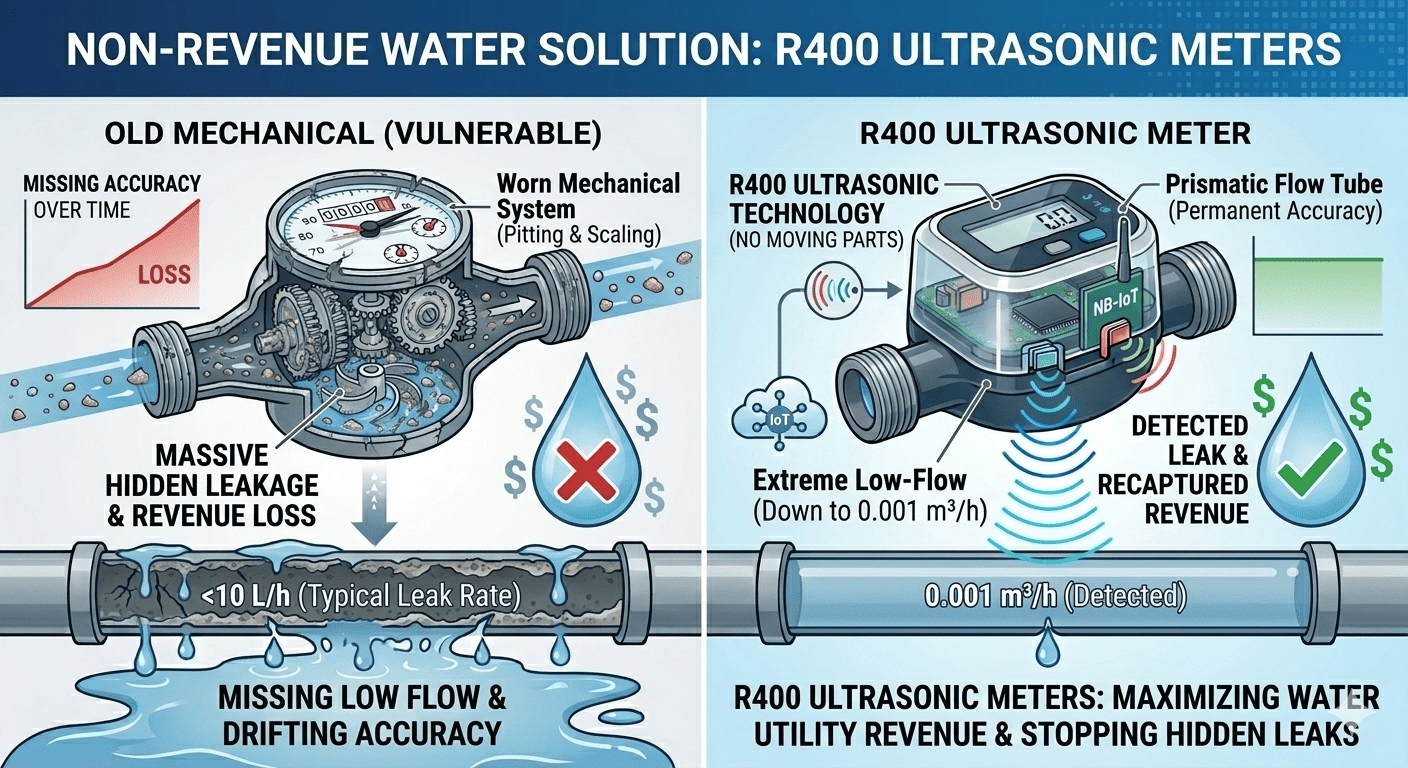
많은 분들이 배관교체를 먼저 알아보시는데요, 압력 구역, 또는 수리팀이 NRW에 대해 논의할 때. 나는 이러한 행동이 중요하다는 점에 동의합니다.. 미터 선택도 더 일찍 확인해야 할 것 같아요. 파이프는 물을 정확하게 전달할 수 있습니다, 그러나 계량기가 낮은 유량을 등록하거나 정확하게 측정할 수 없는 경우 유틸리티는 여전히 수익을 잃을 수 있습니다..
첫 번째 경계는 시작 유량입니다.. 이는 계량기가 전혀 반응하기 시작하는 최소 유량입니다.. 이 지점 아래, 미터는 0을 기록합니다. 두 번째 경계는 Q1입니다.. ISO 하에서 4064 / OIML R49 계측 프레임워크, Q1은 인증된 측정 범위의 최소 유량입니다., 미터는 정격 구역 내에서 필수 오류 규칙을 충족해야 합니다..
이 기사의 경우, DN15 주거용 계량기를 비교 기준으로 사용합니다.. YOUNIO 제품 사양표에는 DN15와 Q3 =이 나열되어 있습니다. 2.5 성능 매개변수의 m³/h. Q3이 확정되면, R 값이 의미 있게 됩니다.
표준 기계식 계량기가 숨겨진 저유량 소비량을 놓치는 이유?
기계식 계량기는 측정 부품을 움직이기 위해 충분한 물의 힘이 필요합니다.. 유량이 너무 적은 경우, 측정기가 시작되지 않거나 인증된 정확도 범위를 벗어나 작동할 수 있습니다..
Q3 =인 DN15 R80 기계식 계량기의 경우 2.5 m³/h, 두 가지 다른 저유량 경계가 있습니다.. 시작 유량은 절대 바닥입니다.. 이 기준점 미만, 기계적 움직임이 반응하지 않고 미터가 0을 기록합니다.. Q1 경계가 다릅니다.. 정의된 도량형 범위 내에서 가장 낮은 유량을 표시합니다..
Q3이 있는 DN15의 경우 = 2.5 m³/h:
| 매개변수 | R80 기계식 측정기 | R400 초음파 측정기 |
|---|---|---|
| 3분기 | 2,500 L/h | 2,500 L/h |
| R 값 | 80 | 400 |
| Q1 = Q3 ¼ R | 31.25 L/h | 6.25 L/h |
| Q1 경계의 차이 | — | 25 L/h 더 낮음 |
이는 R400 미터가 그 가치를 보여주기 위해 모호한 주장이 필요하지 않음을 의미합니다.. 수학이면 충분해요. 동일한 DN15 및 Q3에서 = 2.5 m³/h 조건, R400 미터는 Q1 경계를 다음에서 이동합니다. 31.25 L/h까지 6.25 L/h.
시작 유량과 Q1은 동일하지 않습니다.
기술 논의에서 시작 유량과 Q1을 혼합하지 않습니다.. 그들은 다른 점을 설명합니다.
| 지시자 | 의미 | 중요한 이유 |
|---|---|---|
| 시작 유량 | 미터가 볼륨을 등록하기 시작하는 지점 | 이 지점 아래, 미터가 0을 기록하는 동안 소비가 발생할 수 있습니다. |
| 1분기 | 인증된 측정 범위의 최소 유량 | 이 지점 아래, 미터가 선언된 정확도 범위를 벗어나 있을 수 있습니다. |
| R 값 | Q3을 Q1로 나눈 값 | R 값이 높을수록 Q3이 동일할 때 Q1이 낮아지는 것을 의미합니다. |
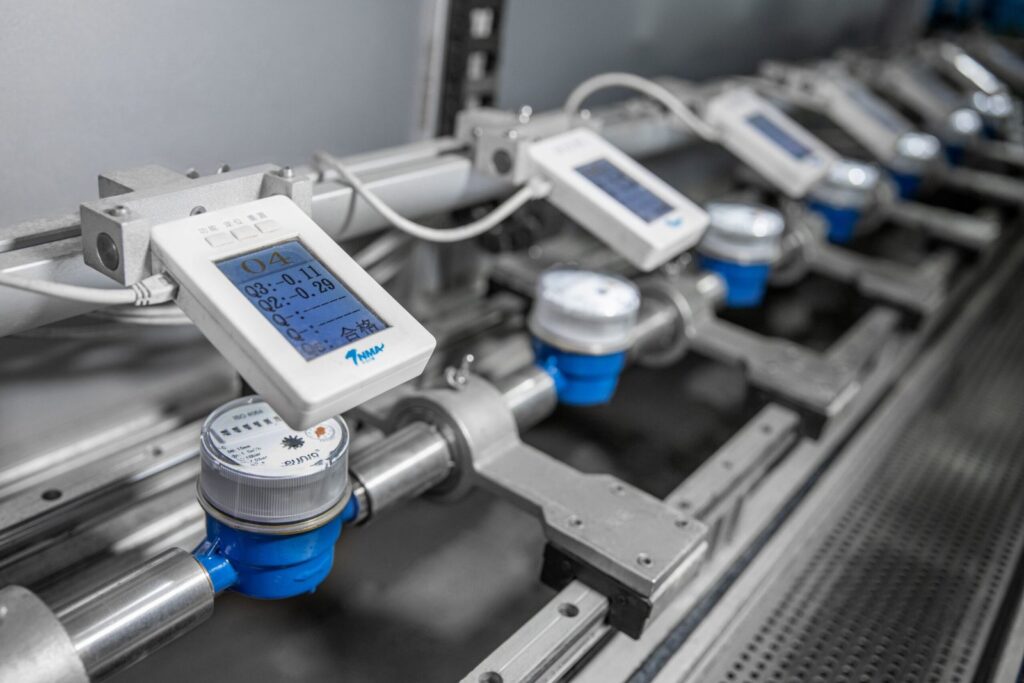
YOUNIO 주거용 초음파 스마트 수량계는 주거용 초음파 측정 기술을 사용하는 정적 수량계로 설명됩니다.. 동일한 제품 재질에서는 Q3/Q1 = R400의 넓은 측정 범위를 갖는다고 명시되어 있습니다.. 재료는 또한 최저 시작 흐름을 다음과 같이 설명합니다. 0.002 m³/h, 이는 다음과 같습니다 2 L/h, 제품 구성 및 테스트 조건에 따라 다름.
현장 비교, 나는 여전히 토론을 1미터 크기로 고정합니다.. DN15의 경우, 게시된 성능표는 Q3 =을 나타냅니다. 2.5 m³/h. R400으로, Q1은 2.5 ¶ 400 = 0.00625 m³/h, 또는 6.25 L/h. R80으로, Q1은 31.25 L/h. 이는 NRW 작업에서 중요한 저유량 정확도 격차입니다..
회수 가능한 청구 수익에 대한 수학
미터만으로 NRW를 제거할 수 있다고 약속하지 않습니다.. 계량기는 파이프 누출을 수리할 수 없습니다.. 계량기만으로는 불법 사용을 막을 수 없습니다.. 미터는 더 많은 저유량 소비량을 가시화할 수 있습니다., 설치 및 데이터 시스템이 이를 지원하는지 여부.
다음은 유틸리티에 대한 간단한 예입니다. 50,000 DN15 주거용 연결:
| 추정 | 값 |
|---|---|
| 이전에 기록되지 않은 연결당 저유량 소비량 | 5 L/h |
| 일일 저유량 기간 | 8 시간 |
| 주거 연결 수 | 50,000 |
| 연간 볼륨 | 50,000 × 5 × 8 × 365 ¶ 1,000 = 730,000 m³/년 |
| 물 요금 | $0.50/m³ |
| 잠재적인 회수 가능한 청구 수익 | $365,000/년도 |
이것은 예시적인 계산입니다.. 실제 복구는 네트워크 흐름 프로필에 따라 다릅니다., 연결 연령, 압력 조건, 미터 연령, 사용자 행동, 및 관세 구조. 이 예제는 방법을 보여주기 위해서만 사용됩니다.. 비즈니스 사례는 현지 야간 유량 데이터와 계량기 테스트 결과를 바탕으로 구축되어야 합니다..
초음파 측정으로 마모 관련 과소등록을 줄이는 방법?
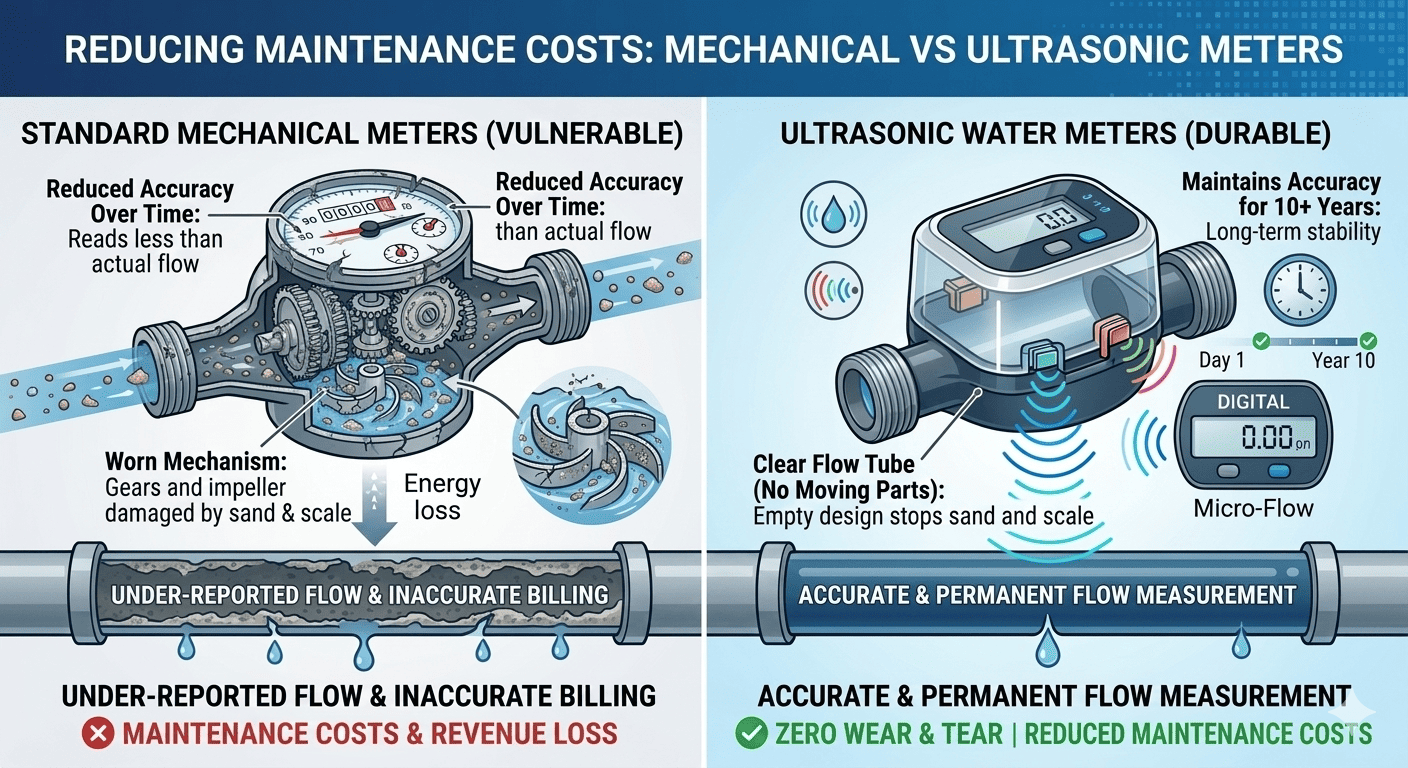
기계식 계량기는 움직이는 부품을 포함합니다.. 이 부분은 착용할 수 있습니다, 속도를 늦추다, 또는 물에 모래가 포함되어 있으면 잼이 발생합니다., 규모, 또는 다른 입자. 나는 이것을 단지 유지보수 문제로만 다루지 않습니다.. 나는 이를 장기적인 수익 위험으로 간주합니다..
초음파 측정기는 정적 측정 기술을 사용합니다.. YOUNIO 가정용 계량기는 초음파 측정 기술로 작동하는 정적 수량계로 설명됩니다.. 제품 재질에도 마모 부품이 없으며 우수한 장기 안정성과 신뢰성을 제공한다고 명시되어 있습니다..
더러운 물의 실제적인 문제
기계식 계량기가 어려운 수질 조건에 직면하는 경우를 자주 봅니다.. 모래가 미터에 들어갈 수 있습니다.. 규모가 커질 수 있음. 작은 입자는 측정 챔버나 임펠러에 영향을 미칠 수 있습니다.. 시간이 지남에 따라, 이는 미터 감도를 감소시킬 수 있습니다, 특히 낮은 유량에서.
초음파 측정은 측정이 회전 휠에 의존하지 않기 때문에 이러한 기계적 마모 경로를 줄입니다.. 유량계는 물 경로를 통해 초음파 신호를 사용하여 유량을 측정합니다.. 이는 측정기가 모든 현장 문제를 무시할 수 있다는 의미는 아닙니다.. 수질, 파이프 상태, 설치 위치, 전체 파이프 작동은 여전히 중요합니다. But the absence of wearing measuring parts removes one major cause of long-term mechanical degradation.
The YOUNIO product materials also describe a vacuuming electronic cavity to prevent glass fogging. I see this as useful in humid meter pits and outdoor environments, where display readability and electronic protection can affect field service quality.
| 저하 요인 | Mechanical Meter Risk | Ultrasonic Meter Advantage |
|---|---|---|
| Sand or particles | Moving parts may wear or jam | No wearing measuring parts |
| Scale formation | Measuring parts may slow down | Static ultrasonic measurement reduces mechanical friction risk |
| Long service period | Accuracy may drift due to mechanical wear | Product materials state long-term stability and reliability |
| Humid pit condition | Register visibility may decline | Vacuuming electronic cavity helps prevent glass fogging |
IoT 데이터가 공공 기관의 조기 조치에 어떻게 도움이 됩니까??
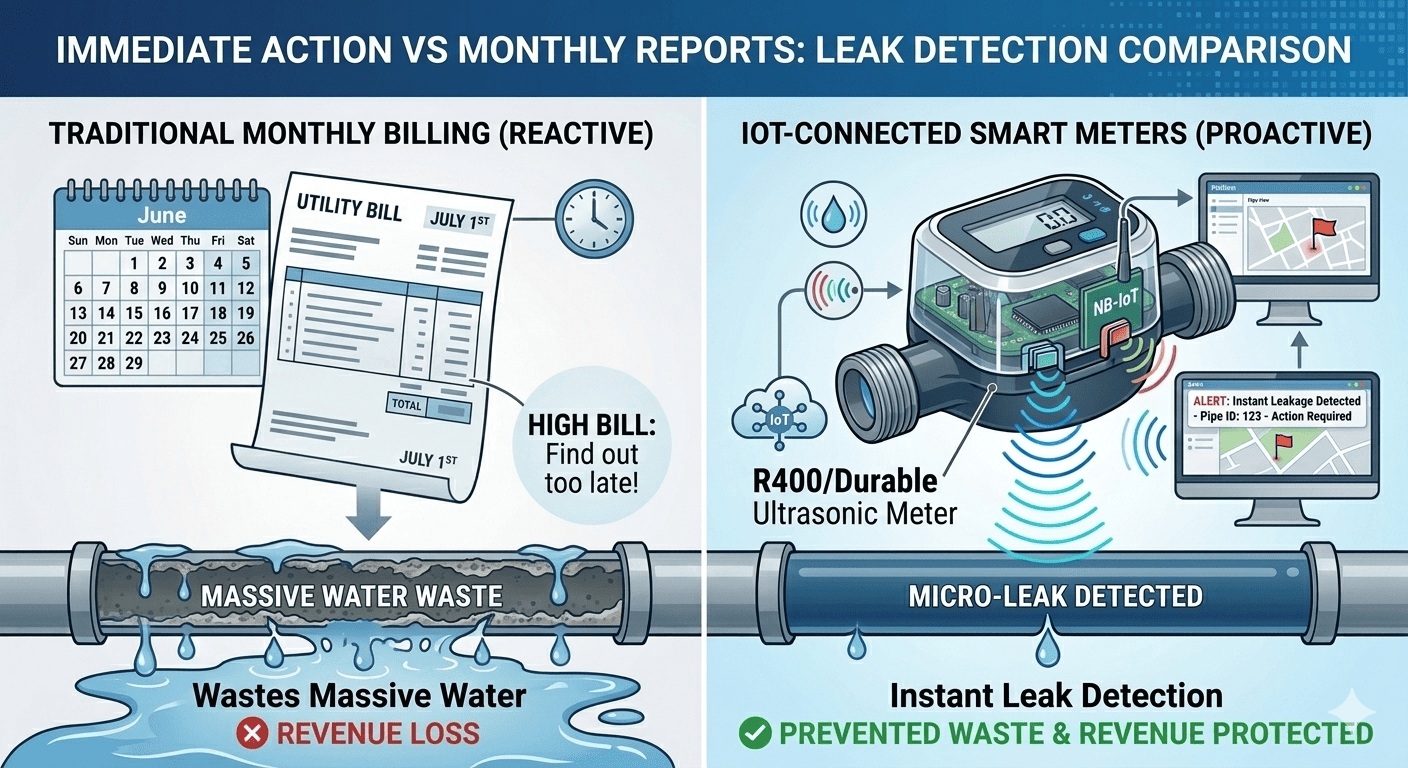
수동 읽기는 네트워크에 대한 지연된 보기를 제공합니다.. 오늘부터 누출이 시작될 수 있습니다, 하지만 유틸리티는 다음 청구 주기에만 결과를 볼 수 있습니다.. 나는 이 지연 시간을 단축하기 위해 스마트 미터를 사용합니다..
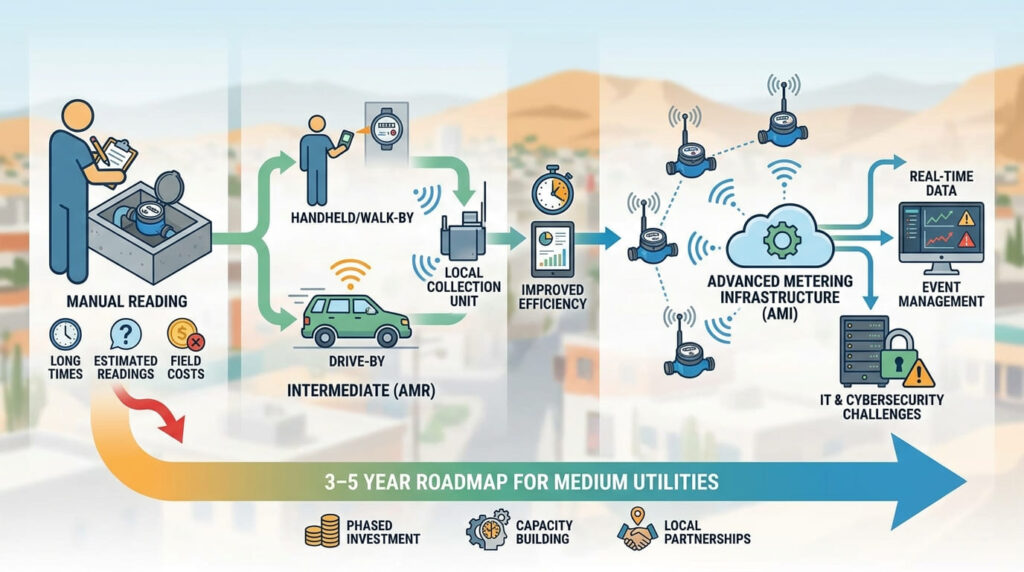
YOUNIO 주거용 초음파 스마트 수량계는 다양한 애플리케이션 시나리오를 위해 광범위한 IoT 기술과 통합된 것으로 설명됩니다.. 제품 자료에는 M-BUS와 같은 통신 옵션도 나열되어 있습니다., RS485, 맥박, 그리고 NB-IoT. 이는 미터를 측정 장치로서 뿐만 아니라 유용하게 만듭니다., AMR 또는 AMI 시스템의 필드 데이터 포인트로도 사용 가능.
늦은 발견부터 조기 경고까지
스마트 초음파 측정기는 누출 감지 및 건조 파이프 감지를 지원할 수 있습니다., 제품 소재를 기반으로. 또한 비정상적인 역류 또는 조작 관련 조건을 식별하는 데 도움이 되는 양방향 유량 측정을 지원할 수도 있습니다..
나는 이것을 “즉각적인 문제 해결”이라고 부르지 않습니다. 미터는 데이터를 보냅니다. 유틸리티에는 여전히 플랫폼이 필요합니다., 경보 규칙, 현장 승무원, 그리고 응답 과정. 그러나 더 나은 데이터를 사용하면 비정상적인 흐름과 운영 조치 사이의 시간을 줄일 수 있습니다..
제품 자료에는 LCD가 누적 용량을 표시할 수 있다고 명시되어 있습니다., 순간적인 흐름, 그리고 풍부한 알람 정보. 현장 기술자가 시운전 중에 로컬 디스플레이를 확인해야 할 수도 있기 때문에 이는 중요합니다., 유지, 또는 불만 조사.
| 데이터 기능 | 전통적인 수동 계량 | 스마트 초음파 계량 |
|---|---|---|
| 누출 가시성 | 독서 주기 이후에 자주 발견됨 | 누출 감지 지원 |
| 건식 파이프 상태 | 원격으로 식별하기 어려움 | 건식 파이프 감지 지원 |
| 역류 또는 변조 | 일반적으로 현장 점검이 필요합니다. | 양방향 유량 측정 지원 |
| 데이터 액세스 | 수동 읽기 | M-버스, RS485, 맥박, 및 NB-IoT 옵션이 나열됨 |
| 로컬 디스플레이 | 기본 레지스터 | 볼륨이 있는 LCD, 흐름, 및 알람 정보 |
조달이 구매 가격 이상이어야 하는 이유?
낮은 구매 가격은 입찰 평가 중에 매력적으로 보일 수 있습니다.. 나는 이 압력을 이해한다. 그러나 나는 또한 가장 낮은 단가가 항상 가장 낮은 수명 주기 비용을 의미하는 것은 아니라는 것도 알고 있습니다..
계량기 교체 프로그램은 구매 가격을 고려해야 합니다., 저유량에서의 정확도, 현장 수명, 배터리 성능, 보호 수준, 통신 비용, 트럭 롤, 불만 처리, 및 데이터 플랫폼 준비.
YOUNIO 제품 자료에서는 가정용 초음파 측정기를 배터리로 구동되며 수명이 1년 이상인 것으로 설명합니다. 10 연령. 제품 자료에는 수중 IP68 보호 수준도 명시되어 있습니다.. 많은 주거용 계량기가 습한 챔버에서 작동하기 때문에 이 두 가지 사항이 중요합니다., 야외 구덩이, 또는 배터리 교체 비용이 비싼 곳.
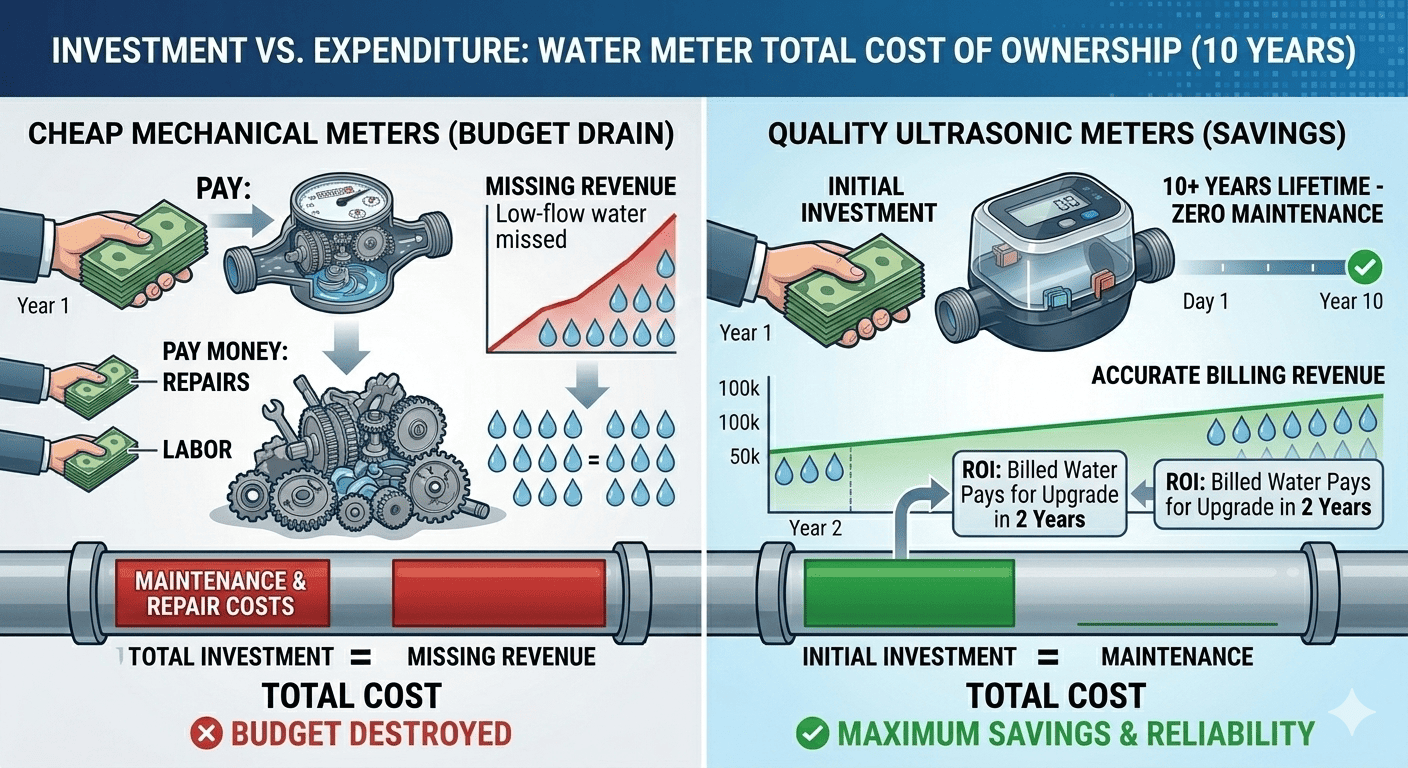
총 소유 비용에는 로컬 데이터가 필요합니다.
나는 모든 R400 초음파 측정기 프로젝트가 고정된 시간 내에 회수된다는 말을 피합니다.. ROI 타임라인은 현지 요금에 따라 다릅니다., 저유량 이벤트 수, 미터 연령, 압력 프로파일, 누출 거동, 통신 비용, 그리고 인건비.
좋은 비즈니스 사례는 파일럿 프로그램에서 시작되어야 합니다. DN15 연결의 샘플 그룹을 테스트하겠습니다.. 나는 오래된 미터 판독 값을 비교할 것입니다, 새로운 미터 판독값, 밤의 흐름 패턴, 경보, 고객 불만, 및 실험실 검증 데이터. 그런 다음 측정된 결과를 기반으로 프로젝트 규모를 조정합니다., 일반적인 주장이 아닌.
| 비용 범주 | Mechanical Meter Risk | R400 초음파 측정기 고려 사항 |
|---|---|---|
| 저흐름 청구 | 낮은 유량에서 과소등록 위험이 더 높음 | Q3이 고정되면 R400은 Q1을 낮춥니다. |
| 기계적 마모 | 움직이는 부품의 성능이 저하될 수 있습니다. | 제품 재료에 마모 부품이 명시되어 있지 않습니다. |
| 배터리 서비스 | 미터 유형에 따라 다름 | 이상 10 명시된 배터리 수명(년) |
| 챔버 홍수 | 보호 수준은 다양함 | IP68 수중 보호 명시 |
| 데이터 가치 | 수동 또는 제한된 데이터 | IoT 통합 및 통신 옵션 지원 |
| ROI | 사이트 데이터에 따라 다름 | 현지 흐름 및 요금 조건을 바탕으로 계산해야 합니다. |
NRW 프로그램에서 R400 미터를 사용하기 전에 확인해야 하는 현장 조건?
R400은 마법의 라벨이 아닙니다. 나는 결과를 기대하기 전에 현장 상황을 확인한다.
첫 번째, 미터 사이즈와 Q3를 체크한다. 초록에서는 R80과 R400을 비교하지 않습니다.. 먼저 1미터 크기를 선택합니다. DN15의 경우, 나는 Q3 =을 사용한다 2.5 이 사양을 선택한 경우 m³/h를 기준으로 합니다..
두번째, Q1을 조사한다. 미터가 R400이고 Q3 = 2.5 m³/h, 그러면 Q1은 6.25 L/h. 미터가 R80이고 Q3 = 2.5 m³/h, 그러면 Q1은 31.25 L/h. 이것이 공정한 비교이다.
제삼, 기동유량을 확인한다. YOUNIO 소재는 매우 낮은 시작 흐름을 설명합니다. 0.002 m³/h, 같음 2 L/h, 제품 특징에. 프로젝트가 다른 내부 또는 현장 테스트를 거친 시작 흐름 값을 사용하는 경우, 테스트 조건과 함께 해당 값을 게시하겠습니다..
네번째, 설치등급 및 배관상태를 확인합니다. 고정확도 측정기는 여전히 올바른 설치가 필요합니다.. 측정 중에는 파이프가 가득 차 있어야 합니다.. 마른 파이프 감지는 비정상적인 상태를 식별하는 데 도움이 될 수 있습니다., 하지만 올바른 유압 설계를 대체할 수는 없습니다..
제오, 통신 및 헤드엔드 시스템을 확인합니다.. 스마트 미터는 더 풍부한 경보 데이터를 생성할 수 있습니다., 하지만 유틸리티에는 다음을 수신할 수 있는 플랫폼이 필요합니다., 가게, 나누다, 그리고 그 데이터에 따라 조치를 취하세요. 그렇지 않으면, 알람 기능은 사용되지 않는 기능이 됩니다.
결론
R400 초음파 측정기는 도량형 수준에서 NRW를 처리합니다.. Q3이 있는 DN15의 경우 = 2.5 m³/h, 그들은 Q1을 31.25 R80 미만의 L/h ~ 6.25 R400 이하 L/h. 입찰에서 미터 크기를 지정할 때 기술이 가장 강력합니다., 3분기, 1분기, 시작 유량, 설치 조건, 배터리 수명, 의사소통 방식, 및 알람 데이터 처리.