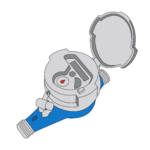
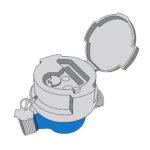

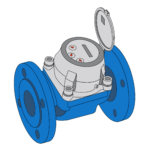

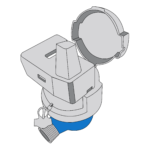


A aqua metri tacite falli potest. Permitto confido, reditus, tempusque tractamus ut unum tempus emptionis pro lifecycle dignissim.
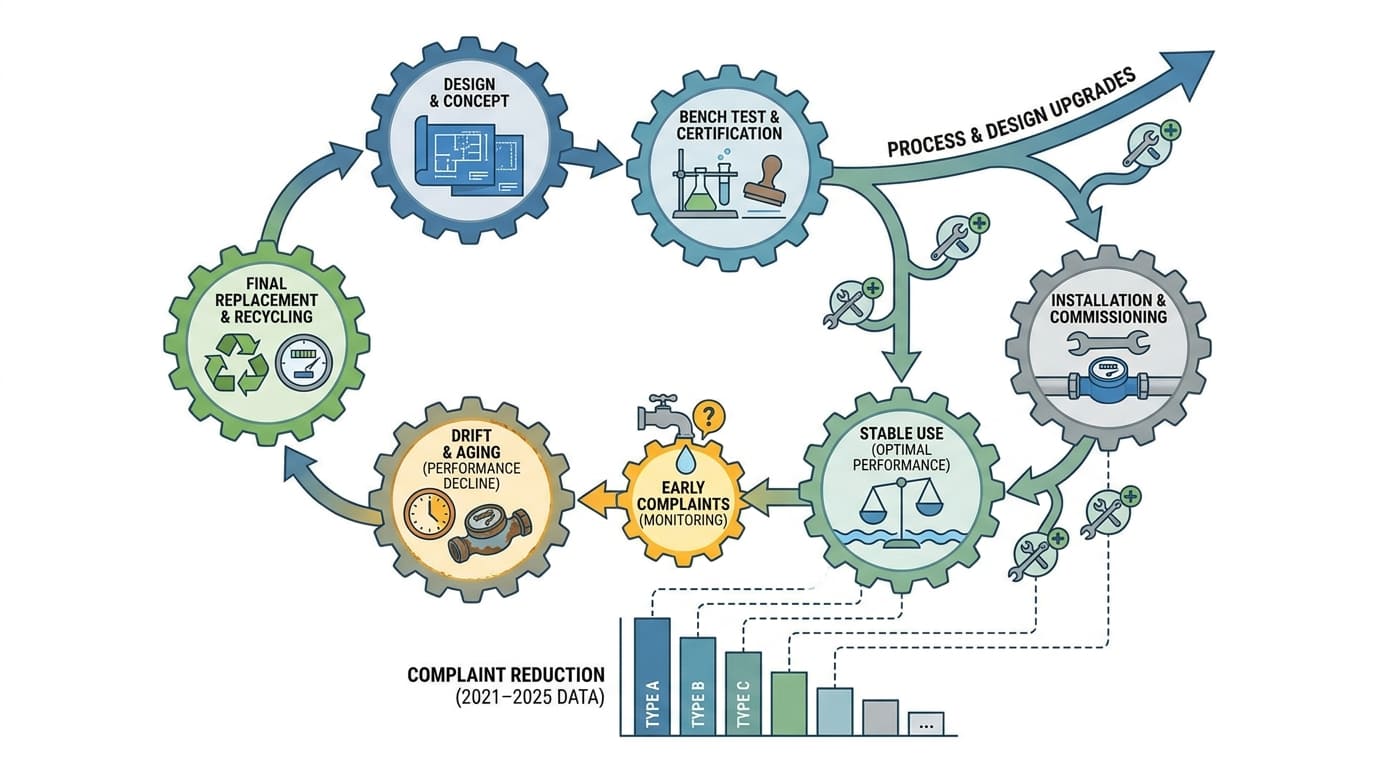
Curo aqua metri lifecycle substitutio per vestigia singula metri a design, scamnum test, certificatione, institutionem, primis querelis, firmum usum, summa, canus, et finalis repositum. Mea 2021-2025 notitia querimoniam ostendit quod unumquemque processum vel consilium upgrade potest ad manifestam querimoniam generis reducere.
Ego spectare ad querimoniam in uno post-Sales forsit. Nunc illud video signum e tota vita. A censu stillante, Lectio in malum, debilis pugna terrorem, vel inverso fluit nuntius potest omnia referre ad designandum, institutionem, aqua qualitas, aut aetate. Haec sententia me adiuvat quandonam reficere debeam, cum sit reponere, et si mutare productum sive processus in altera batch.
Factory Birth: Design, Testis et Certification?
A infirmi officinam dolor gignit postea processus ager. Omnem querimoniam in situ emptoris solvere non possum, si periculum in consilio natus est.
Committitur aqua metri lifecycle ad consilium, materia electionis, productio imperium, scamnum temptationis, et certificatione. A stabilis metri metologiae praecepta manifesta debent occurrere, factum internum compescit, et ius approbationes antequam ad utilitatem project.
Quid Reprehendo ante Shipment
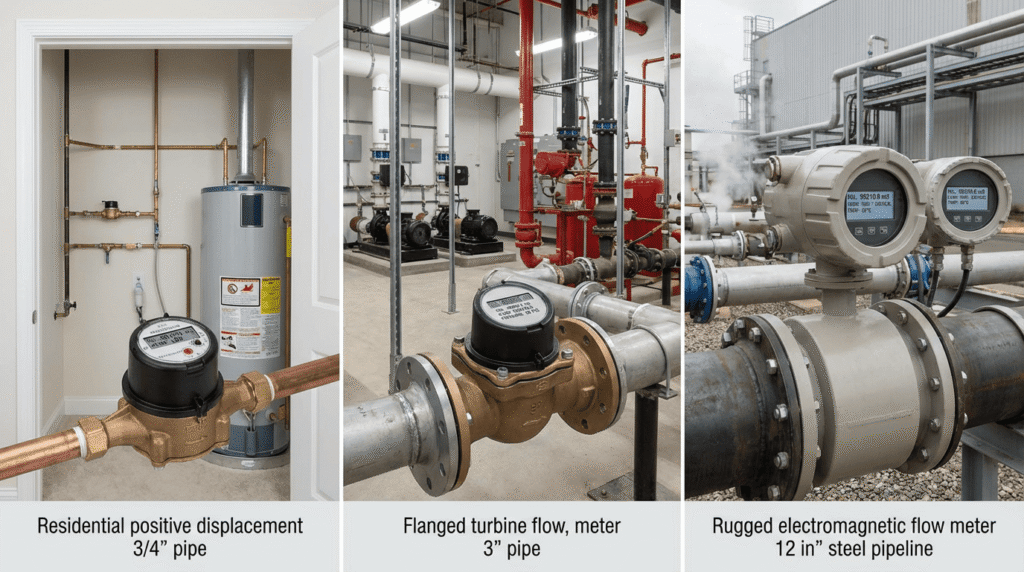
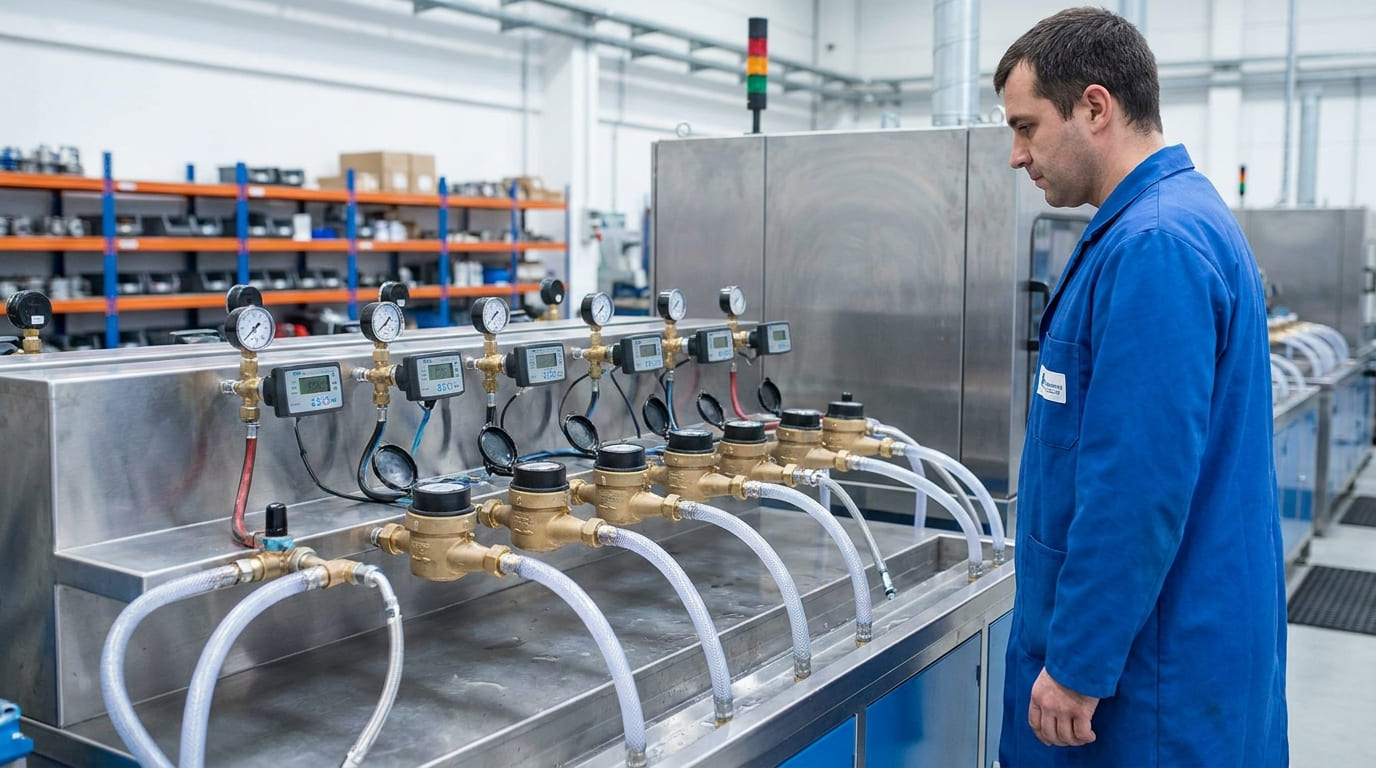
Facio scaena primo periculo portam officinam. Younio tegit productum genera a 15 mm to 300 mm, inter singula jet, multi jet, volumetric, Woltman, et electronic types, ideo oportet me inserere ius productum familiae cum ius officium punctum. Mihi quoque signis opus est ut lingua vulgari. Smart ultrasonic meters can be designed around ISO 4064:2014, OIML R49-2013, et MED, sic officinas test eventus comparare possum cum regulas receptas pro personali sententia. Ego attendas ad automation, quia errorem humanum minuit. Societas automatariorum aquae metri verificationis machinas et camera-based instrumentorum verificationis ad brevem fluxum temporis testium et ad efficientiam probationem elevandam adhibita est, quae etiam productum species sustinet. ISO ratio, comprehendo ISO * 9001 ac "5 in 1" procuratio setup, plus CE/MED et NSF/ANSI 61 & 372 approbationes, documenta mihi dat, ut tenerae commissiones et auditores mihi ostenderem.
| Factory porta | Quod expecto | Quid interest? |
|---|---|---|
| Design review | Influunt range, corpus, mandare, modulus | Ego reducere iniuriam productum lectio. |
| scamnum test | Q1, Q2, Q3, Q4 puncta | Metrologiam ante confirmo sit amet. |
| Certification | ISO, MED, CE, NSF, ACS | Demitto et obsequio periculo tenera. |
| Processus record | Batch data ac test omnia | Postea querelis citius indagamus. |
Primo anno in Field: Early-Vita Exitus?
Primus annus errata abscondita celeriter exponere potest. Multas quaestiones, quae veniunt ex institutionem video, transportari, occasus, seu mane pars infirmitatem.
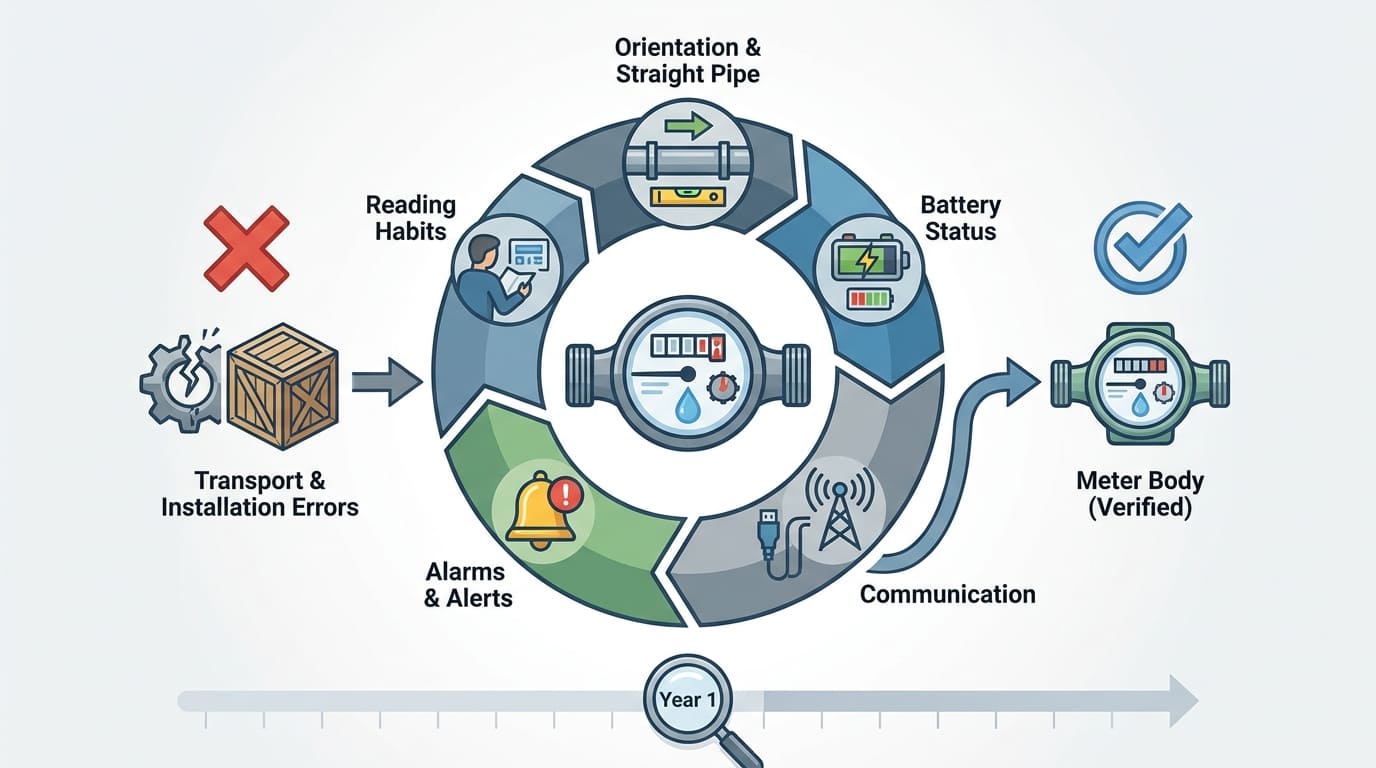
Annuit primo vitae primo anno querelis tractamus. Inhibeo institutionem versus, recta pipe sections, altilium status, communicationis, terrores, et mos lectionis habitus antequam de corpore ipso metri iudicem.
Quid mane querelae Solent Dic mihi
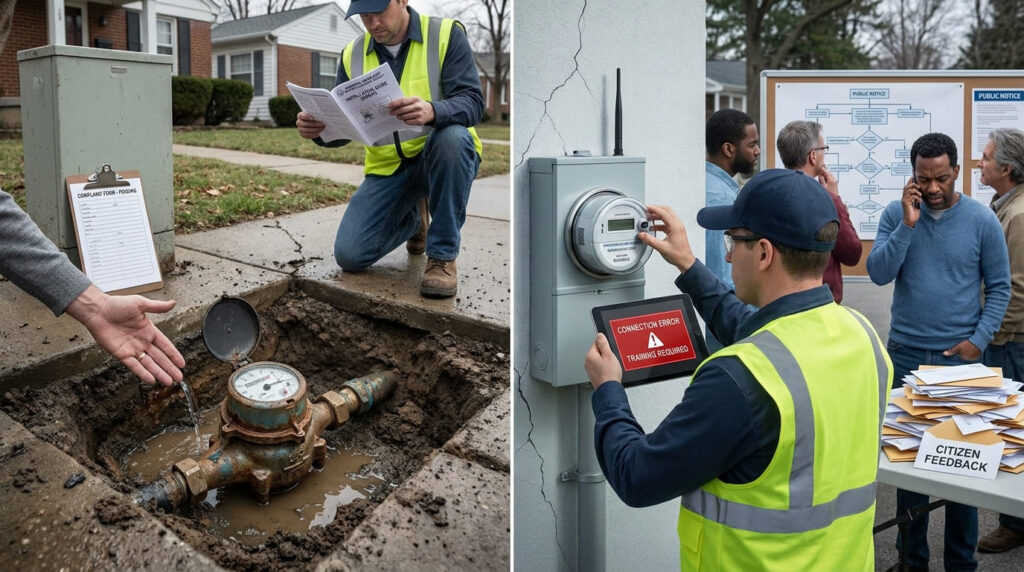
Non reprehendo quod primum productum. Quaero quid inter bancum et tibiam mutatum sit. Metrum callidum ultrasonicum condere potest et errorem informationem referre cum aqua non sit in pipeline et nullum signum in transductore. Potest deprehendere aquam longam currentem in Leak et longum tempus aquae magnae quam maxime fistulae dissiliunt, et etiam potest deprehendere pravam institutionem directionem per terrores fluere directionem. Haec aedificata in terroribus adiuva me productum difficultates ex situ difficultates separare. Ego quoque reprehendo casibus practical tribulationis. Lectio negativa demonstrare potest directionem fluxus converso, et abnormes vel temere pulsus notitia metri aquae frigidae potest venire ab iniuria institutionis positionis, brevis ancipitem recta sectiones, magnus flexuram, tibia magna vel diametro ante metrum. Installation should follow the site engineering design, et mutationes sine fectum permission non licet.
| mane indicium | Primum reprehendo | Mihi verisimile actio |
|---|---|---|
| Lectio negans | Influunt directionem | Ego rectam directionem vel inspicere valvae layout. |
| Random data | Tibia layout et aqua gradu | Ego adjust institutionem seu locum recensionis design. |
| Humilis altilium terrorem | altilium status | Ego reponere altilium vel reprehendo repono historia. |
| Longum terrorem fluxus | Leak vel usor mores | Ego cognoscere ultrices ante repositoque meter. |
Anni 2-5: Operatio stabilis et PERFLUO?
Stabilis annis potest me neglegentem. Ut quaeror, tardus accurate pereffluamus usque querelis, exosculatio hiatus, or * NRW numbers force attention.
Ego uti annis 2-5 spectare trends, non solum defectis. Lectio data comparavi, querimoniam rate, humilis-flow perficientur, communicationis qualitas, et batch historia ut summa apud users animadverto eam.
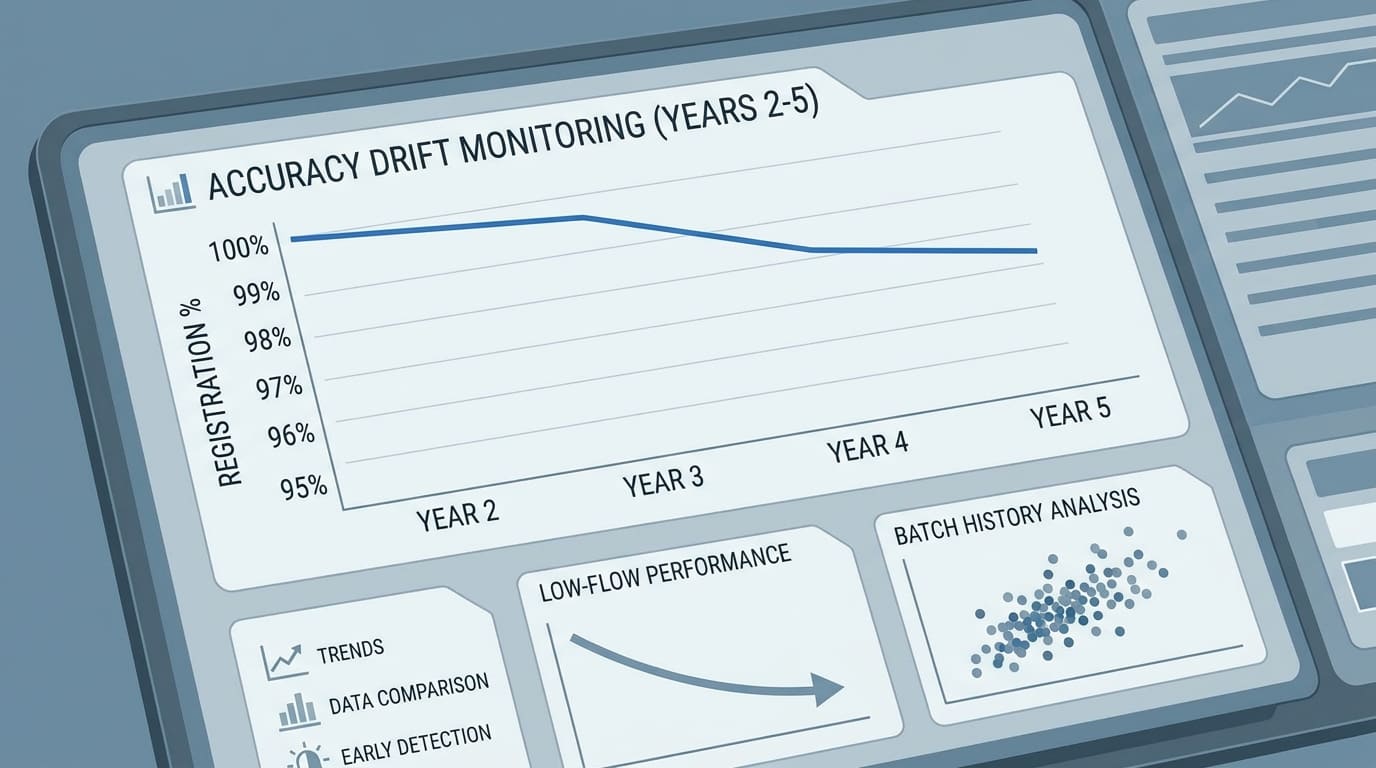
Quomodo Lego Speculum Medio-Vitae
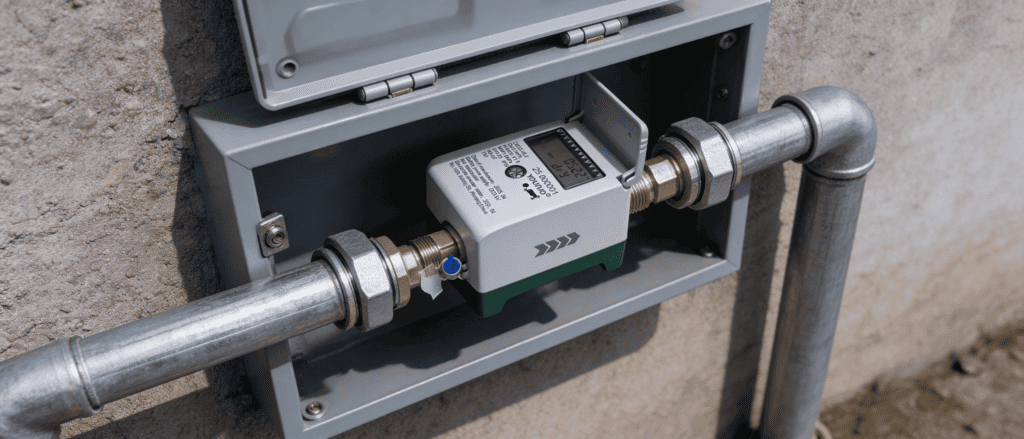
Exspecto pauciores primos defectus post primum annum. Ego quoque expecto in periculo accurate mutationem lentum ac deposita, particulae, ac movere partes penitus cum meter. Nam ultrasonic metra, Ego magis focus in signo qualis, altilium conditio, et terrorem historiae, quia mensurae principium utitur technologiae transitoriis ultrasonicis et signo processui ad inveniendum velocitatem fluentem. Hoc genus metri rate fluxus minimum metiri potest 0.01 m³ / h et offert parva magnitudine, alta stabilitas, et fortis anti-impedimento facultatem, Itaque mediae vitae calliditate saepe acti sunt pugnae et institutiones factorum potius quam vestium mechanicarum. Nam metris mechanica, Aspicio plus apud lapsum, arena, scandere ", et humilis-fluxus sensus. Non utar una regula omnium productorum. Ego coetus metris per genus, magnitudine, aqua qualitas, pressura, ac institutionem zonam. Et comparare querimoniam curvae per batch.
| Medius vita item | Mechanica meter spectat | Dolor de meter |
|---|---|---|
| summa diligentia | gerunt et deposita | Signum iter et calibratiis stabilitas |
| Lectio damnum | Subcriptio vel accessum exitus | Communication aut altilium exitus |
| Querimonia botri | Batch processus seu situs aquae | Firmware, modulus, aut antennae occasum |
| Tutela electionis | Tersus, test, aut reponere | Diagnose, renovatio, aut reponere moduli |
Uti meo 2021-2025 data est doctrina lima. Querelam querimoniam exspecto omissis post unumquodque consilium vel processum upgrade .. Quod gutta mihi argumentatur quod vita procuratio operatur.
Vultus pro Reliable aqua Metrum Supplier?
YOUNIO metra aquarum mechanica et ultrasonica ab DN15 ad DN500 fabricat, MEDIUS certificatus et probatus est ISO 4064. Free exemplaria et officinas test tradit available for qualified buyers.
Nuper-Vita: gere, Aqua Qualitas et Seneca Effectus?
Veteribus metris non semper magna. Saepe videre parva sub adnotatione, annuit infirma, et crebris querelis ante manifesta defectum apparet.
Ego tractare nuper-vita metris ad periculum bonorum. Aevum recenseo, aqua qualitas, querimonia historia, accurate test eventus, vita altilium, et postea pretium antequam decernere proximum gradum.
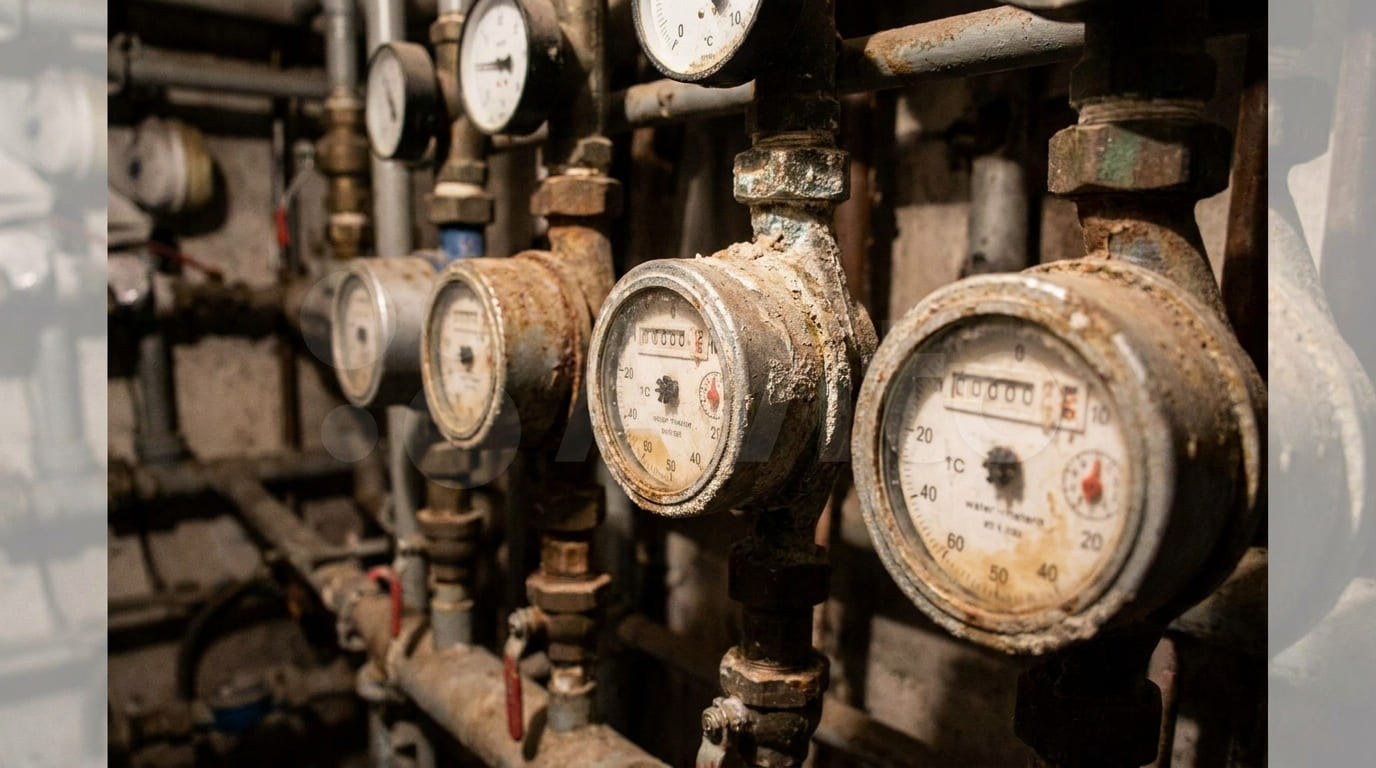
Quid Age mutat sententiam
Non utor aetate solum ut tortor felis. Age res, at aqua qualitas et officium cyclum magis refert in multis retiacula. A meter in clean, firmum aqua aetate lente. A sordida aqua meter in, pressura offensionibusque parvis fragile, aut pauper pipe condiciones ut massa multo ante. Nam dolor metris, Etiam respiciunt altilium consilium fines. Mensa ultrasonica metrum parametri ostendit a 3.6 V Lithium altilium (ER34615) cum altilium vita saltem octo annos et consummatio infra 0.2 mW*, sic cogito altilium et meter lifecycle simul pro tractandis altilium ut parva detail. Eadem scheda etiam libros pressurae iacturas (p40 pro DN15-DN20 et p63 pro DN25-DN40), EMC genus E1, et medium temperatus fines, sic utar plena technica range cum iudico agri canus. Comprobatio etiam sequitur Sinica JJG 162-2009 praeesset frigidae aquae metris, quae mihi legitimum fundamentum periodicum re-tentat.
| miscueratque elementum | Quod video | Quid decernere? |
|---|---|---|
| gere | Inferioris sensus | Ego temptare vel reponere in meter. |
| Scale | Tarda responsio | Ego reprehendo aquae qualitatem et metri genus. |
| Pugna aetas | Virtus terror | Ego reponere altilium vel plena metri. |
| Repetita querela | Humilis fiducia | Ego priusquam fama damnum adolescit reponere. |
Quam Complaint curvae Mutare Post Design Emendationes?
Querela curva plus quam una fama docere potest. Amitto emendationem casu tantum prope tesseras singulatim.
Comparabo querimoniam curvarum ante et post singulas designationes seu processus upgrade. Si unum genus mittit querimonia evidenter, Mutationem servavi et eam ad proximam batch applicare.
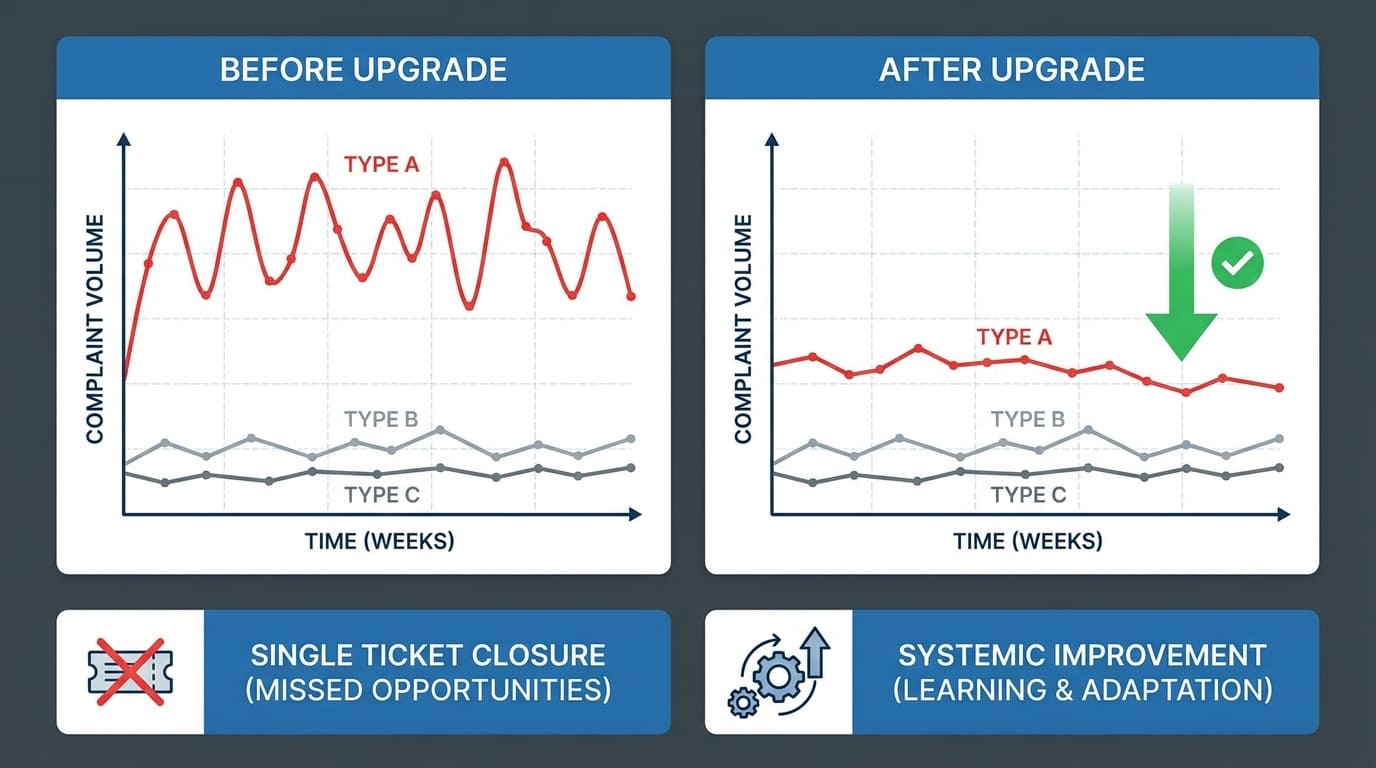
Quid me Coniungere querelae cum Product Mutationes
Modus simplex utar. Define unius generis querimoniam, unum massa rhoncus, unum productum versionem, et olim fenestra. Deinde compara curvam ante et post mutationem. Mea 2021-2025 notitia manifesta exemplum. Post processum consiliove upgrades, related querelis stillabunt in visibili modo. Exempli gratia, si temere legendi querelae incidant postquam ego meliorem institutionem ductu et modulo protegens, Non dicam fortunam. Nota quod in lifecycle melius. Haec sententia aequet officinam partem. YOUNIO in productum collocavit R *&D et in apparatu productio auto-evoluta ut machinis obfirmatis, Fibulae anulum densis inventa, et aqua metri densis machinis, quae productio efficientiam improved, salvus sumptus, et erexit productum species. Camera-fundatur verificationis fabrica remotum manualibus metri lectionis et metri memoria a test processus, quae errorem humanum secare ad fontem.
| Phasellus type | Querela type I track | Quae res similis |
|---|---|---|
| Structura mutatio | Lacus vel fractio- nem | Paucioribus idem-pars petit |
| Test modum mutatio | Sagaciter controversias | Paucioribus lab casibus rejectionis |
| OMNIBUS mutatio | Lectio damnum | Paucioribus tesseras communicationis |
| Manual mutatio | Institutionem errores | Paucioribus locum correctionis casibus |
Non abscondo malum curvarum. Utar ut altera actio. A plana curva sit mutatio non pervenerunt usque ad causam realem.
Cum ponere, Cum reponere?
Iniuriam interdum consilium corrumpit pecuniam. A nuper postea consilium querelis creates, exosculatio damnum, et pressura a users.
metrum contendo cum culpa localis est, humilis periculo, facile cognoscere. Ego reponere, cum accurate, confido, salus, crebris querelis, aut lifecycle sumptus fit inconveniens.
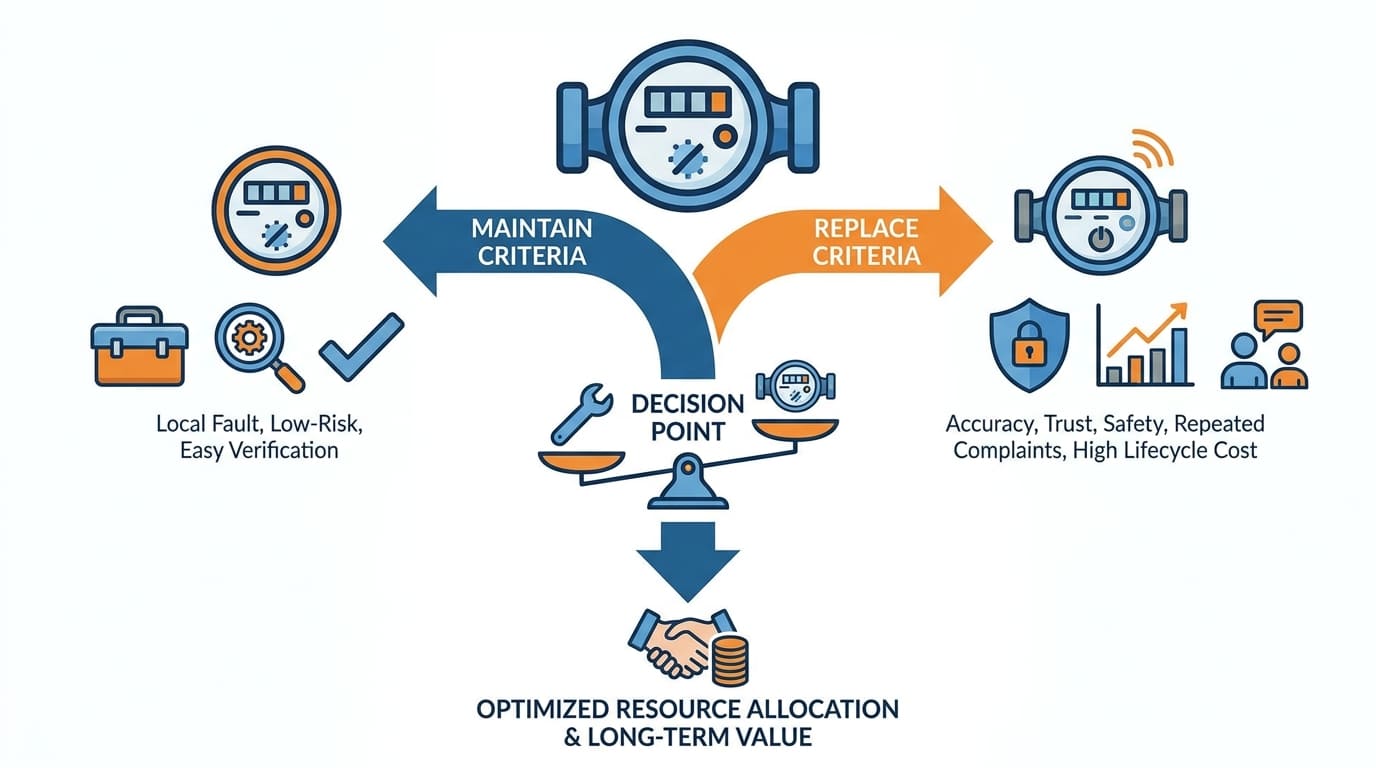
Mea Decision Tabula
I incipere querimoniam. Rogo ergo an metrum adhuc intra suam utilem vitam technicam et oeconomicam sit. Si dolor metri ostendit low altilium, Inhibeo an pugna restitui possit et an reliqua metri bene perficiunt. Instructio materia dicit humilis altilium debet quam primum restitui. Lectio negans per meter si ostendit, Primum reprehendo si fluxus directionis praeposterus, et si non, Ego contact elit statim. Si meter influunt, non temperatus signo, Non detraham manually, et in elit contact, quia dux dat directam admonitionem. Muneribus detectis uti etiam aedificatis ut sententiae input. Ratio potest referre ac copia Leak, ruptis, nullus signum, et pravam partem rerum, ideo videre possum culpam historiae in administratione systematis antequam metrum attingam. Haec parva praecepta ne actio iniuria agri.
| Casus | Dico quod | Ego reponere cum |
|---|---|---|
| altilium terrorem | Metra sunt partes tenerae et signatae subtiliter | Metrum vetus aut laboris sumptus est nimis alta |
| Inversa fluxus | Installation est iniuriam | Internum damnum consequitur eventu |
| accurate querimonia | Lab test transit | Lab test fallit aut fide victus est |
| Communicatio damnum | Modulus vel occasus est recoverable | Repetita damnum pertinet exosculatio |
| ultrices | Gasket vel iuncturam exitus patet | Corpus seu structuram periculum est inventus |
Ego quoque mos fiducia in consilium. Refectio vilis pretiosa fieri potest, si eadem domus proximo mense iterum queritur.
Building a Lifecycle Plan for Your Metre Fleet?
A meter classe sine lifecycle consilio fit reactionem machinam. Tantum vident difficultates post customers queri.
Ego aedificare lifecycle consilium cum productum delectu, batch tracking, installation imperium, querimonia coding, periodica probatio, upgrade feedback, et cogitavit postea. Hoc consilium querelas in consilium et operationem data vertit.
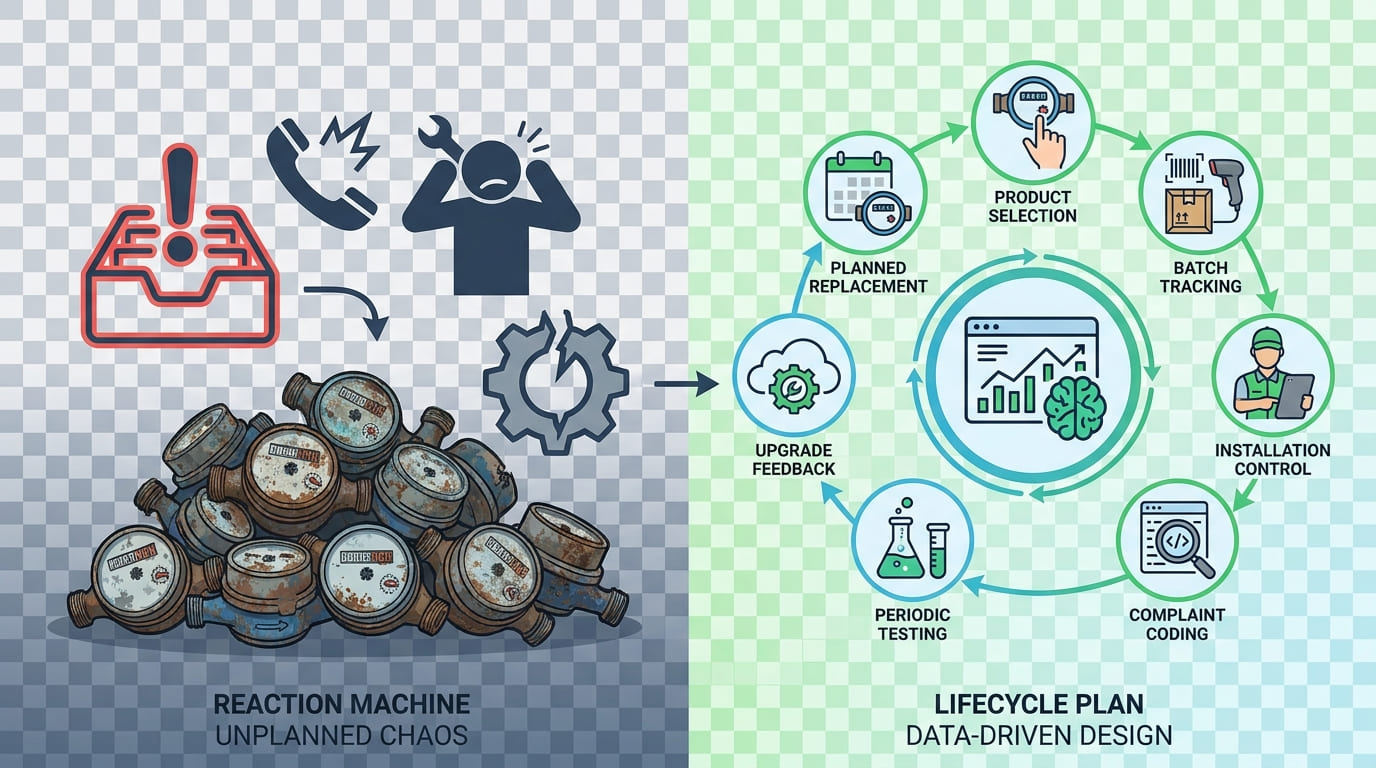
Classis mea Plan Framework
Ego antequam tenera consilium satus. I define type metri, amplitudo range, modus communicationis, certificatione opus, aquae qualitate periculo, et postea scopum. Custodio testimonia et technica files parati, quia YOUNIO plena ratio ISO administrandi inter ISO decurrit 9001, ISO 14001, ISO 45001, ISO/IEC 27001, et tenet CE/MED et NSF/ANSI 61-2017 & 372-2016 libellorum, which I can map to tender requirements in different markets. I also design the complaint code list early. I avoid vague labels like “bad meter.” I use clear types such as negative reading, no reading, battery alarm, ultrices, accuracy dispute, burst alarm, and installation direction alarm. Smart meters report leak, ruptis, no-water signal, and wrong direction events to the management system, so I use these alarm types as structured data fields in the fleet system rather than as free text. For storage before installation, I also respect the guide, which keeps meters in the original package at 5–40 °C, in aere gratis ex mordax gasorum, and limits stacking height to five boxes.
| Lifecycle step | My control point | My data output |
|---|---|---|
| Electio | Meter type and standard | Approved model list |
| Institutionem | Direction and pipe condition | Site acceptatio record |
| Operatio | Lectio et terror recensionem | Menstrua tenoris chart |
| Querela | Code et radix causa | Querela curva |
| Cultura | Design seu processus mutatio | Ante-post comparationem |
| Replacement | Aevum, test, et pretium | Renovatio consilium |
Malo phased postea. Ego primum reponere zonis pessimi. Uti eventus ad adjust proximum tempus. Haec ratio budget tuetur et minuit querimoniam spicis.
Conclusio
Aquam metrum in lifecycle dignissim quam tractamus, ut possit secare querelis, amplio postea leo, et converte agrum elit in melius futurum consilia.
Vultus pro Reliable aqua Metrum Supplier?
YOUNIO metra aquarum mechanica et ultrasonica ab DN15 ad DN500 fabricat, MEDIUS certificatus et probatus est ISO 4064. Free exemplaria et officinas test tradit available for qualified buyers.