



Maleisië heeft een waterverliesprobleem dat te groot is om te negeren. Ik heb uitgegeven 16 jaar in de watermeterindustrie, en ik blijf hetzelfde probleem op veel markten tegenkomen. Water wordt behandeld, gepompt, en naar het netwerk gestuurd, maar een groot deel ervan wordt nooit omzet. In Maleisië, dat gedeelte gaat over 37%.
Deze blog gaat over hoe Maleisië het niet-inkomstenwater kan verminderen, of NRW, door te leren van de Chinese ervaringen met slimme meters. Ik zal de focus houden op echte data, echte methoden, en echte gevallen. Ik zal de discussie ook praktisch houden voor nutsbedrijven, ingenieurs, en inkoopteams.
Waarom NRW zo belangrijk is in Maleisië
Niet-inkomstenwater is water dat al is geproduceerd en gedistribueerd, maar geen inkomsten genereert voor het nutsbedrijf. Het bestaat meestal uit drie hoofdonderdelen:
- Fysieke verliezen: lekkage uit leidingen, gewrichten, en opslagsystemen
- Commerciële verliezen: meter onderregistratie, facturatiefouten, en ongeoorloofd gebruik
- Niet-gefactureerd geautoriseerd verbruik: water gebruikt voor brandbestrijding, blozen, en andere legale maar onbeperkte doeleinden
Het NRW-niveau in Maleisië is rond 34.7% naar 37%, wat ruim boven de 15% naar 20% benchmark die vaak wordt gezien als internationale beste praktijk. Het jaarlijkse inkomstenverlies als gevolg van dit probleem is rond RM 2 miljard.
Ik beschouw dit niet alleen als een boekhoudkundige kwestie. Elke verloren liter betekent ook verspilde pompenergie, verspilde behandelingschemicaliën, en verspilde netwerkcapaciteit. In een groeiend land met hogere energiekosten en een stijgende vraag, NRW wordt een strategisch probleem, niet alleen een technische.
Vanuit mijn standpunt, drie grondoorzaken domineren het Maleisische NRW-beeld:
- Oude leidinginfrastructuur, wat leidt tot meer uitbarstingen en achtergrondlekkage
- Oudere metertechnologie, die vaak een laag debietverbruik mist
- Beperkte realtime gegevens, wat de lekdetectie vertraagt en de duur van het verlies verlengt
Van deze drie, Ik geloof dat de meterlaag de snelste en meest kosteneffectieve plek is om te beginnen. Het vervangen van leidingen duurt jaren en vereist grote kapitaalbudgetten. Meterupgrades kunnen binnen enkele weken worden uitgevoerd. Ze kunnen ook binnen één factureringscyclus meetbare resultaten opleveren.
Wat China goed deed: Een strategie op vier pijlers
De ervaring van China is waardevol omdat het niet afhankelijk was van één enkele technologie. Er werd gebruik gemaakt van een volledige methode. Onder de 14e Vijfjarenplan (2021–2025), China heeft bindende lekkagedoelstellingen vastgesteld: onderstaand 9% voor grote steden, onderstaand 8% voor pilotsteden met hoge lekkage, en hieronder 7% voor toonaangevende steden.
Wat het verschil maakte was een vierpijlerstrategie.
1. Districtsgemeten gebieden (DMA)
China verdeelde de bevoorradingsnetwerken in afzonderlijk bewaakte zones. Elke zone had duidelijke inlaat- en uitlaatmeetpunten. Hierdoor konden nutsbedrijven de instroom vergelijken met het gefactureerde verbruik en lekkage binnen een bepaald gebied isoleren.
Dit is van belang omdat NRW op stadsschaal vaak onzichtbaar is. Zodra een netwerk is opgesplitst in DMAS, het probleem wordt lokaal en beheersbaar.
2. Uiterst nauwkeurige slimme meters
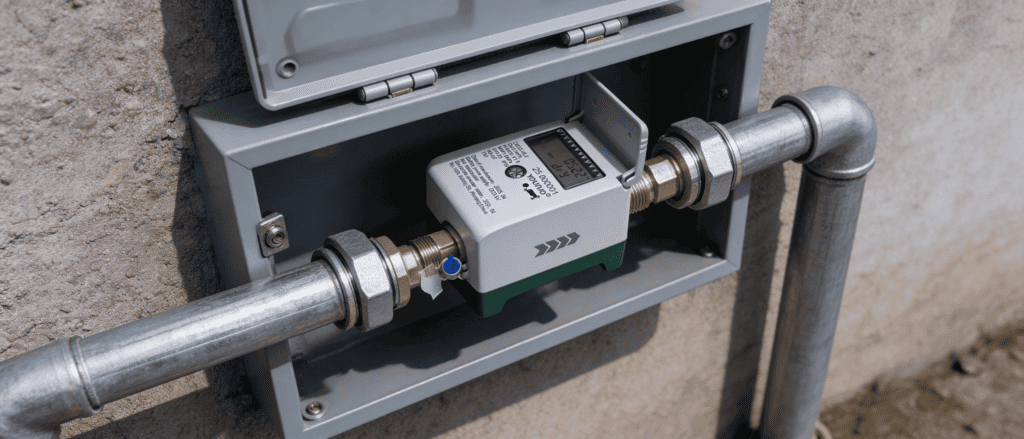
China rolde uit Slimme meters van klasse R400 bij residentiële en commerciële verbindingen. Deze meters verminderden de chronische onderregistratie die we in het verleden tegenkwamen mechanische meterS, vooral bij lage stroming.
Toen slimme meters werden gekoppeld aan AMR-infrastructuur, hulpprogramma's verwijderden ook handmatige leesfouten en kregen continue verbruiksgegevens in plaats van maandelijkse momentopnamen.
3. Optimalisatie van drukzones
China hield niet alleen toezicht op de druk. Het beheerde het actief. Verlaging van de druk tijdens periodes van lage vraag, vooral 's nachts, direct verminderde achtergrondlekkage. Dit komt omdat de lekstroom nauw verbonden is met het drukniveau.
4. Intelligente lekdetectie
Steden als Peking gecombineerd satelliet bodemvochtanalyse met akoestische ruisloggers. Slimme analyses koppelden deze signalen vervolgens om waarschijnlijke lekposities te identificeren, zodat reparatieteams sneller konden werken en minder konden graven.
Casestudy van Peking
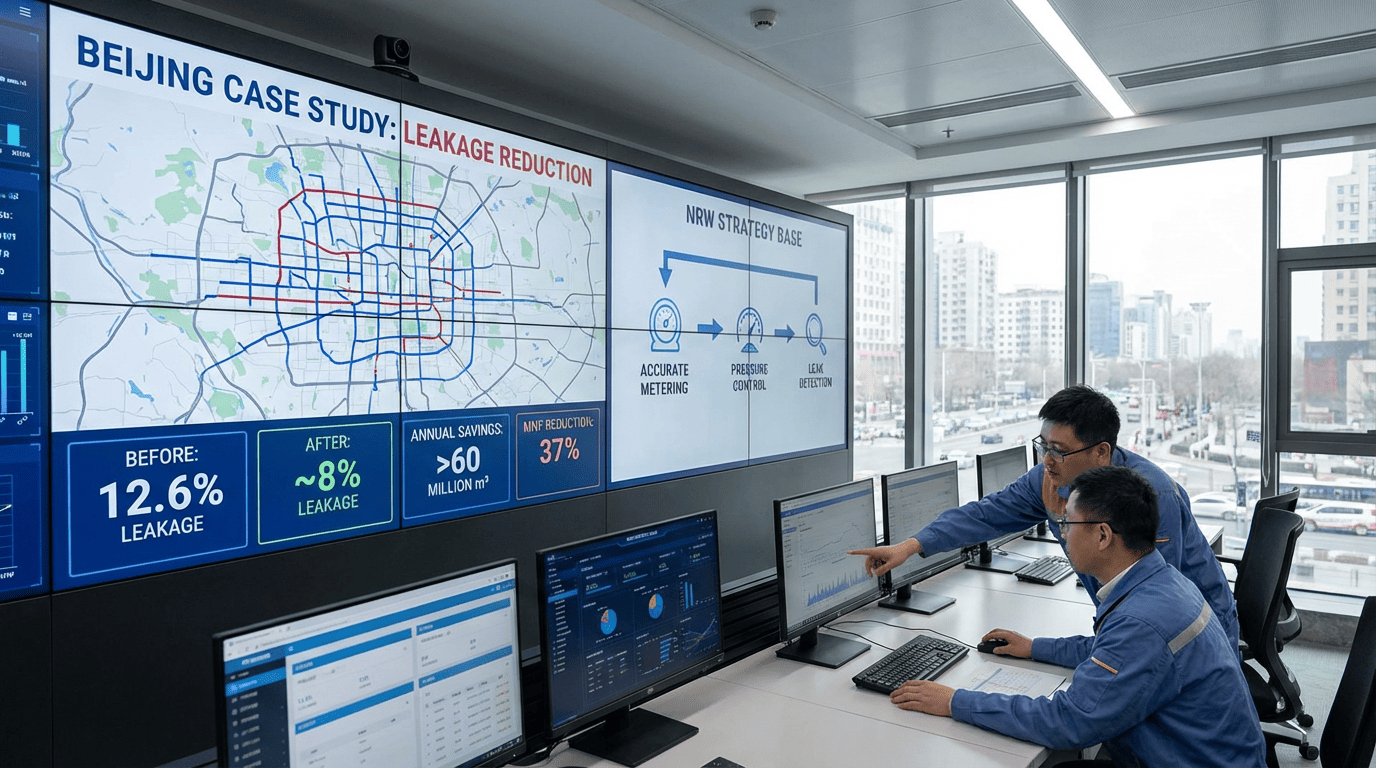
Het voorbeeld uit Peking is het vermelden waard:
- Voor: 12.6% lekkage tarief
- Na: over 8% lekkage tarief
- Water bespaard: meer dan 60 miljoen m³ per jaar
- Minimale nachtstroom (MNF): beneden langs 37%
Voor mij, de belangrijkste les is volgordebepaling. Drukcontrole en lekdetectie zijn nuttig, maar ze hebben eerst nauwkeurige gegevens nodig. Nauwkeurige gegevens zijn afhankelijk van nauwkeurige metingen. In eenvoudige woorden, de meterupgrade is niet slechts één van de vele verbeteringen. Het is de basis voor de hele NRW-strategie.
Waarom de meterverhouding belangrijker is dan veel kopers denken
Bij de inkoop van nutsvoorzieningen, veel teams focussen op grootte, drukklasse, protocol, en certificering. Die zijn allemaal belangrijk. Maar ik geloof meter verhouding is nog steeds een van de meest onderschatte specificaties.
Meterverhouding is de verhouding tussen Q3, het permanente debiet, En Q1, het minimaal meetbare debiet. Het vertelt ons hoe laag de stroom is die de meter nauwkeurig kan meten.
Voor een DN15 meter met Q3= 2.5 m³/u:
| Metertype | Q3 (m³/u) | Q1 Minimaal meetbaar debiet | Stromen onder Q1 |
|---|---|---|---|
| R160 (nalatenschap) | 2.5 | 0.0156 m³/u | Niet geregistreerd |
| € 400,- (JOUNIO) | 2.5 | 0.00625 m³/u | Volledig gemeten |
Dit betekent een klein maar voortdurend lek, zoals een toilet dat doorsijpelt 0.010 m³/u, kan worden gevangen door een R400 meter maar gemist door een R160 meter.
Hetzelfde principe wordt ondersteund door YOUNIO ultrasoon metergegevens. Bijvoorbeeld, de DN15 ultrasone meter heeft Q1 = 0.010 m³/u bij R250 En Q1 = 0.006 m³/u bij R400. Voor DN20, de Q1-waarden zijn 0.016 m³/u bij R250 En 0.010 m³/u bij R400 .
Dit is geen klein technisch detail. Over 100,000 verbindingen, Het ontbreken van een laag verbruik kan oplopen tot een zeer groot volume per factureringscyclus.
Op zoek naar een betrouwbare leverancier van watermeters?
YOUNIO produceert mechanische en ultrasone watermeters van DN15 tot DN500, MID-gecertificeerd en ISO-getest 4064. Gratis monsters en fabriekstestrapporten beschikbaar voor gekwalificeerde kopers.
De link tussen meternauwkeurigheid en minimale nachtstroom
Minimale nachtstroom, of MNF, is een van de nuttigste veldmethoden voor het meten van lekkage in een DMA. Tussen ongeveer 2:00 AM en 4:00 BEN, het legale klantgebruik daalt tot bijna nul. De stroom die tijdens dat venster bij de DMA-inlaat wordt geregistreerd, bestaat dus grotendeels uit achtergrondlekkage.
Maar er is een probleem. Als eindgebruikersmeters lage stromen te weinig registreren, het hulpprogramma krijgt een vals beeld. Het netwerk lijkt misschien gezonder dan het in werkelijkheid is.
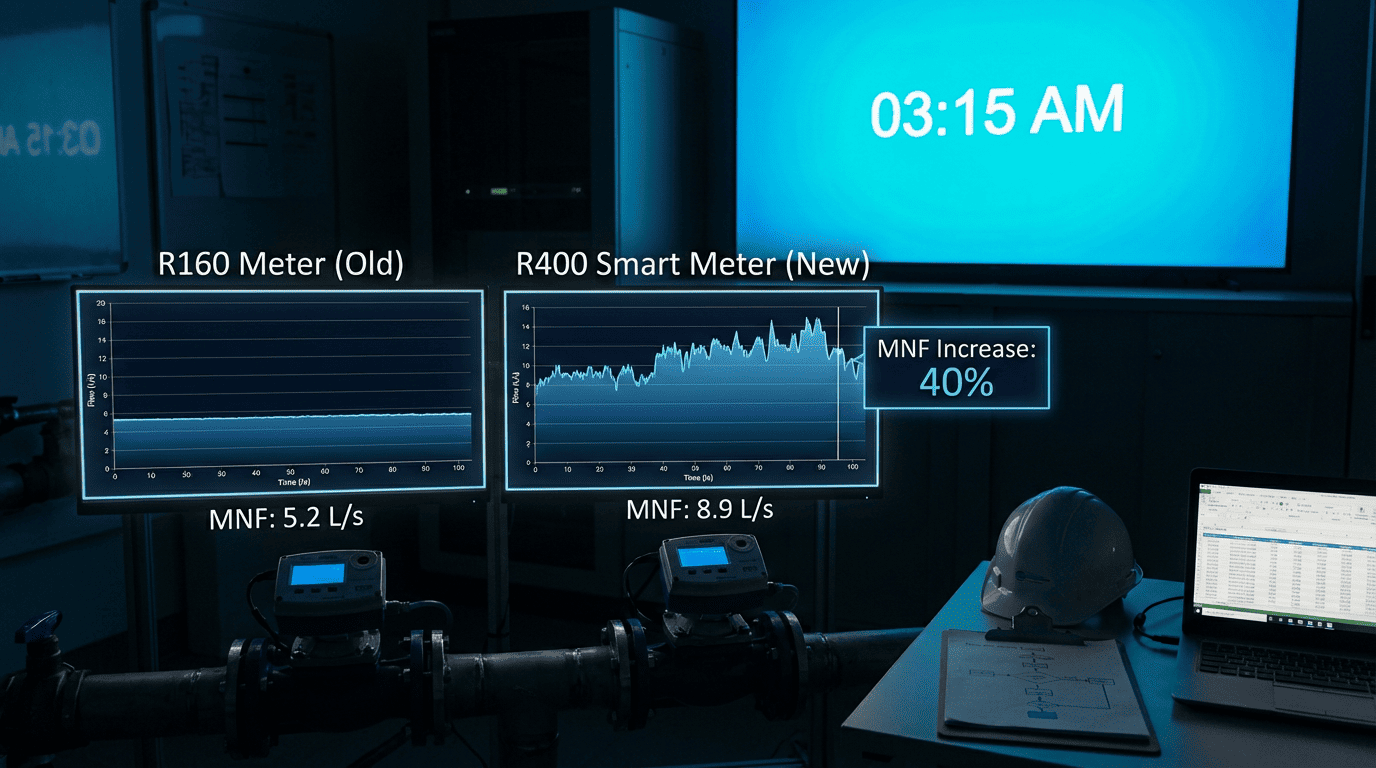
Dit is de reden waarom de inzet van de R400 het beeld verandert. Wanneer een nutsbedrijf overstapt van oudere R160-meters naar R400 slimme meters, de echte MNF wordt zichtbaar. De toename van de gemeten nachtafvoer betekent niet dat de lekkage ineens erger is geworden. Het betekent dat de lekkage er altijd was en nu correct wordt gemeten.
In DMA-pilotprogramma's op verschillende markten, YOUNIO heeft opgemerkt dat het vervangen van R160-meters door R400 slimme meters een MNF-stijging van 15% naar 40% vergeleken met de oude basislijn. Dit nieuw zichtbare verlies wordt dan het doelwit voor reparatiewerkzaamheden.
Ik denk dat dit punt erg belangrijk is voor de Maleisische nutsbedrijven. Betere metingen verbeteren niet alleen de facturering. Het verbetert ook de diagnose.
Slimme meteropties die relevant zijn voor Maleisië
YOUNIO biedt twee productlijnen voor slimme meters die direct relevant zijn voor de NRW-reductie in Maleisië.
1. Ultrasone slimme meter
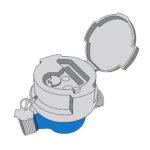
De ultrasone slimme meter is verkrijgbaar vanaf DN15 tot DN40, met €250 of €400 opties. De belangrijkste specificaties omvatten:
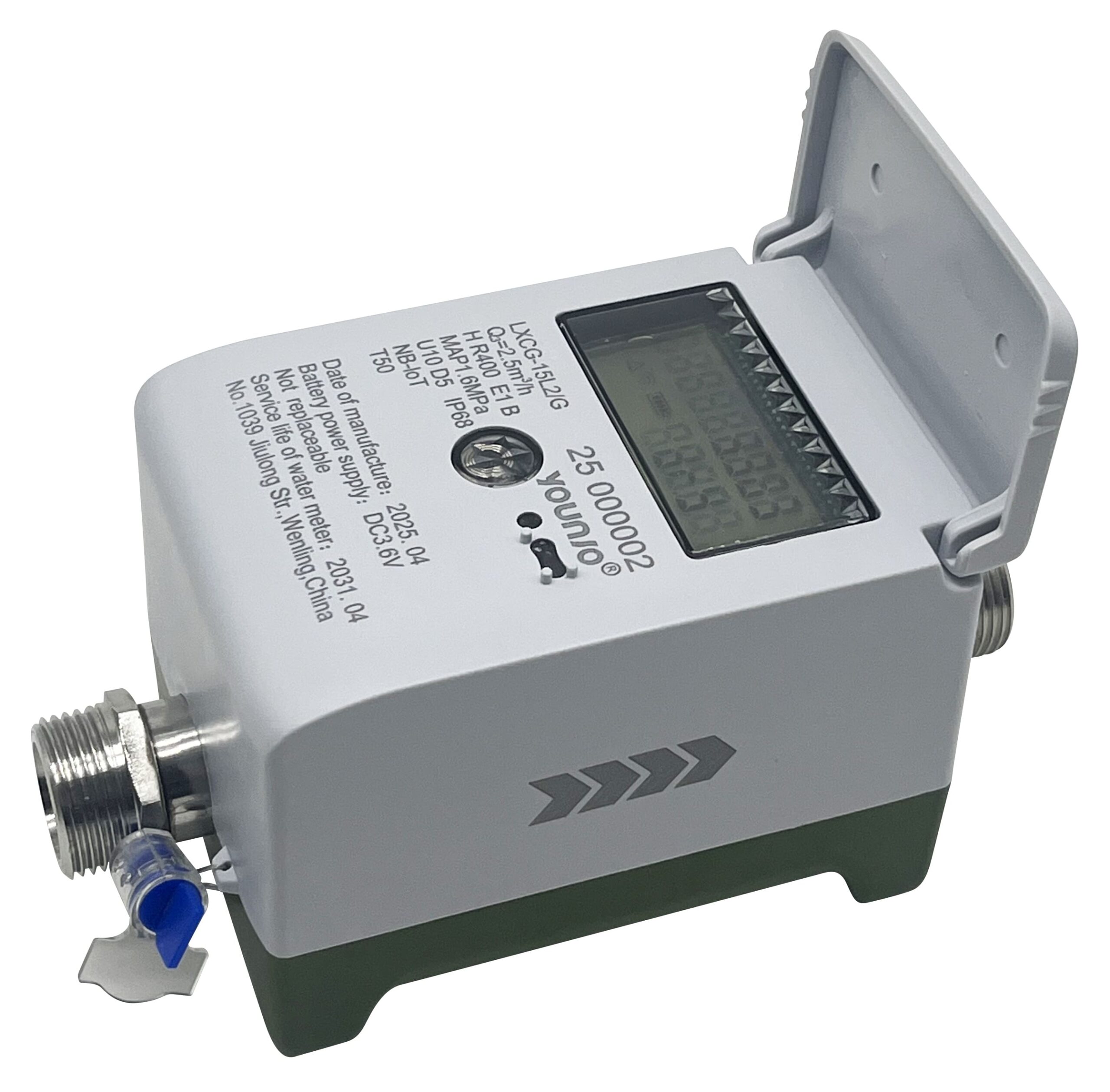
- Meetprincipe: ultrasone transittijd
- Nauwkeurigheid: ±5% van Q1 tot onder Q2, en ±2% van Q2 tot Q4
- Beschermingsklasse: IP68
- Batterij: 3.6V ER34615, met ten minste 8 jaar leven
- Mededeling: NB-IOT, LoRa/LoRaWAN, M-bus, RS485, pulsuitgang
- Bewegende delen: geen
- Standaard: ISO 4064:2014 / OIML R49-2013
2. Volumetrisch (Roterende zuiger) Slimme meter
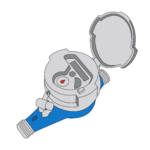
De volumetrische meter is verkrijgbaar in DN15 tot DN20, met R160, € 250,-, R315, en R400 versies. Belangrijkste kenmerken zijn onder meer:
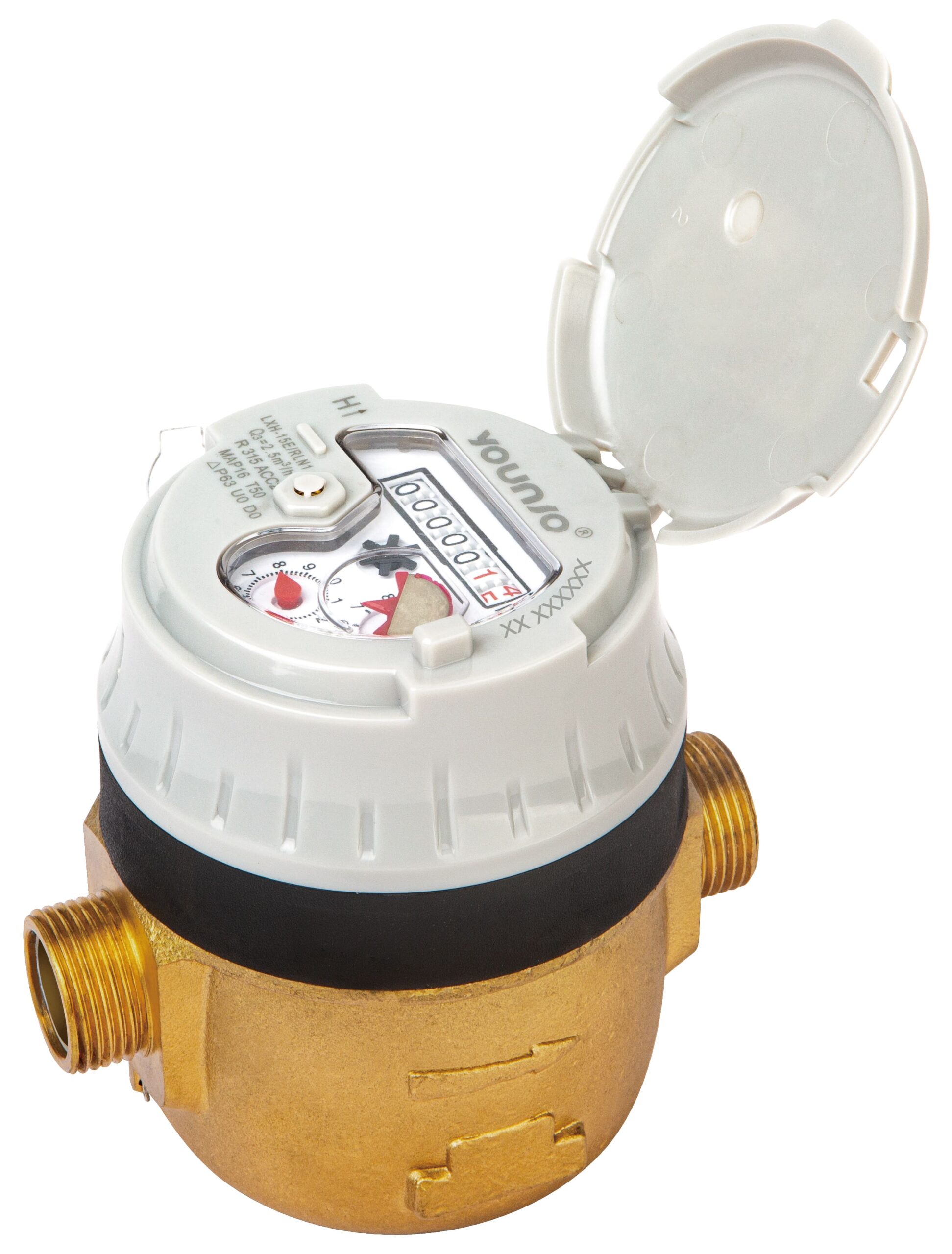
- Meetprincipe van roterende zuiger
- AMR-uitgang vooraf uitgerust
- Keuzes van lichaamsmateriaal: messing, roestvrij staal, of polymeer
- Extra inlaatfilter dat kan worden gereinigd zonder de verzegeling te verbreken
- Magnetische beschermring
- Optionele terugslagklep
- ISO 4064:2014 meewerkend
YOUNIO toont ook de werking van het AMR-systeem via een online cloudplatform in zijn showroom, wat helpt verklaren hoe slimme meters in realtime werken.
Waarom een DMA-pilot de beste eerste stap is
In mijn ervaring, De belangrijkste barrière voor slimme meters is niet altijd het budget. Vaak is het onzekerheid. Utility-teams willen drie dingen weten:
- Zal de technologie in dit netwerk werken??
- Zal de communicatiemethode op dit gebied werken??
- Zal de ROI sterk genoeg zijn om intern te verdedigen??
A 90-dag DMA-pilot is de beste manier om ze alle drie te beantwoorden.
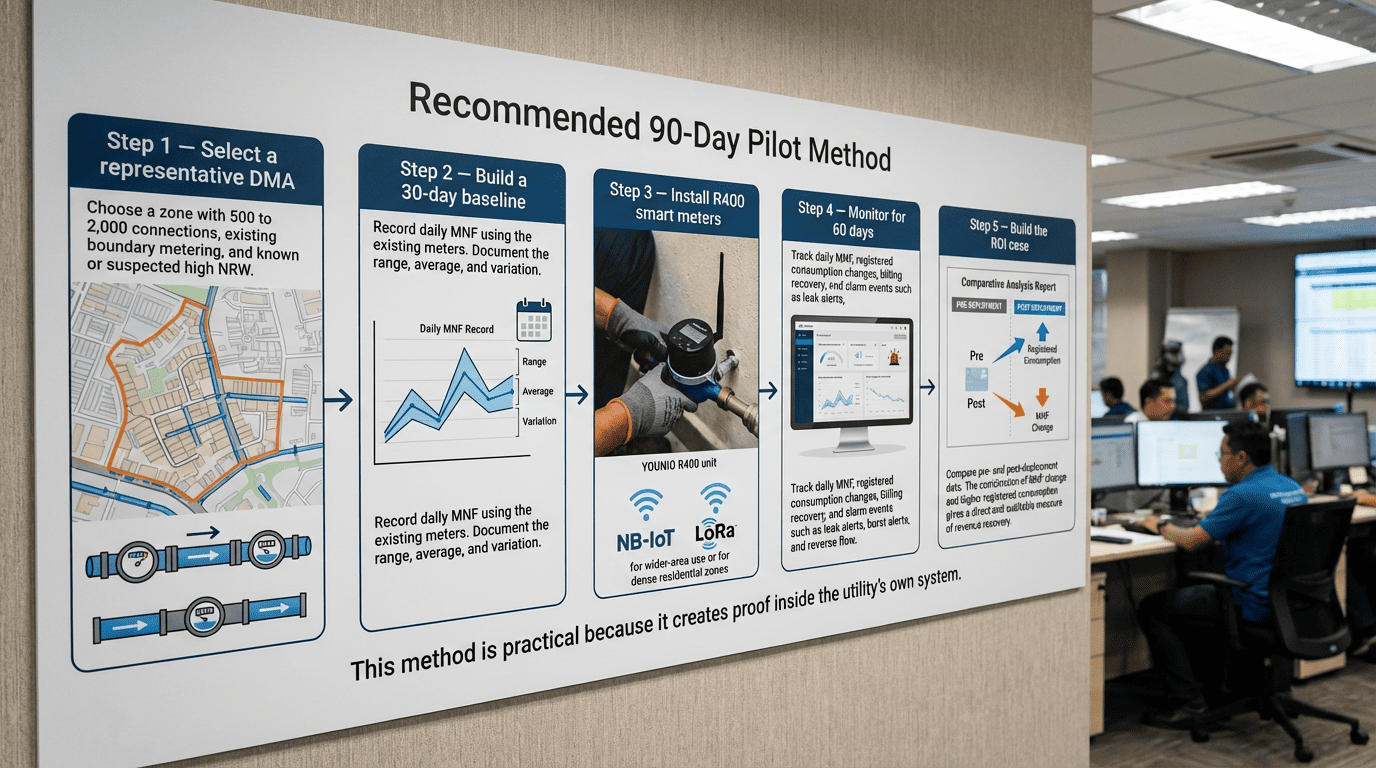
Aanbevolen pilotmethode van 90 dagen
Stap 1 — Selecteer een representatieve DMA
Kies een zone met 500 naar 2,000 verbindingen, bestaande grensmeting, en bekende of vermoedelijke hoge NRW.
Stap 2 — Bouw een basislijn voor 30 dagen
Registreer dagelijks MNF met behulp van de bestaande meters. Documenteer het bereik, gemiddeld, en variatie.
Stap 3 — Installeer R400 slimme meters
Vervang eindgebruikersmeters door YOUNIO R400-eenheden. Kiezen NB-IOT voor gebruik over een groter gebied of LoRa voor dichtbevolkte woongebieden.
Stap 4 – Monitor voor 60 dagen
Volg dagelijks MNF, geregistreerde verbruiksveranderingen, facturering herstel, en alarmgebeurtenissen zoals lekwaarschuwingen, burst-waarschuwingen, en tegenstroom.
Stap 5 — Bouw de ROI-case
Vergelijk vóór- en gegevens na de implementatie. De combinatie van MNF-veranderingen en een hogere geregistreerde consumptie geeft een directe en controleerbare maatstaf voor het herstel van de inkomsten.
Deze methode is praktisch omdat er bewijs binnen het eigen systeem van het nutsbedrijf wordt gecreëerd.
Waarom certificering en leverancierssterkte belangrijk zijn
Bij gereguleerde inkoop van waterbedrijven, certificeringen zijn niet decoratief. Het zijn fundamentele toelatingseisen.
YOUNIO heeft een sterke certificeringsbasis:
- EU MID B+D-certificering, binnengekomen 2016
- NSF/ANSI 61 en NSF/ANSI 372 dubbele certificering, verkregen in 2019, waardoor YOUNIO de eerste Chinese watermeteronderneming is die beide tegelijkertijd doorstaat
- ACS Frankrijk-certificering
- Volledige managementcertificeringsstapel inclusief ISO9001, ISO14001, ISO45001, En ISO/IEC 27001
Het bedrijf beschikt ook over een sterke productie- en exportcapaciteit. Het produceert meer dan 2.4 miljoen eenheden per jaar, exporteert naar over 80 landen en regio's, en meer dan 80% van de verkoopopbrengsten komt uit de export . Het bedrijf omvat producten van 15 mm tot 300 mm, inbegrepen enkele straal, multi-jet, volumetrisch, Woltman, en elektronische typen . YOUNIO wordt ook ondersteund door Sanchuan wijsheidstechnologie, genoteerd aan de Shenzhen Stock Exchange met aandelencode 300066.
Voor nutsbedrijven in Maleisië, dit is van belang omdat het succes van een pilot vaak leidt tot een bredere uitrol. De leveringscapaciteit en de gereedheid voor certificering moeten al aanwezig zijn.
Laatste gedachten
Het NRW-niveau in Maleisië van 37% is serieus, maar het is niet onvermijdelijk. Ik geloof dat het een meet- en beheerprobleem is voordat het iets anders wordt. China heeft laten zien dat grootschalige verbeteringen binnen één planningscyclus mogelijk zijn als nutsbedrijven de DMA-discipline combineren, uiterst nauwkeurige slimme meters, druk beheer, en intelligente lekdetectie.
Als ik de snelste moet noemen, meest kosteneffectieve eerste stap voor een Maleisisch nutsbedrijf vandaag, Ik zou dit zeggen: implementeer R400 slimme meters binnen een gedefinieerde DMA en meet het resultaat zorgvuldig.
De nutsbedrijven die NRW het snelst terugdringen, zijn niet altijd degenen met de grootste kapitaalbudgetten. Zij zijn degenen die beginnen met nauwkeurige metingen, bouw vertrouwen op met echte veldgegevens, en van daaruit verder uitbreiden.
De eerste stap is nog steeds hetzelfde.
Meet wat je hebt. Repareer vervolgens wat je vindt.
Op zoek naar een betrouwbare leverancier van watermeters?
YOUNIO produceert mechanische en ultrasone watermeters van DN15 tot DN500, MID-gecertificeerd en ISO-getest 4064. Gratis monsters en fabriekstestrapporten beschikbaar voor gekwalificeerde kopers.