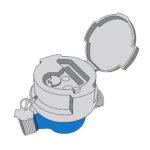

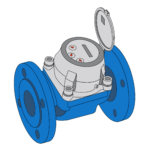

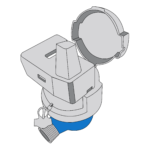

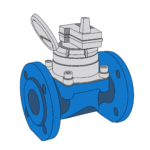

ISO 4064 is de belangrijkste internationale standaardfamilie voor watermeters voor koud drinkwater en warm water, en het definieert het metrologische, technisch, testen, rapportage, niet-metrologisch, En installatie eisen die fabrikantS, nutsvoorzieningen, en projectteams gebruiken om de naleving van de meter te evalueren . Ik beschouw deze norm als een van de belangrijkste technische referenties in de watermeterindustrie, omdat het een gedeelde taal voor prestaties biedt, testen, en acceptatie in verschillende metertechnologieën en markten.
Als ik met een inkoopingenieur van nutsvoorzieningen zou spreken, een aanbestedingsbeoordelaar, of een watermeterverdeler, Ik zou dit heel eenvoudig zeggen: als je ISO niet begrijpt 4064, het zal moeilijker zijn om producten eerlijk te vergelijken, datasheets correct lezen, en het beheersen van projectrisico's. De standaard is van belang omdat het niet alleen om laboratoriumnauwkeurigheid gaat. Het gaat er ook om wat de meter is, hoe het wordt getest, wat er gerapporteerd wordt, en hoe deze geïnstalleerd moet worden.
Ik denk ook dat dit artikel moet worden gebruikt als een technisch woordenboek. Je hoeft niet elke regel in één keer te lezen. U kunt naar de gewenste sectie gaan als u stroomdefinities wilt controleren, nauwkeurigheid termen, standaard structuur, of installatielessen.
Inhoudsopgave
- 1. Invoering: Waarom ISO 4064 Zaken
- 2. ISO 4064 Overzicht standaardstructuur
- 3. Evolutie: Van oude standaard naar nieuw
- 4. Debietparameters gedefinieerd
- 5. Nauwkeurigheidsklassen & Maximaal toegestane fout (MPE)
- 6. Installatie klassen (U/D)
- 7. Drukverliesklassen (AP)
- 8. Metertypen onder ISO 4064
- 9. Wat is er nieuw in ISO 4064:2024
- 10. ISO 4064 versus OIML R 49 versus AWWA versus andere regionale normen
- 11. Hoe het typeplaatje van een watermeter te lezen
- 12. Standaarden downloaden & Referentiedocumenten
- 13. FAQ
- 14. Conclusie + CTA
1. Invoering: Waarom ISO 4064 Zaken
ISO 4064 is de internationale standaardfamilie voor watermeters voor koud drinkwater en warm water dat door een volledig opgeladen meter stroomt, gesloten leiding, en het is van toepassing op meters die het geïntegreerde volume aangeven. Het omvat zowel mechanische meters als meters op basis van elektrische of elektronische principes, evenals mechanische meters die elektronische apparaten bevatten. Dat punt is belangrijk omdat veel mensen nog steeds ISO denken 4064 gaat alleen over traditionele mechanische meters. Dat is het niet.
In mijn werk, Ik behandel ISO 4064 als basisreferentie voor technische vergelijking. Wanneer twee leveranciers beiden beweren “ISO-compliant,Ik wil weten welk deel van ISO 4064 zij verwijzen naar, hoe de tests werden uitgevoerd, wat er werd gemeld, en welke beperkingen van toepassing zijn. Dat is waar de standaard praktisch wordt.
Voor kopers en beoordelaars, ISO 4064 helpt bij het beantwoorden van dit soort vragen:
- Welke stroomparameters bepalen de prestaties van de meter??
- Welke foutlimieten gelden?
- Hoe worden tests uitgevoerd?
- Wat er in het testrecord moet verschijnen?
- Welke installatieomstandigheden er toe doen?
- Heeft de norm betrekking op mijn metertechnologie??
Dit artikel is bedoeld als een lange referentiepagina. U kunt het gebruiken om definities te controleren, vergelijk standaardsystemen, en begrijp hoe ISO 4064 maakt verbinding met OIML R 49 en regionale kaders.
2. ISO 4064 Overzicht standaardstructuur
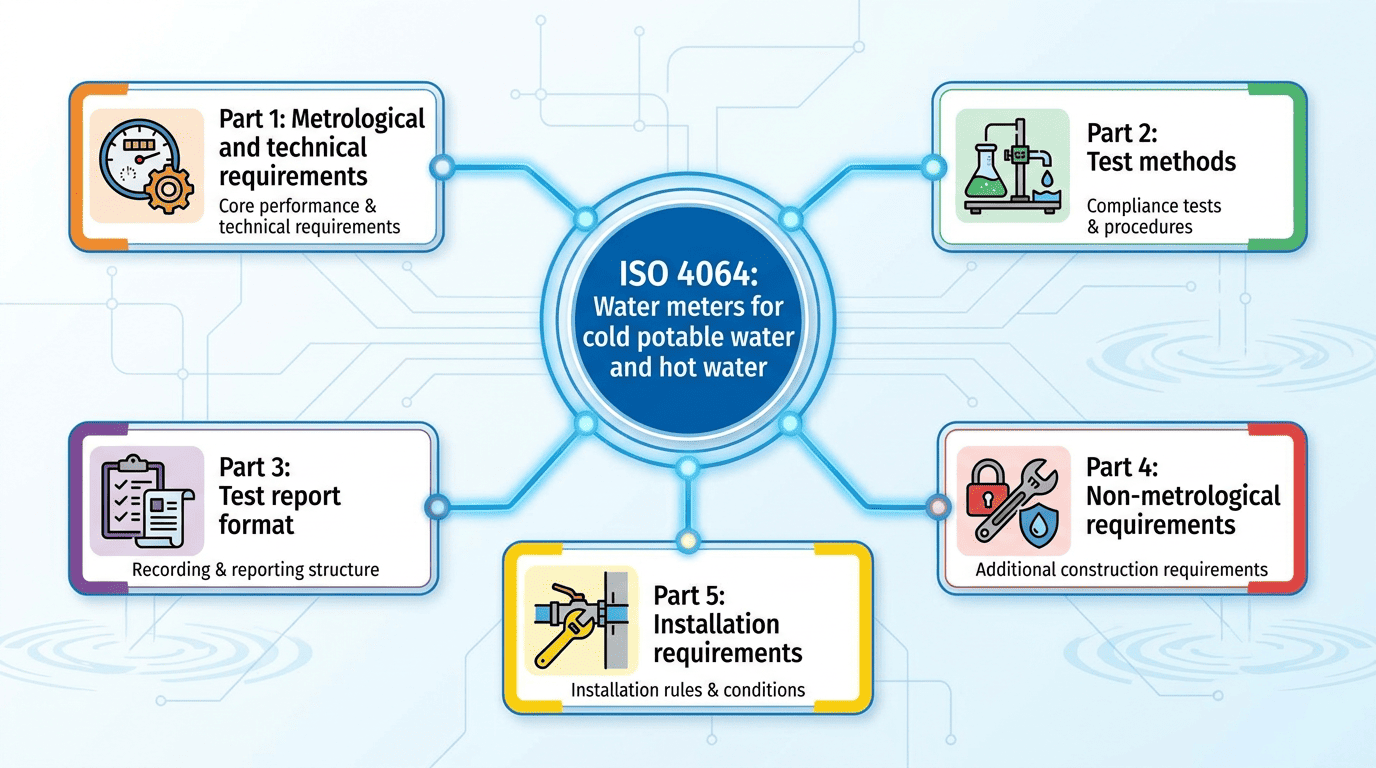
ISO 4064 is niet één enkele tekst. Het is een vijfdelige standaardfamilie onder de algemene titel Watermeters voor koud drinkwater en warm water.
De vijf delen zijn:
| Deel | Titel | Hoofdfocus |
|---|---|---|
| Deel 1 | Metrologische en technische vereisten | Kernprestaties en technische vereisten |
| Deel 2 | Testmethoden | Hoe compliancetests worden uitgevoerd |
| Deel 3 | Formaat testrapport | Hoe testresultaten worden vastgelegd en gerapporteerd |
| Deel 4 | Niet-metrologische eisen die niet onder ISO vallen 4064-1 | Niet-metrologische items zoals aanvullende bouwgerelateerde eisen |
| Deel 5 | Installatievereisten | Installatieregels en voorwaarden |
Deze structuur is van belang omdat mensen “ISO 4064” vaak heel algemeen citeren. In werkelijkheid, Deel 1 vertelt u waar de meter aan moet voldoen, Deel 2 vertelt hoe het wordt getest, Deel 3 vertelt u hoe het rapport is opgebouwd, Deel 4 heeft betrekking op niet-metrologische eisen die nog niet zijn behandeld in Deel 1, en deel 5 houdt zich bezig met de installatie.
Relatie met OIML R 49
ISO 4064:2014 en OIML R 49 waren zeer nauw op elkaar afgestemd. In werkelijkheid, ISO 4064-1:2014 is identiek aan de overeenkomstige editie van OIML R 49-1, en ISO 4064-2:2014 is identiek aan de overeenkomstige editie van OIML R 49-2. Dit is de reden waarom mensen ze vaak ‘dual-logo’-standaarden noemen. Ze zijn gelijktijdig uitgegeven en hebben dezelfde technische inhoud in de overeenkomstige delen.
Relatie met EN 14154 en MID
Het referentiemateriaal dat u mij hebt gegeven, bevat niet de tekst van EN 14154 of MID 2014/32/EU, dus ik moet hier voorzichtig zijn. Gebaseerd op algemene branchekennis, IN 14154 is nauw afgestemd op ISO 4064 in Europa, en MID is het wettelijke kader dat meetinstrumenten regelt, inclusief watermeters, op de EU-markt. In de praktijk, Inkoopteams vergelijken vaak ISO 4064 / OIML R 49 naleving samen met MID-conformiteit bij de omgang met Europese projecten. Maar voor exacte juridische bewoordingen, lezers moeten de officiële EN- en MID-teksten raadplegen.
3. Evolutie: Van oude standaard naar nieuw
Dit is een van de belangrijkste onderdelen omdat veel inkopers bij aanbestedingen nog steeds oude classificatietaal gebruiken.
3.1 Het oude systeem (ISO 4064:1993)
Onder het oudere systeem, veel gebruikers verwezen naar watermeters door Klasse A, B, C, of D, en gebruikte stroomparameters zoals Qmin, Qt, Qn, en Qmax. In dagelijkse branchetaal, dit oudere raamwerk is nog steeds gebruikelijk, vooral bij oudere aanbestedingen en op markten waar oude technische gewoonten sterk blijven.
Het oude systeem werd daar veel voor gebruikt mechanische watermeterS. Een algemeen vereenvoudigd begrip was:
- Qmin = minimale stroom
- Qt = overgangsstroom
- Qn = nominaal debiet
- Qmax = maximale stroom
In veel oudere specificaties, mensen herinneren zich ook het traditionele foutidee als:
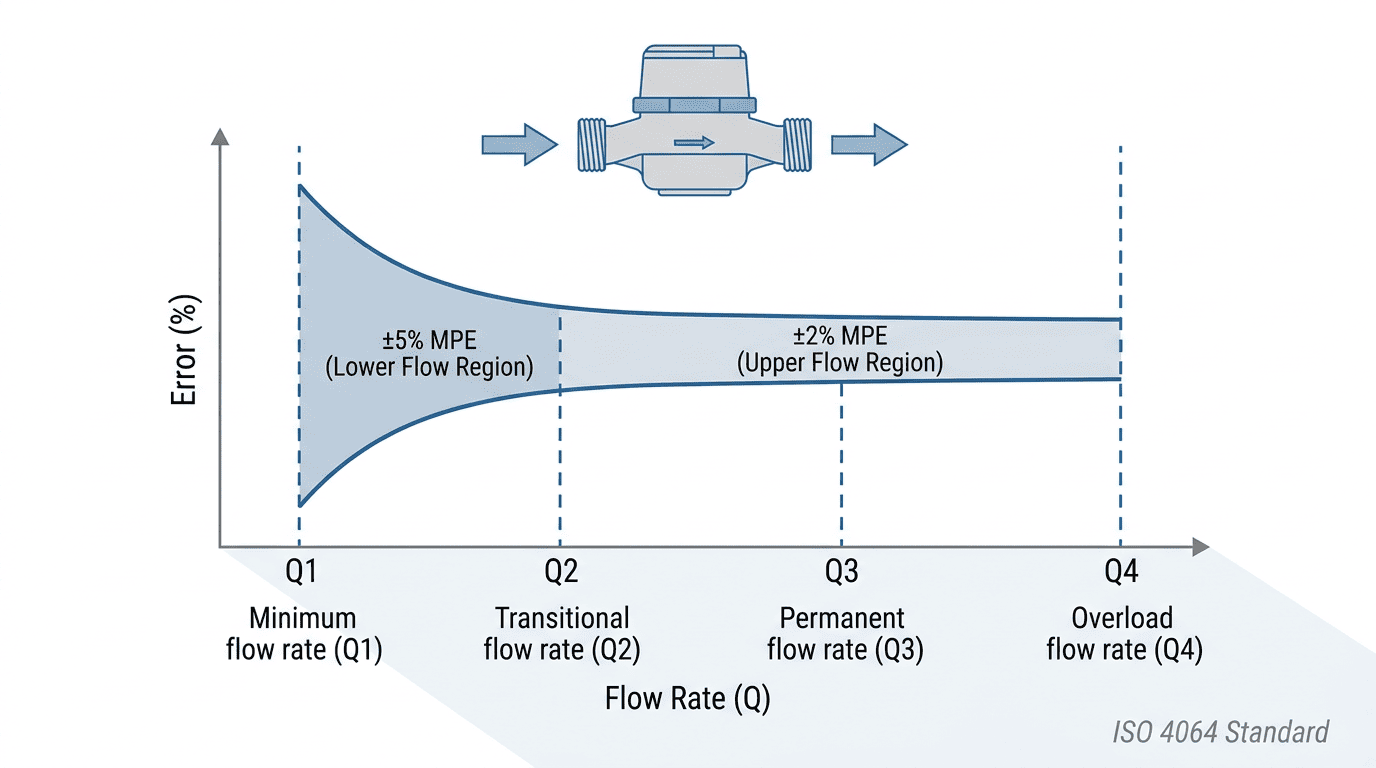
- lagere zone: ±5%
- bovenste zone: ±2%
Ik moet hier precies zijn: deze oude definities worden niet rechtstreeks geciteerd in de verstrekte referentieteksten, dit deel is dus gebaseerd op gevestigde branchekennis en niet op de aangeleverde uittreksels.
3.2 Het nieuwe systeem (ISO 4064:2014, en latere updates)
De moderne ISO 4064 raamwerk gebruikt Q1, Vraag 2, Q3, en Q4, en het introduceert de R-verhouding, gedefinieerd als de verhouding tussen het permanente debiet en het minimale debiet. Dit nieuwere systeem is van toepassing op een breder scala aan technologieën, niet alleen mechanische meters. ISO 4064-1:2014 stelt expliciet dat dit van toepassing is op meters die gebaseerd zijn op mechanische principes, apparaten gebaseerd op elektrische of elektronische principes, en mechanische meters met elektronische apparaten.
Deze verandering is belangrijk omdat de markt niet langer alleen mechanische turbine- of volumetrische meters vergelijkt. Hulpprogramma's vergelijken nu ultrasoon, elektromagnetisch, en ook slimme hybride producten.
De nieuwere structuur maakt ook gebruik van Nauwkeurigheidsklasse 1 En Nauwkeurigheidsklasse 2 in plaats van alleen het oudere klassensysteem. De exacte moderne MPE-tabel moet altijd worden gecontroleerd aan de hand van de officiële huidige standaardtekst. De verstrekte referenties bevestigen het bestaan van toepasselijke maximaal toelaatbare foutcontroles bij het testen, inclusief temperatuurgerelateerde verificatie, maar ze geven niet de volledige tabel in de fragmenten.
3.3 Oud-naar-nieuw toewijzingstabel
Op de markt, mensen gebruiken vaak ruwe mappings zoals:
| Taal van oude klasse | Veel voorkomende moderne vergelijking |
|---|---|
| Klasse B | Vaak losjes vergeleken met ongeveer R80 |
| Klasse C | Vaak losjes vergeleken met ongeveer R160 |
| Klasse D | Vaak geassocieerd met hogere gevoeligheidsbereiken |
Maar ik wil een krachtige waarschuwing geven: je moet oude klassenlabels en moderne R-waarden niet als exacte equivalenten beschouwen. Voor een goede vergelijking zijn de werkelijke stroomparameters nodig, meter oriëntatie, toepassingsvoorwaarden, en de exact goedgekeurde technische gegevens. Een aanbesteding die eenvoudigweg zegt: “Klasse B = R80” zonder de onderliggende stroomwaarden te controleren, kan voor verwarring zorgen.
4. Debietparameters gedefinieerd
Dit is het technische hart van productvergelijking in ISO 4064-stijl.
Q1 — Minimumdebiet
Q1 is het laagste debiet waarbij de meter naar verwachting zal werken binnen de toepasselijke foutgrenzen onder standaardomstandigheden. In praktische projecttaal, Q1 vertelt me hoe gevoelig de meter aan de lage kant is.
Q2 — Overgangsdebiet
Q2 is het overgangspunt tussen het onderste stroomgebied en het bovenste stroomgebied. Het markeert de verandering in de toepasselijke foutband.
Q3 — Permanent debiet
Q3 is een van de belangrijkste markerings- en vergelijkingsparameters. In het moderne systeem, het is het permanente debiet dat de meter onder normale gebruiksomstandigheden aankan.
Q4 — Overbelastingsdebiet
Q4 is het overbelastingsdebiet. Het vertelt mij wat de meter gedurende korte perioden aankan zonder te voldoen aan de standaardvoorwaarden die verband houden met overbelastingsprestaties.
R-verhouding = Q3 / Q1
De R-verhouding is een belangrijk modern vergelijkingsinstrument. In eenvoudige bewoordingen, het vertelt mij hoe groot het bruikbare bereik van de meter is tussen permanente stroom en minimale stroom. Een hogere R-verhouding suggereert doorgaans een betere gevoeligheid bij lage stroming ten opzichte van het permanente stromingspunt.
Vaste relaties
Gemeenschappelijke ISO 4064 systeem gebruik, de vaste relaties worden meestal vermeld als:
- Vraag 2 / Q1 = 1.6
- Q4 / Q3= 1.25
Deze verhoudingen behoren tot de standaardkennis van de sector en staan centraal in de manier waarop moderne watermeterreeksen worden gepresenteerd.
Waarom dit belangrijk is in echte projecten
Als ik twee meters vergelijk die allebei “Q3 = 4 m³/u,Ik kan er nog steeds niet van uitgaan dat ze hetzelfde presteren bij een laag debiet. Eén ervan kan R80 zijn. Een andere kan R160 of R400 zijn. Dat verandert lekkage vastlegging, gevoeligheid voor nachtstroming, en submetergedrag.
Typische R-waarden die op de markt voorkomen
Vaak voorkomende R-waarden zijn onder meer::
- R40
- € 50,-
- R63
- R80
- € 100,-
- R125
- R160
- € 200,-
- € 250,-
- R315
- € 400,-
- € 500,-
- R630
- €800,-
- € 1000,-
Typische applicatielogica voor R-waarden
| R-verhouding | Typisch gebruiksidee |
|---|---|
| R40–R80 | Basis- of oudere applicaties |
| R100–R160 | Gemeenschappelijk woon- en utiliteitsgebruik |
| R200–R400 | Hogere gevoeligheidsbehoeften bij laag debiet |
| €500+ | Gespecialiseerde of geavanceerde meettoepassingen |
Ik moet nogmaals opmerken dat de verstrekte uittreksels niet de volledige Q-waardetabellen of R-waardecatalogus vermelden, De details in dit gedeelte zijn dus gedeeltelijk afhankelijk van gevestigde kennis van de sector.
Op zoek naar een betrouwbare leverancier van watermeters?
YOUNIO produceert mechanische en ultrasone watermeters van DN15 tot DN500, MID-gecertificeerd en ISO-getest 4064. Gratis monsters en fabriekstestrapporten beschikbaar voor gekwalificeerde kopers.
5. Nauwkeurigheidsklassen & Maximaal toegestane fout (MPE)
Nauwkeurigheidsklasse vertelt kopers hoe goed de meter naar verwachting zal presteren onder gedefinieerde omstandigheden.
De door u verstrekte referenties bevestigen dat ISO 4064 omvat toepasselijke maximaal toelaatbare foutcriteria en dat tests zoals watertemperatuurtests moeten verifiëren dat de relatieve indicatiefout de toepasselijke MPE niet overschrijdt. Ze bevestigen ook dat type-evaluatietests de bepalingen van ISO volgen 4064-1 en rapportage in ISO 4064-3.
Klas 1 versus klasse 2
In moderne ISO 4064 gebruik, meter worden over het algemeen ingedeeld in Nauwkeurigheidsklasse 1 En Nauwkeurigheidsklasse 2. In de brede branchepraktijk:
- Klas 1 heeft strengere foutlimieten
- Klas 2 heeft bredere toegestane foutlimieten
Koud water versus warm water
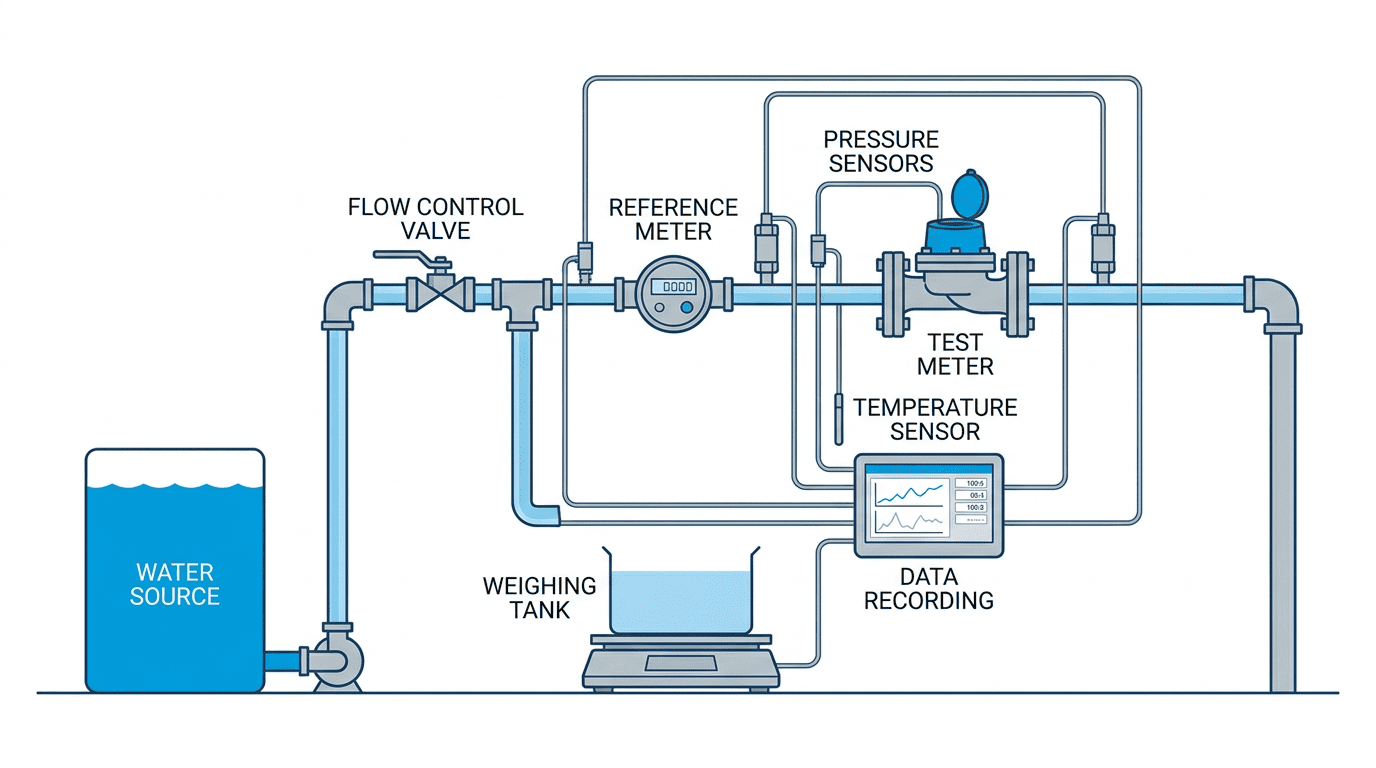
De standaardfamilie omvat zowel koud drinkwater als warm water. De testmethoden omvatten watertemperatuurtests en overbelastingswatertemperatuurtests, en de overbelastingswatertemperatuurtest is van toepassing op meters met MAT ≥ 50 °C. Dat is een nuttige herinnering dat de evaluatie van de warmwatermeter geen eenvoudige kopie is van de evaluatie van koud water.
Temperatuureffecten
Het meegeleverde materiaal stelt dat een watertemperatuurtest verifieert dat de relatieve indicatiefout de toepasselijke MPE onder de gespecificeerde testomstandigheden niet overschrijdt. Temperatuur is dus geen bijzaak. Het is onderdeel van naleving.
Milieuklassen
In uw schets wordt het klimaat genoemd, mechanisch, en elektromagnetische omgevingsklassen zoals E1/E2/E3. Deze concepten maken deel uit van de bredere ISO 4064 / OIML R 49 raamwerk in de praktijk, vooral voor elektronische meters. Maar de meegeleverde uittreksels bevatten niet de daadwerkelijke klassentabellen, dus ik zou hier geen precieze bewoording uit de standaard moeten verzinnen.
Praktische vergelijkingstabel
| Item | Praktische betekenis |
|---|---|
| Nauwkeurigheidsklasse 1 | Strakker toegestaan foutbereik |
| Nauwkeurigheidsklasse 2 | Breder toegestaan foutbereik |
| Koudwatermeter | Geëvalueerd binnen gedefinieerde gebruiksomstandigheden voor koud water |
| Warmwatermeter | Vereist naleving bij hogere temperaturen |
| MAT | Maximaal toelaatbare temperatuur, belangrijk voor heetwatertests |
Als je wilt, Ik kan deze sectie later omzetten in een strengere normentabel zodra u de exacte MPE-pagina's uit de huidige editie verstrekt.
6. Installatie klassen (U/D)
Installatieles is een van de nuttigste, maar minst begrepen onderwerpen bij echte aanbestedingen.
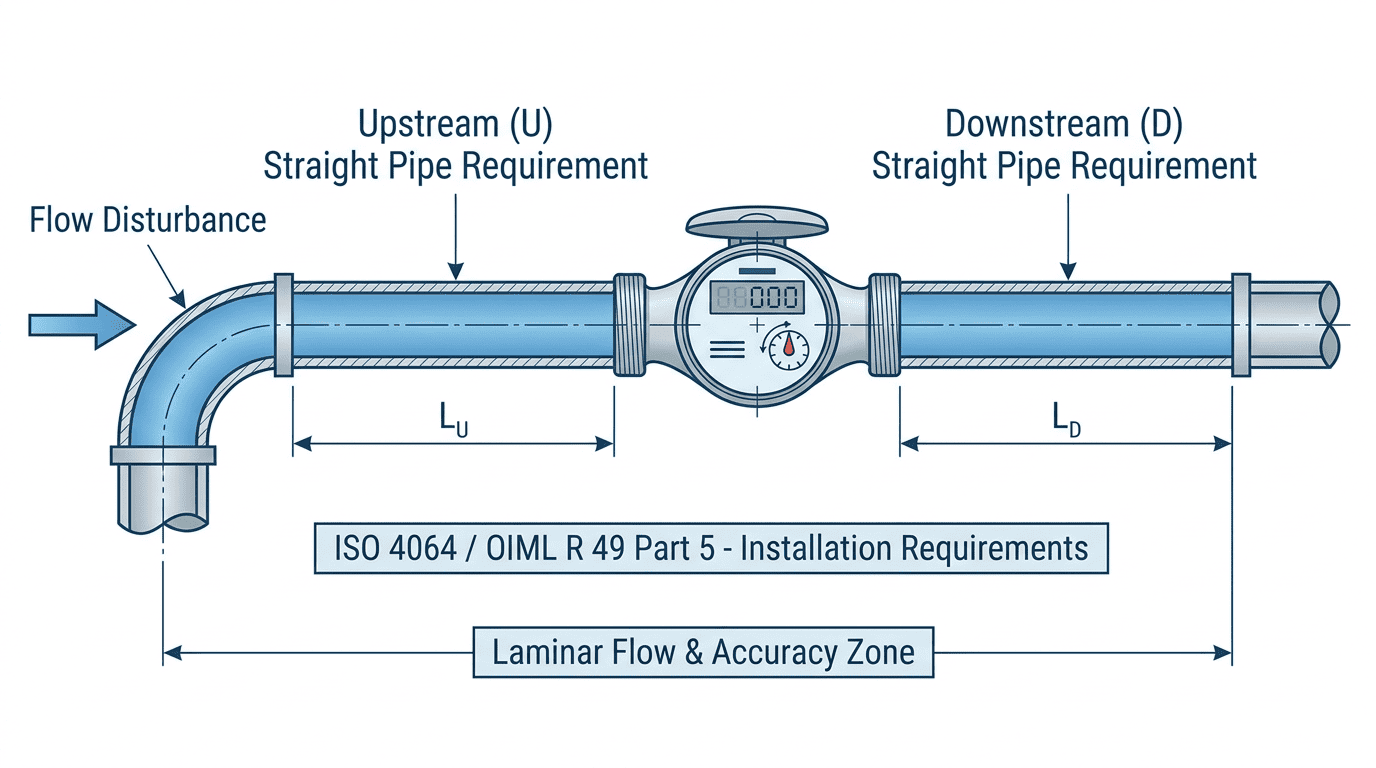
In praktische ISO 4064 / OIML R 49 gebruik, U En D beschrijf de vereisten voor rechte buizen stroomopwaarts en stroomafwaarts van de meter. Deze klassen zijn belangrijk omdat een verstoorde stroom de prestaties kan beïnvloeden, vooral voor sommige metertechnologieën en installatieomstandigheden.
De verstrekte referenties bevestigen dat installatievereisten een speciaal onderdeel vormen van de standaardfamilie Deel 5 . Ze laten ook zien dat testprocedures mogelijk de toepassing vereisen van installatie- en operationele vereisten die in de norm zijn gespecificeerd.
Wat U en D in de praktijk betekenen
Typische voorbeelden uit de sector zijn onder meer:
- U0 / D0 — geen rechte buis nodig
- U3 / D1
- U5 / D3
- U10 / D5
Dit zijn gebruikelijke manieren om te beschrijven hoeveel rechte pijp stroomopwaarts en stroomafwaarts nodig is.
Waarom het ertoe doet
Als een meter lange rechte stukken nodig heeft, de installatiekosten stijgen. Ook de ruimtebeperkingen worden ernstiger. In compacte kamers, retrofits, en meterkasten, installatieklasse kan beslissen of de meter realistisch is voor het project.
Praktische marktnota
Ultrasone meters worden vaak gepromoot omdat ze kunnen reiken U0/D0 of soortgelijke lage vereisten voor rechte pijpen. Dat is een reden waarom ze aantrekkelijk zijn in moeilijke installaties. Maar kopers moeten altijd de exacte goedkeuringsgegevens van het specifieke model verifiëren.
7. Drukverliesklassen (AP)
Drukverlies is een andere belangrijke ontwerp- en selectieparameter. Een meter moet niet alleen nauwkeurig meten. Het moet ook voorkomen dat er overmatig drukverlies in het systeem ontstaat.
Uw overzicht verwijst naar drukverliesklassen zoals:
- Δp63
- Δp40
- Δp25
- Δp16
- Δp10
Dit zijn gebruikelijke manieren om het maximale drukverlies te classificeren.
De meegeleverde referentieteksten vermelden deze klassentabellen niet rechtstreeks, maar ze bevestigen wel dat ISO 4064 omvat niet-metrologische vereisten in deel 4 en installatievereisten in deel 5, en dat testmethoden een afzonderlijk formeel onderdeel vormen van de standaardfamilie. In de bredere industriële praktijk, drukverlies is een belangrijk onderdeel van productvergelijking omdat het het netwerkontwerp beïnvloedt, kosten pompen, en hydraulisch gedrag.
Waarom nutsbedrijven zich zorgen maken
Als het drukverlies te hoog is:
- de systeemefficiëntie daalt
- klachten over gebruikersdruk kunnen toenemen
- Het energieverbruik van de pomp kan toenemen
- De selectie bij grote diameters kan vervormd zijn
8. Metertypen onder ISO 4064
Een van de belangrijkste verduidelijkingen in ISO 4064:2014 is dat het niet alleen van toepassing is op mechanische meters in de oude stijl. Deel 1 is uitdrukkelijk van toepassing op meters gebaseerd op mechanische principes, apparaten gebaseerd op elektrische of elektronische principes, en mechanische meters die elektronische apparaten bevatten.
Sleuteltypeconcepten die vaak worden gebruikt in ISO 4064 discussies
- Integrale meter
- Modulaire meter
- Combinatiemeter
- Concentrische meter
Uw schets belicht ook drie componentconcepten die vaak worden gebruikt in moderne meetarchitectuur:
- Meting transducer
- Rekenmachine
- Indicatie apparaat
Deze zijn vooral belangrijk voor elektronische en composietontwerpen.
Technologie positionering
| Technologie | ISO 4064 reikwijdte positie |
|---|---|
| Mechanisch | Overdekt |
| Ultrasoon | Valt onder het elektrische/elektronische principe |
| Elektromagnetisch | Valt onder het elektrische/elektronische principe |
| Mechanisch met elektronica | Overdekt |
Deze brede reikwijdte is één van de redenen dat de standaard zeer relevant blijft bij moderne aanbestedingen voor slimme meters.
9. Wat is er nieuw in ISO 4064:2024
Je schets vraagt om een 2024 sectie bijwerken. De door u aangeleverde referentiematerialen zijn afkomstig van de 2014 edities van onderdelen 1 En 2, ze bieden dus geen directe tekstuele ondersteuning voor gedetailleerde informatie 2024 veranderingen. Vanwege je citatieregel, Ik moet duidelijk zijn: het specifieke 2024 De onderstaande onderwerpen zijn gebaseerd op algemeen begrip binnen de sector, niet op de meegeleverde fragmenten.
In grote lijnen, recente updates van de normen voor watermeters en op elkaar afgestemde kaders hebben zich meer op gericht:
- sterkere steun voor slimme en elektronische meters
- elektromagnetische compatibiliteitsverwachtingen
- software- en firmware-integriteit
- datacommunicatie en beveiligingsonderwerpen
- stabiliteitsverificatie op lange termijn
U noemt ook overgangsregelingen voor 2014 certificaten. Dat is zeer marktspecifiek en moet worden getoetst aan het exacte certificeringsschema, goedkeuringsorgaan, en regionale autoriteit in kwestie.
Als u wilt dat deze sectie van publicatiekwaliteit is en zeer nauwkeurig, Ik raad sterk aan om de ambtenaar te verstrekken 2024 eerst tekst of uittreksels.
10. ISO 4064 versus OIML R 49 versus AWWA versus andere regionale normen
ISO 4064 versus OIML R 49
Het sterkste ondersteunde punt uit uw referenties is dit:
ISO 4064-1:2014 is identiek aan de overeenkomstige editie van OIML R 49-1, en ISO 4064-2:2014 is identiek aan de overeenkomstige editie van OIML R 49-2.
Dat is een zeer belangrijke boodschap voor mondiale kopers. In veel technische discussies, ISO 4064 en OIML R 49 worden in de afgestemde edities vrijwel door elkaar behandeld wat betreft de technische inhoud van de watermeter .
In de referentiematerialen wordt ook opgemerkt dat de implementatie in nationale regelgeving kan verschillen, maar gebruik is verplicht in bepaalde OIML-certificaatsystemen en MAA-frameworks voor het conformeren van watermeters.
ISO 4064 / OIML R 49 versus AWWA
De opgegeven referenties omvatten geen AWWA-documenten, dus ik moet de gedetailleerde verschillen niet overdrijven. Gebaseerd op algemene kennis, AWWA-normen worden veel gebruikt in de Verenigde Staten en organiseren de metervereisten vaak verschillend per metertype en in de VS. verwachtingen van de markt.
Regionale voorbeelden
In uw overzicht wordt GB/T vermeld 778, IS 779, en INMETRO. Dat zijn in de praktijk echte regionale kaders, maar de meegeleverde referenties dekken deze niet. Een veilige uitspraak is dat veel nationale normen worden beïnvloed door of afgestemd zijn op ISO 4064 / OIML R 49 concepten, maar lokale juridische en certificeringsdetails zijn nog steeds van belang.
11. Hoe het typeplaatje van een watermeter te lezen (Markeringsvereisten)
Het naamplaatje van een watermeter is een van de snelste manieren om te begrijpen wat de meter beweert te zijn. In het echte inkoopwerk, Ik begin altijd met de markering, omdat deze mij vertelt of de productidentiteit overeenkomt met de datasheet en het goedkeuringsbestand.
Uw overzicht vermeldt markeringen zoals:
- Q3
- R-verhouding
- Nauwkeurigheidsklasse
- DN
- KAART
- MAT
Dit zijn allemaal normale en belangrijke markeringsconcepten in de meettaal van ISO-stijl.
De meegeleverde uittreksels bevatten niet de volledige markeringsclausule, dus ik zal dit gedeelte praktisch houden in plaats van een ontbrekende tabel te citeren.
Wat ik meestal zoek op een naamplaatje
| Markering | Wat het mij vertelt |
|---|---|
| Fabrikant / merk | Productidentiteit |
| Serienummer | Traceerbaarheid |
| DN | Nominale diameter |
| Q3 | Permanente stroomsnelheid |
| R | Bereikverhouding |
| Nauwkeurigheidsklasse | Prestatieklasse |
| KAART | Maximaal toelaatbare druk |
| MAT | Maximaal toelaatbare temperatuur |
| Stroomrichting | Installatie richting |
| Goedkeuringsmerken | Certificeringsstatus |
Praktisch advies
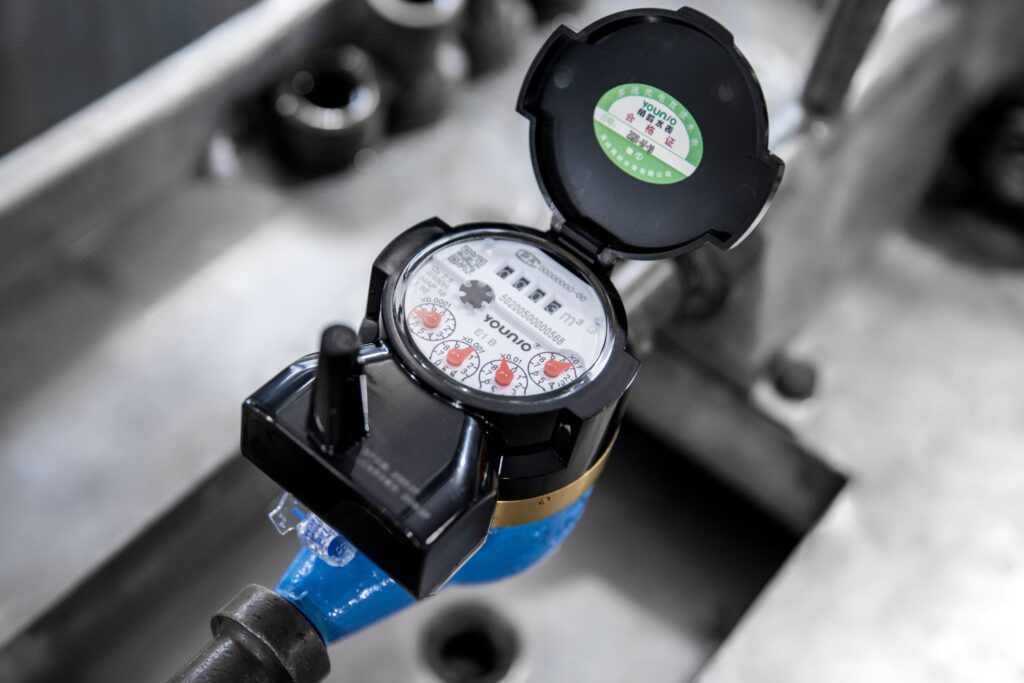
Voor sectie 11, het gebruik van echte YOUNIO-productfoto's zou een zeer sterke zet zijn. Een echt naamplaatje met pijlen die naar Q3 wijzen, R, DN, KAART, en MAT zou het artikel veel nuttiger maken voor kopers.
12. Standaarden downloaden & Referentiedocumenten
Als ik deze sectie zou structureren voor een pijlerpagina, Ik zou het zo doen:
Officiële normen
- Link naar de officiële ISO-aankooppagina voor ISO 4064 Delen 1–5
https://www.iso.org/standard/80868.html
https://www.iso.org/standard/80869.html
https://www.iso.org/standard/86239.html
https://www.iso.org/standard/86240.html
https://www.iso.org/standard/86241.html - Link naar officiële OIML R 49 documenten indien beschikbaar
https://www.oiml.org/en/files/pdf_r/r049-1-e24.pdf
Houd er rekening mee dat officiële standaarden auteursrechtelijk beschermd zijn en via geautoriseerde kanalen moeten worden verkregen
13. FAQ
Wat is het verschil tussen klasse B en R80?
Klasse B behoort tot het oudere classificatiesysteem, terwijl R80 tot het nieuwere, op verhoudingen gebaseerde systeem behoort. Ze worden wel eens in markttaal met elkaar vergeleken, maar ze zijn niet perfect uitwisselbaar. Voor een correcte vergelijking zijn de werkelijke stroomparameters en goedgekeurde technische gegevens nodig.
Welke R-verhouding moet ik opgeven voor woningmetingen??
Dat hangt af van de toepassing. In veel gevallen, hogere R-waarden verbeteren de gevoeligheid voor lage stroming, die kunnen helpen bij het opvangen van lekkages in woningen en een eerlijkere facturering. Maar de juiste keuze hangt nog steeds af van het lokale gebruiksprofiel, begroting, en installatievoorwaarden.
Kan een ISO 4064 gecertificeerde meter worden gebruikt in de VS?
Niet automatisch. ISO 4064 naleving is technisch waardevol, maar VS. projecten vereisen mogelijk ook naleving van lokale of op AWWA gebaseerde vereisten, afhankelijk van de markt en toepassing.
Wat is het verschil tussen ISO 4064 en OIML R 49?
Voor de uitgelijnde 2014 edities in uw referenties, ISO 4064-1 en OIML R 49-1 zijn identiek, en ISO 4064-2 en OIML R 49-2 zijn eveneens identiek.
Hoe vaak is ISO 4064 bijgewerkt?
Het wordt van tijd tot tijd herzien via formeel commissiewerk. Uit de verstrekte referenties blijkt dat de 2014 edities geannuleerd en vervangen eerdere edities, en dat ISO/TC onder de verantwoordelijke commissies valt 30 en de daarmee verband houdende technische subcommissie OIML.
Is ISO 4064 alleen van toepassing op mechanische watermeters?
Nee. Deel 1 stelt expliciet dat dit niet alleen geldt voor meters die op mechanische principes zijn gebaseerd, maar ook aan apparaten gebaseerd op elektrische of elektronische principes, en tot mechanische meters waarin elektronische apparaten zijn verwerkt.
Is ISO 4064 installatievereisten bevatten?
Ja. Installatievereisten vormen een speciaal onderdeel van de standaardfamilie, namelijk onderdeel 5.
Is ISO 4064 opmaakvereisten voor testrapporten opnemen?
Ja. Het testrapportformaat is een speciaal onderdeel, namelijk onderdeel 3.
14. Conclusie
ISO 4064 is van belang omdat het de waterindustrie een volledig raamwerk geeft, niet alleen een nauwkeurigheidsclaim. Het definieert eisen, testmethoden, rapportstructuur, niet-metrologische items, en installatievereisten voor een breed scala aan watermetertechnologieën. Het sluit ook nauw aan bij OIML R 49 in de overeenkomstige edities, waardoor het vooral belangrijk is voor internationale vergelijking en aanbestedingen.
Op zoek naar een betrouwbare leverancier van watermeters?
YOUNIO produceert mechanische en ultrasone watermeters van DN15 tot DN500, MID-gecertificeerd en ISO-getest 4064. Gratis monsters en fabriekstestrapporten beschikbaar voor gekwalificeerde kopers.