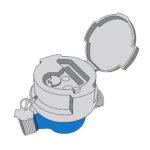

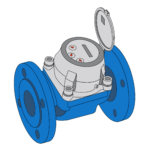

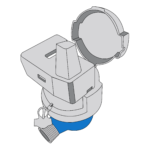

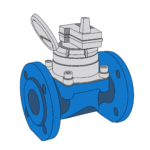

What Is the Future of Water Metering?
Water loss is not only a technical issue. I see it become a billing issue, a trust issue, and a long-term utility cost.
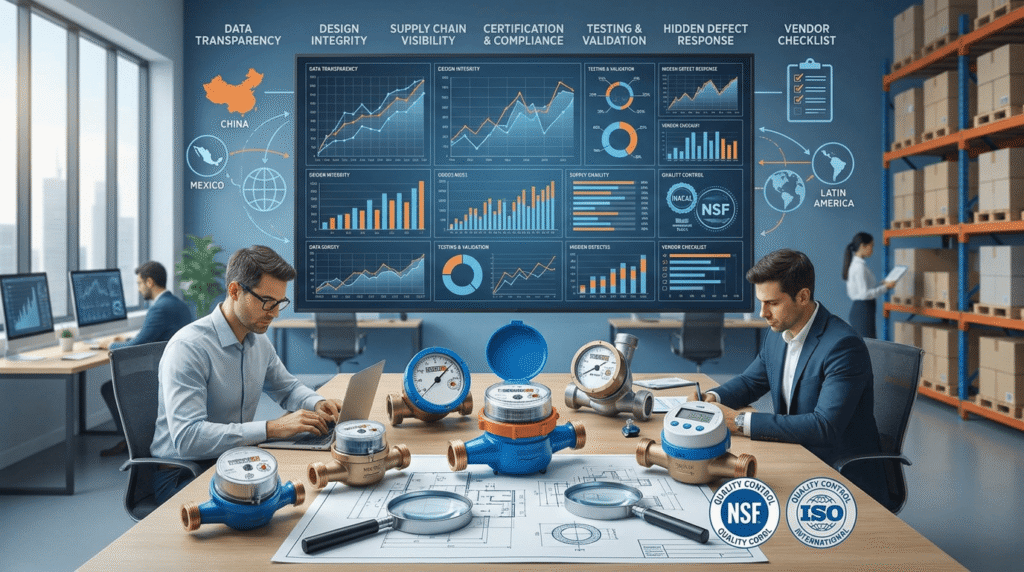
The future of water metering is moving from manual reading to connected, data-driven systems. I expect AMR, AMI, IoT water meters, alarmen, cloud-platforms, and field data to work together so utilities can reduce losses, improve billing, and manage assets with better control.
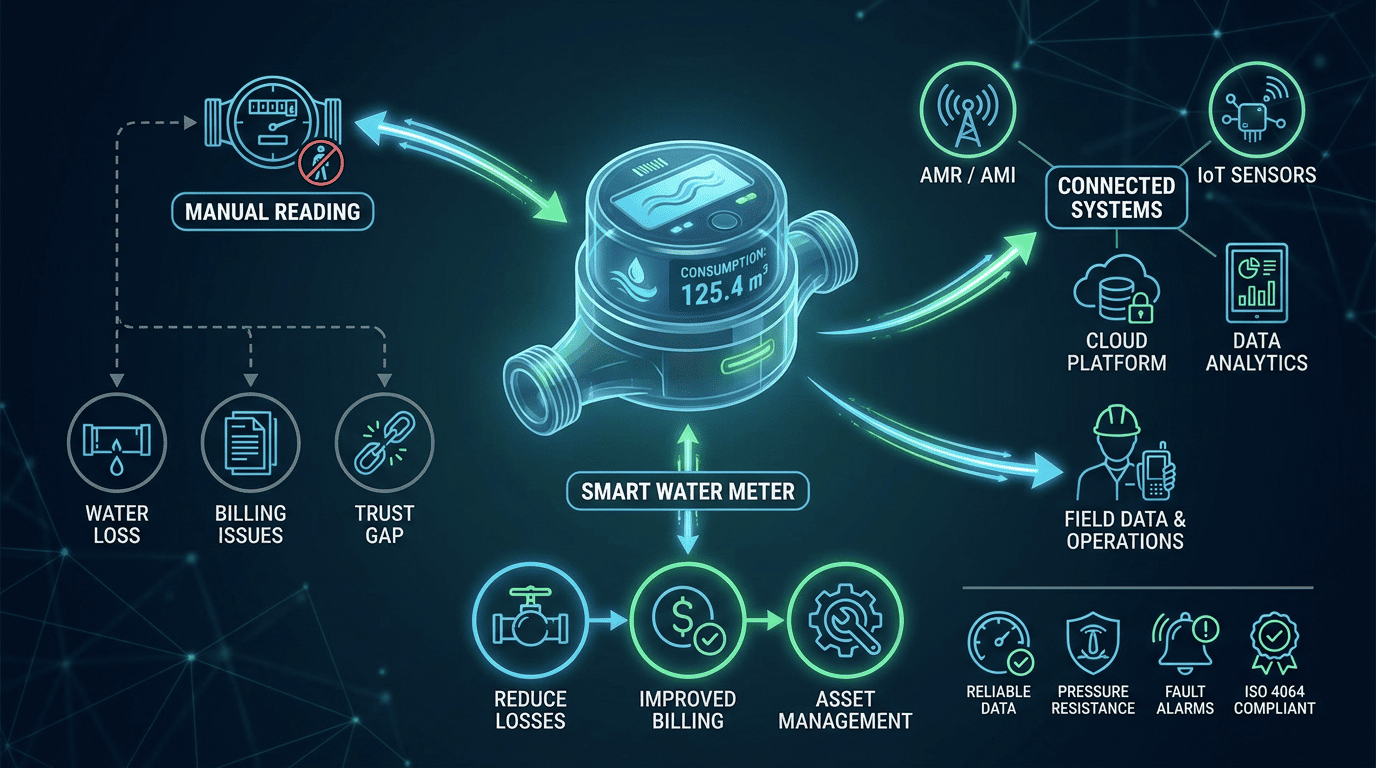
I do not see smart metering as a simple upgrade from a mechanical meter to a digital meter. I see it as a change in how a utility reads, cheques, maintains, and manages its network. A smart meter still has to measure water correctly. It also has to display data clearly, resist pressure, protect metrological performance, send reliable data, en eventuele fouten melden. ISO 4064 behandelt ook elektronische apparaten, indicatie, lezen op afstand, testen, en drukweerstand als serieuze onderdelen van de prestaties van de watermeter, niet als kleine accessoires.
Waarom moet de watermeting veranderen??
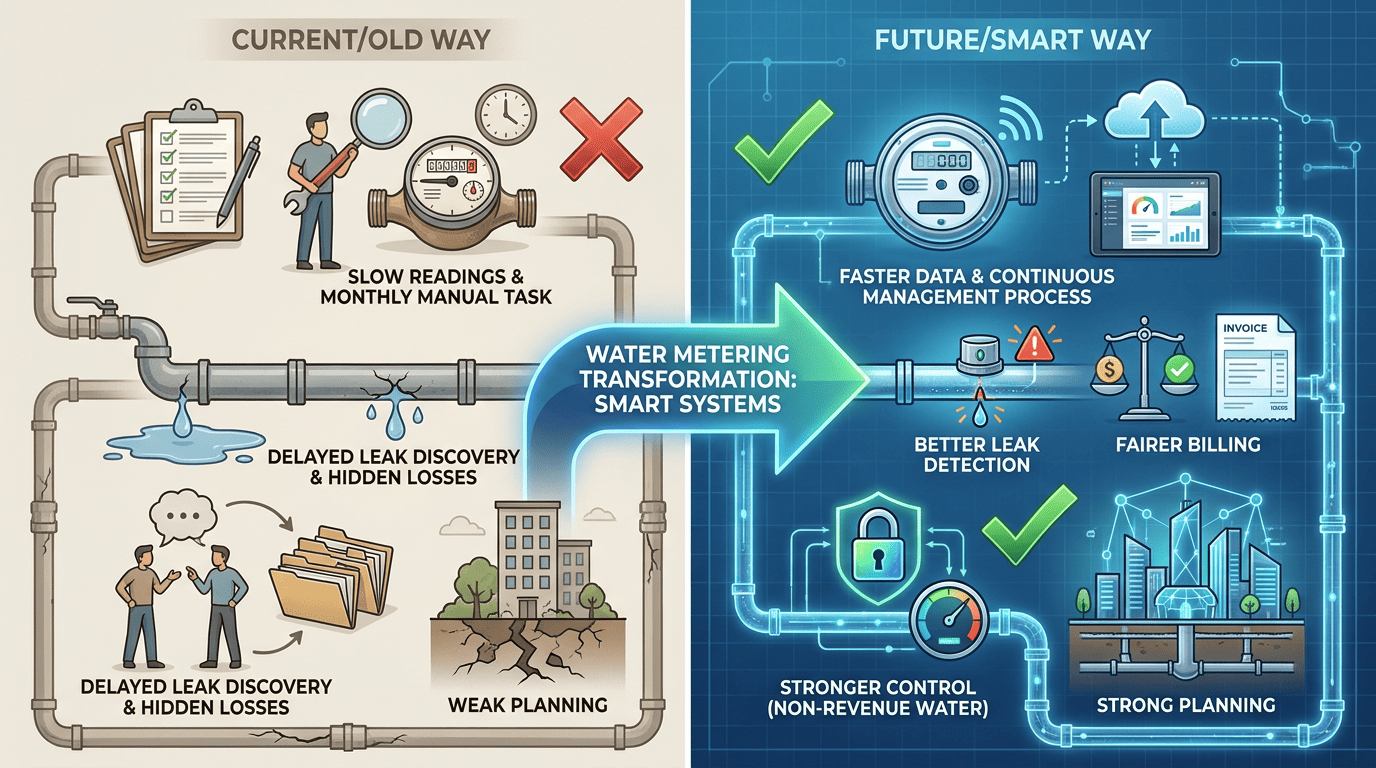
Veel waterbedrijven zijn nog steeds afhankelijk van trage metingen, vertraagde ontdekking van lekkage, en onvolledige veldgegevens. Ik zie dat dit geschillen veroorzaakt, verborgen verliezen, en zwakke planning.
De watermeting moet veranderen omdat nutsbedrijven snellere gegevens nodig hebben, Betere lekdetectie, eerlijkere facturering, en sterkere controle op niet-inkomstenwater. Slimme systemen helpen het uitlezen van meterstanden te verschuiven van een maandelijkse handmatige taak naar een continu beheerproces.
Van het uitlezen van meters tot het beheren van watergegevens
Ik zie de oude watermeter als meetpunt. Ik zie de nieuwe watermeter als een datapunt. Dit verschil is van belang. Een traditionele meter registreert het volume. A smart meter records volume and can also support events, alarmen, mededeling, and long-term operation.
I still respect mechanical meters. They are simple, proven, and useful in many projects. But many networks now need more than a monthly number. They need leak alerts. They need abnormal flow warnings. They need reverse-flow information. They need data that can support billing, onderhoud, and customer service.
A modern ultrasonic smart meter can provide a wide measurement range such as Q3/Q1 = R400, an ultralow starting flow down to 0.001 m³/u, leakage detection, detectie van droge pijpleidingen, reverse flow monitoring, alarm display, and communication options such as wireless M-Bus and NB-IoT. I see these functions as practical tools, not marketing words.
| Old metering focus | Future metering focus |
|---|---|
| Manual reading | Lezen op afstand |
| Monthly billing number | Daily or hourly data |
| Late leak discovery | Faster leak detection |
| Meter als apparaat | Meter als data-asset |
| Basisvolumeweergave | Volume, stroom, alarm, en gebeurtenisgegevens |
| Reactief onderhoud | Gepland onderhoud |
Wat is de rol van AMR in het huidige watermeetsysteem?
AMR is vaak de eerste digitale stap, maar ik beschouw het niet als de laatste stap. Het verbetert de leesefficiëntie, maar het creëert mogelijk geen volledige netwerkintelligentie.
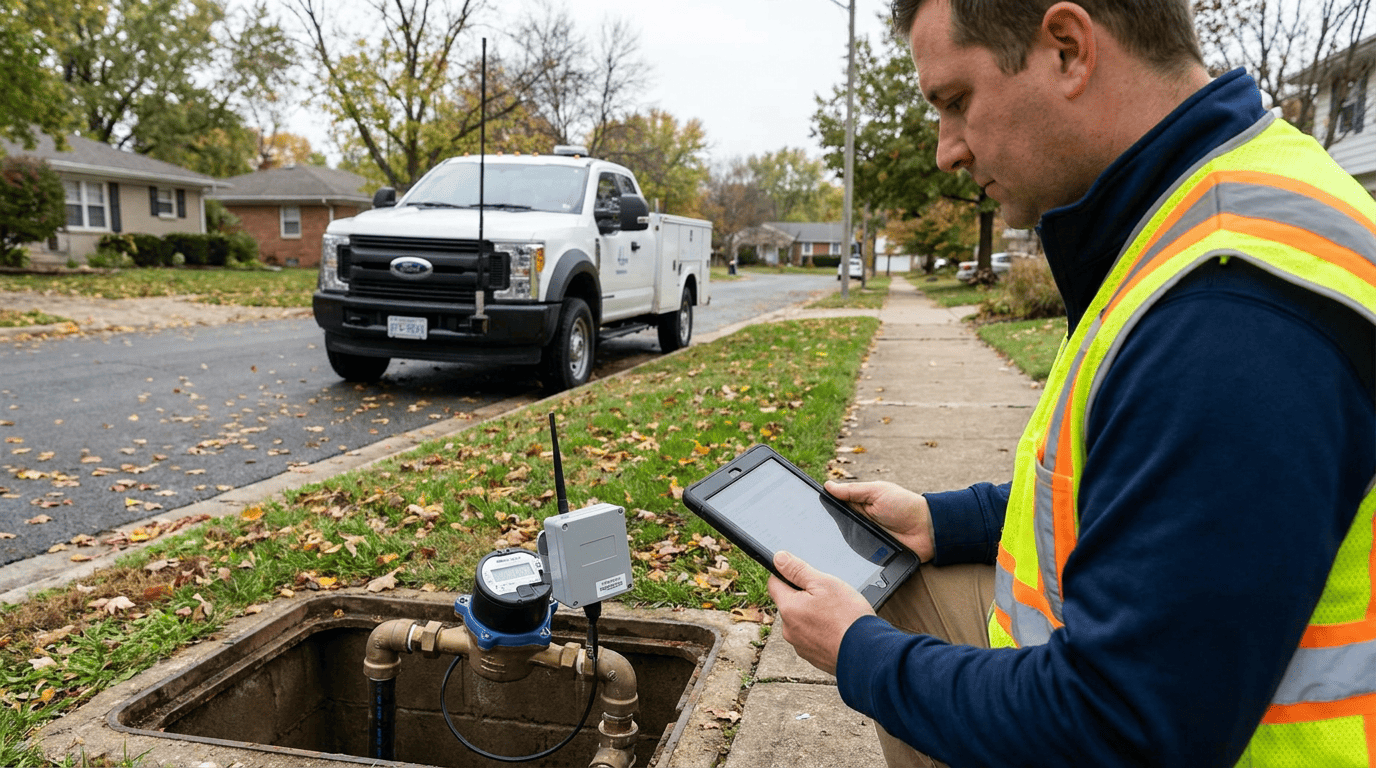
AMR, of geautomatiseerde meteruitlezing, Hiermee kunnen nutsbedrijven metergegevens verzamelen zonder elke meter handmatig uit te lezen. Het vermindert de arbeid, verbetert de leessnelheid, en vermindert menselijke fouten, maar het biedt meestal minder tweerichtingsbediening dan AMI.
Waarom AMR er nog steeds toe doet
Ik zie AMR als een brug tussen handmatig uitlezen en geavanceerde digitale meting. Een nutsvoorziening kan beginnen met een walk-by, langsrijden, RF, M-bus, LoRa, of andere communicatiemethoden. Het hoofddoel is eenvoudig. Het hulpprogramma wil metingen sneller en met minder fouten verzamelen.
AMR kan de kosten van veldbezoeken verlagen. Het kan ook de geschatte rekeningen verlagen. Het kan hulpprogramma's helpen bij het opbouwen van een eenvoudige leesdatabase. Dit is handig wanneer een nutsbedrijf niet klaar is voor volledige AMI-investeringen.
Maar AMR kent grenzen. Veel AMR-systemen ondersteunen hoofdzakelijk eenrichtingsuitlezing. Het is mogelijk dat ze geen frequente intervalgegevens leveren. Het is mogelijk dat ze geen geavanceerde alarmen in realtime ondersteunen. Ze kunnen ook afhankelijk zijn van lokale leesroutes. Dus ik vraag het niet, “Is AMR goed of slecht??' vraag ik, ‘Komt AMR overeen met het huidige doel van het nutsbedrijf??”
| AMR-sterkte | AMR-beperking |
|---|---|
| Lagere werklast voor handmatig lezen | Biedt mogelijk geen realtime inzicht |
| Betere leesnauwkeurigheid | Mogelijk zijn nog steeds leesroutes vereist |
| Snellere factureringscyclus | Beperkt alarmbeheer in sommige systemen |
| Lower first investment than full AMI | Less useful for active network control |
Why Is AMI Becoming the Main Direction?
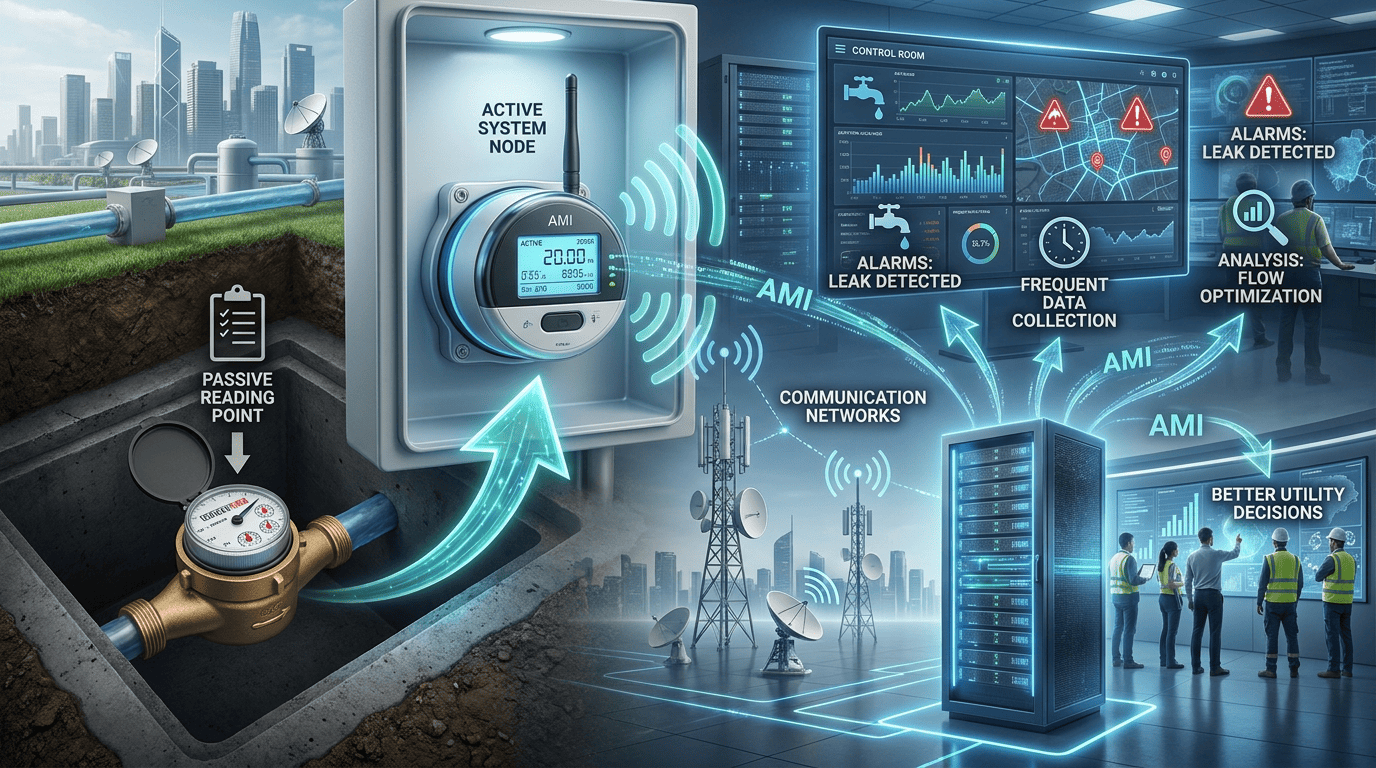
AMI changes the meter from a passive reading point into an active system node. I see this as the real shift in future water metering.
AMI, or advanced metering infrastructure, connects meters, communication networks, and management platforms. It supports more frequent data collection, alarmen, analysis, and better utility decisions.
AMI is not only a communication system
I do not define AMI only by the communication technology. NB-IOT, Lorawan, draadloze M-Bus, and other networks are only part of the system. AMI also includes the meter, the communication module, the data platform, the alarm rules, the maintenance process, and the people who use the data.
Een goed AMI-project zou een nutsbedrijf moeten helpen duidelijke vragen te beantwoorden. Waar vindt een abnormale nachtstroom plaats?? Welke meters stopten met rapporteren? Welk gebied heeft mogelijke lekkage? Welke klant heeft een ongebruikelijk verbruik? Welke meter toont droge leiding of tegenstroom?
De hardware van de meter is nog steeds van belang. ISO 4064 stelt dat verbindingen tussen elektronische onderdelen, zoals de meetomvormer, rekenmachine, en indicatieapparaat, moet betrouwbaar en duurzaam zijn. Ik lees dit als herinnering dat slimme meters afhankelijk zijn van zowel communicatie als een stabiel intern ontwerp.
| AMI-laag | Wat ik controleer |
|---|---|
| Meter | Nauwkeurigheid, drukklasse, weergave, batterij, afdichting |
| Mededeling | NB-IOT, Lorawan, draadloze M-Bus, signaalsterkte |
| Platform | Zichtbaarheid van gegevens, alarmen, activa in kaart brengen |
| Veldproces | Installatie, activering, inbedrijfstelling |
| Hulpprogramma-workflow | Facturering, onderhoud, klantenservice |
| Risicobeheersing | Gegevensbeveiliging, bijhouden van gegevens, reactie op falen |
Wat een slimme watermeter echt slim maakt?
Een meter is niet alleen slim omdat hij over een communicatiemodule beschikt. Ik zoek naar meetstabiliteit, detectie van gebeurtenissen, helderheid weergeven, en veldbetrouwbaarheid.
Een slimme watermeter moet nauwkeurig meten, betrouwbaar communiceren, nuttige informatie weergeven, gebeurtenissen registreren, abnormale omstandigheden op te sporen, en ondersteuning voor langdurig gebruik in echte veldomgevingen.
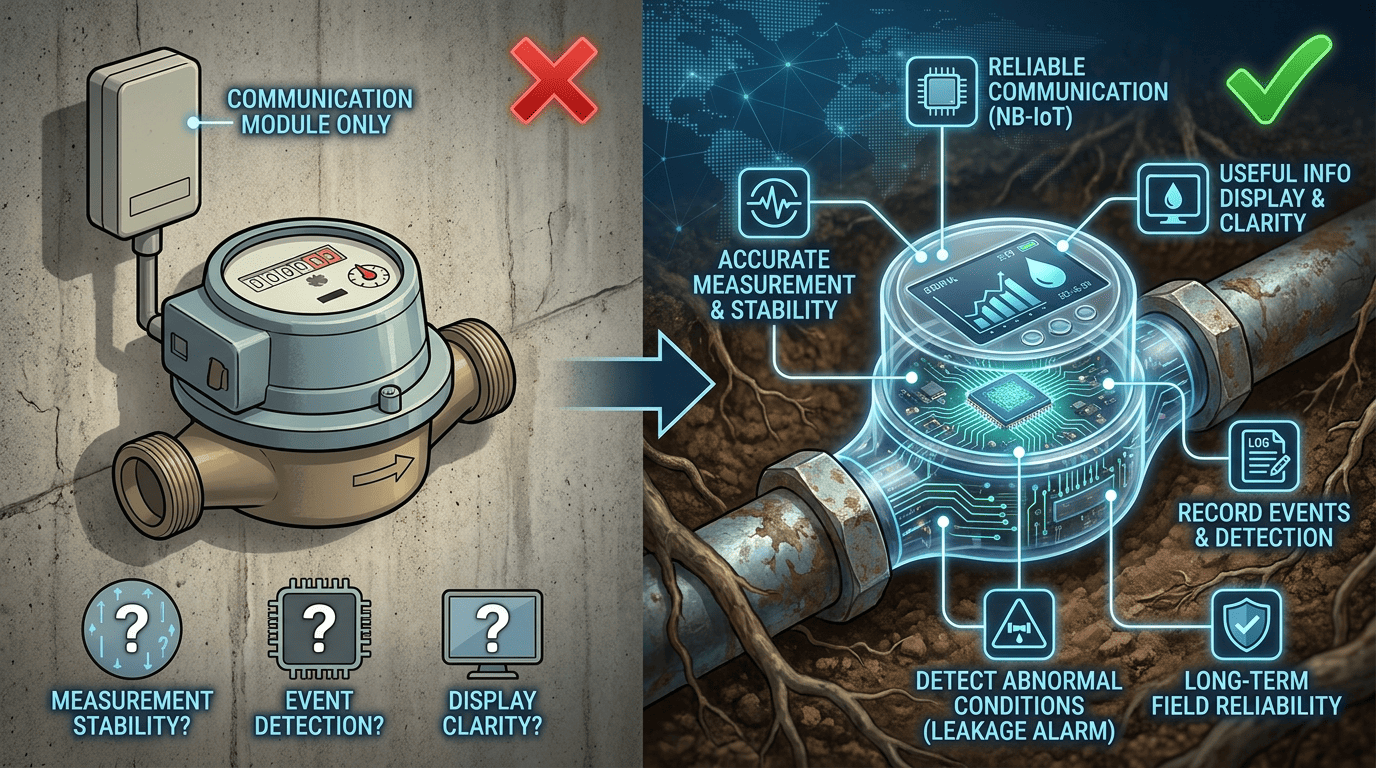
Slim betekent meetbaar, leesbaar, en diagnosticeerbaar
Ik zie drie niveaus van slimme meterwaarde. Het eerste niveau is meten. De meter moet water correct meten. Het tweede niveau is communicatie. De meter moet gegevens naar het systeem sturen. Het derde niveau is de diagnose. De meter moet het nutsbedrijf helpen begrijpen wat er in het veld gebeurt.
YOUNIO ultrasone slimme meters worden beschreven zonder slijtdelen, stabiliteit op lange termijn, meer dan 10 jaar batterijduur, IP68 onderwaterbescherming, leakage detection, detectie van droge pijpleidingen, tweerichtingsstroommeting, en een groot LCD-scherm dat het cumulatieve volume weergeeft, onmiddellijke stroom, en alarminformatie. Ik vind deze combinatie belangrijk omdat de veldbetrouwbaarheid van meer dan één kenmerk afhangt.
Het display is ook belangrijk. ISO 4064 stelt dat het indicatieapparaat het volume continu moet weergeven, periodiek, of op aanvraag, en dat het gemakkelijk leesbaar moet zijn. Dit betekent dat de lokale lezing nog steeds belangrijk is, zelfs als uitlezing op afstand bestaat.
| Slimme meterfunctie | Praktische waarde |
|---|---|
| Groot meetbereik | Betere opvang bij lage stroming |
| Lage startstroom | Beter zicht op lekkage |
| IP68-bescherming | Betere kamerprestaties |
| Lange levensduur van de batterij | Lagere onderhoudslast |
| Alarmweergave | Snellere velddiagnose |
| NB-IoT of draadloze communicatie | Uitlezen en monitoren op afstand |
| Detectie van omgekeerde stroom | Betere sabotage- en netwerkanalyse |
| Detectie van droge leidingen | Betere controle over abnormale status |
Hoe verandert IoT de watermeting??
IoT maakt watermeters onderdeel van een groter besturingssysteem. Ik zie dit als het punt waarop metergegevens nuttig worden voor de planning, dienst, en vermogensbeheer.
IoT-watermeting verbindt meters met cloudplatforms en workflows van nutsbedrijven. Het zorgt ervoor dat gegevens van de meter naar de mensen en systemen kunnen gaan die deze nodig hebben.
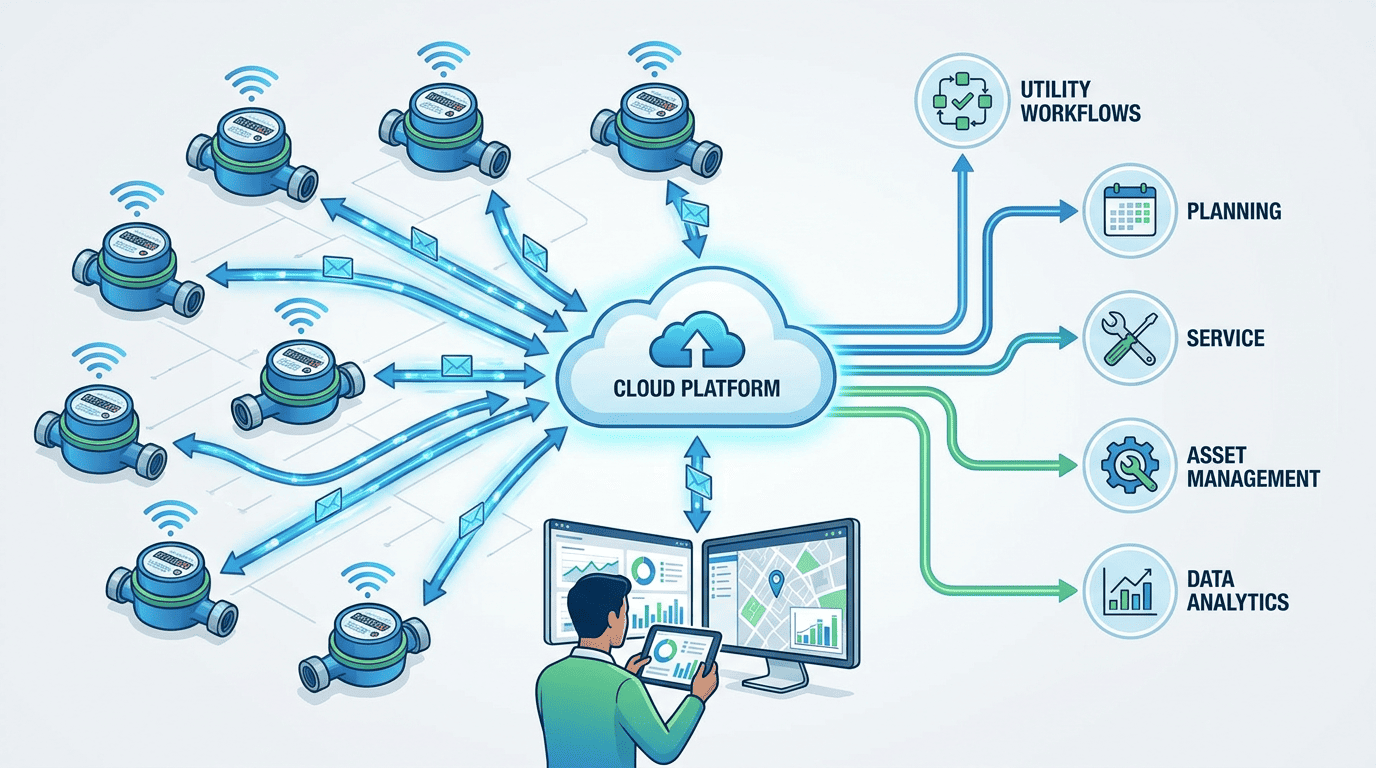
IoT zet veldgebeurtenissen om in managementsignalen
Ik denk niet dat IoT alleen waardevol is omdat het modern is. Ik denk dat het waardevol is omdat het veldgebeurtenissen zichtbaar kan maken. Een lek wordt niet meer alleen ontdekt na een klacht. Een gestopte meter wordt niet langer verborgen tot de volgende facturatiecyclus. Een droge leidingconditie kan een systeemalarm worden. Een tegenstroomgebeurtenis kan een onderhoudsgeval worden.
Daarom is het melden van storingen belangrijk. ISO 4064 vereist dat wanneer een watermeter gegevens naar randapparatuur verzendt, de verzending moet vergezeld gaan van een bericht dat de aanwezigheid van een fout aangeeft wanneer er een fout bestaat. Ik zie dit als een belangrijk principe voor slimme meters. Gegevens mogen er niet geldig uitzien als de meter een probleem meldt.
Het systeem heeft ook een veilige alarmoverdracht nodig als meetwaarden op een extern station worden herhaald. Dit is belangrijk omdat een nutsbedrijf beslissingen over facturering of onderhoud kan nemen op basis van gegevens op afstand. Als het alarm verloren gaat, de beslissing kan verkeerd zijn.
| IoT-functie | Nutsvoordeel |
|---|---|
| Gegevens uploaden op afstand | Minder handmatig lezen |
| Alarmtransmissie | Snellere probleemreactie |
| Opname van evenementen | Betere afhandeling van geschillen |
| Consumptietrend | Betere vraaganalyse |
| Batterijstatus | Betere serviceplanning |
| Clouddashboard | Betere zichtbaarheid van het management |
Welke voordelen moeten nutsbedrijven verwachten van toekomstige watermetingen??
Ik verwacht dat toekomstige metingen de facturering zullen verbeteren, waterverlies verminderen, behoud ondersteunen, en de klantenservice meer op feiten gebaseerd maken.
Toekomstige watermetingen kunnen betere factureringsgegevens opleveren, snellere lekdetectie, lagere leeskosten, sterkere activacontrole, en duidelijkere verbruiksinformatie voor zowel nutsbedrijven als klanten.
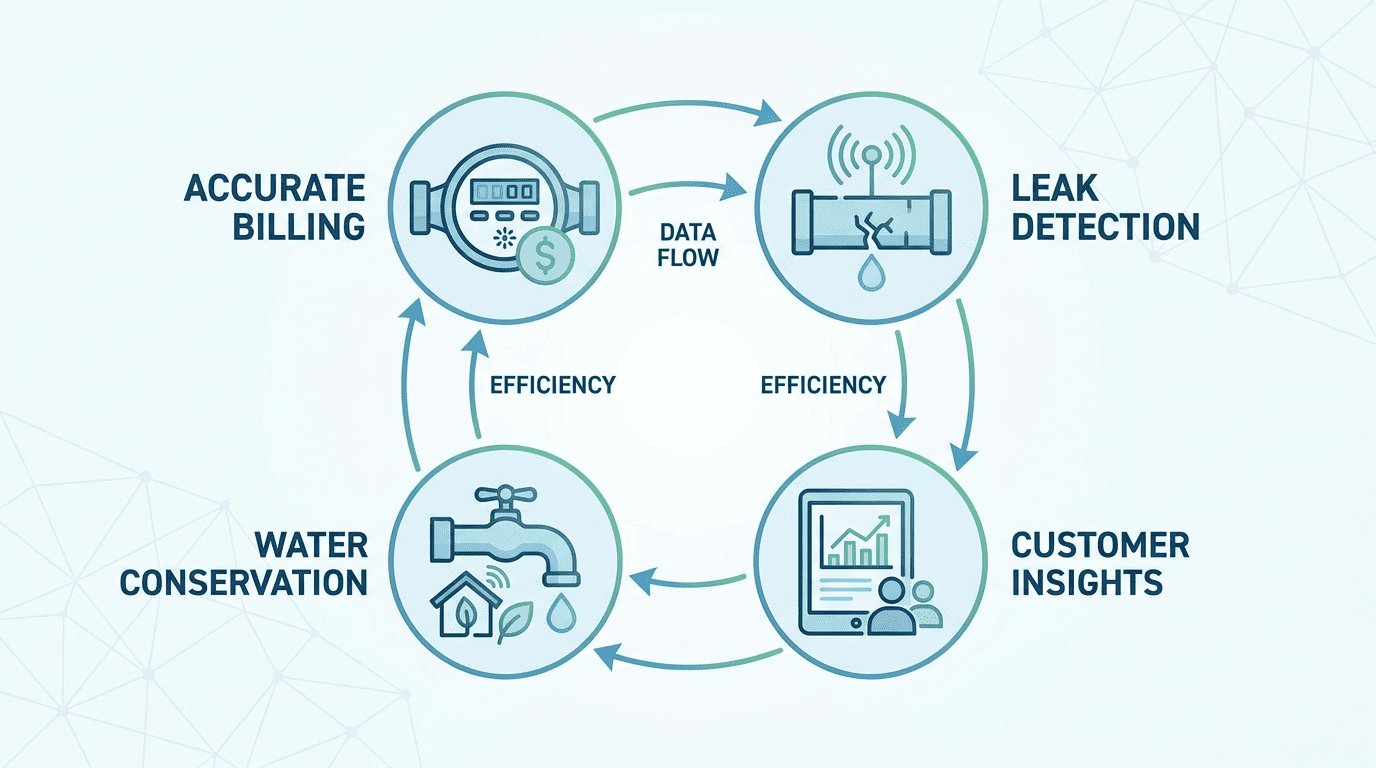
Betere data zorgen voor betere beslissingen
Ik herinner projectteams er altijd aan dat slimme meters op zichzelf geen waarde creëren. De waarde komt wanneer het hulpprogramma de gegevens gebruikt. Een platform vol ongelezen alarmen is niet slim. Een dashboard dat niemand controleert, is niet slim. Een meter die gegevens uploadt maar geen onderhoudsworkflow heeft, creëert beperkte waarde.
Wanneer de workflow duidelijk is, de voordelen worden reëel. The billing team can reduce estimated readings. The maintenance team can find silent failures faster. The customer service team can explain unusual bills with data. The planning team can see demand trends by area. The NRW team can compare consumption patterns and leakage signals.
ISO 4064 test methods also remind me that performance testing is based on recorded values, afmetingen, and observations. I apply the same idea to projects. If a utility wants long-term value, it should record installation data, signal data, commissioning data, alarmen, and service history.
| Voordeel | What makes it real |
|---|---|
| Fairer billing | Accurate meter data and correct mapping |
| Lower NRW | Leak detection and consumption analysis |
| Lower reading cost | Remote data collection |
| Better maintenance | Alarms and event logs |
| Better customer service | Clear consumption records |
| Better planning | Area-level trend data |
Welke uitdagingen kunnen slimme meterprojecten tegenhouden??
Ik zie dat veel problemen met slimme meters al vóór de installatie beginnen. Het product kan goed zijn, maar het projectproces kan zwak zijn.
Slimme meteringprojecten kunnen mislukken vanwege verkeerde specificaties, slechte signaalcontroles, zwakke installatiecontrole, onduidelijke inbedrijfstelling, hoge kostendruk, en zwakke databeveiligingsplanning.
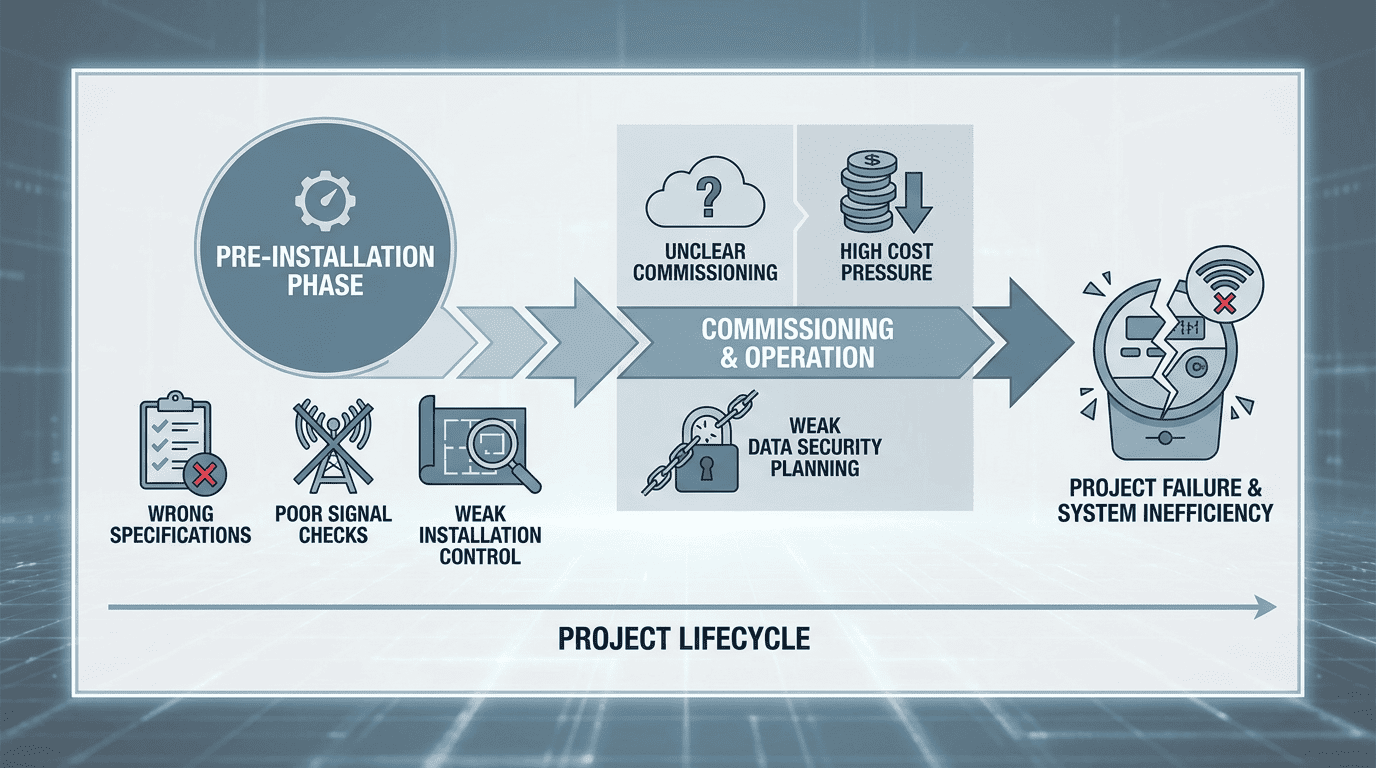
De grootste risico's zijn meestal van praktische aard
Ik heb gezien dat teams zich te veel op het communicatieprotocol concentreerden en te weinig op de basis. Ze vergeten verbindingsnormen. Ze slaan drukcontroles over. Ze bevestigen het signaal in de kamers niet. Ze registreren geen initiële metingen. Ze komen niet correct overeen met de serienummers van de kamers. Ze trainen het onderhoudsteam niet.
Druk is een basisitem dat niet kan worden genegeerd. ISO 4064 requires a water meter to withstand 1.6 maal de maximaal toelaatbare druk voor 15 minuten en tweemaal de maximaal toegestane druk 1 minuut zonder lekkage of schade. I use this as a reminder that smart meters are still hydraulic products first.
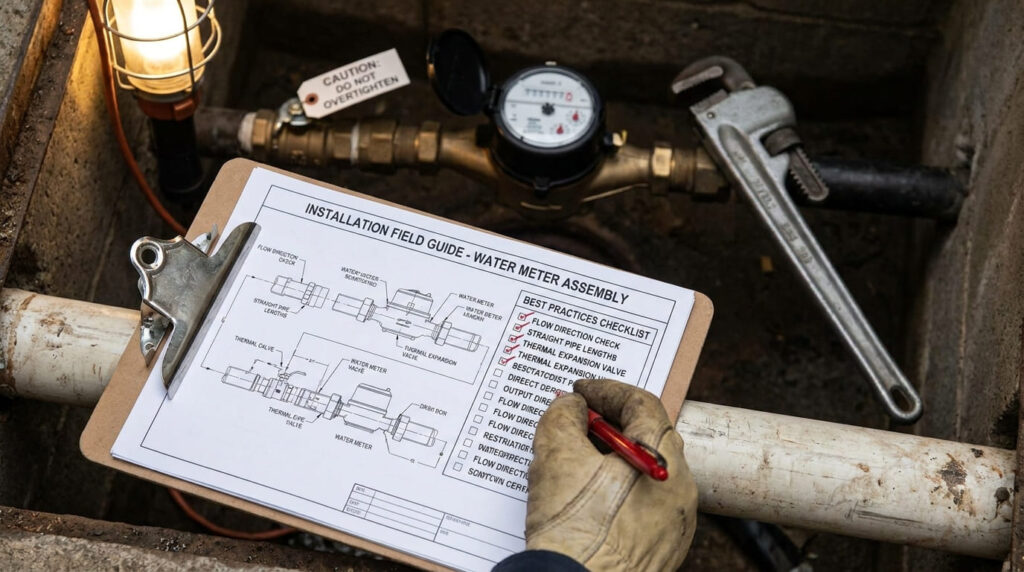
Installation and testing conditions also matter. ISO 4064 test installation descriptions include water supply, pipework, flow-regulating devices, isolating valves, temperature measurement, pressure measurement, and other devices used to check flow, cycle duration, and cycle count. The same reference also states that meters and connecting pipes should be suitably bled of air. I see this as a clear warning for field teams. Lucht, poor pipework, and bad commissioning can damage performance.
| Projectrisico | Control action |
|---|---|
| Wrong flange or thread | Approve drawings before order |
| Zwak signaal | Test signal before installation |
| Water hammer | Open valves slowly |
| Air in pipe | Bleed air during commissioning |
| Poor data mapping | Match meter ID, room, and platform record |
| Lost alarms | Check alarm transmission |
| Weak maintenance plan | Define inspection and battery review |
How Should Buyers Choose the Right Future-Ready Meter?
I do not choose a meter only by price. I choose it by application, risico, certification path, data need, and maintenance reality.
Buyers should select water meters by matching the meter type, stroom bereik, drukklasse, protection level, communicatie methode, installation environment, and platform needs to the actual project.
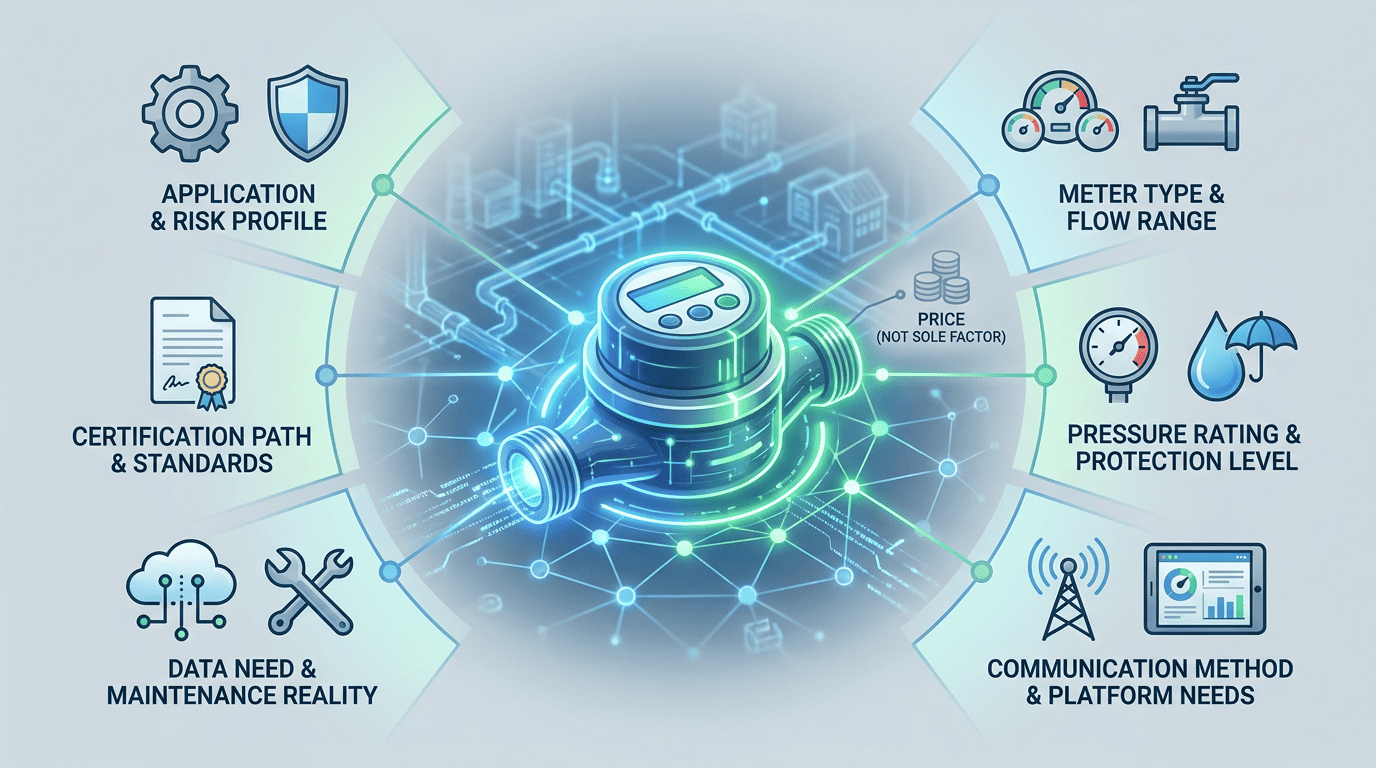
The right meter is the meter that fits the project
A residential apartment project may need compact meters, strong low-flow sensitivity, and simple platform mapping. An industrial site may need larger sizes, higher pressure confidence, and strong event records. A flooded chamber may need IP68 protection. A city-wide project may need long battery life and stable communication.
For ultrasonic residential metering, Ik let op metingen met een groot bereik, lage startstroom, levensduur van de batterij, communicatie mogelijkheden, alarm display, leakage detection, detectie van droge pijpleidingen, en tegenstroommeting. Deze functies helpen wanneer het nutsbedrijf zowel factuurgegevens als operationeel inzicht wil.
Ook controleer ik of accessoires voor uitlezen op afstand de meting beïnvloeden. ISO 4064 staat apparaten voor uitlezen op afstand toe waar de nationale regelgeving dit toestaat, maar de toevoeging van dergelijke apparaten mag de metrologische kenmerken van de meter niet veranderen. Deze zin is erg belangrijk. Een communicatieapparaat moet de meter ondersteunen, de manier waarop het meet niet veranderen.
| Selectie-item | Vraag die ik stel |
|---|---|
| Stroombereik | Registreert de meter een laag debiet?? |
| Druk | Komt dit overeen met de netwerkconditie?? |
| Bescherming | Kan het de kamer overleven?? |
| Mededeling | Werkt het signaal op de locatie?? |
| Weergave | Kan het veldteam de metingen verifiëren?? |
| Alarmen | Kan er sprake zijn van lekkage, droge pijp, of tegenstroom? |
| Batterij | Komt het onderhoudsplan overeen met de levensduur van de batterij?? |
| Platform | Kan het hulpprogramma de gegevens gemakkelijk gebruiken? |
Wat is mijn praktische kijk op de toekomst?
Ik geloof niet dat de toekomst van watermeting alleen maar om slimme apparaten gaat. Ik geloof dat het gaat om betere beslissingen, gebaseerd op betere veldgegevens.
De toekomst van watermeting zal nauwkeurige meters combineren, betrouwbare communicatie, cloud-platforms, alarmlogica, velddiscipline, en langdurig onderhoud.
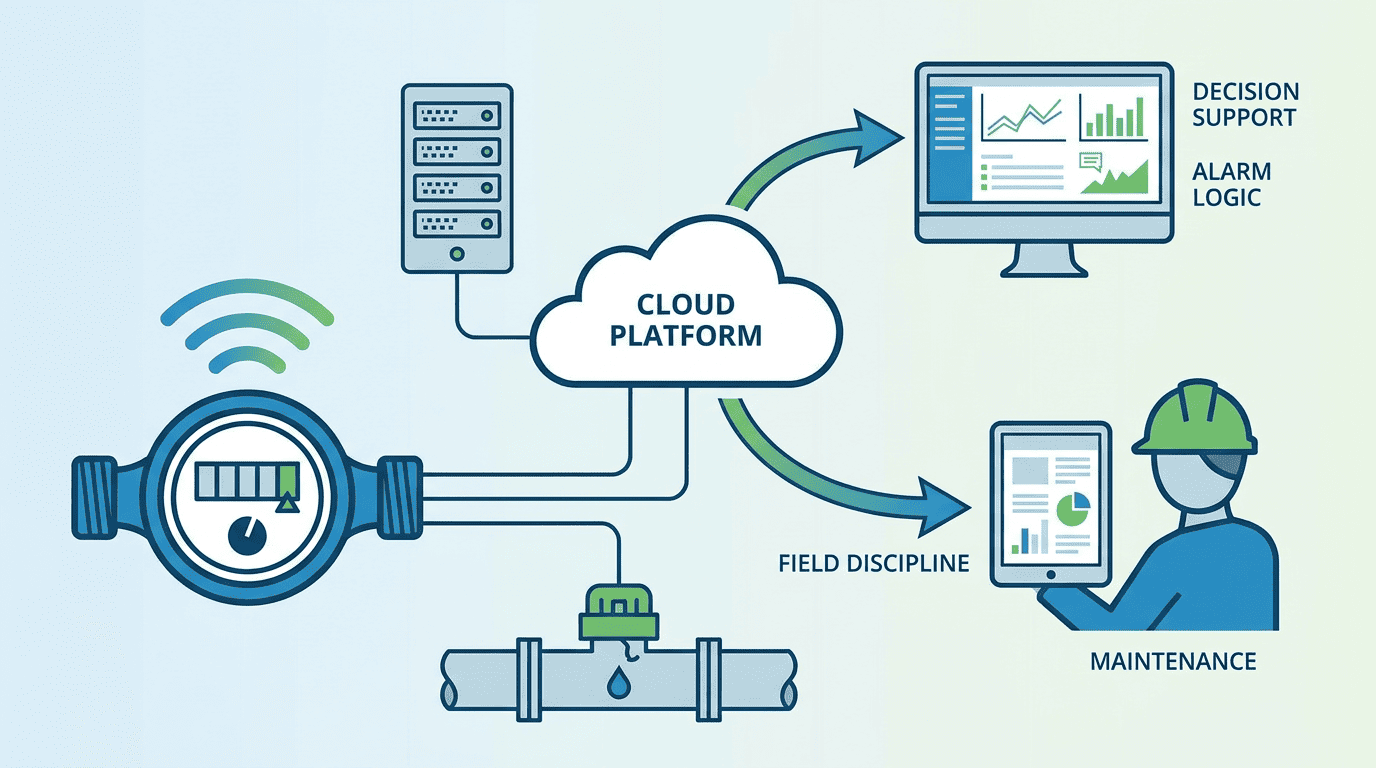
Slimme meters zijn een systeem, geen snelkoppeling
Ik zie de sterkste toekomst in systemen die techniek verbinden, facturering, onderhoud, and customer service. Een meter alleen kan NRW niet oplossen. Een platform alleen kan lekkage niet verhelpen. Een communicatiemodule alleen kan de facturering niet verbeteren. Het volledige systeem moet samenwerken.
Een goed toekomstbestendig watermeetproject begint met de juiste productselectie. Het gaat verder met sitecontroles. Het hangt af van een schone installatie. Het wordt nuttig na de inbedrijfstelling. Het creëert alleen waarde op de lange termijn als het nutsbedrijf de gegevens gebruikt.
Daarom behandel ik slimme watermetering zowel als een technisch project als als een managementproject. De technische kant heeft meetnauwkeurigheid nodig, druk weerstand, betrouwbare elektronica, juiste weergave, beveiligde communicatie, en geregistreerde testgegevens. De managementkant heeft duidelijke workflows nodig, opgeleide mensen, eigendom van gegevens, en serviceverantwoordelijkheid.
Als een projectteam alleen een goedkopere meter wil, Ik kan alleen de aankoopkosten verlagen. Als een projectteam een beter meetsysteem wil, Ik kan helpen het levenscyclusrisico te verminderen.
Conclusie
De toekomst van watermeting is verbonden, datagedreven, en praktisch. Ik zie de beste resultaten als slimme meters, mededeling, installatie, inbedrijfstelling, en onderhoudswerkzaamheden als één systeem.
Heeft u een project waarvoor de juiste meterspecificatie nodig is??
Stuur uw vereisten — pijpmaat, stroom profiel, toepassingstype, lokale certificeringsinstantie en communicatieprotocol — rechtstreeks naar Leon. We’ll review and respond within 24 uur met een schriftelijk technisch advies.
YOUNIO slimme meters: DN15–DN500 | NB-IOT, LoRa, M-bus
Certificeringen: MID B+D (Tsjechische CMI) | NSF/ANSI 61+372 | ACS (Frankrijk)
📧 leon@younio.com | 📱Whatsappen: +86-13666800173