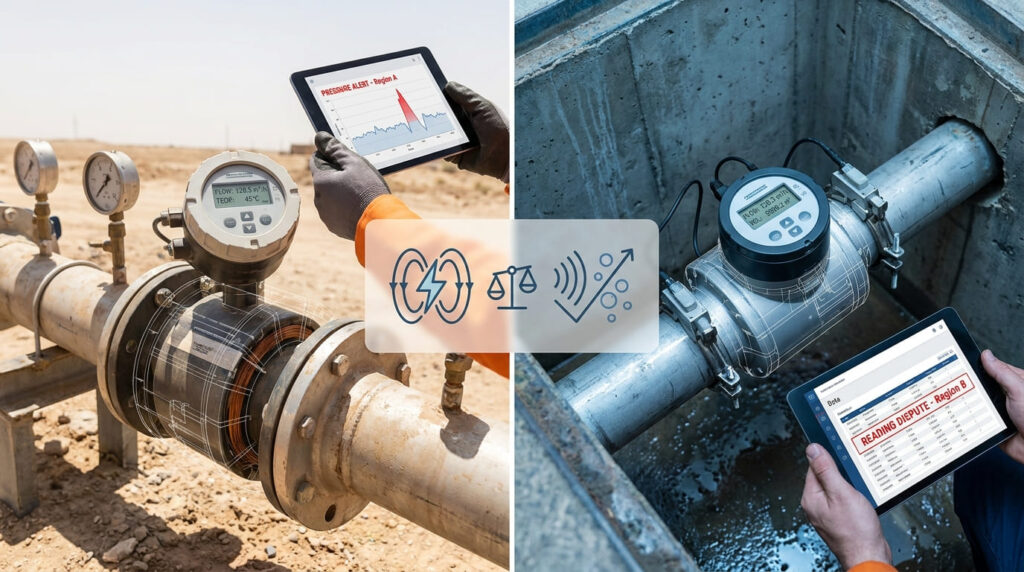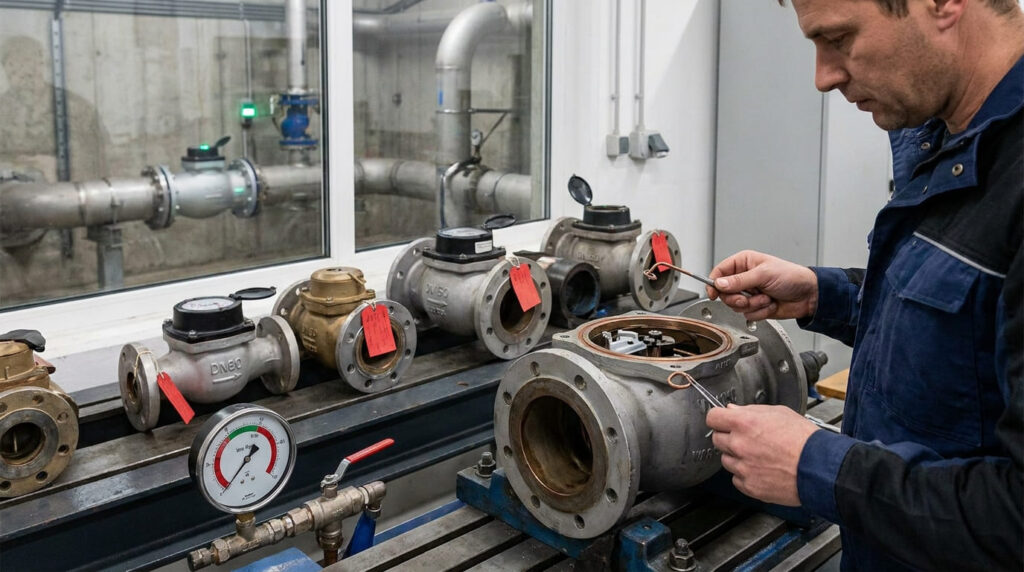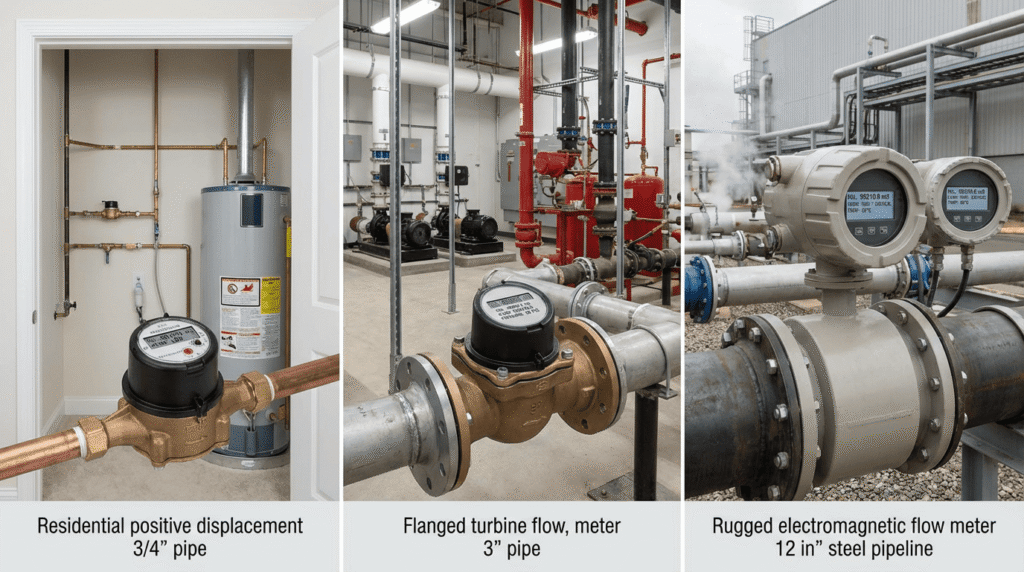
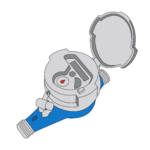
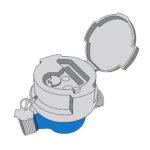

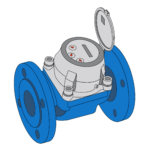

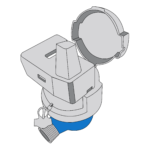


Замена счетчиков в городе на бумаге выглядит просто. Купить счетчики, поменять счетчики, отправлять счета. В реальной жизни, Я вижу разгневанных граждан, поздние графики, и заголовки, которые не нужны ни одной утилите.
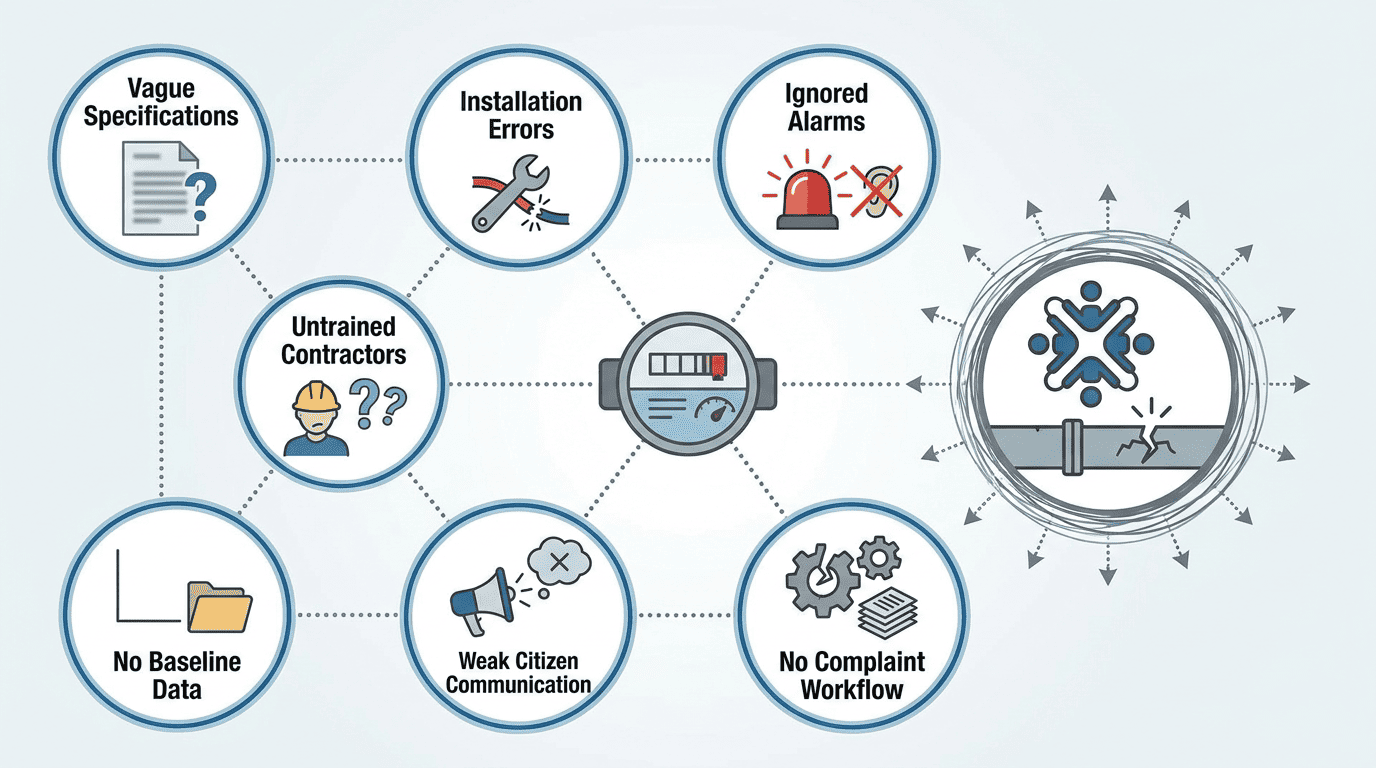
Я вижу семь скрытых рисков замены муниципальных счетчиков воды: слабые характеристики, неподготовленные подрядчики, плохое общение с гражданами, ошибки установки, игнорируемые сигналы тревоги, слабая работа с жалобами, и отсутствие базовых данных. Города, в которых нет четкого обучения и процессов подачи жалоб, часто сталкиваются с комбинированным прессингом и техническим давлением..
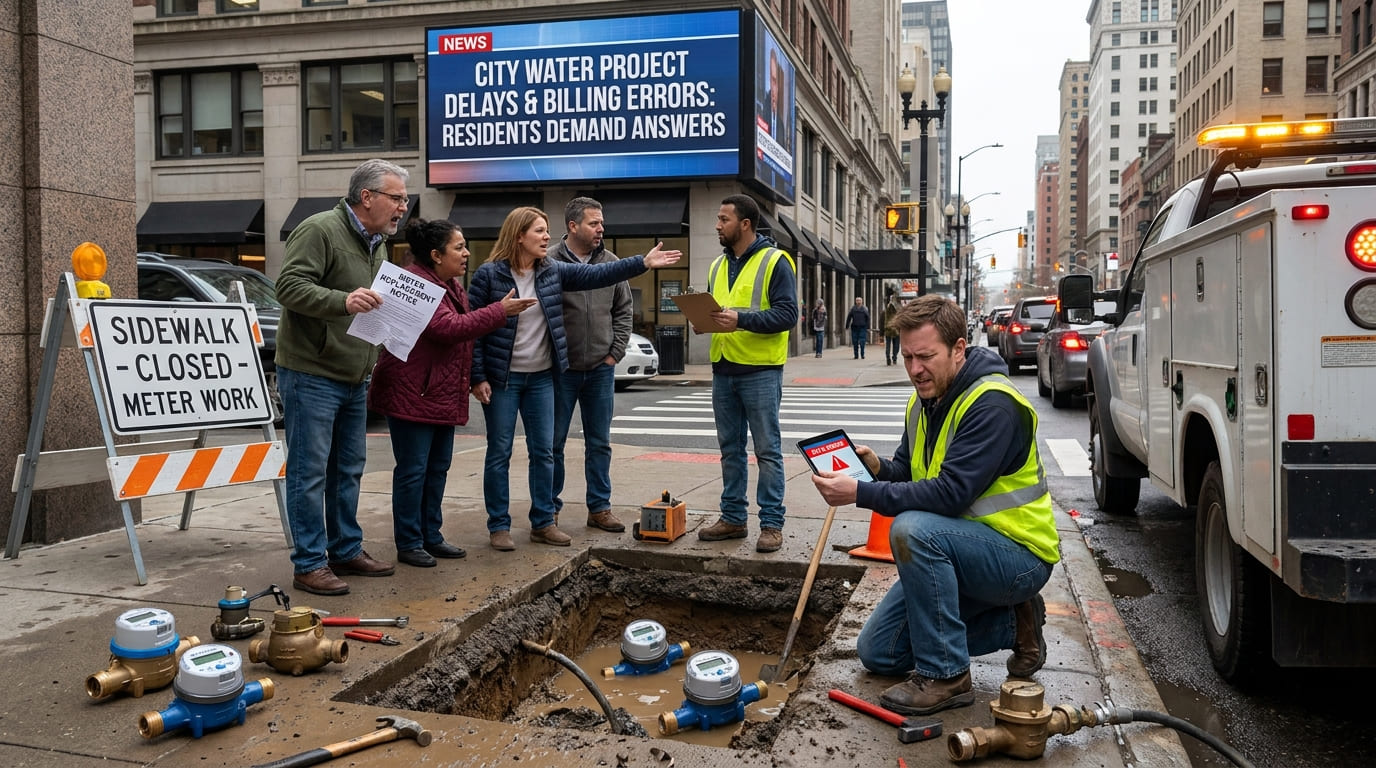
Я просмотрел файлы жалоб от многих городских проектов.. Те же закономерности повторяются. Техническая часть почти никогда не является самой страшной проблемой.. Худшая проблема – это разрыв между технической реальностью и ожиданиями граждан., и отсутствие реального плана рассмотрения жалоб, когда они резко возрастают.. В этом посте, Я делюсь тем, что узнаю из этих файлов., и я даю практический контрольный список, которым утилиты могут воспользоваться перед, в течение, и после развертывания.
Почему города запускают программы замены счетчиков?
Старые счетчики недочитаны. Старые счетчики выходят из строя. Старые счетчики не могут общаться с системой. Я вижу, как города заменяют счетчики, чтобы решить все три проблемы одновременно..
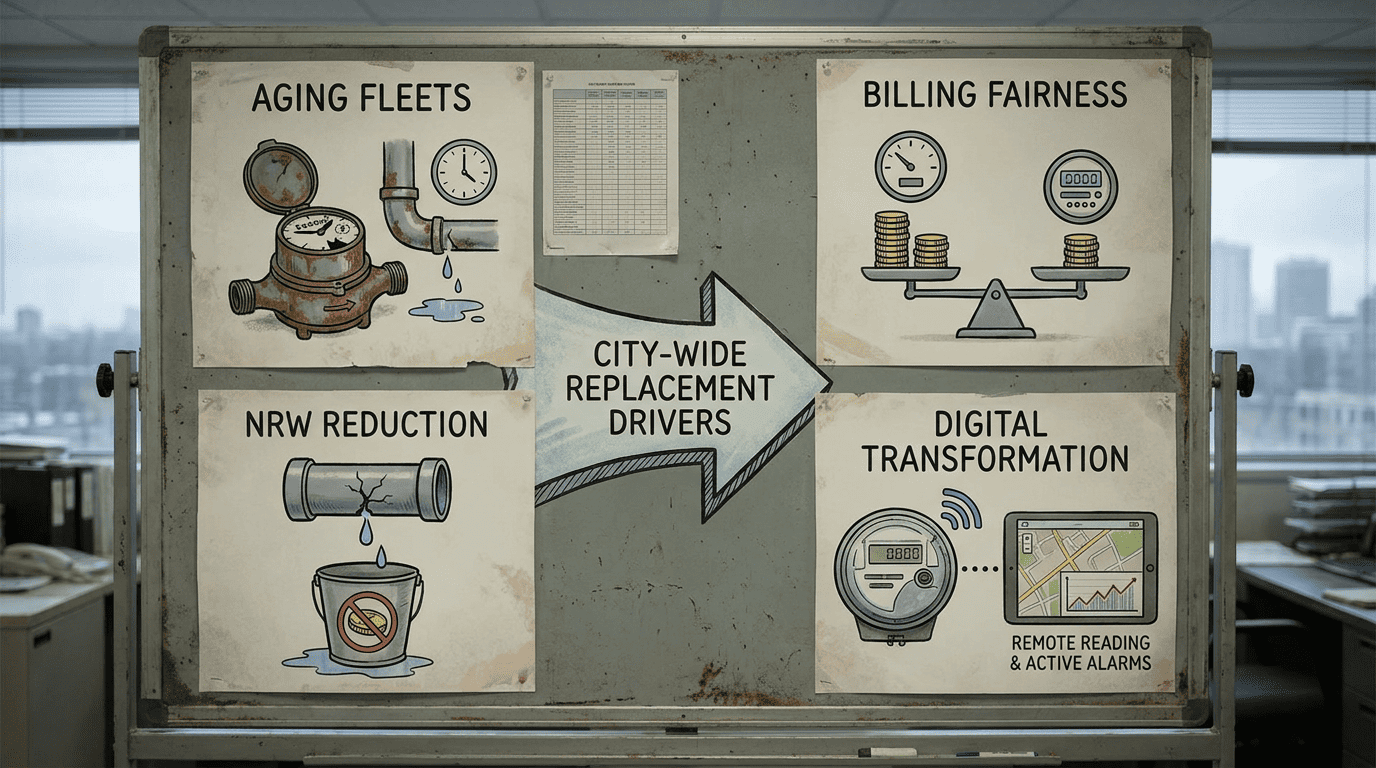
Я вижу четыре основных фактора замены в масштабах города: стареющий парк техники, Сокращение NRW цели, справедливость выставления счетов, и цифровая трансформация в сторону интеллектуальных систем водоснабжения с дистанционным считыванием и активными сигнализациями..
Чего города хотят от нового флота
Я задаю каждой утилите один и тот же вопрос: чего ты хочешь от нового флота? Ответы обычно совпадают. Им нужны точные измерения в соответствии с современными стандартами., с проверкой на основе JJG 162-2009 для счетчиков холодной воды или Iso 4064:2014 / OIML R49-2013 для ультразвуковых счетчиков. Они хотят удаленного чтения. Интеллектуальный ультразвуковой счетчик относится к беспроводному сборщику данных GSM и использует мобильную общедоступную сеть GSM для формирования системы беспроводного мониторинга., easy to manage and saving operating costs. They want event data: the system actively reports abnormal information from the pipeline network, including leaks, всплески, неправильное направление, и события отсутствия потока. They want a path toward smart city integration, which is exactly what NB-IoT умный счетчик воды projects support as a node for IoT and smart city construction. The new fleet is not just hardware. It is a data platform.
| Driver | What the city expects | Источник |
|---|---|---|
| Aging fleet | Modern accuracy class | Iso 4064 / JJG 162 |
| Северный Рейн-Вестфалия | Active leak/burst alarms | Event reporting |
| Billing fairness | Reliable readings | Smart meter menu |
| Digital city | IoT integration | NB-IoT smart meter |
Seven Hidden Risks We See in Real Projects?
The risks are rarely about the meter itself. They sit in specs, люди, and communication.
I see seven hidden risks: vague specs, ошибки установки, игнорируемые сигналы тревоги, неподготовленные подрядчики, weak citizen communication, no complaint workflow, and no baseline data. Each one alone is manageable; together they create a public crisis.
The Seven Risks in Plain Words
I list each risk in plain words. Risk one: vague procurement specs that ignore real water quality. Risk two: ошибки установки, such as wrong flow direction or short straight sections, which cause negative readings or random data. Risk three: игнорируемые сигналы тревоги, such as leak or burst events the system reports actively but no one reads. Risk four: untrained contractors who skip steps and break the rule that installation must follow the site professional engineering design, без изменений без разрешения инженера. Risk five: weak citizen communication before bills change. Risk six: no complaint workflow, so each call becomes an emergency. Risk seven: no baseline data, so the utility cannot prove a new meter reads correctly compared with the old one. Города, которые не учитывают эти риски, одновременно сталкиваются с техническими проблемами и давлением средств массовой информации..
| Риск | Типичный знак | смягчение последствий |
|---|---|---|
| Расплывчатые характеристики | Смешанное качество продукции | Эталонный ISO 4064 / СРЕДНИЙ |
| Ошибки установки | Негативное чтение [3] | Проектирование под руководством инженера |
| Игнорированные сигналы тревоги | Несвоевременный ремонт течи | Активная система отчетности |
| Неподготовленные подрядчики | Неправильное направление, плохая позиция | Обучение + аудит |
| Слабая связь | Гражданский гнев | Предварительная информация |
| Нет рабочего процесса | Долгие споры | Определенный сценарий подачи жалобы |
| Нет базовой линии | "New meter reads high" | Старый против. новые данные сравнения |
Спецификации закупок и реальные условия?
Спецификация, написанная в офисе, не является спецификацией настоящей городской трубы.. Я вижу этот пробел в каждом проблемном проекте..
Я устраняю этот пробел, написав спецификации, в которых называются стандарты., варианты связи, функции сигнализации, и правила хранения. Iso 4064:2014, МОЗМ Р49-2013, и JJG 162-2009 дать защитную базу, плюс отчеты о событиях и правила использования батареи с самого счетчика.
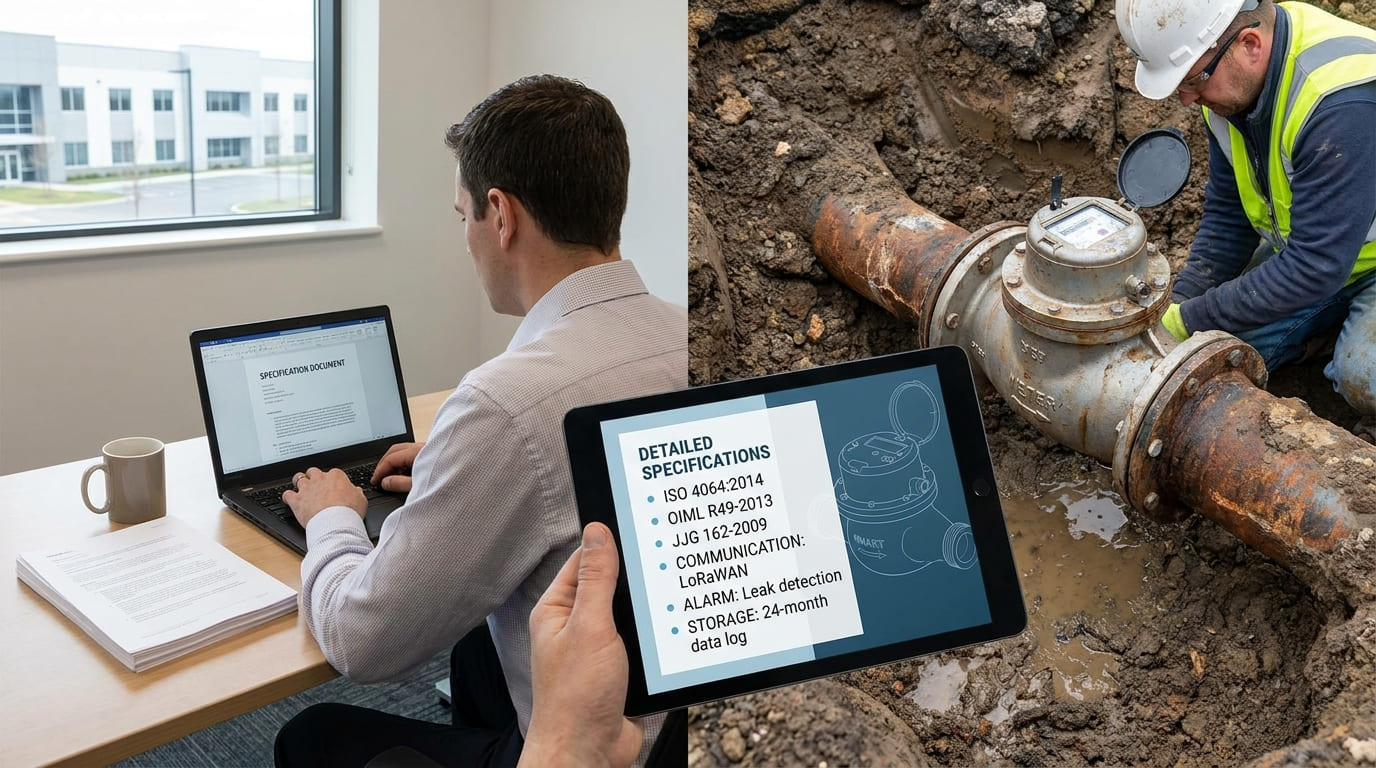
Что я вкладываю в сильную спецификацию
Я поставил четыре блока в сильную спецификацию. Блок первый – метрология: счетчики должны соответствовать стандарту ISO 4064:2014 и МОЗМ Р49-2013, с коэффициентами R250 или R400 и прозрачным Q1, 2 квартал, Q3, Значения Q4 для каждого диаметра. Для китайских проектов, JJG 162-2009 Положение о поверке счетчиков холодной воды является нормативной базой. Блок второй – общение и мероприятия: счетчик должен поддерживать дистанционное считывание и активно сообщать об утечках (длительный поток более 24 часов), лопаться (большой поток за установленное время), неправильное направление, нет потока, и события низкого заряда батареи. Третий блок – окружающая среда.: класс защиты, средняя температура, температура хранения, и срок службы батареи ≥ 8 лет для ультразвуковых счетчиков. Четвертый блок — логистика и складирование.: счетчик хранится в оригинальной упаковке при температуре 5–40°C., на воздухе без агрессивных газов, при укладке не более 5 коробки. С этими блоками, спецификация соответствует действительности, не брошюра.
| Спецблок | Ключевое содержание | Источник |
|---|---|---|
| Метрология | Iso 4064 / Уимл / JJG 162 | |
| События | Сигнализация утечки/взрыва/направления/отсутствия потока | |
| Среда | Батарея ≥8 лет, IP-класс | |
| Хранилище | 5–40°С, нет агрессивного газа, ≤5 коробок |
Ищем надежного поставщика счетчиков воды?
YOUNIO производит механические и ультразвуковые счетчики воды от DN15 до DN500., Сертифицирован MID и протестирован по стандарту ISO 4064. Бесплатные образцы и отчеты о заводских испытаниях доступны квалифицированным покупателям..
Обучение подрядчиков и контроль качества в масштабе?
Город заменяет десятки тысяч метров. Даже небольшое количество ошибок при установке порождает большие волны жалоб..
Я вырезал ошибки установки двумя инструментами: короткий, повторяемое обучение для подрядчиков, and quality audits keyed to the meter’s own troubleshooting points — flow direction, прямые участки, позиция, и хранение.
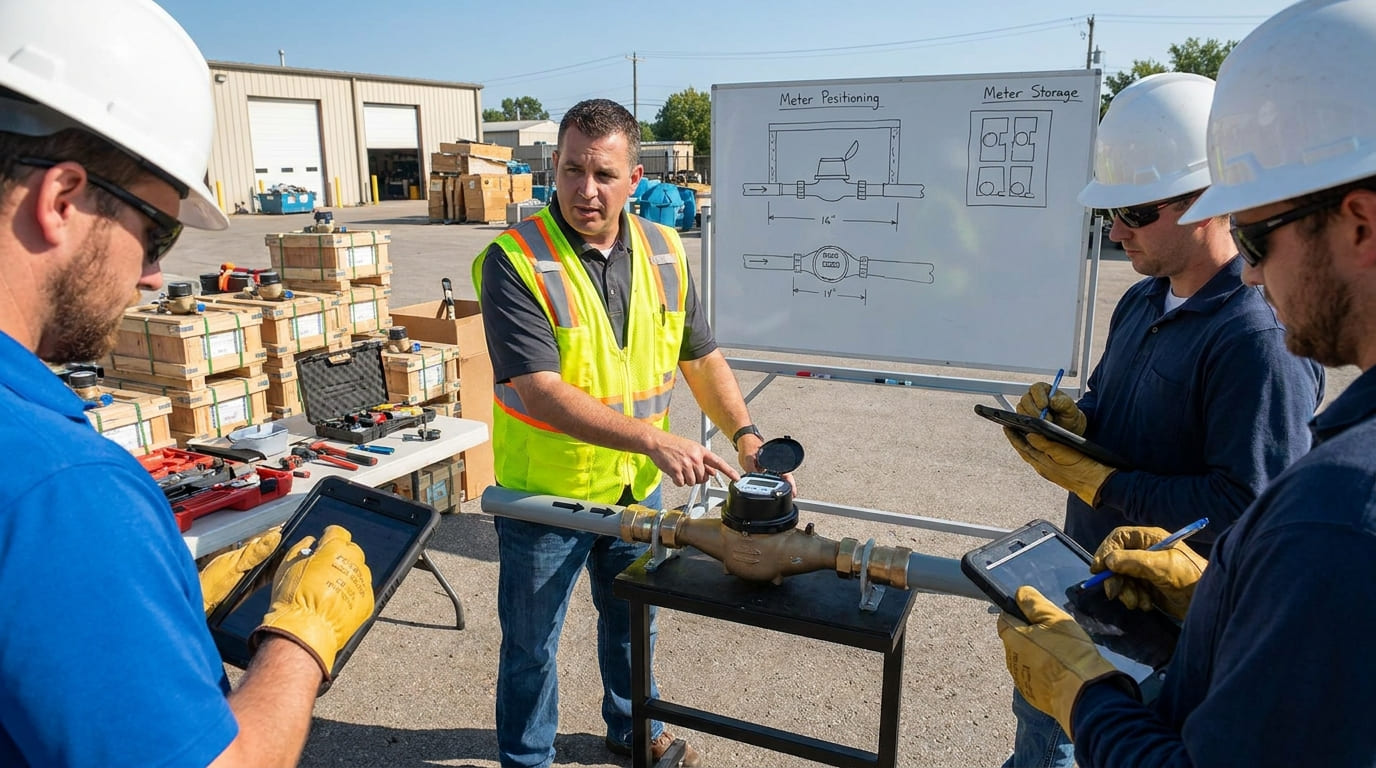
Что я обучаю и что проверяю
Обучаю подрядчиков по небольшому количеству пунктов и провожу аудит по этим же пунктам. Первый, установка должна соответствовать профессиональному инженерному проекту на месте., и изменение без разрешения инженера строго запрещено. Второй, направление потока должно совпадать со стрелкой; в противном случае счетчик показывает отрицательный результат, и первым шагом при устранении неполадок является проверка того, не изменилось ли направление.. Третий, положение установки должно обеспечивать полную трубу с правильными прямыми участками; короткий прямой участок, большой изгиб, или большой диаметр трубы, прежде чем таблица вызовет аномальные или случайные данные. Четвертый, Хранение на объекте должно осуществляться при температуре 5–40°C и в условиях отсутствия агрессивных газов., при штабелировании ≤ 5 коробки. Пятый, перед подачей питания, подрядчики проверяют ЖК-дисплей на наличие символа низкого заряда батареи, поскольку разряженную батарею следует заменить как можно скорее. Я привязываю каждый пункт обучения к однострочному флажку аудита, поэтому контроль качества масштабируется на тысячи установок..
| Учебный пункт | Аудиторская проверка | Источник |
|---|---|---|
| Инженерное проектирование | Утвержденный чертеж на месте | |
| Направление потока | Стрелка соответствует потоку | |
| Прямые участки | Нет короткого изгиба перед счетчиком | |
| Хранилище | 5–40°С, ≤5 коробок | |
| Батарея | Значок низкого заряда батареи на ЖК-дисплее |
Communication with Citizens During Replacement?
Most "meter scandals" I read are communication scandals. The meter works; the message did not.
I plan citizen communication in three phases: before (why we replace), в течение (what to expect at home), and after (how to read the new bill). Without this plan, even correct readings trigger anger and media coverage.
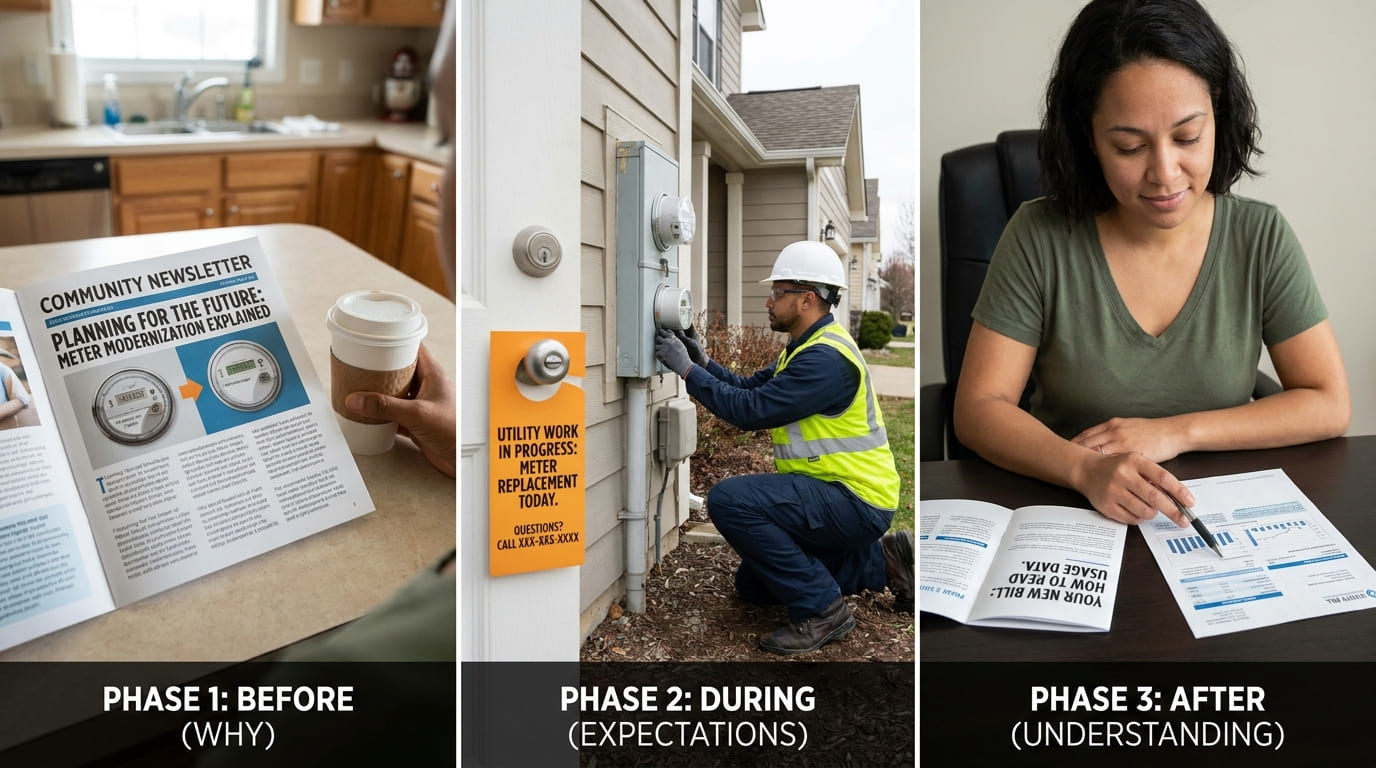
What I Tell Citizens at Each Phase
Before replacement, I tell citizens what the new meter does and does not do. I explain that the smart meter reports abnormal events such as leak (24h running) and burst (large flow over time) actively to the system, which actually protects them from huge bills hidden in walls. During replacement, I tell them what they see at home: небольшой ультразвуковой или механический счетчик, ЖК-дисплей с меню, показывающим мгновенный расход, совокупный поток, рабочее время, и дата, переключаемый магнитным стержнем. Так же предупреждаю, что со временем может появиться значок низкого заряда батареи и утилита заменит батарею. После замены, Я объясняю, как появляется новое чтение на купюрах., и я делюсь основами устранения неполадок: отрицательное показание означает, что команда сначала проверяет направление потока. Четкие сообщения превращают новый счетчик из угрозы в услугу.
| Фаза | Сообщение | Источник |
|---|---|---|
| До | Умные будильники защитят вас | |
| В течение | ЖК-меню и основные сведения об измерителе | |
| После | Как читать законопроект | |
| В любое время | Что делать при отрицательном прочтении |
Что говорят нам данные о жалобах после внедрения?
Жалобы – это не шум. Это данные. Я читаю их как карту ошибок проекта..
Я группирую жалобы после внедрения в четыре группы.: дорогостоящие жалобы, жалобы на плохое чтение, устанавливать жалобы, и жалобы на общение. Журналы событий интеллектуальных счетчиков и сохраненные данные превращают каждый кластер в устранимую проблему., не аргумент.
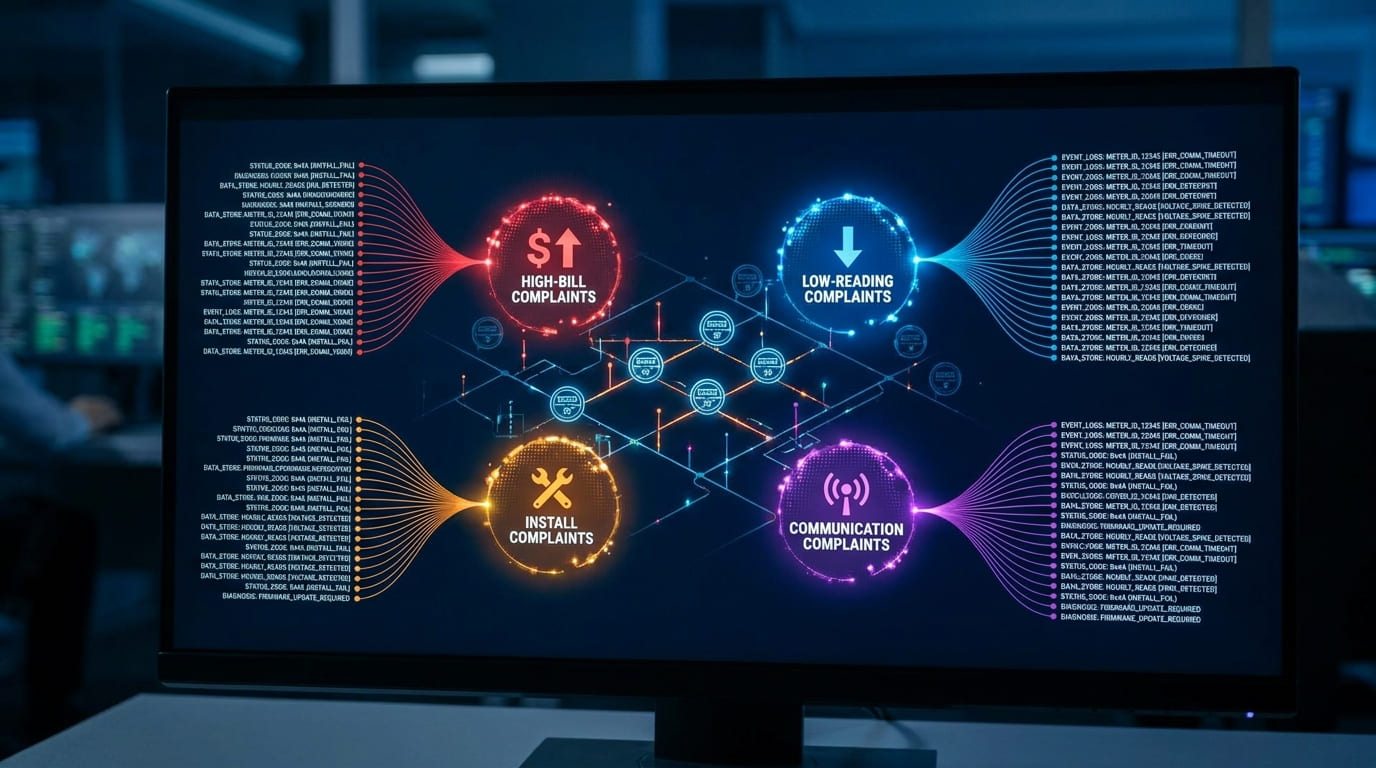
Как я использую данные жалоб
I use complaint data with the meter’s own records. Для жалоб на дорогостоящие счета, Я проверяю сигнализацию длительного расхода: если счетчик показывал непрерывный поток в течение 24 часов, у пользователя настоящая утечка, это не погрешность счетчика. Для жалоб на низкое чтение, Я проверяю сигнал направления и примечание об обратном потоке в разделе устранения неполадок.; если счетчик установлен в неправильном направлении, система активно сообщает и сохраняет ошибку. Для жалоб на установку (случайные данные, дрейфовать), Я проверяю примечания по устранению неполадок на предмет неправильного положения установки., низкий уровень воды, короткие прямые участки, большой изгиб, или большой диаметр трубы перед счетчиком. По жалобам на связь, Проверяю, получил ли гражданин предстартовое сообщение и пояснение к законопроекту. Я также полагаюсь на сохраненные данные: интеллектуальный ультразвуковой счетчик показывает совокупный расход, рабочее время, и дата, что дает четкий график для любого спора. При таком подходе, файлы жалоб становятся двигателем улучшений, не пиар-кризис.
| Кластер жалоб | Данные, которые я проверяю | Источник |
|---|---|---|
| Высокий счет | Сигнализация длинного потока (24час) | |
| Низкое чтение | Сигнализация направления | |
| Установить дрифт | Позиция / прямой участок | |
| Батарея / нет данных | Отчет о низком заряде батареи |
Практический контрольный список по снижению рисков для коммунальных предприятий?
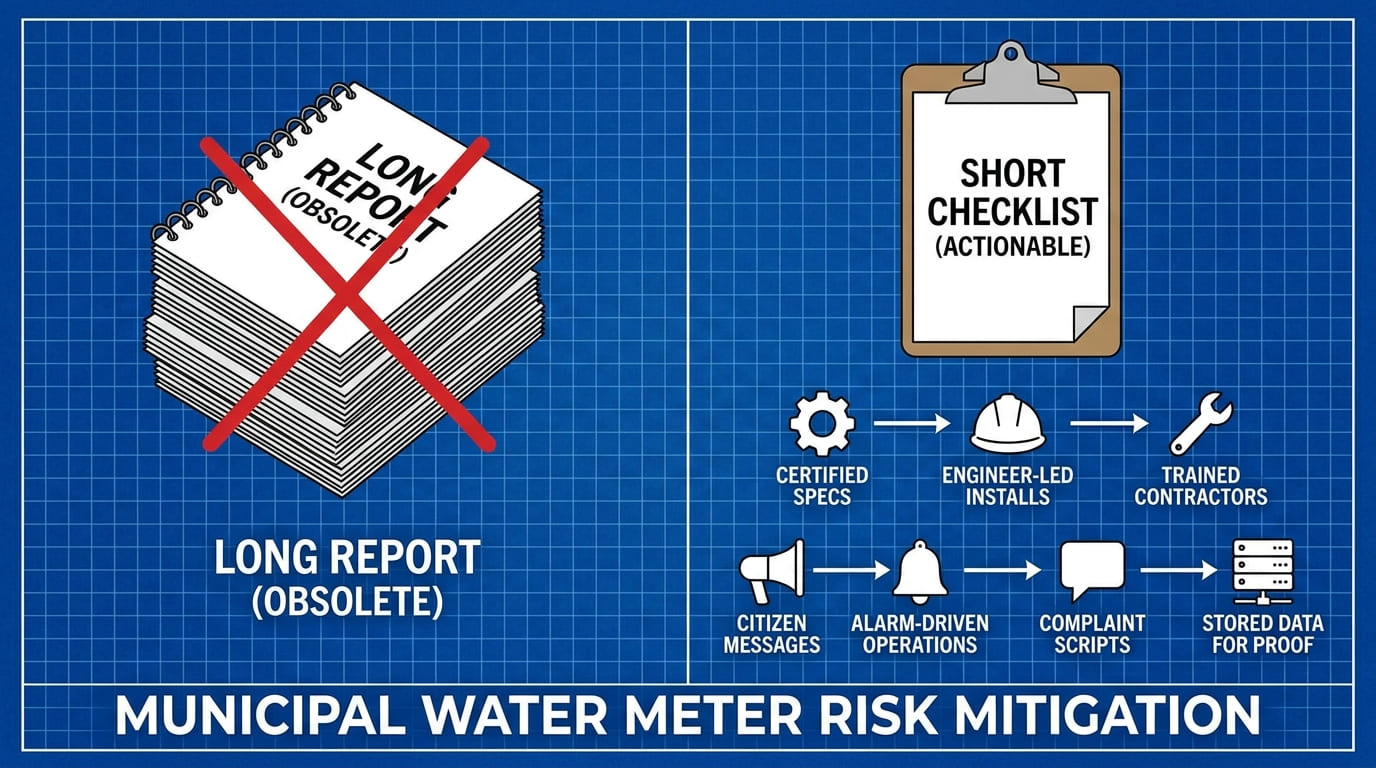
Длинный отчет не поможет загруженной коммунальной службе. Краткий контрольный список делает.
Я даю коммунальным предприятиям краткий контрольный список рисков, связанных с заменой муниципальных счетчиков воды.: сертифицированные характеристики, установки под руководством инженера, обученные подрядчики, сообщения граждан, операции по тревоге, сценарии жалоб, и сохраненные данные для доказательства. Каждый элемент соответствует функции счетчика или документированному правилу..
The Checklist I Hand to Project Managers
I keep the checklist short on purpose. Item one: specs reference ISO 4064:2014, МОЗМ Р49-2013, и JJG 162-2009 where applicable, with clear Q1–Q4 values per diameter. Item two: installations follow the site professional engineering design, with no unauthorized alteration. Item three: contractors are trained on flow direction, прямые участки, install position, и правила хранения (5–40°С, ≤5 коробок). Item four: citizens receive pre-, during-, and post-replacement messages explaining the LCD menu and what alarms mean. Item five: operations teams act on the four standard alarms — leak (long flow 24h), лопаться (large flow over time), неправильное направление, and no-flow — actively reported by the system. Item six: complaint handlers follow a script: check direction first on negative readings, check battery icon on missing data, and pull stored events for any high-bill case. Item seven: utilities keep a baseline of old vs. new readings to defend against "the new meter reads too high" claims.
| Пункт контрольного списка | Source of truth |
|---|---|
| Certified specs | Iso 4064 / JJG 162 |
| Engineer-led install | Engineering design rule |
| Trained contractors | Troubleshooting points |
| Citizen messaging | LCD menu explanation |
| Alarm-driven ops | Active event reporting |
| Complaint script | Направление + battery checks |
| Baseline data | Старый против. new comparison |
Заключение
City-wide meter replacement fails on people, not on meters. Strong specs, обученные подрядчики, сообщения граждан, and alarm-driven operations turn risk into a manageable, data-backed program.
Ищем надежного поставщика счетчиков воды?
YOUNIO производит механические и ультразвуковые счетчики воды от DN15 до DN500., Сертифицирован MID и протестирован по стандарту ISO 4064. Бесплатные образцы и отчеты о заводских испытаниях доступны квалифицированным покупателям..