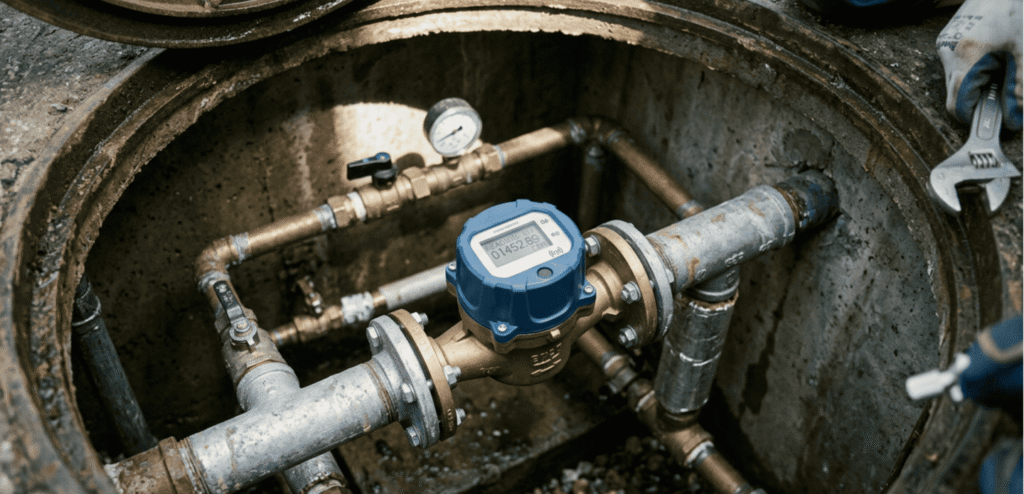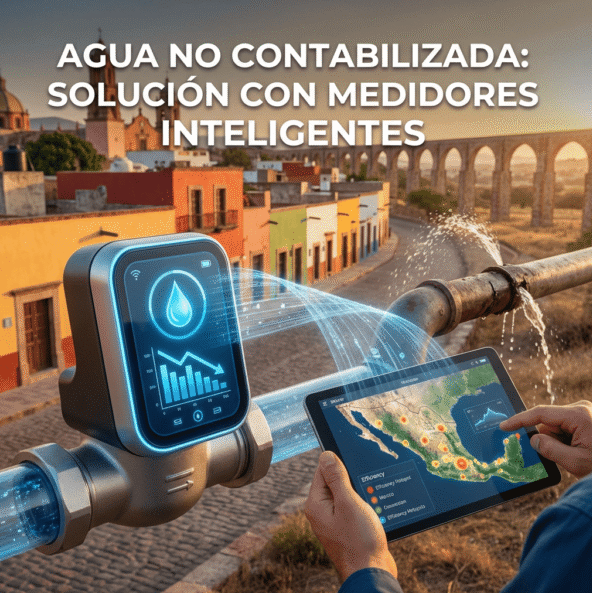
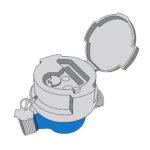

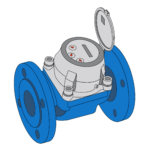

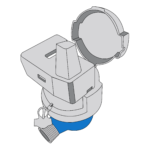

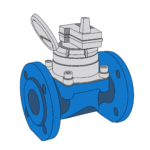

Field complaint records from our global projects reveal a striking pattern: "wrong installation direction" and "complex pipeline disturbances" affect both positive displacement (PD) meters and velocity meters. После 40 years of manufacturing and supporting utilities across the Middle East, Africa, and Latin America, I have seen these issues repeated in project after project. The difference lies not in whether problems occur, but in how each meter type responds—and whether your choice aligns with your real-world conditions.
Positive displacement vs velocity water meter selection is rarely black and white. The right choice depends on flow profile, water quality, installation conditions, and your operational priorities. In this article, I will break down where each type succeeds or fails based on actual field data from installations worldwide.
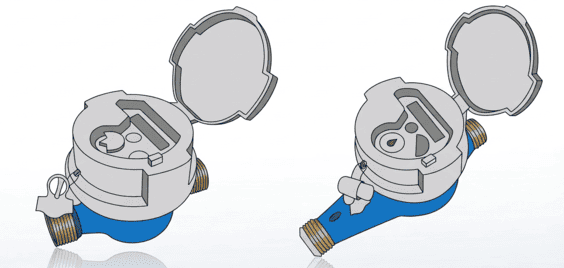
![IMAGE_PLACEHOLDER_1: Professional B2B illustration showing two types of water meters side by side, positive displacement meter on left and velocity meter on right, clean technical style, blue color scheme]
What Are Positive Displacement Water Meters?
Positive displacement (PD) meters operate on a simple principle: they measure volume by filling and emptying a known chamber or moving a measuring element with each unit of water. Как вода течет по счетчику, it displaces a piston, nutating disc, or rotating vane. Each rotation or cycle represents a fixed volume, which is recorded on the register. The meter counts the cycles, not the speed of the flow itself.
PD meters excel at low flow measurement. Because they measure volume directly, they maintain accuracy even when flow rates are very low. This makes them ideal for applications where flows vary widely or where small flows must be recorded accurately. Typical PD meter designs include oscillating piston, nutating disc, and rotary piston types.
Key characteristics of PD meters:
- Wide measuring range (R80 to R100 in many modern models)
- Excellent accuracy at low flow rates (1 квартал)
- Sensitive to water quality—particles can jam moving parts
- Higher pressure loss compared to some velocity meters
- Moving parts require periodic maintenance
![IMAGE_PLACEHOLDER_2: Cross-section technical diagram of positive displacement water meter showing internal measuring chamber and piston mechanism, labeled components, clean technical illustration]
What Are Velocity Water Meters (Вултман, Turbine, и т. д.)?
Velocity meters measure the speed of water flowing through a known cross-sectional area. The meter uses a rotating element (turbine, impeller, or Woltman helix) whose rotation speed is proportional to flow velocity. By measuring the rotation rate and knowing the pipe area, the meter calculates flow rate and accumulates volume. Unlike PD meters, velocity meters infer volume from speed rather than counting fixed volumes.
Common velocity meter types include:
- Вултман (turbine) meters: Use a helical impeller, ideal for larger pipe sizes (DN50 to DN500+). Common in industrial and utility applications with high flows.
- Single-jet and multi-jet meters: Direct the water stream onto an impeller at an angle. The impeller rotates faster or slower based on flow velocity. Typically used for smaller pipe sizes (DN15 to DN40).
- Vertical turbine meters: Designed for vertical installations, often used in groundwater well applications.
Velocity meters generally have lower pressure loss than PD meters at high flows because they offer less resistance to water movement. Однако, they may struggle with low flow accuracy because the rotating element may not turn consistently at very low velocities.
Key characteristics of velocity meters:
- Lower pressure loss at high flow rates
- Better suited for larger pipe sizes (especially Woltman)
- Less sensitive to small particles than PD meters
- Wider gap between minimum and maximum flow capability in some models
- Moving parts subject to wear over time
![IMAGE_PLACEHOLDER_3: Technical illustration showing three types of velocity meters: Woltman turbine, мульти-струя, and single-jet, with cross-section views showing internal rotating elements, clean schematic style]
Global Project Data: Where Each Type Succeeds or Fails
Our project records from the Middle East, Africa, and Latin America reveal clear performance patterns for each meter type under real-world conditions. I will share specific examples where meter choice made or broke project outcomes.
Middle East residential metering project (2023): A utility in Saudi Arabia installed 30,000 PD meters for residential applications. Initial accuracy was excellent, but after 18 months, complaints rose sharply. Investigation revealed that sand particles from the distribution network were jamming measuring chambers. The utility switched to ultrasonic meters, which have no moving parts and are unaffected by particulate matter. Complaints dropped by 70%.
Latin America industrial application (2022): A manufacturing facility in Brazil used Woltman turbine meters for process water measurement. The meters performed well at the facility's typical flow rates. Однако, during low-demand periods at night, flow dropped below the meters' minimum operating threshold. The meters stopped registering, leading to unaccounted water losses. The facility installed PD meters with wider low-flow range, capturing night flows accurately.
African agricultural project (2024): An irrigation scheme in Kenya used velocity meters on wells and distribution lines. The meters frequently reversed flow direction due to pump cycling and pressure fluctuations. Standard velocity meters cannot measure reverse flow, leading to inaccurate net volume readings. PD meters with bidirectional measurement capabilities were installed, capturing both forward and reverse flows.
These examples illustrate that context matters more than theoretical performance. The "best" meter depends on your specific water quality, flow profile, and operational conditions.
![IMAGE_PLACEHOLDER_4: World map illustration with project locations marked in Middle East, Latin America, and Africa, showing icons for successful PD meter projects and velocity meter projects, professional infographic style]
Sensitivity to Installation Conditions and Flow Profile
Installation conditions are where most field failures occur, and our complaint records consistently show that "wrong installation direction" and "complex pipeline disturbances" cause problems for both PD and velocity meters. Однако, the nature and severity of these problems differ.
Installation direction errors:
- PD meters with horizontal-only orientation installed vertically: The measuring element (piston or disc) relies on gravity for proper operation. Vertical installation can cause erratic readings or premature wear. In one project in the UAE, 15% of PD meters failed within 2 years due to incorrect vertical mounting.
- Velocity meters installed without proper straight pipe runs: Velocity meters require laminar flow for accurate measurement. If installed immediately after an elbow, valve, or tee, turbulent flow causes inaccurate readings. Iso 4064 specifies minimum straight pipe lengths upstream (typically 10× pipe diameter) and downstream (5× pipe diameter) to ensure proper flow profile.
Pipeline disturbances:
- Air pockets: Air trapped in the pipe can cause both meter types to register inaccurately. PD meters may register partial volume when air passes through the measuring chamber. Velocity meters may spin the impeller unpredictably in turbulent air-water mixtures. Air release valves upstream of meters are essential.
- Pulsating flow: Pump-induced pulsations affect velocity meters more severely than PD meters. The rotating impeller may accelerate and decelerate with each pulse, causing registration errors. PD meters, which count fixed volumes, are less sensitive to flow pulsation.
- Vibration: Both meter types can be affected by pipe vibration. Однако, PD meters with oscillating pistons may experience premature wear from excessive vibration, while velocity meters with turbine bearings may fail faster under continuous vibration.
Flow profile considerations:
- Laminar vs turbulent flow: Velocity meters perform best under laminar flow conditions. Turbulent flow upstream can cause registration errors of 10-20% in extreme cases.
- Flow rate variability: PD meters handle wide flow ranges better than many velocity meters. If your application sees flow rates that vary from very low (nighttime residential use) to very high (peak industrial demand), PD meters often provide more consistent accuracy across the entire range.
![IMAGE_PLACEHOLDER_5: Technical diagram showing correct vs incorrect meter installations, including straight pipe runs, orientation (horizontal vs vertical), and upstream/downstream clearances, annotated with measurements]
Точность, Pressure Loss and Range Comparison
When comparing PD and velocity meters, three technical specifications matter most: accuracy across the flow range, pressure loss, and measuring range (R-value). These factors directly affect billing accuracy, pump energy costs, and meter suitability for your specific application.
Accuracy comparison:
| Specification | Positive Displacement | Velocity (Вултман) | Velocity (Jet) |
|---|---|---|---|
| Typical accuracy at Q3 (max flow) | ±2% to ±1% | ±2% | ±2% |
| Accuracy at Q1 (min flow) | ±2% to ±1% | ±5% to ±2% | ±5% to ±2% |
| Measuring range (R-value) | R80 to R100 | R50 to R80 | R40 to R80 |
| Low-flow performance | Excellent | Fair to Good | Fair |
PD meters consistently outperform velocity meters at low flow rates (1 квартал). This is critical for applications where small flows represent a significant portion of total volume (residential billing, обнаружение утечек). Velocity meters, especially larger Woltman types, often have higher minimum flow thresholds and may not register accurately below Q1.
Pressure loss:
Pressure loss represents the energy cost of running water through the meter. Higher pressure loss means your pumps must work harder, increasing electricity consumption. Over a 10-15 year meter lifespan, this can add up to significant operational costs.
| Meter Type | Typical Pressure Loss at Q3 | Energy Impact |
|---|---|---|
| PD meters | 0.1 к 0.3 bar | Moderate |
| Woltman turbine | 0.05 к 0.2 bar | Low to Moderate |
| Jet meters | 0.2 к 0.5 bar | Moderate to High |
Velocity meters, particularly Woltman turbines, generally offer lower pressure loss at high flow rates. This makes them attractive for applications with large pipe sizes and high flows where energy efficiency matters (pumped distribution systems, industrial process water).
Measuring range (R-value):
The R-value is the ratio of Q3 (maximum flow) to Q1 (minimum flow). Higher R-values indicate wider measuring ranges.
- PD meters: Typically R80 to R100. Modern ultrasonic PD alternatives achieve R100 or higher.
- счетчики Вольтмана: Typically R50 to R80. High-end models reach R100.
- Jet meters: Typically R40 to R80. Residential models often achieve R80.
Wider measuring ranges mean one meter can accurately measure both very low and very high flows. This reduces the need for multiple meter sizes or parallel metering arrangements.
![IMAGE_PLACEHOLDER_6: Comparison chart showing accuracy curves for PD vs velocity meters across flow rates (Q1 to Q3), with pressure loss curves and measuring range bars, professional technical graph]
Typical Applications for PD Meters
Based on our project experience, PD meters excel in specific applications where their technical characteristics align with operational requirements. Here are the scenarios where PD meters are the clear choice.
Residential water billing: PD meters are widely used for residential metering worldwide because they capture low flows accurately. In many households, nighttime flows (toilet leaks, small continuous uses) represent a significant portion of total volume. A Middle East utility we worked with reduced unaccounted water by 8% after switching from velocity to PD meters for residential applications, specifically because PD meters captured low-flow leaks that velocity meters missed.
Small commercial and institutional applications: Small restaurants, clinics, and offices often have widely varying flow patterns. A restaurant might have intermittent heavy flows during meal preparation and very low flows overnight. PD meters with R100 range handle this variability well.
Leak detection programs: Because PD meters register accurately at very low flows, they are ideal for NRW (Non-Revenue Water) reduction programs. A utility in Africa used PD meters in DMA (District Metered Area) monitoring and identified previously undetectable leaks, reducing NRW from 35% к 28%.
Applications with limited installation space: PD meters often require less straight pipe upstream and downstream compared to velocity meters. This makes them suitable for compact meter pits and retrofits where space is constrained.
Billing accuracy priority applications: If revenue recovery is the primary concern and water quality is relatively clean, PD meters offer superior accuracy across the flow range. A Latin American utility increased revenue by 12% after switching to PD meters, citing improved capture of low-flow usage.
![IMAGE_PLACEHOLDER_7: Infographic showing typical PD meter applications with icons: residential homes, small businesses, обнаружение утечек, billing systems, compact installations, clean visual style]
Typical Applications for Velocity Meters
Velocity meters, particularly Woltman turbine meters, dominate specific application categories where their technical advantages outweigh other considerations. These applications typically involve larger pipe sizes, higher flows, or environments where PD meter limitations (sensitivity to particles, pressure loss) would be problematic.
Large-diameter utility meters (DN50 to DN500+): Woltman meters are the standard choice for larger pipe sizes in distribution networks. A Middle East utility uses Woltman meters for DN100 and larger pipes feeding district metering areas. The low pressure loss at high flows reduces pumping costs compared to PD alternatives. For a 15,000 m³/day flow, the energy savings from lower pressure loss can be significant over a year.
Industrial and agricultural applications: Factories, irrigation systems, and processing plants often have high flow rates with relatively clean water. Velocity meters handle these high flows efficiently. A Latin American agricultural cooperative uses Woltman meters on irrigation wells with flows up to 200 m³/h. The meters provide accurate bulk measurement with minimal pressure loss.
Applications with particulate water: In regions where water contains sand, sediment, or other particles, velocity meters often outperform PD meters. PD meters' moving parts can jam when particles enter the measuring chamber. An African utility serving a region with sandy groundwater switched from PD to velocity meters and reduced maintenance calls by 60%.
Temporary or portable metering: Velocity meters with robust construction are often used for temporary flow measurement (construction sites, well testing, system audits). Their tolerance for less-than-ideal water quality makes them suitable for these applications.
Budget-constrained projects: For some utilities and contractors, velocity meters offer lower upfront costs compared to PD meters, especially in larger pipe sizes. When lifecycle cost considerations are secondary to initial budget constraints, velocity meters provide acceptable performance.
![IMAGE_PLACEHOLDER_8: Infographic showing typical velocity meter applications: industrial factories, irrigation systems, large pipe networks, agricultural wells, temporary metering, professional icon-based design]
A Practical Decision Framework for Meter Type
После 40 years of supporting utilities across multiple continents, I have developed a straightforward decision framework that helps project managers choose between PD and velocity meters. This framework is based on real field conditions rather than theoretical specifications.
Шаг 1: Assess water quality
- Clean water (low particulates): Both meter types suitable
- Sandy/sediment water: Velocity meters preferred
- Variable water quality: Consider ultrasonic meters (no moving parts)
Шаг 2: Analyze flow profile
- Wide flow range (very low to very high): PD meters excel
- Consistent high flows: Velocity meters lower pressure loss advantage
- Intermittent low-flow periods: PD meters capture low flows better
- Pulsating flow: PD meters less affected
Шаг 3: Evaluate installation constraints
- Limited straight pipe available: PD meters more tolerant
- Vertical installation required: Check PD meter orientation specifications
- Compact meter pit: PD meters often smaller footprint
- Easy access for maintenance: Either type suitable
Шаг 4: Consider operational priorities
- Billing accuracy paramount (revenue recovery): PD meters superior
- Energy cost significant (pumping costs): Velocity meters lower pressure loss
- Low maintenance priority: Consider ultrasonic (no moving parts)
- Lifecycle cost focus: Calculate 10-year TCO including energy, maintenance, and revenue
Шаг 5: Review regulatory and compliance requirements
- Iso 4064 accuracy class requirements: Both types available in Class C or D
- Local utility specifications: Some regions mandate specific meter types
- Approval processes: Ensure selected model has required certifications (СРЕДНИЙ, Oiml R49)
Decision matrix summary:
| Scenario | Recommended Meter Type | Rationale |
|---|---|---|
| Residential billing, clean water | PD | Low-flow accuracy critical |
| Large DN pipe, high flows | Velocity (Вултман) | Lower pressure loss |
| Sandy/particulate water | Velocity | Moving parts less sensitive |
| Wide flow range, revenue focus | PD | R100 range, accurate at Q1 |
| Energy cost significant | Velocity | Lower pressure loss at Q3 |
| Compact installation space | PD | Less straight pipe required |
| Minimal maintenance priority | Ultrasonic (PD alternative) | No moving parts |
The key insight from our field data is that the same meter type can perform excellently in one context and fail in another. Your decision should be based on your specific conditions: water quality, flow profile, installation constraints, and operational priorities.
Заключение
Choosing between positive displacement vs velocity water meters is not about finding the "best" technology—it is about matching the right technology to your specific conditions. Field complaint records consistently show that installation errors and complex pipeline conditions affect both meter types. The difference lies in how each type responds to your unique environment.
PD meters excel when low-flow accuracy, revenue recovery, and wide measuring ranges are priorities. Velocity meters shine when large pipe sizes, high flows, and energy efficiency are primary concerns. In both cases, proper installation, appropriate straight pipe runs, and water quality considerations are essential for reliable performance.
В Юнио, we have supported utilities, distributors, and OEMs with water metering solutions for over 40 годы. We offer both PD and velocity meters, along with ultrasonic alternatives, and we help our clients select the right technology for their specific applications. Our CNAS-certified laboratory and 5000+ m² production facility ensure that every meter meets ISO 4064 and OIML R49 standards.
If you are planning a water metering project and want to discuss whether PD or velocity meters are right for your application, send me your project details. I will provide a technical recommendation based on your flow profile, water quality, and installation conditions. Our team can also help with tender specifications, custom configurations for harsh environments, and factory audits for large orders.