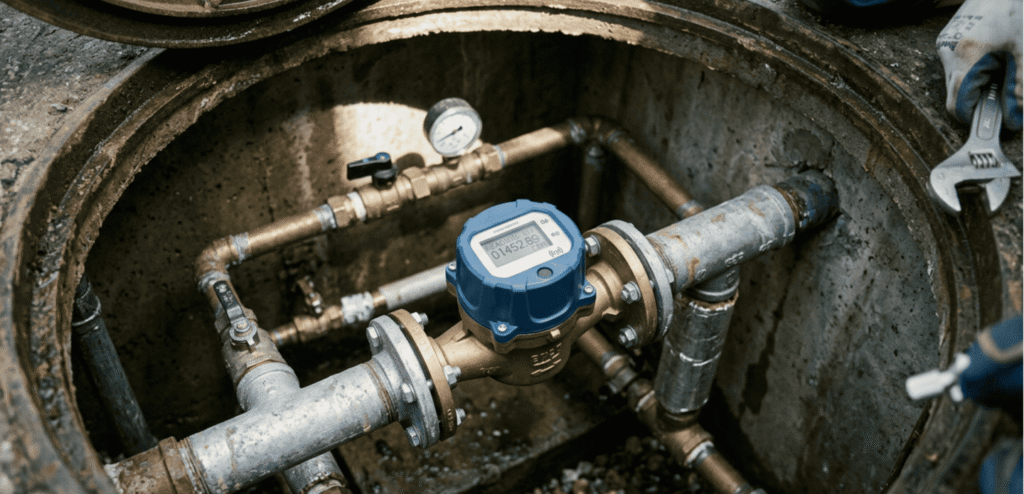

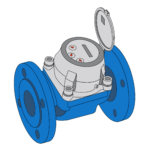

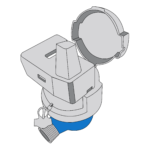

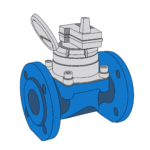

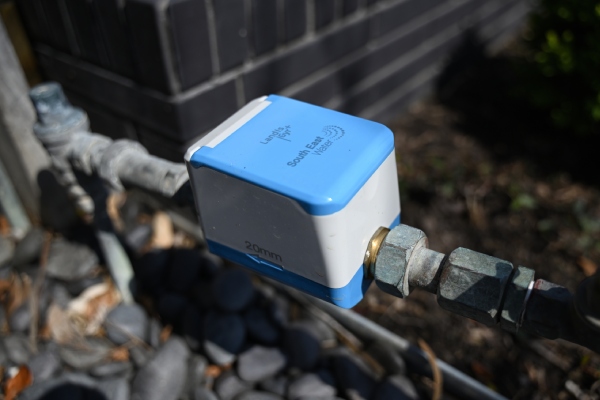
Интересно, сколько стоит счетчик воды AMR и что это за собой влечет?? Вот подробный обзор автоматического считывания показаний счетчика. (Амр) счетчики воды и их стоимость.
Поскольку продажи в этой линии закончились 15 годы, экспортированы контейнеры счетчиков воды AMR,Я хотел бы поделиться с вами:
It's not so expensive for an AMR water meter now.The cost of an AMR water meter depends on factors like the type of technology, уровень точности, материалы, и методы связи. Ультразвуковой счетчик воды AMR1 250 рандов, стоимость беспроводной связи составляет около долларов США. 36 - 45 за штуку из Китая сейчас.
Продолжайте читать, чтобы понять различные аспекты счетчиков воды AMR и их сравнение с другими системами..
Что такое AMR для счетчиков воды?
Амр (Автоматическое показание счетчика) это технология, используемая для автоматического сбора данных о потреблении со счетчиков воды и отправки их в центральную базу данных для обработки..
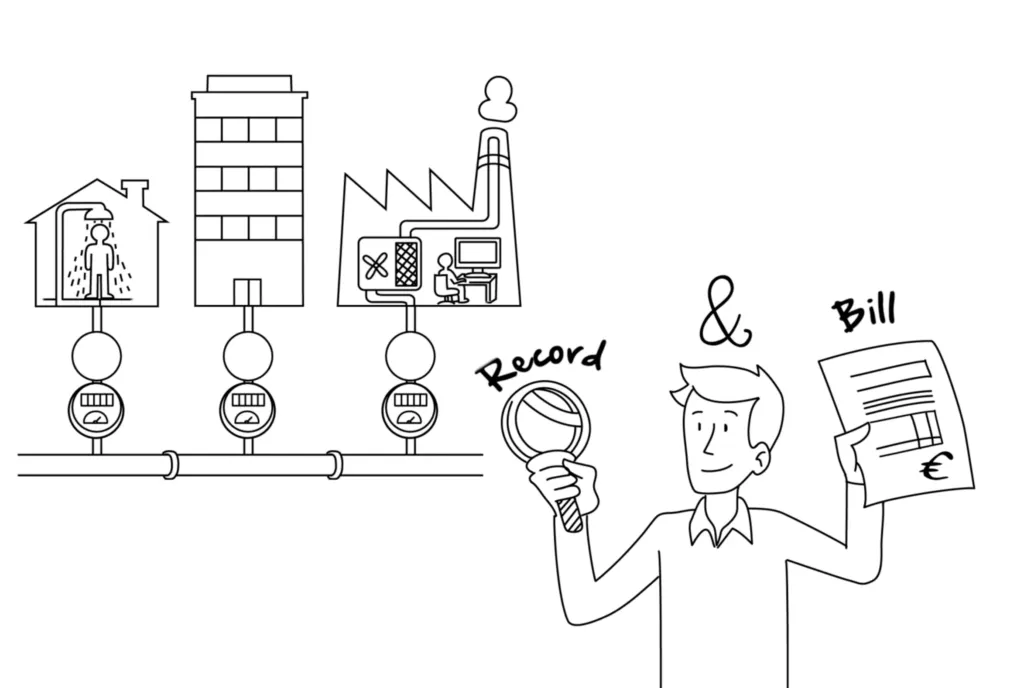
AMR для счетчиков воды позволяет коммунальным предприятиям автоматизировать считывание показаний счетчиков без необходимости физического посещения., сокращение трудозатрат и повышение точности выставления счетов.
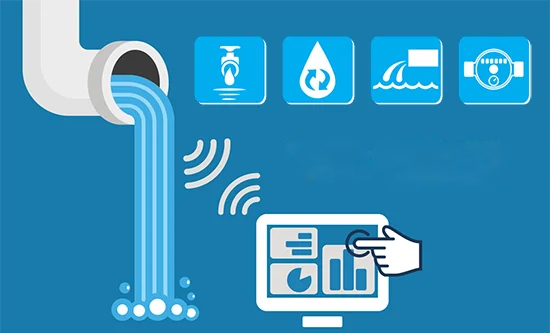
Виды АМР для счетчиков воды
| Тип УПП | Описание | Стоимость последствий |
|---|---|---|
| Радиочастота (РФ) | Отправляет данные посредством радиосигналов ближнего действия. | Низкая стоимость установки и обслуживания. |
| Системы Drive-By | Сбор данных во время движения автомобиля по счетчику | Умеренные затраты на установку |
| Фиксированные сетевые системы2 | Счетчики отправляют данные через постоянную сеть связи. | Высокая стоимость установки, но более надежный |
Как AMR снижает эксплуатационные расходы
Технология AMR устраняет необходимость считывания показаний счетчиков вручную., что требует не только времени, но и затрат. Традиционные методы снятия показаний счетчиков требуют, чтобы персонал посещал каждое место., иногда несколько раз в месяц, что переводится как труд, транспортное средство, и расходы на топливо. С АМР, данные собираются автоматически и передаются в электронном виде, это означает, что коммунальные предприятия могут сэкономить как на человеческих ресурсах, так и на оперативной логистике..
Более того, AMR также исключает возможность человеческой ошибки., что может привести к неправильным прочтениям и спорам по счетам. Обеспечивая более последовательные и точные показания, коммунальные предприятия могут избежать потерь доходов и обеспечить справедливую практику выставления счетов.
Однако, первоначальная стоимость установки систем AMR, особенно более сложные, может быть существенным. В некоторых случаях, коммунальным предприятиям, возможно, придется инвестировать в инфраструктуру для поддержки сбора данных (например, вышки связи для систем фиксированной сети или транспортные средства для систем проезда). Эти текущие затраты могут со временем сократить финансовую экономию., making it critical for utility companies to carefully evaluate their specific needs and the scale of their operations.
How does an AMR water meter work?
An AMR water meter works by automatically transmitting usage data from the water meter to a central system. This allows for more efficient data collection and reduces the need for manual reading.
AMR systems typically use radio signals, drive-by methods, or fixed network systems to send data, ensuring continuous and accurate monitoring.
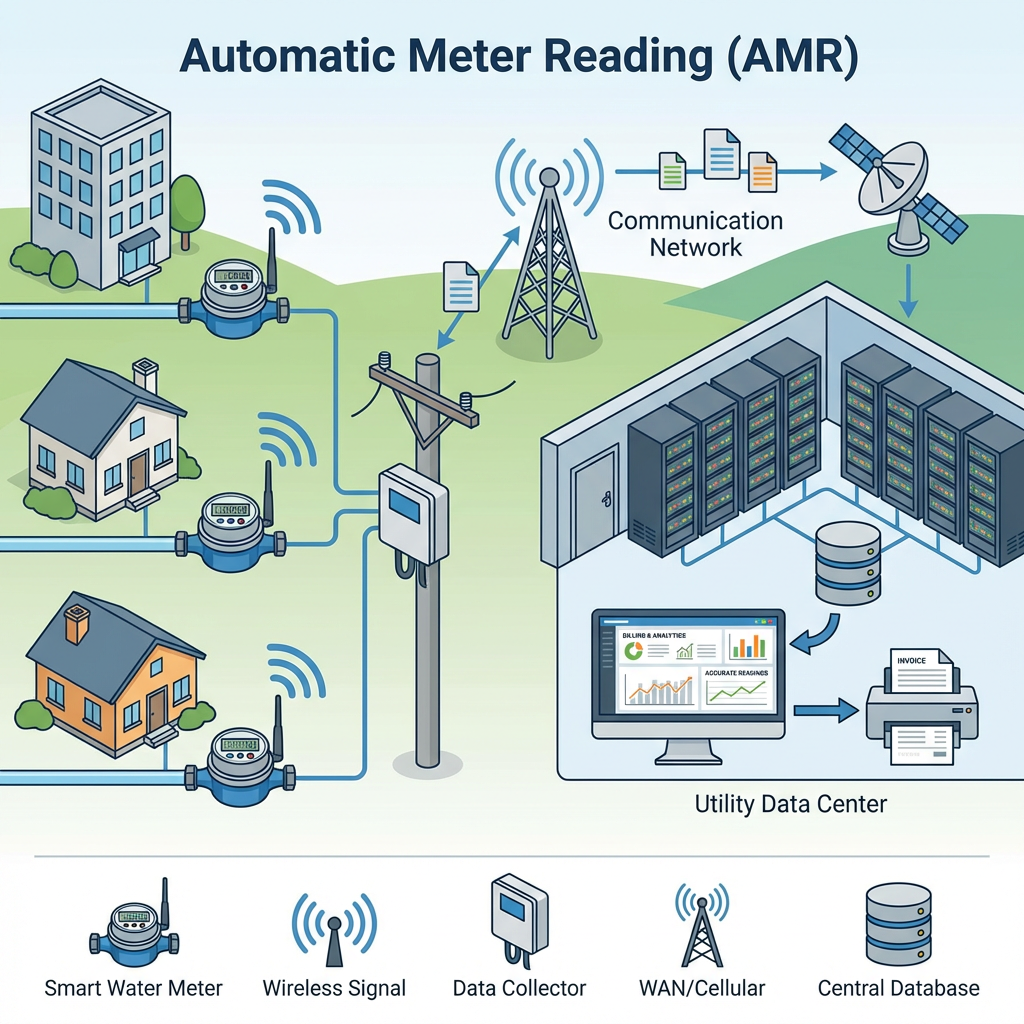
Basic Operation of an AMR Water Meter
- Data Collection: The AMR water meter measures the water consumption and stores the data.
- Data Transmission: The data is sent via wireless technology (РФ, drive-by, or fixed network) to a centralized system.
- Data Processing: The utility processes the data, and billing information is generated based on the actual consumption.
Cost Breakdown of AMR Water Meter Components
| Component | Cost Range |
|---|---|
| Счетчик воды | $30 к $100 (for standard mechanical models) |
| AMR Transmitter | $50 к $150 (depending on the technology) |
| Data Collection System | $1,000 к $10,000 (depending on the network) |
| Installation | $20 к $100 per meter (varies by system) |
These components add to the overall cost of AMR systems. While the upfront cost for individual meters is relatively low, setting up the network and data infrastructure can be expensive.
Why Costs Vary for AMR Water Meters
The primary factors that determine the cost of AMR systems include the type of technology used (РФ, drive-by, or fixed network), the number of meters being installed, and the specific needs of the utility company. For instance, общегородская система фиксированной сети потребует более значительных первоначальных инвестиций, чем простая система для проезда в сельской местности.. Сложность установки, которые могут включать в себя рытье траншей для подземных систем или установку коммуникационной инфраструктуры., также влияет на общую стоимость.
Более того, Коммунальные предприятия должны учитывать текущие расходы на техническое обслуживание, например, замена или ремонт неисправных счетчиков, обновление программного обеспечения, и модернизация сетей связи. Хотя AMR обеспечивает существенную экономию затрат с точки зрения трудозатрат и операционной эффективности., общий анализ затрат и выгод должен включать эти факторы.
Является ли счетчик воды AMR таким же, как умный счетчик воды??
Нет, счетчик воды AMR — это не то же самое, что умный счетчик воды, хотя оба используются для удаленного считывания показаний счетчиков..
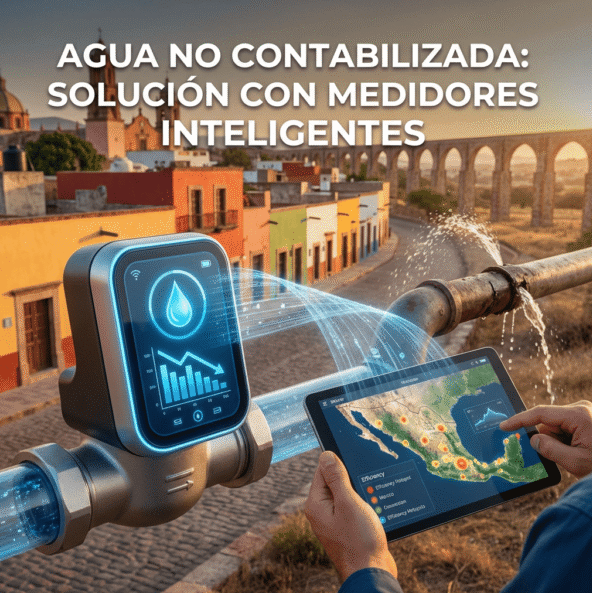
Системы AMR обычно представляют собой системы односторонней связи для сбора данных., в то время как умные счетчики (которые используют технологию AMI) функция двусторонней связи для обмена данными в реальном времени и дополнительные возможности.
Ключевые различия между AMR и интеллектуальными счетчиками воды
| Особенность | Счетчик воды АМР | Умный счетчик воды |
|---|---|---|
| Коммуникация | В одну сторону (данные передаются только в коммунальную службу) | двусторонний (данные, отправленные и полученные утилитой) |
| Данные в реальном времени | Нет обратной связи в режиме реального времени | Предоставляет данные в режиме реального времени или почти в реальном времени. |
| Расширенные функции | Ограничено потреблением чтения | Включает в себя такие функции, как обнаружение утечек и мониторинг давления. |
| Расходы | Как правило, более низкая стоимость установки | Более высокая первоначальная стоимость из-за дополнительных функций. |
Хотя измерители AMR эффективны для сбора основных данных, им не хватает возможности коммунальных служб отправлять инструкции или получать немедленную обратную связь.. Это означает, что с АМР, коммунальные предприятия не могут реагировать в режиме реального времени на такие проблемы, как утечки, перебои в обслуживании, или ненормальные модели потребления. Умные счетчики AMI, с другой стороны, разрешить двустороннюю связь, Это означает, что они могут мгновенно уведомлять коммунальные предприятия о потенциальных проблемах и даже позволять коммунальным предприятиям удаленно регулировать настройки или отключать воду в случае чрезвычайных ситуаций..
Умные счетчики также обеспечивают мониторинг в реальном времени, что помогает как коммунальным предприятиям, так и потребителям постоянно отслеживать расход воды., облегчая выявление неэффективности или потерь и снижая общее потребление.
Экономические последствия AMR по сравнению с интеллектуальными счетчиками
Счетчики AMR обычно более доступны в установке, поскольку у них меньше функций.. Для коммунальных предприятий с ограниченным бюджетом или в районах, где мониторинг в реальном времени не является приоритетом., AMR systems may offer a more cost-effective solution. Однако, smart meters have the potential to deliver more value over the long term. Their ability to detect leaks and monitor consumption in real time not only helps utilities respond faster to issues but also reduces the risk of costly water losses or customer disputes.
Why Are Smart Water Meters Gaining Popularity?
As cities and industries look for ways to improve resource management and sustainability, smart water meters offer a broader range of capabilities. Their ability to provide instant feedback on water usage patterns allows for better forecasting, reduces operational costs, and improves customer relations. Over time, the reduced cost of water management and the increased customer satisfaction often outweigh the initial investment in smart meters, что привело к тому, что многие коммунальные предприятия перешли на более интеллектуальные решения по измерению.
В чем разница между счетчиками воды АМИ и АМР?
АМИ (Передовая инфраструктура измерения) и счетчики воды AMR используются для дистанционного измерения., но они существенно различаются по возможностям.
AMI — более совершенная система, включающая двустороннюю связь., позволяя коммунальным предприятиям более эффективно собирать и управлять данными, в то время как AMR является более простым, односторонняя система связи.
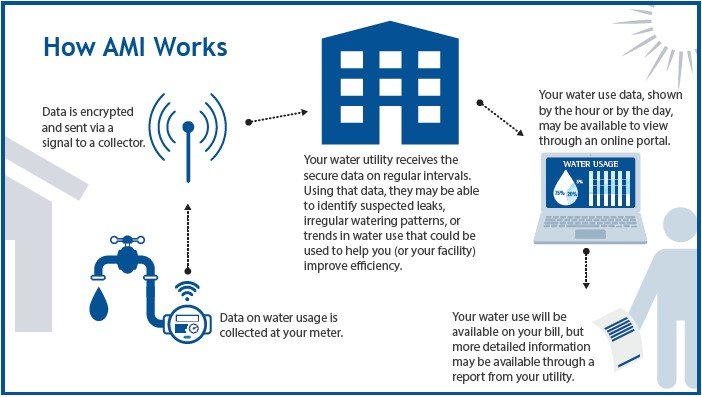
АМИ против. Амр: Ключевые различия
| Особенность | Счетчик воды АМР | Счетчик воды АМИ |
|---|---|---|
| Коммуникация | В одну сторону | двусторонний |
| Частота передачи данных | Периодический, на основе заданных интервалов | В реальном времени или близком к реальному времени |
| Расходы | Более низкая первоначальная стоимость, ограниченная функциональность | Более высокая стоимость, но предлагает больше возможностей |
| Функциональность | Сбор основных данных | Данные о потреблении в реальном времени, диагностика, обнаружение утечек |
Глубокое погружение: Преимущества ОИМ перед УПП
Системы AMI значительно более продвинуты, чем AMR.. Они предлагают преимущества передача данных в реальном времени, что позволяет коммунальным предприятиям немедленно реагировать на такие проблемы, как утечки, изменения давления, или необычные модели потребления. Эта возможность работы в режиме реального времени является огромным преимуществом перед AMR., который собирает данные только через определенные промежутки времени.
С АМИ, коммунальные предприятия могут улучшить обслуживание клиентов, предоставляя точные, актуальная платежная информация, сокращение споров по поводу сметных счетов. Кроме того, AMI позволяет проводить более продвинутую аналитику, например, профилактическое обслуживание и динамическое ценообразование на основе моделей использования., что делает его более универсальным инструментом для современного управления коммунальными предприятиями..
Экономические последствия ОИМ по сравнению с УПП
Хотя системы AMI требуют более крупных первоначальных инвестиций из-за их расширенных функций., они предлагают большие долгосрочные выгоды, включая более эффективное управление ресурсами, снижение потерь воды, and improved operational efficiency. AMI systems also reduce labor costs, as they automate more aspects of meter reading, диагностика, and customer interaction.
В отличие, AMR systems are typically more budget-friendly but come with limitations in terms of data collection and management. Utilities need to weigh the upfront costs against the long-term operational savings to determine which system makes the most sense for their needs.
Заключение
The cost of an AMR water meter varies based on technology and scale, but it generally provides an affordable solution for automating water meter readings. Однако, if your utility requires real-time data and advanced functionalities like leak detection and demand response, investing in an AMI or smart metering system may offer more value in the long run.