

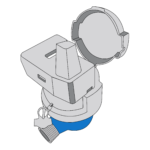

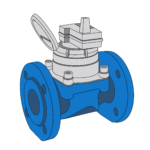

消防線多年來一直保持安靜. 然後一項活動需要突然高流量. 如果儀表錯誤, 投訴成為安全風險.
消防水錶現場課程清楚地展示了一種模式: 故障通常源自於長時間的靜態, 突發高流量需求, 以及儀表選擇不正確. 我將消防計量視為高風險應用, 不是正常的計費點.
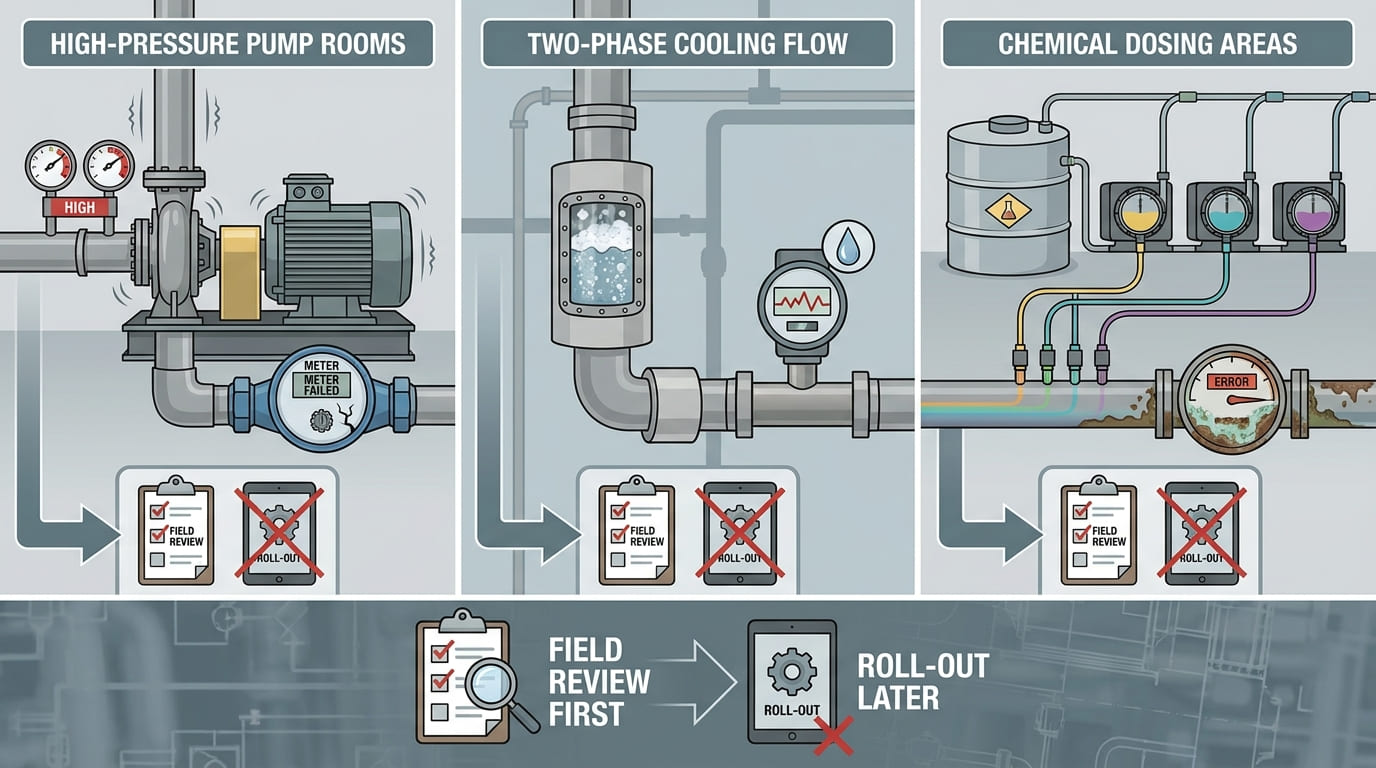
我通常在模型選擇之前放慢討論速度. 消防表可能看起來像一個大水錶, 但經營情況卻大不相同. 它可能幾乎靜止不動, 然後面對泵浦流量, 反向液壓效應, 壓力衝擊, 以及緊急需求.
是什麼讓消防計量與眾不同?
正常計量表遵循每日消耗量. Fire lines do not. This quiet period creates false confidence, so I check the duty cycle first.
Fire service metering is different because the line may stay static for long periods and then face sudden high flow during testing or fire events. The meter must suit both low or zero-flow monitoring and emergency hydraulic demand.
The Duty Cycle Is the First Risk
I do not start a fire service project by asking only for DN size. I first ask how the line works. Is it a dedicated fire line? Is it a combined domestic and fire service line? Is the meter used only for monitoring? Is it used for billing domestic bypass consumption? Does the line feed sprinklers, hydrants, fire pumps, tanks, or a mixed building system?
The most important point is the duty cycle. Many fire lines are static most of the time. Flow may be close to zero for months. Then the system may suddenly move to a high-flow test or emergency condition. This is very different from a residential or commercial meter with frequent daily flow.
That pattern creates a special complaint risk. If the meter is selected like a normal consumption meter, it may not handle the sudden flow requirement. If it is oversized only for fire flow, it may not record low domestic bypass flow well. If it is too restrictive, pressure loss may become a serious issue during fire service demand.
Combination meters are often considered in mixed-flow applications because they can use a small meter path for lower flow and a main path for higher flow. ISO 4064 includes specific references to combination meters and notes that combination meters with two indicating devices must apply register requirements to both indicating devices [2]. This supports the idea that both low-flow and high-flow indication paths must be treated carefully.
I also pay attention to protection devices. A water meter should include sealable protection devices to prevent dismantling or modification of the meter, adjustment device, or correction device before and after correct installation [2]. In fire service applications, unauthorized modification is not only a billing issue. It can become a safety and compliance issue.
| Fire Service Feature | Why It Is Different | 我檢查的內容 |
|---|---|---|
| Long static condition | Deposits, dry chambers, and hidden faults may not appear early | Absence of flow behavior and inspection plan |
| Sudden high flow | Emergency demand can exceed normal consumption profile | 第三季, 第四季, 壓力損失, and overload behavior |
| Mixed domestic and fire flow | Low-flow and high-flow needs conflict | Combination meter or bypass design |
| High consequence of failure | Failure may affect safety systems | 認證, 測試報告, and maintenance schedule |
| Tamper sensitivity | Unauthorized changes create risk | Sealing and protection devices |
A fire service meter supports measurement, monitoring, and control documentation. It does not replace fire system hydraulic design, pump testing, valve inspection, sprinkler engineering, or local code compliance.
Flow and Pressure Requirements in Fire Systems?
A fire line cannot be sized only by pipe diameter. The wrong flow boundary can create false readings, 壓力損失, or failure.
Fire service meter selection should define minimum monitoring flow, normal standby condition, test flow, emergency flow, 過載流量, pressure range, and pressure loss. ISO 4064 includes tests for static pressure, 水壓, 逆流, 壓力損失, and indication error [5].
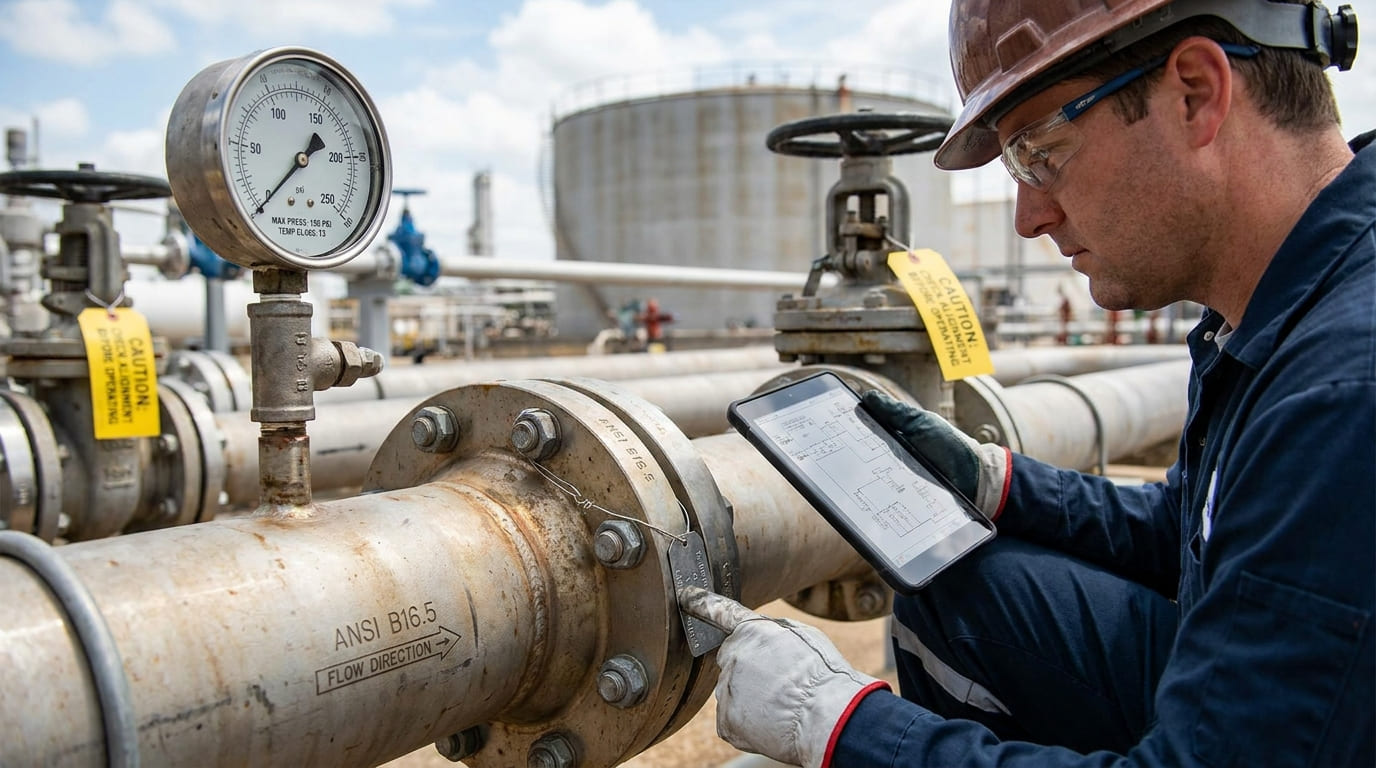
I Separate Standby, Test, and Emergency Flow
I usually ask for three flow conditions. The first is standby or near-zero condition. The second is routine test flow. The third is fire event or maximum design flow. These conditions should not be mixed into one vague statement such as “large flow meter required.”
The meter must be able to operate within its declared measuring range under defined conditions. ISO 4064 performance testing includes error of indication, static pressure, 水壓, 逆流, and pressure loss tests [5]. These items are relevant because fire service lines may face high pressure, backflow influence, flow testing, and hydraulic disturbance.
Durability is also important. ISO 4064 describes durability testing to verify a water meter when subjected to continuous, 永恆的, and overload flow conditions [1]. The test can subject the meter to a constant flow rate of Q3 or Q4 for a specified duration [1]. This matters because a fire service meter may not flow every day, but when it does flow, the event can be severe.
For field review, I also check whether the system can create cavitation, 氣穴, or parasitic wear. ISO 4064 test installation guidance states that devices in the piping system shall not cause cavitation phenomena or other types of parasitic wear of the meter [3]. It also states that meters and connecting pipes should be suitably bled of air [3]. In real fire lines, trapped air and pump starts can create unstable behavior that later appears as an abnormal complaint.
| Flow or Pressure Item | Why I Ask | Risk If Missing |
|---|---|---|
| Minimum detectable flow | Checks monitoring or bypass flow need | Under-registration complaint |
| Normal standby condition | Confirms long static behavior | Hidden fault or stagnant water issue |
| Routine test flow | Matches fire system test practice | Wrong meter overload assumption |
| Emergency design flow | Protects fire response capacity | Pressure loss or meter damage risk |
| Q3 and Q4 | Defines permanent and overload flow boundary | Incorrect meter selection |
| 壓力損失 | Protects downstream fire system demand | Reduced available pressure |
| Inlet and outlet pressure | Shows hydraulic stress | Leakage or abnormal wear |
I do not recommend selecting by pipe size alone. The selected meter should match the actual working flow profile and the required emergency flow. If the meter is too large, low-flow monitoring may be weak. If the meter is too small, pressure loss and overload risk may increase.
Typical Complaint and Failure Modes?
Fire meter complaints often arrive late. The meter looked fine because nothing happened. Then a test exposes the weak point.
Typical fire service meter complaints include no registration after long standby, low reading at test flow, excessive pressure loss, 洩漏, register damage, reverse flow effects, air-related errors, and smart alarm or data transmission faults.
Why the Complaint Often Looks Abnormal
I see one repeated pattern. The meter may work normally during factory inspection and installation. Then it stays almost still. No one notices a hidden issue. Months later, a pump test or fire drill creates sudden high flow. The meter gives an unexpected reading, 洩漏, vibrates, or triggers a complaint.
This does not always mean the meter is defective. It may mean the wrong model was selected, the line was not flushed, the meter was installed near a pump or valve, air was trapped, or the meter was exposed to pressure shock. It may also mean the meter was not suitable for the required high-flow duty.
ISO 4064 performance tests include absence of flow for electronic water meters or meters with electronic devices [5]. This is relevant because long no-flow periods are common in fire service lines. If a smart meter is used, I also check how the device behaves during faults. ISO 4064 states that when a meter transmits data to peripheral equipment, the transmission shall be accompanied by a message indicating the presence of a fault [6]. This helps separate valid readings from fault conditions.
| 抱怨 | Possible Cause | My First Check |
|---|---|---|
| No reading during test | stuck mechanism, 空氣, wrong model, blocked line | flow condition and meter status |
| 讀數低 | oversized meter, bypass issue, partial obstruction | 第三季, r, 安裝, line flushing |
| 洩漏 | 壓力衝擊, gasket issue, body stress | pressure record and installation support |
| High pressure loss | undersized meter or wrong type | pressure loss data and emergency flow |
| Reverse flow record | backflow or hydraulic transient | valve layout and reverse flow test basis |
| Fault alarm | electronic issue or system fault | alarm log and communication path |
| No remote data | weak signal or platform issue | 閘道, SIM卡, 覆蓋範圍, 報告週期 |
For electronic or smart meters, alarms must be handled carefully. ISO 4064 allows automatic correction, stopping only the faulty device if the meter still complies, or a visible or audible alarm under defined fault handling rules [6]. If data is transmitted, the fault message should travel with the transmission [6]. I do not treat every alarm as a measurement failure. I first identify whether it is a sensor, 力量, 記憶, 溝通, or platform issue.
A fire service meter complaint should never be closed with a simple “replace meter” answer. I review complaint data, 安裝記錄, pressure data, 測試條件, 批次記錄, and any alarm logs. The high-risk nature of the application requires root-cause analysis.
Installation Pitfalls in Fire Lines?
A good meter can fail in a bad fire line. 泵浦, 彎曲, 閥門, and trapped air can turn testing into complaints.
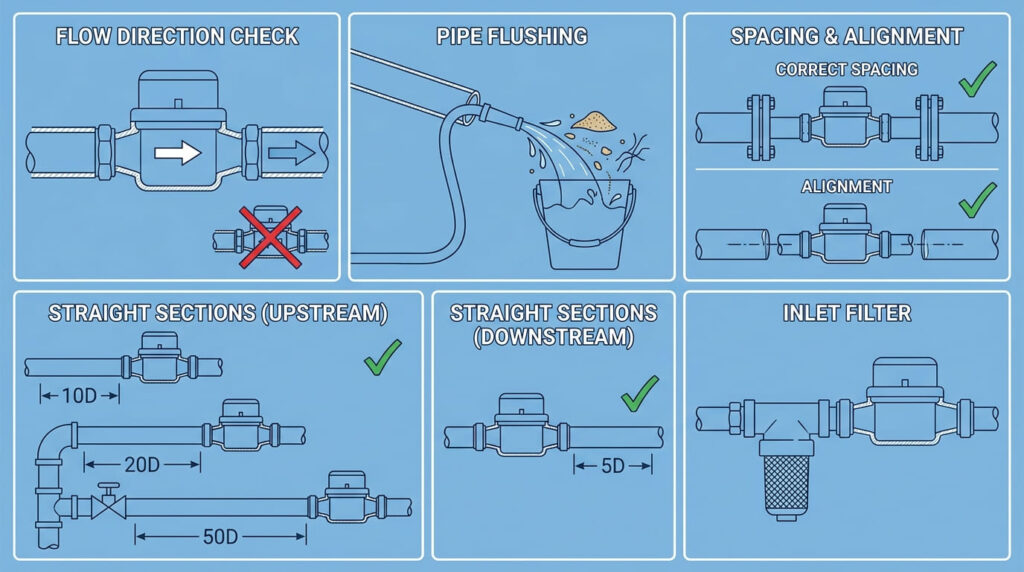
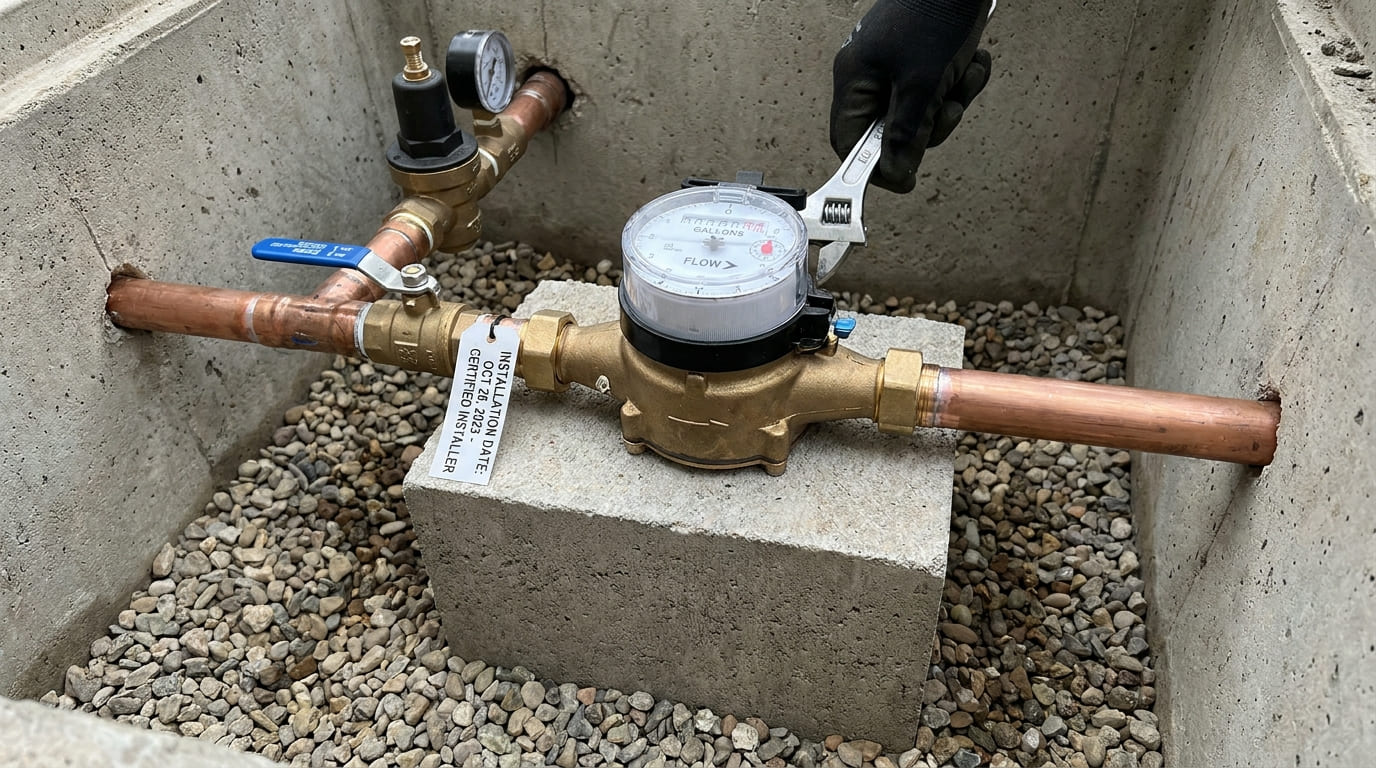
Fire line installation pitfalls include insufficient straight pipe, nearby pumps, fast-closing valves, 滯留空氣, poor pipe support, 錯誤的流向, inaccessible chambers, and missing pressure measurement points.
The Pipe Layout Can Decide the Result
I always ask for the installation drawing before confirming a fire service meter. A fire line often has pumps, check valves, isolation valves, bypasses, hydrant branches, and sharp bends. These parts can disturb flow or create pressure transients.
ISO 4064 test setup guidance includes water supply, 管道工程, 流量調節裝置, 隔離閥, 水溫測量, and means for checking flow rate and duration [1]. It also describes test pipework with flow-regulating devices, 隔離閥, pressure measurement at inlet and outlet, and flow-interrupting devices [3]. These details remind me that flow testing is not only about the meter. It is about the entire hydraulic arrangement.
Air is another common pitfall. ISO 4064 states that meters and connecting pipes should be suitably bled of air [3]. In fire systems, air can remain in high points, dead legs, or after maintenance. When a pump starts, that air can pass through the meter and create unstable readings, 噪音, or mechanical stress.
Cavitation and parasitic wear are also concerns. ISO 4064 says the various devices in the test piping system shall not cause cavitation phenomena or other types of parasitic wear of the meter [3]. In a fire line, pump suction issues, throttled valves, and poor layout can create harsh hydraulic conditions.
| Installation Pitfall | Field Effect | Control Method |
|---|---|---|
| Meter too close to pump | unstable flow and vibration | follow straight pipe guidance |
| No pressure gauges | cannot diagnose pressure loss | add inlet and outlet pressure points |
| Trapped air | 噪音, unstable reading, damage risk | bleed air and check high points |
| Fast valve closure | 壓力衝擊 | review valve operation and surge control |
| 方向錯誤 | no reading or reverse reading | check flow arrow before commissioning |
| Poor pipe support | body stress and leakage | support pipework, not meter body |
| Inaccessible chamber | delayed inspection | design for maintenance access |
I also check whether the meter can be removed safely. Fire systems are critical. Maintenance access must allow isolation, 檢查, 替代品, and recommissioning without creating unsafe downtime. A meter buried in a tight chamber may pass installation acceptance but fail lifecycle maintenance.
測試, Certification and Compliance Requirements?
Fire service meters need more than a datasheet. If the test boundary is unclear, compliance becomes a debate after failure.
Testing and compliance should cover metrological performance, 壓力, 逆流, 壓力損失, 耐用性, 溫度, register protection, fault handling, and local fire approval requirements. ISO 4064 includes these water meter performance test categories [5].
I Check Both Meter Standard and Fire Approval Path
我對待ISO 4064 as an important water meter standard, but not as a complete fire protection approval. It helps define metrological and performance testing. Fire systems may also require local fire codes, consultant approval, civil defense approval, UL/FM listed components, backflow requirements, or other national rules depending on the market.
ISO 4064 performance test programs include static pressure, error of indication, absence of flow, 水溫, overload water temperature where applicable, 水壓, 逆流, and pressure loss [5]. These items are useful for reviewing a fire service meter because the application may face high pressure, 反向液壓效應, and pressure-loss sensitivity.
Durability testing is also relevant. The standard describes verification of meter durability under continuous, 永恆的, and overload flow conditions, including tests at Q3 or Q4 for specified duration [1]. In fire service applications, I pay special attention to Q4 because sudden overload flow can occur during system testing or emergency operation.
For temperature, ISO 4064 describes tests to measure the effects of water temperature on meter indication errors, including testing at Q2 with defined inlet temperature conditions and at the maximum admissible temperature of the meter [4]. Fire service water is usually cold, but mechanical rooms, outdoor chambers, and warm climates can still affect meter materials and electronics.
| Compliance Item | What I Request |
|---|---|
| Water meter standard | ISO 4064, OIML R49, or project-required standard |
| Fire approval | local fire authority, consultant, or civil defense requirement |
| Flow ratings | 第三季, 第四季, 壓力損失, overload data |
| Pressure tests | static pressure and working pressure evidence |
| 逆流 | test basis and field backflow control |
| Register protection | sealed protection against modification |
| Smart fault handling | alarm and transmitted fault message behavior |
| 安裝手冊 | 直管, 方向, 壓力, and maintenance rules |
I also check sealing and tamper protection. ISO 4064 需要能夠密封的保護裝置,以防止在沒有證據的情況下拆卸或改裝儀表或其調節裝置 [2]. 這在消防線路中很重要,因為未經授權的旁路或調整可能會影響計費和安全文檔.
高風險設施的真實案例?
高風險設施很快就會暴露出薄弱的規格. 醫院, 商場, 工廠, 倉庫不能接受含糊的選表.
在高風險設施中, 消防表問題通常來自家庭和消防流量的混合, 泵房壓力衝擊, 沖洗不良, 無法存取的安裝, 和智慧溝通差距.
我經常看到的場模式
我將描述常見的專案模式而不是機密的客戶案例. 第一種模式出現在大型商業建築中. The same line may support domestic consumption monitoring and fire demand. A normal large meter may handle high flow but miss low bypass consumption. A small meter may read low flow but restrict fire demand. In this case, I study whether a combination meter or a separate metering arrangement is suitable.
The second pattern appears in pump rooms. The meter is installed too close to pumps, 手肘, or fast-closing valves. During a fire pump test, the reading becomes unstable, or the meter shows vibration. ISO 4064 test arrangements include pressure measurement at the inlet and outlet and require devices not to cause cavitation or parasitic wear [3]. This reflects a practical field need: pressure and hydraulic behavior must be measurable.
The third pattern appears in warehouses and industrial parks. The fire system sits idle. After months, a test creates sudden flow. 碎片, 滯留空氣, or a partly closed valve creates a complaint. Because the system is high-risk, the facility team may demand immediate replacement. I still ask for a root-cause review before deciding.
The fourth pattern appears in smart metering projects. The meter measures flow, but the remote reading is missing. The problem may be underground installation, metal covers, weak NB-IoT coverage, poor LoRa gateway placement, wrong meter registration, or platform settings. A smart meter can support remote data collection and alarm management, but it cannot replace network design, gateway power, SIM management, or field response.
| Facility Type | Common Fire Meter Risk | 我驗證的內容 |
|---|---|---|
| Hospital | high consequence of downtime | 旁路, isolation, 和維護計劃 |
| Shopping mall | mixed use and large peak demand | combination meter need and pressure loss |
| Factory | 幫浦振動和髒水 | 水工佈置及沖洗記錄 |
| 倉庫 | 長時間閒置 | 測試計劃和無流動行為 |
| 工業園區 | 通訊和壓力區 | 網關計劃和壓力記錄 |
我更喜歡對不尋常設施進行飛行員驗證. 試點應包括流量測試, 壓力觀察, 遠端抄表測試是否智能, 和維護訪問審查. 實際結果取決於當地現場情況.
安全選擇和維護消防儀表?
消防儀表的決定應保守. 儀表必須支援安全, 測量, 以及實際現場條件下的可維護性.
透過定義流量剖面來選擇和維護消防儀表, 第三季, 第四季, 壓力損失, 壓力等級, 安裝佈局, 合規路線, 檢查時間表, 以及採購前的故障應對計劃.
My Practical Checklist for Safer Projects
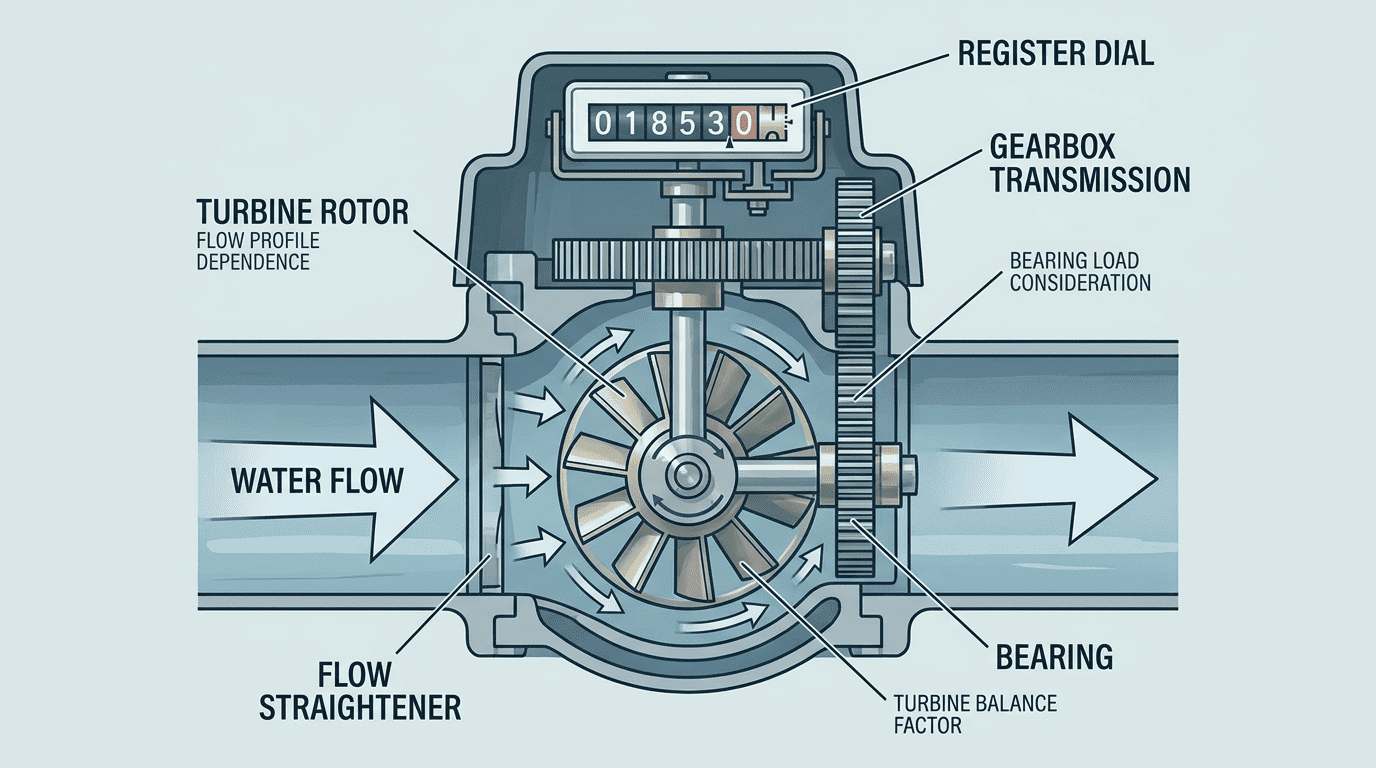
I use a checklist before approving a fire service meter. 從應用開始. I ask whether the meter is for a dedicated fire line, 綜合家庭和消防服務, 噴頭供應, 消防栓分支, 消防泵浦出口, 或設施監控. 然後定義水力邊界.
投標書應註明米數, 第三季, 第四季, 壓力損失極限, 常壓, 最大壓力, 壓力衝擊風險, 安裝方向, 直管段要求, 溫度等級, 防護等級, 及認證要求. ISO 4064 包括壓力損失測試, 水壓, 逆流, static pressure, and indication error [5]. 當買方需要類似的技術文件時,這些是有用的投標參考.
I also ask for durability evidence. ISO 4064 耐久性測試可以使儀表在指定的時間內接受 Q3 或 Q4,以驗證在永久和過載流量條件下的行為 [1]. 對於消防儀表, 我想知道長時間安靜後出現高流量時儀表的表現如何.
維護不是可選的. 消防線路需要定期檢查, 測試流程驗證, 壓力檢查, 需要時放氣, 閥門位置檢查, 和記錄保存. 如果電錶是智慧的, 維護計劃應包括電池狀態, 訊號品質, 報警回顧, 平台數據, 和故障訊息. ISO 4064 當儀表向外圍設備傳輸資料時,要求傳輸的資料包含指示故障的訊息 [6].
| 採購及維修項目 | 我指定的內容 |
|---|---|
| 應用邊界 | 專用火, 綜合服務, 灑水器, 消防栓, 泵浦線 |
| 流量剖面 | 支援, 低流量, test flow, emergency flow |
| 儀表參數 | DN, 第三季, 第四季, 壓力損失, 壓力等級 |
| 安裝 | 直管, 方向, 支援, 排氣, 使用權 |
| 遵守 | ISO/OIML documents and local fire approvals |
| 保護 | sealed devices and tamper evidence |
| 智慧系統 | 通訊方式, 閘道, SIM卡, 平台, 報警規則 |
| 維護 | inspection cycle, flow test, 壓力記錄, 申訴流程 |
YOUNIO can support mechanical water meters, 沃爾特曼米, turbine meters, large-diameter meters, ultrasonic meters, and smart AMR/AMI options for different applications. But I would still verify the final selection against the fire system design, local approval route, and field pilot where the risk is high.
The safest selection is not always the largest meter. It is the meter that matches the actual flow profile, 壓力條件, 安裝佈局, and compliance requirement. In fire service applications, I treat long static condition plus sudden high flow plus wrong model selection as the main complaint triangle.
結論
Specify fire service meters by flow profile, 第三季, 第四季, 壓力損失, 安裝, 遵守, 和維護訪問. Wrong assumptions create high-risk complaints.