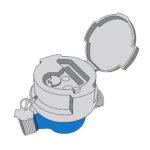

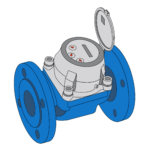

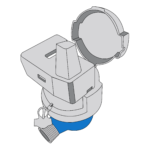

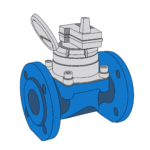

我們全球專案的現場投訴記錄揭示了一個驚人的模式: “安裝方向錯誤" 和“複雜的管道擾動" 影響正位移 (PD) 米和速度計. 後 40 多年來在中東製造和支援公用事業, 非洲, 和拉丁美洲, 我在一個又一個的專案中看到這些問題重複出現. 差別不在於是否出現問題, 而是每種儀表類型的回應方式以及您的選擇是否符合您的實際情況.
正排量水錶與流速水錶的選擇很少是非黑即白的. 正確的選擇取決於流量剖面, 水質, 安裝條件, 以及您的營運優先事項. 在本文中, 我將根據全球安裝的實際現場數據來詳細分析每種類型的成功或失敗之處.
![IMAGE_PLACEHOLDER_1: 專業 B2B 插圖並排顯示兩種類型的水錶, 左側為正位移計,右側為速度計, 乾淨的技術風格, 藍色配色方案]
什麼是容積式水錶?
正位移 (PD) 儀表的工作原理很簡單: 他們透過填充和清空已知的室或用每個單位的水移動測量元件來測量體積. 當水流過水錶時, 它取代了活塞, 章動碟, 或旋轉葉片. 每次旋轉或循環代表固定的體積, 記錄在登記冊上. 儀表計算週期, 不是水流本身的速度.
PD 計擅長低流量測量. 因為他們直接測量體積, 即使流速非常低,它們也能保持精度. 這使得它們非常適合流量變化很大或必須準確記錄小流量的應用. 典型的局部放電計設計包括振盪活塞, 章動碟, 和旋轉活塞類型.
局部放電計的主要特性:
- 測量範圍寬 (許多現代型號中的 R80 至 R100)
- 低流量下具有出色的精度 (Q1)
- 對水質敏感-顆粒會堵塞運動部件
- 與某些流速計相比,壓力損失更高
- 運動部件需要定期維護
![IMAGE_PLACEHOLDER_2: 顯示內部測量室和活塞機構的容積式水錶橫斷面技術圖, 標記組件, 乾淨的技術插圖]
什麼是流速水錶 (沃爾特曼, 渦輪, ETC。)?
流速計測量水流過已知橫截面積的速度. 儀表採用旋轉元件 (渦輪, 葉輪, 或沃爾特曼螺旋) 其轉速與流速成正比. 透過測量旋轉速率並了解管道面積, 儀表計算流量並累積體積. 與 PD 計不同, 速度計根據速度推斷體積,而不是計算固定體積.
常見的速度計類型包括:
- 沃爾特曼 (渦輪) 米: 使用螺旋葉輪, 適用於較大尺寸的管道 (DN50 至 DN500+). 常見於高流量的工業和公用事業應用中.
- 單射流和多射流流量計: 將水流以一定角度引導到葉輪上. 葉輪根據流速旋轉得更快或更慢. 通常用於較小的管道尺寸 (DN15 至 DN40).
- 直立式渦輪流量計: 專為垂直安裝而設計, 常用於地下水井應用.
在高流量下,流速計通常比 PD 計具有更低的壓力損失,因為它們對水運動的阻力較小. 然而, 他們可能會遇到低流量精度的問題,因為旋轉元件可能無法在非常低的速度下持續轉動.
速度計的主要特性:
- 高流量時壓力損失較低
- 更適合較大尺寸的管道 (尤其是沃特曼)
- 與局部放電測量儀相比,對小顆粒的敏感度較低
- 某些型號的最小和最大流量能力之間的差距更大
- 隨著時間的推移,運動部件會磨損
![IMAGE_PLACEHOLDER_3: 顯示三種類型速度計的技術插圖: 沃特曼渦輪機, 多射流, 和單噴, 橫斷面視圖顯示內部旋轉元件, 乾淨的示意圖風格]
全球專案數據: 每種類型成功或失敗的地方
我們的中東專案記錄, 非洲, 和拉丁美洲揭示了現實條件下每種儀表類型的清晰性能模式. 我將分享儀表選擇決定或破壞專案成果的具體範例.
中東住宅計量項目 (2023): 沙烏地阿拉伯安裝了一家公用事業公司 30,000 適用於住宅應用的局部放電測量儀. 初始精度非常好, 但之後 18 月, 投訴急劇上升. 調查顯示,來自分配網路的沙粒堵塞了測量室. 該公用事業公司改用超音波儀表, 沒有移動部件且不受顆粒物的影響. 投訴量下降 70%.
拉丁美洲工業應用 (2022): 巴西的製造工廠使用沃爾特曼渦輪流量計進行製程水測量. The meters performed well at the facility's typical flow rates. 然而, 夜間低需求時段, flow dropped below the meters' minimum operating threshold. 儀表停止記錄, 導致不明的水損失. 該設施安裝了具有更寬低流量範圍的局部放電測量儀, 準確捕捉夜間流動.
非洲農業項目 (2024): 肯亞的一項灌溉計劃在水井和配電線路上使用了速度計. 由於泵浦循環和壓力波動,儀表經常改變流向. 標準流速計無法測量逆流, 導致淨體積讀數不準確. 安裝了具有雙向測量功能的局部放電測量儀, 捕捉正向和反向流量.
這些例子說明背景比理論表現更重要. 最好的" meter depends on your specific water quality, flow profile, and operational conditions.
![IMAGE_PLACEHOLDER_4: World map illustration with project locations marked in Middle East, Latin America, and Africa, showing icons for successful PD meter projects and velocity meter projects, professional infographic style]
Sensitivity to Installation Conditions and Flow Profile
Installation conditions are where most field failures occur, and our complaint records consistently show that "wrong installation direction" 和“複雜的管道擾動" cause problems for both PD and velocity meters. 然而, the nature and severity of these problems differ.
Installation direction errors:
- PD meters with horizontal-only orientation installed vertically: The measuring element (piston or disc) relies on gravity for proper operation. Vertical installation can cause erratic readings or premature wear. In one project in the UAE, 15% of PD meters failed within 2 years due to incorrect vertical mounting.
- Velocity meters installed without proper straight pipe runs: Velocity meters require laminar flow for accurate measurement. If installed immediately after an elbow, valve, or tee, turbulent flow causes inaccurate readings. ISO 4064 specifies minimum straight pipe lengths upstream (typically 10× pipe diameter) and downstream (5× pipe diameter) to ensure proper flow profile.
Pipeline disturbances:
- Air pockets: Air trapped in the pipe can cause both meter types to register inaccurately. PD meters may register partial volume when air passes through the measuring chamber. Velocity meters may spin the impeller unpredictably in turbulent air-water mixtures. Air release valves upstream of meters are essential.
- Pulsating flow: Pump-induced pulsations affect velocity meters more severely than PD meters. The rotating impeller may accelerate and decelerate with each pulse, causing registration errors. PD meters, which count fixed volumes, are less sensitive to flow pulsation.
- Vibration: Both meter types can be affected by pipe vibration. 然而, PD meters with oscillating pistons may experience premature wear from excessive vibration, while velocity meters with turbine bearings may fail faster under continuous vibration.
Flow profile considerations:
- Laminar vs turbulent flow: Velocity meters perform best under laminar flow conditions. Turbulent flow upstream can cause registration errors of 10-20% in extreme cases.
- Flow rate variability: PD meters handle wide flow ranges better than many velocity meters. If your application sees flow rates that vary from very low (nighttime residential use) to very high (peak industrial demand), PD meters often provide more consistent accuracy across the entire range.
![IMAGE_PLACEHOLDER_5: Technical diagram showing correct vs incorrect meter installations, including straight pipe runs, orientation (horizontal vs vertical), and upstream/downstream clearances, annotated with measurements]
準確性, Pressure Loss and Range Comparison
When comparing PD and velocity meters, three technical specifications matter most: accuracy across the flow range, pressure loss, and measuring range (R-value). These factors directly affect billing accuracy, pump energy costs, and meter suitability for your specific application.
Accuracy comparison:
| Specification | Positive Displacement | Velocity (沃爾特曼) | Velocity (Jet) |
|---|---|---|---|
| Typical accuracy at Q3 (max flow) | ±2% to ±1% | ±2% | ±2% |
| Accuracy at Q1 (min flow) | ±2% to ±1% | ±5% to ±2% | ±5% to ±2% |
| Measuring range (R-value) | R80 to R100 | R50 to R80 | R40至R80 |
| 低流量效能 | 出色的 | 從公平到良好 | 公平的 |
PD 計在低流速下始終優於速度計 (Q1). 這對於小流量佔總流量很大一部分的應用至關重要 (住宅計費, 洩漏檢測). 速度計, 特別是較大的沃特曼類型, 通常具有較高的最小流量閾值,並且可能無法在 Q1 以下準確記錄.
壓力損失:
壓力損失代表流過水錶的能源成本. 較高的壓力損失意味著您的泵浦必須更加努力地工作, 增加電力消耗. 超過一個 10-15 年儀表壽命, 這會增加巨大的營運成本.
| 儀表類型 | Q3 處的典型壓力損失 | 能源影響 |
|---|---|---|
| PD meters | 0.1 到 0.3 酒吧 | 緩和 |
| 沃特曼渦輪機 | 0.05 到 0.2 酒吧 | 低到中等 |
| 噴射流量計 | 0.2 到 0.5 酒吧 | 中到高 |
速度計, 特別是沃特曼渦輪機, 通常在高流量下提供較低的壓力損失. This makes them attractive for applications with large pipe sizes and high flows where energy efficiency matters (pumped distribution systems, industrial process water).
Measuring range (R-value):
The R-value is the ratio of Q3 (maximum flow) to Q1 (minimum flow). Higher R-values indicate wider measuring ranges.
- PD meters: Typically R80 to R100. Modern ultrasonic PD alternatives achieve R100 or higher.
- 沃爾特曼米: Typically R50 to R80. High-end models reach R100.
- 噴射流量計: Typically R40 to R80. Residential models often achieve R80.
Wider measuring ranges mean one meter can accurately measure both very low and very high flows. This reduces the need for multiple meter sizes or parallel metering arrangements.
![IMAGE_PLACEHOLDER_6: Comparison chart showing accuracy curves for PD vs velocity meters across flow rates (Q1 to Q3), with pressure loss curves and measuring range bars, professional technical graph]
Typical Applications for PD Meters
Based on our project experience, PD meters excel in specific applications where their technical characteristics align with operational requirements. Here are the scenarios where PD meters are the clear choice.
Residential water billing: PD meters are widely used for residential metering worldwide because they capture low flows accurately. In many households, nighttime flows (toilet leaks, small continuous uses) represent a significant portion of total volume. A Middle East utility we worked with reduced unaccounted water by 8% after switching from velocity to PD meters for residential applications, specifically because PD meters captured low-flow leaks that velocity meters missed.
Small commercial and institutional applications: Small restaurants, clinics, and offices often have widely varying flow patterns. A restaurant might have intermittent heavy flows during meal preparation and very low flows overnight. PD meters with R100 range handle this variability well.
Leak detection programs: Because PD meters register accurately at very low flows, they are ideal for NRW (Non-Revenue Water) reduction programs. A utility in Africa used PD meters in DMA (District Metered Area) monitoring and identified previously undetectable leaks, reducing NRW from 35% 到 28%.
Applications with limited installation space: PD meters often require less straight pipe upstream and downstream compared to velocity meters. This makes them suitable for compact meter pits and retrofits where space is constrained.
Billing accuracy priority applications: If revenue recovery is the primary concern and water quality is relatively clean, PD meters offer superior accuracy across the flow range. A Latin American utility increased revenue by 12% after switching to PD meters, citing improved capture of low-flow usage.
![IMAGE_PLACEHOLDER_7: Infographic showing typical PD meter applications with icons: residential homes, small businesses, 洩漏檢測, billing systems, compact installations, clean visual style]
Typical Applications for Velocity Meters
速度計, particularly Woltman turbine meters, dominate specific application categories where their technical advantages outweigh other considerations. These applications typically involve larger pipe sizes, higher flows, or environments where PD meter limitations (sensitivity to particles, pressure loss) would be problematic.
Large-diameter utility meters (DN50 至 DN500+): Woltman meters are the standard choice for larger pipe sizes in distribution networks. A Middle East utility uses Woltman meters for DN100 and larger pipes feeding district metering areas. The low pressure loss at high flows reduces pumping costs compared to PD alternatives. For a 15,000 m³/day flow, the energy savings from lower pressure loss can be significant over a year.
Industrial and agricultural applications: Factories, irrigation systems, and processing plants often have high flow rates with relatively clean water. Velocity meters handle these high flows efficiently. A Latin American agricultural cooperative uses Woltman meters on irrigation wells with flows up to 200 m³/h. The meters provide accurate bulk measurement with minimal pressure loss.
Applications with particulate water: In regions where water contains sand, sediment, or other particles, velocity meters often outperform PD meters. PD meters' moving parts can jam when particles enter the measuring chamber. An African utility serving a region with sandy groundwater switched from PD to velocity meters and reduced maintenance calls by 60%.
Temporary or portable metering: Velocity meters with robust construction are often used for temporary flow measurement (construction sites, well testing, system audits). Their tolerance for less-than-ideal water quality makes them suitable for these applications.
Budget-constrained projects: For some utilities and contractors, velocity meters offer lower upfront costs compared to PD meters, especially in larger pipe sizes. When lifecycle cost considerations are secondary to initial budget constraints, velocity meters provide acceptable performance.
![IMAGE_PLACEHOLDER_8: Infographic showing typical velocity meter applications: industrial factories, irrigation systems, large pipe networks, agricultural wells, temporary metering, professional icon-based design]
A Practical Decision Framework for Meter Type
後 40 years of supporting utilities across multiple continents, I have developed a straightforward decision framework that helps project managers choose between PD and velocity meters. This framework is based on real field conditions rather than theoretical specifications.
步 1: Assess water quality
- Clean water (low particulates): Both meter types suitable
- Sandy/sediment water: Velocity meters preferred
- Variable water quality: Consider ultrasonic meters (no moving parts)
步 2: Analyze flow profile
- Wide flow range (very low to very high): PD meters excel
- Consistent high flows: Velocity meters lower pressure loss advantage
- Intermittent low-flow periods: PD meters capture low flows better
- Pulsating flow: PD meters less affected
步 3: Evaluate installation constraints
- Limited straight pipe available: PD meters more tolerant
- Vertical installation required: Check PD meter orientation specifications
- Compact meter pit: PD meters often smaller footprint
- Easy access for maintenance: Either type suitable
步 4: Consider operational priorities
- Billing accuracy paramount (revenue recovery): PD meters superior
- Energy cost significant (pumping costs): Velocity meters lower pressure loss
- Low maintenance priority: Consider ultrasonic (no moving parts)
- Lifecycle cost focus: Calculate 10-year TCO including energy, maintenance, and revenue
步 5: Review regulatory and compliance requirements
- ISO 4064 accuracy class requirements: Both types available in Class C or D
- Local utility specifications: Some regions mandate specific meter types
- Approval processes: Ensure selected model has required certifications (中, OIML R49)
Decision matrix summary:
| Scenario | Recommended Meter Type | Rationale |
|---|---|---|
| Residential billing, clean water | PD | Low-flow accuracy critical |
| Large DN pipe, high flows | Velocity (沃爾特曼) | Lower pressure loss |
| Sandy/particulate water | Velocity | Moving parts less sensitive |
| Wide flow range, revenue focus | PD | R100 range, accurate at Q1 |
| Energy cost significant | Velocity | Lower pressure loss at Q3 |
| Compact installation space | PD | Less straight pipe required |
| Minimal maintenance priority | Ultrasonic (PD alternative) | No moving parts |
The key insight from our field data is that the same meter type can perform excellently in one context and fail in another. Your decision should be based on your specific conditions: 水質, flow profile, installation constraints, and operational priorities.
結論
Choosing between positive displacement vs velocity water meters is not about finding the "best" technology—it is about matching the right technology to your specific conditions. Field complaint records consistently show that installation errors and complex pipeline conditions affect both meter types. The difference lies in how each type responds to your unique environment.
PD meters excel when low-flow accuracy, revenue recovery, and wide measuring ranges are priorities. Velocity meters shine when large pipe sizes, high flows, and energy efficiency are primary concerns. In both cases, proper installation, appropriate straight pipe runs, and water quality considerations are essential for reliable performance.
在Younio, we have supported utilities, distributors, and OEMs with water metering solutions for over 40 年. We offer both PD and velocity meters, along with ultrasonic alternatives, and we help our clients select the right technology for their specific applications. Our CNAS-certified laboratory and 5000+ m² production facility ensure that every meter meets ISO 4064 and OIML R49 standards.
If you are planning a water metering project and want to discuss whether PD or velocity meters are right for your application, send me your project details. I will provide a technical recommendation based on your flow profile, 水質, and installation conditions. Our team can also help with tender specifications, custom configurations for harsh environments, and factory audits for large orders.