



Many projects meet problems after delivery. If teams hide them, trust breaks. I prefer partners who solve the first issue together.
A long term water meter partnership is not built on “zero problems.” It is built when the utility, supplier, 安装人员, and factory share data, solve complaints clearly, and make the next batch smoother.
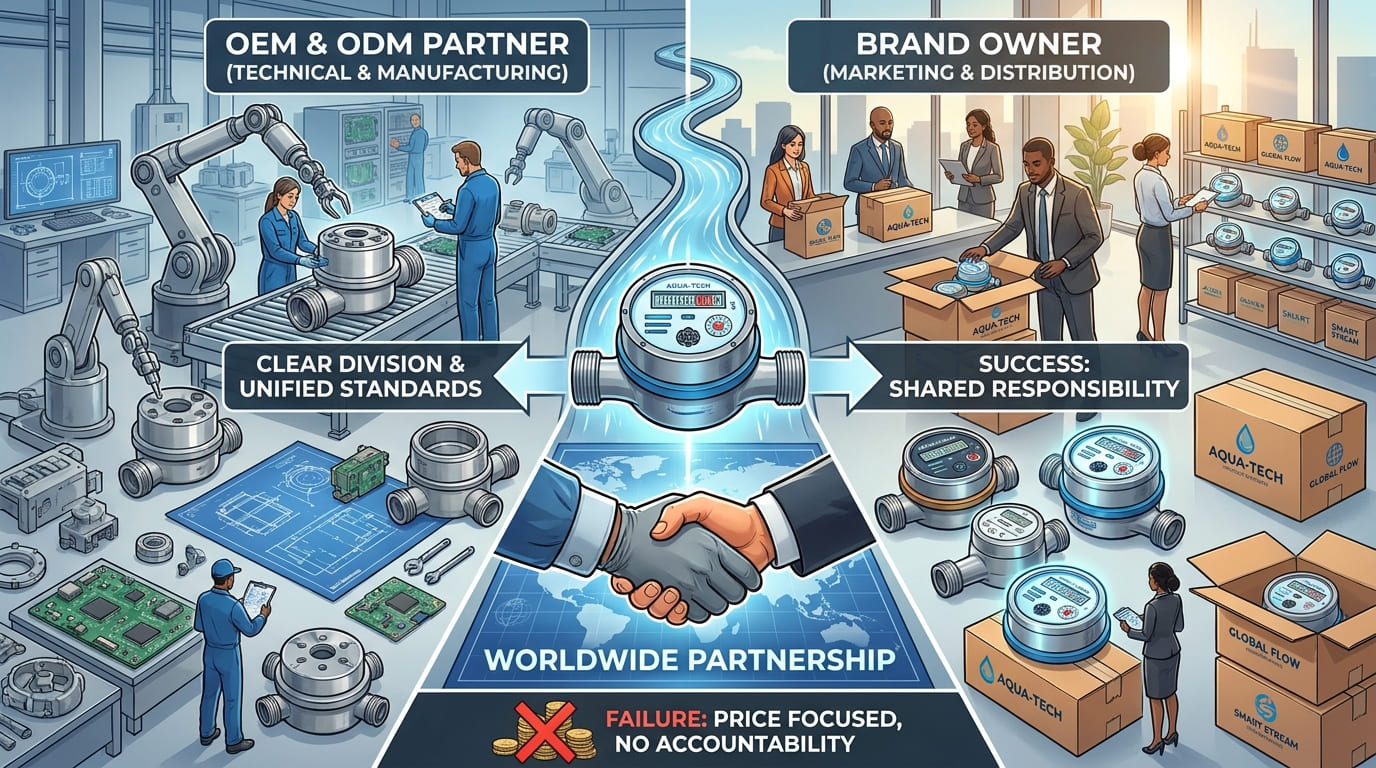
I have learned this from repeat customers. The first order tests price and delivery. The second order tests honesty. The third order usually depends on whether both sides handled the first serious problem in a professional way.
What Do Repeat Customers Have in Common?
Some customers only buy once. Others return year after year. The difference is usually not price alone.
Repeat customers usually share site data, accept joint reviews, respect test evidence, discuss installation limits, and treat complaints as project improvement work, not only supplier blame.
I Look for Behavior, Not Only Order Volume
I do not define a repeat customer only by the number of purchase orders. I define them by how they behave when the project becomes difficult.
Good repeat customers ask technical questions before shipment. They ask about meter size, 第三季度, R值, Q1 where relevant, 温度等级, 压力条件, 安装位置, 通讯方式, battery plan, and certificate scope. They also ask what the meter cannot solve alone. This is a strong sign.
They also keep records. They can provide installation photos, serial number lists, pressure notes, water quality comments, 通讯日志, and complaint categories. When a complaint appears, they do not send only one sentence saying “the meter is bad.” They send evidence.
This matters because water meter performance depends on defined conditions. ISO 4064 durability testing, 例如, verifies meters under continuous, 永恒的, and overload flow conditions by subjecting meters to constant flow rates such as Q3 or Q4 for a specified duration [1]. That type of test evidence is useful, but field conditions still need to be checked.
| Repeat Customer Behavior | Why It Helps the Partnership |
|---|---|
| Shares site data early | improves meter selection |
| Keeps serial number records | supports traceable complaint analysis |
| Accepts pilot review | reduces full-rollout risk |
| Discusses installation limits | prevents avoidable field disputes |
| Reviews smart data logs | separates meter, 网络, and platform issues |
| Gives structured feedback | helps improve the next batch |
I also see repeat customers take responsibility for their side of the system. A smart meter can measure, store data, detect events, and transmit data. But it cannot fix poor signal coverage, wrong platform mapping, blocked meter pits, or weak field response.
This is why mature customers often become long-term partners. They do not expect a supplier to hide every problem. They expect the supplier to explain the problem clearly and help prevent the same issue in the next batch.
How Did We Handle the First Serious Complaint with Them?
The first serious complaint decides the tone of the relationship. A defensive answer can damage years of future cooperation.
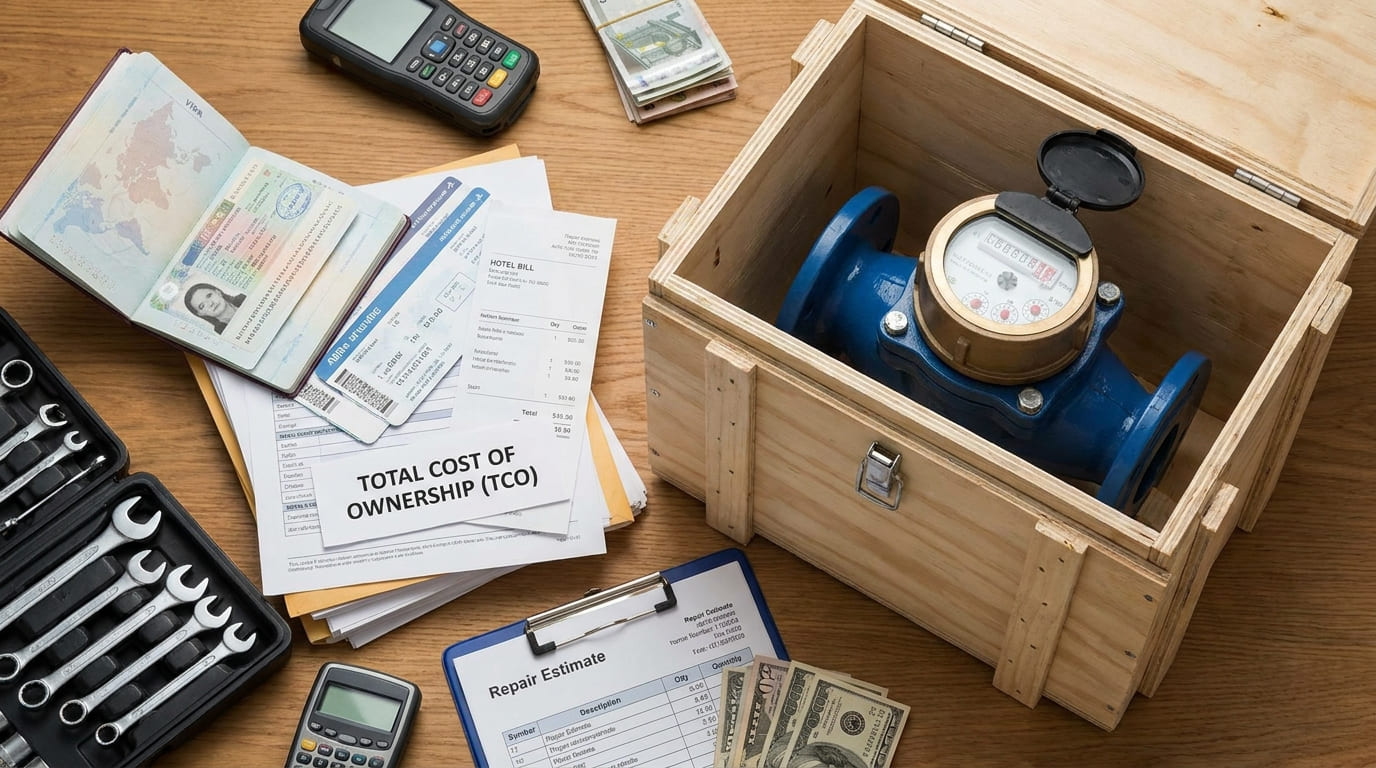
I handle the first serious complaint by collecting field evidence, checking batch records, reviewing test conditions, comparing installation data, and agreeing on corrective actions before discussing blame.
I Start With Evidence Before Responsibility
When the first serious complaint arrives, I slow the process down. I do not want a fast but wrong answer.
I usually ask for the meter model, 通径尺寸, 序列号, 安装日期, site photos, 流动方向, 压力条件, 水质备注, customer complaint description, communication logs if it is a smart meter, and whether the meter was removed for testing. These details help separate product, 安装, site, and system causes.
For mechanical or static meters, I check whether the complaint is about accuracy, 泄漏, blockage, 缩合, reading difficulty, 或损坏. 对于智能电表, I also check battery status, 信号强度, 上传周期, platform response, valve status if applicable, and alarm records.
The standard reminds me to look at pressure and connections carefully. A water meter should withstand test pressures of 1.6 乘以最大允许压力 15 分钟和最大允许压力的两倍 1 分钟无泄漏或损坏 [3]. But if the site has pressure surge, poor fittings, or installation stress, the complaint still needs field analysis.
用于电子仪表, fault handling is also important. ISO 4064 states that when a water meter transmits data to peripheral equipment, the transmission should be accompanied by a message indicating the presence of a fault where applicable [2][5]. This means a good complaint review should include communication evidence, not only physical inspection.
| Complaint Step | 我检查的内容 |
|---|---|
| Identify the meter | 模型, DN, 序列号, 批 |
| Check the site | 照片, 压力, 流动方向, 使用权 |
| Check installation | 位置, 配件, 全管状态 |
| Check test evidence | factory record and retest result |
| Check smart logs | upload, 警报, 电池, platform response |
| Define action | 替代品, 维修, training, 设计变更 |
The first complaint is not only a service case. It is a partnership test. If both sides share evidence, the project improves. If both sides protect themselves first, the next order becomes harder.
How Do One-Off Deals Become Multi-Year Frameworks?
A one-off deal is usually built around price. A multi-year framework needs trust, process, and technical memory.
One-off deals become multi-year frameworks when both sides standardize specifications, 文件, complaint response, pilot reviews, training, delivery planning, and batch improvement rules.
I Build the Second Order From the Lessons of the First
I do not push customers to sign a long framework too early. I prefer to finish one project, review it honestly, and then improve the next order.
The first batch teaches us the real application. The site may show pressure fluctuation, 沙, 规模, installation space limits, or communication coverage gaps. The installer may need clearer training. The packaging may need a different label. The platform may need a different data field. The tender may need a clearer acceptance rule.
After that review, the second order should not be a copy-paste order. It should include improvements.
A multi-year framework should define the meter range, technical standards, 证书范围, test documents, serial traceability, delivery schedule, packaging rules, 备件, training plan, after-sales response, and complaint evidence format. If the project includes electronic meters, it should also define power supply type, data retention, 报告周期, and platform responsibilities.
ISO 4064 recognizes different power supply types for water meters with electronic devices, including external power supply, 不可更换电池, and replaceable battery [4]. For meters with external power supply, the volume indication just before power failure should not be lost and should remain accessible for at least one year [4]. These details should be written into framework discussions when they affect project risk.
| Framework Item | Why I Include It |
|---|---|
| Approved product list | prevents uncontrolled model changes |
| Technical parameters | keeps Q3, r, 压力, and temperature clear |
| Document package | supports tender and acceptance |
| Batch traceability | speeds complaint handling |
| Training plan | reduces installation error |
| Smart system rules | clarifies network and platform duties |
| 评审会 | turns complaints into improvement |
The strongest frameworks are not the most rigid ones. They allow controlled improvement. If the first project shows that a different communication method, installation accessory, register marking, or packaging method is better, the framework should allow that change through a clear approval process.
This is how a long term water meter partnership grows. It turns experience into a repeatable project system.
Why Do Transparency, Data Sharing and Joint Reviews Matter?
Without shared data, every problem becomes an opinion. With shared data, the team can find the cause faster.
Transparency matters because water meter complaints often involve product records, 场地条件, 安装质量, 通讯日志, and user behavior at the same time.
I Prefer One Shared Problem File
I usually ask both sides to create one shared problem file. It should include the complaint description, 序列号, site photos, installation notes, 测试记录, customer account data where allowed, and smart meter logs where applicable.
This file reduces emotional arguments. It also helps the factory compare the field case with production and testing data. If several complaints come from one batch, one district, one installer, one pipe material, or one communication gateway, the pattern becomes visible.
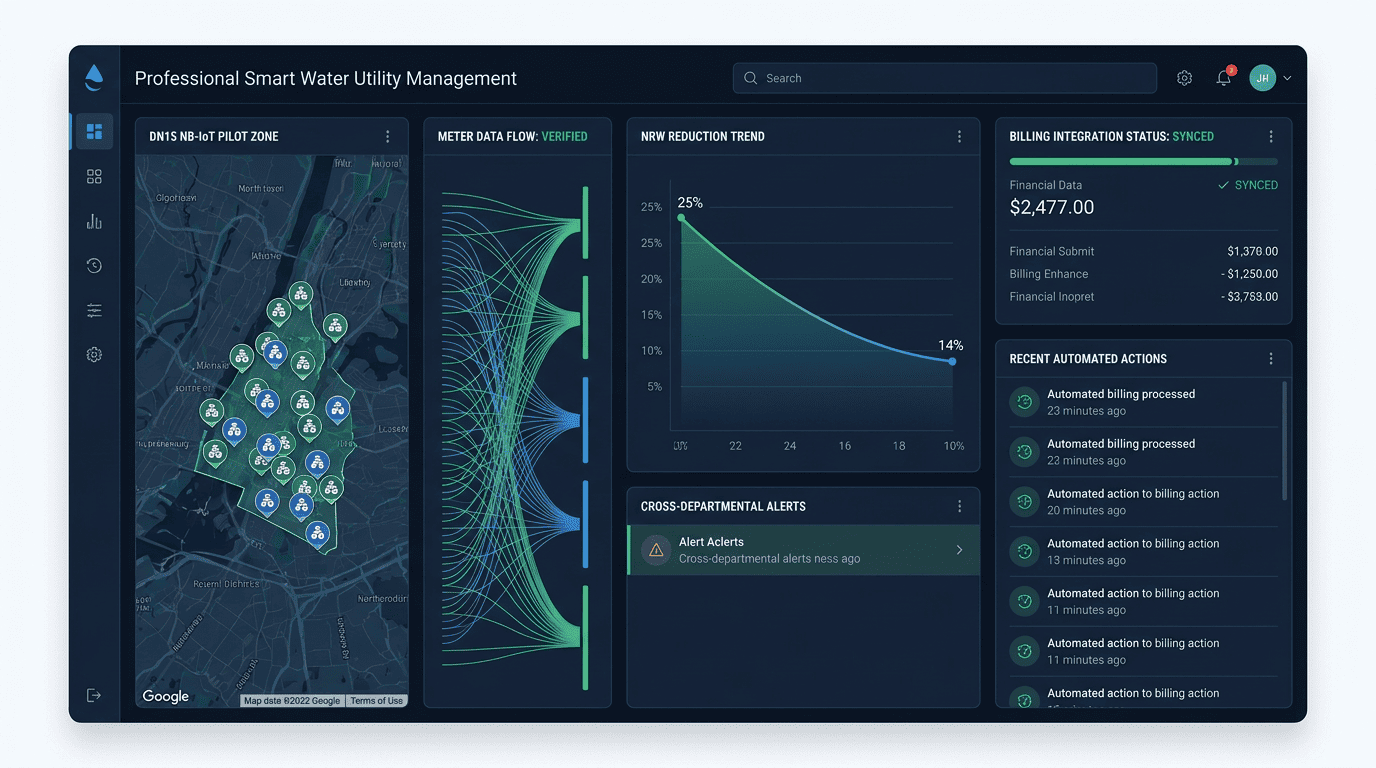
Joint reviews are especially important for AMR and AMI projects. A smart meter complaint may come from the meter, 电池, the signal, the gateway, the SIM card, the network server, the head-end platform, the billing system, or the field response process. 仪表支持工作, but it does not replace the whole system.
ISO 4064 requires fault information to be handled carefully in meters that transmit data to peripheral equipment, including the presence of a fault message in the transmission where applicable [2][5]. This supports the idea that smart water meter reviews should include both measurement data and diagnostic data.
| Shared Data Type | Use in Joint Review |
|---|---|
| Serial number list | links field meters to factory records |
| Installation photos | checks direction, 使用权, and environment |
| Pressure notes | identifies hydraulic stress |
| Water quality notes | identifies sand, 锈, 规模, or air |
| Communication logs | 将仪表和网络问题分开 |
| Retest results | confirms metrological condition |
| Complaint category | finds repeated patterns |
I also ask for regular review meetings. They do not need to be long. A monthly or quarterly review during rollout can catch small problems before they become large claims.
Transparency is not about exposing weakness. It is about shortening the distance between evidence and action.
How Did Joint Improvement Projects Reduce Complaint Rates?
Complaint reduction rarely comes from one big change. It usually comes from many small corrections made after honest review.
Joint improvement projects reduce complaint rates by improving installation training, 包装, 文档, 仪表配置, communication setup, 测试证据, and field response procedures.
I Treat Every Complaint Pattern as a Design Input
When several complaints repeat, I do not treat them as separate accidents. I treat them as a pattern.
例如, if many complaints involve communication failure, we review signal strength, 上传周期, gateway location, SIM 卡状态, meter registration, 和平台映射. If many complaints involve leakage at connections, we review fittings, 垫片, torque practice, 管道对准, and installer training. If many complaints involve reading difficulty, we review installation position, display angle, meter box design, and local reading habits.
Factory-side improvement may include clearer labels, better packaging separation, updated manuals, improved waterproofing detail for a specific configuration, revised software parameters, or stricter outgoing inspection. Utility-side improvement may include better site preparation, 管线冲洗, pressure control, installation training, and data review.
Testing references also help guide improvement. ISO 4064 durability testing includes installations with water supply, 管道工程, 流量调节装置, 隔离阀, inlet water temperature measurement, 以及检查流量和测试持续时间的装置 [1]. Pressure-related test installations may also include devices for measuring inlet and outlet pressure, and the test setup should avoid cavitation or parasitic wear [6]. These ideas remind me that field diagnosis should check more than the meter body.
| Repeated Complaint Pattern | Joint Improvement Action |
|---|---|
| 远程阅读差距 | signal survey and gateway adjustment |
| Installation leakage | installer training and fitting review |
| Display not readable | meter box and orientation correction |
| Accuracy dispute | retest protocol and site condition review |
| Battery concern | reporting cycle and power design review |
| Transport damage | packaging and pallet change |
| Wrong model installed | barcode and serial control |
I do not claim that a joint project removes all complaints. It does not. But it can reduce repeated complaints.
The most valuable improvement is not only technical. It is memory. The next batch becomes better because both sides remember what went wrong and what corrected it.
What Contract Models Encourage Long-Term Thinking?
Some contracts reward only the lowest price. Others reward stable performance, clear responsibility, 和持续改进.
Contract models encourage long-term thinking when they include technical review points, pilot stages, document control, complaint evidence rules, training duties, batch feedback, and improvement mechanisms.
I Prefer Contracts That Define How Problems Will Be Solved
A good contract should not pretend that problems will never happen. It should define how both sides will solve them.
I like contracts that start with a pilot or first article approval. The pilot should check site conditions, installation method, communication coverage, 平台整合, user reading method, and acceptance documents. After the pilot, the project team should review complaints, installation photos, data upload rate, and retest results before full rollout.
The contract should also define technical documents. These may include datasheets, 证书, 测试报告, calibration or verification records, installation manuals, communication protocol documents, packaging drawings, and serial number lists.
用于电子仪表, power and data retention should be clear. ISO 4064 states that water meters with electronic devices may use external power supply, 不可更换电池, replaceable battery, or combinations of these supplies [4]. If an external power supply fails, the volume indication before failure should not be lost and should remain accessible for at least one year [4]. These details affect both tender compliance and after-sales responsibility.
| Contract Clause | Long-Term Value |
|---|---|
| Pilot stage | finds site and system risks early |
| Approved specification | prevents uncontrolled substitutions |
| Document list | supports acceptance and audits |
| 系列可追溯性 | speeds complaint investigation |
| Training obligation | reduces installation errors |
| Complaint evidence format | avoids vague claims |
| Joint review schedule | supports continuous improvement |
| Change approval process | allows controlled upgrades |
Warranty clauses should also be realistic. They should separate manufacturing defects from damage caused by wrong installation, unsuitable site conditions, pressure events, tampering, poor communication coverage, or lack of maintenance access.
This is not a way to avoid responsibility. It is a way to make responsibility clear.
A long-term contract should reward both sides for fewer repeated problems, not only for faster replacement after failure.
What Should A Partnership Checklist Include for Both Sides?
A partnership without a checklist depends on memory. That becomes risky when people change or projects expand.
A partnership checklist should define technical parameters, site responsibilities, factory responsibilities, 测试证据, communication rules, training, 投诉处理, review meetings, and improvement actions.
I Use the Checklist Before the Next Order
Before a repeat customer places the next order, I like to review a checklist together. It makes the relationship more stable.
The utility should confirm application scenes, meter sizes, 正常流量, 压力条件, 水质, 安装位置, 使用权, environmental risk, communication network, platform requirements, and customer service process. The factory should confirm product model, 第三季度, R值, Q1 where relevant, 温度等级, 压力等级, 本体材质, 通讯方式, battery plan, 文件, 测试记录, and packaging.
If the project uses electronic meters, both sides should define alarms and data handling. ISO 4064 describes fault handling options such as automatic correction, stopping only the faulty device where allowed, or visible or audible alarms that continue until the cause is suppressed [5]. Where data is transmitted to peripheral equipment, the fault message should accompany the transmission where applicable [2][5].
The installer also belongs in the checklist. Installation quality affects complaint rates. The installer should confirm flow direction, 密封, 管道对准, meter box access, 全管状态, signal test where applicable, and correct meter registration.
| Checklist Area | Utility Side | Factory Side |
|---|---|---|
| 应用 | site and usage data | model recommendation |
| Hydraulics | pressure and flow conditions | rated condition confirmation |
| 水质 | 沙, 锈, 规模, air notes | material and meter suitability |
| 安装 | access and installer control | manual and training support |
| 智能系统 | network and platform readiness | protocol and device support |
| 文件 | local acceptance needs | certificates and reports |
| Complaints | field evidence and photos | batch records and analysis |
| 改进 | review feedback | corrective action plan |
I also ask both sides to agree on what the meter does not solve alone. A water meter does not repair leaks, clean billing data, stop all tampering, or guarantee communication without network conditions. It supports measurement, data collection, alarm management, and better decisions when the system around it is prepared.
The checklist is not bureaucracy. It is a shared memory system for the next batch.
结论
A mature partnership does not avoid every issue. It solves issues with evidence, updates the next batch, and keeps technical responsibility clear.