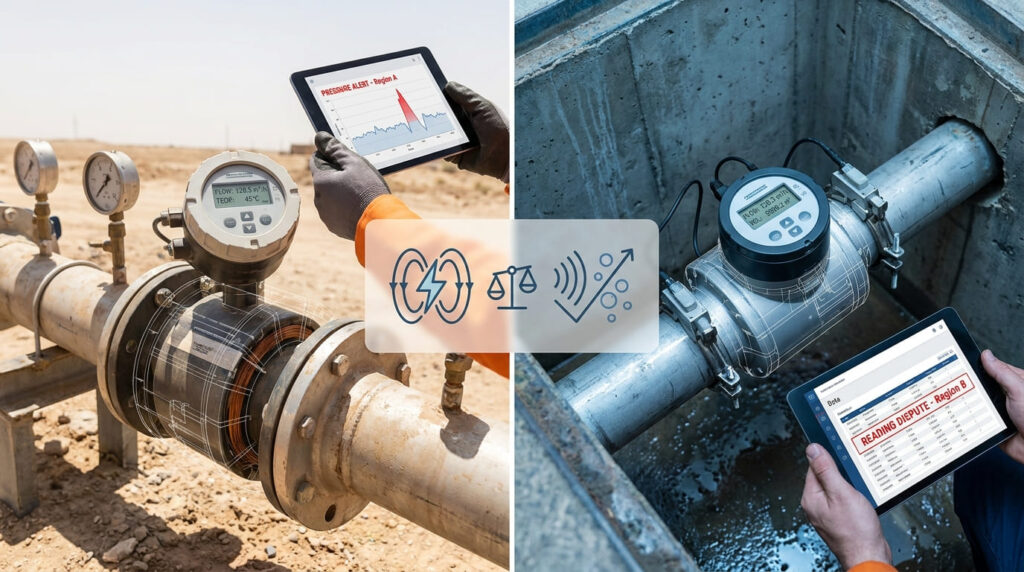
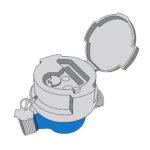
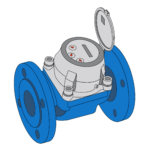
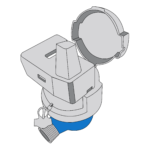
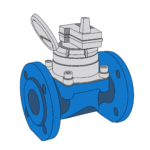

我经常看到“精度投诉”始于仪表问题, 但最终因安装问题而结束. 当没有人首先检查网站时,成本会快速增长.
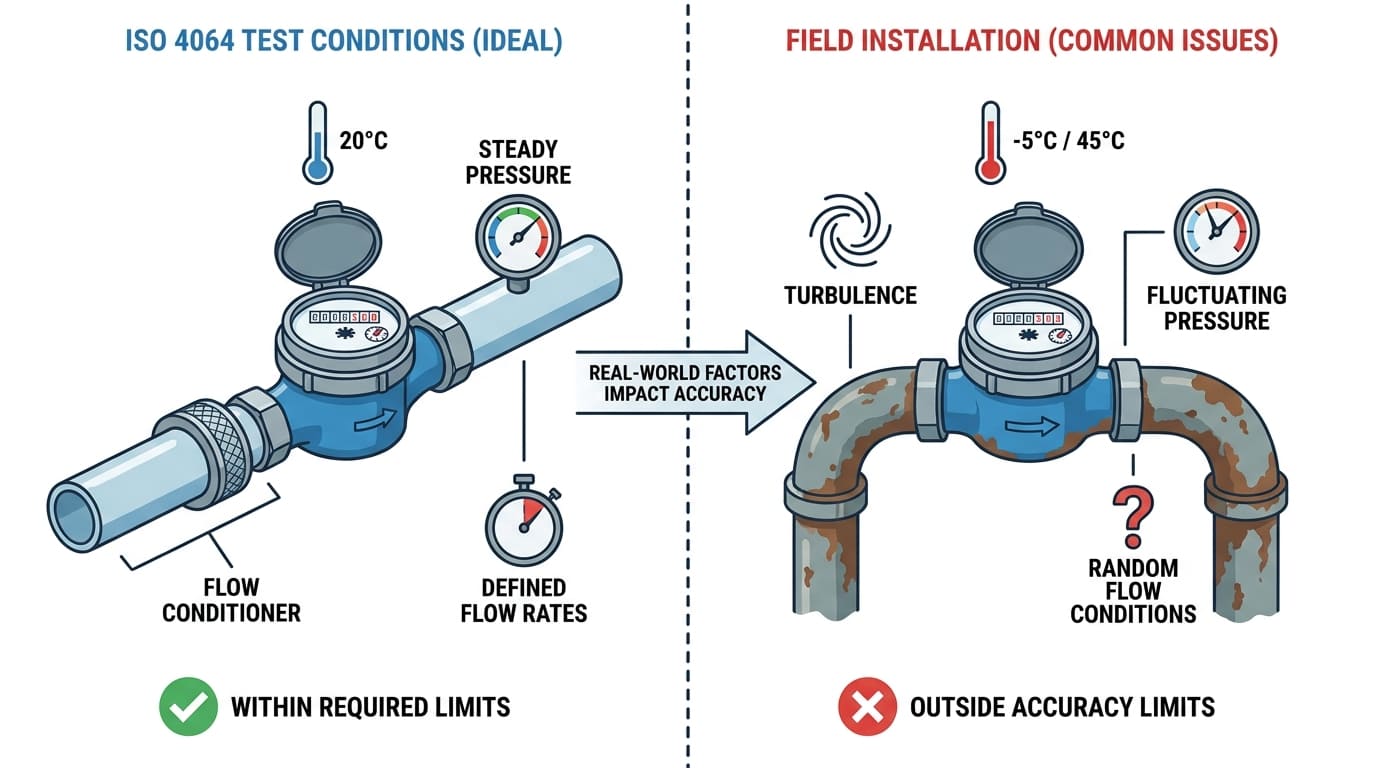
根据ISO 4064, water meter accuracy means the meter’s error of indication stays within the required limits under defined test and operating conditions, not under any random field condition. Many complaints happen because pressure, 温度, 直管, flow conditioning, or rated operating conditions are not respected.

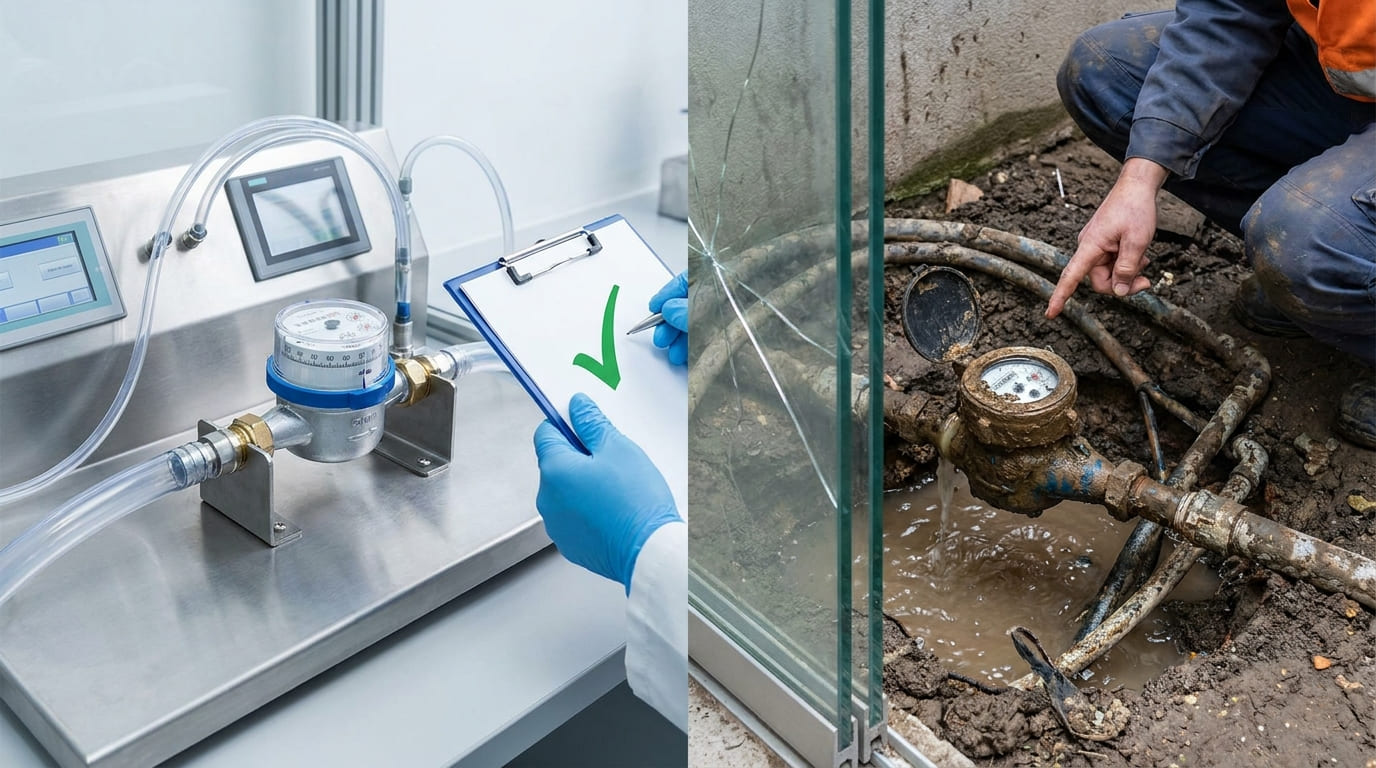
我用的是ISO 4064 as a practical boundary line. On one side, I have a meter tested under controlled conditions. On the other side, I have a field installation with bends, valves, pumps, dirt, wrong direction, and unstable pressure. The argument usually starts when these two worlds are treated as the same thing.
How Does ISO 4064 Define Accuracy and Classes?
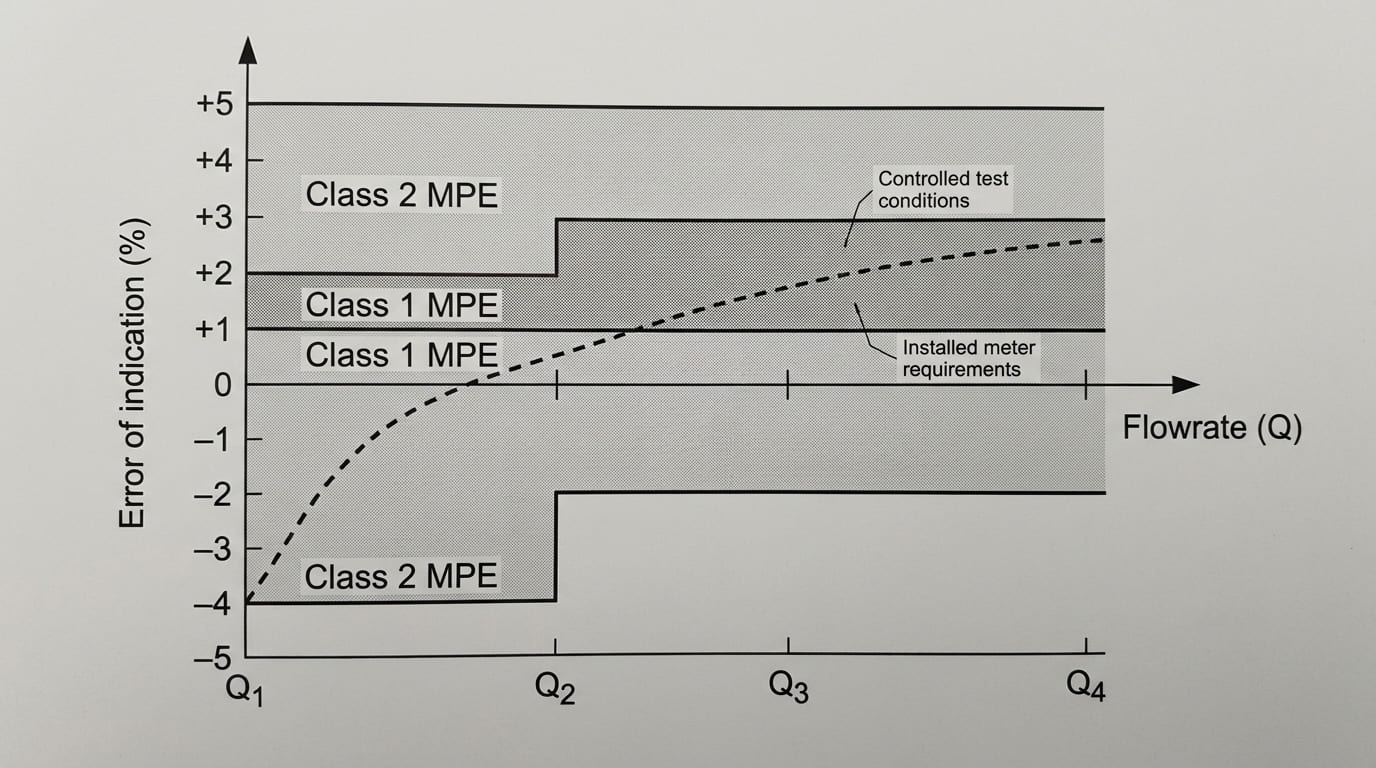
I have learned that ISO 4064 does not define accuracy as a vague promise. It defines it through error of indication, maximum permissible errors, accuracy class, and controlled test conditions.
ISO 4064 requires that meter indication errors be measured using specified equipment and procedures, with flow points such as Q1, Q2, and Q3 checked under controlled conditions. The installed meter must also meet MPE requirements according to its accuracy class when installation disturbances are properly handled.

What “accuracy” really means in practice
When I explain this to a utility engineer, I avoid saying “this meter is accurate” without context. I prefer to say, “this meter meets its accuracy class when it is tested and installed under the conditions defined by the standard and the type approval.” That sentence sounds longer, but it prevents many disputes later.
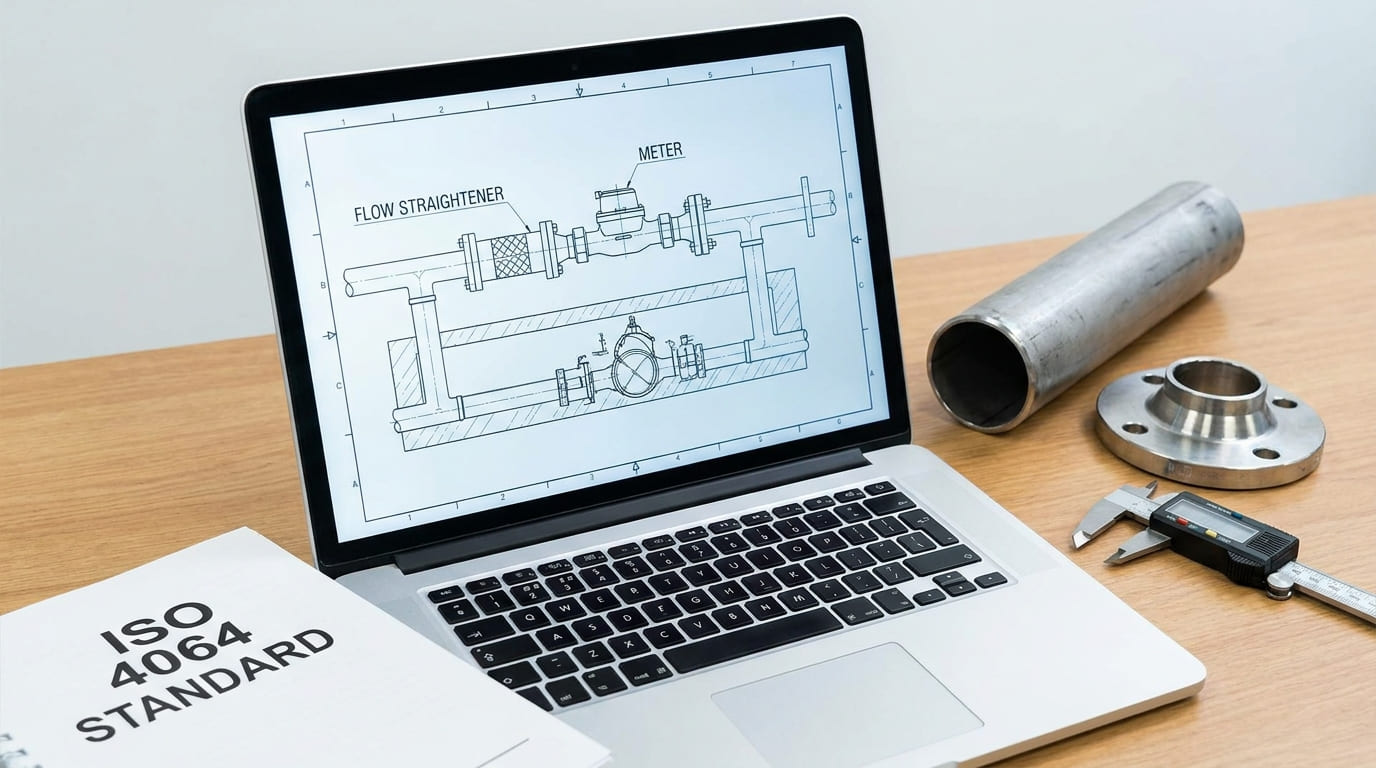
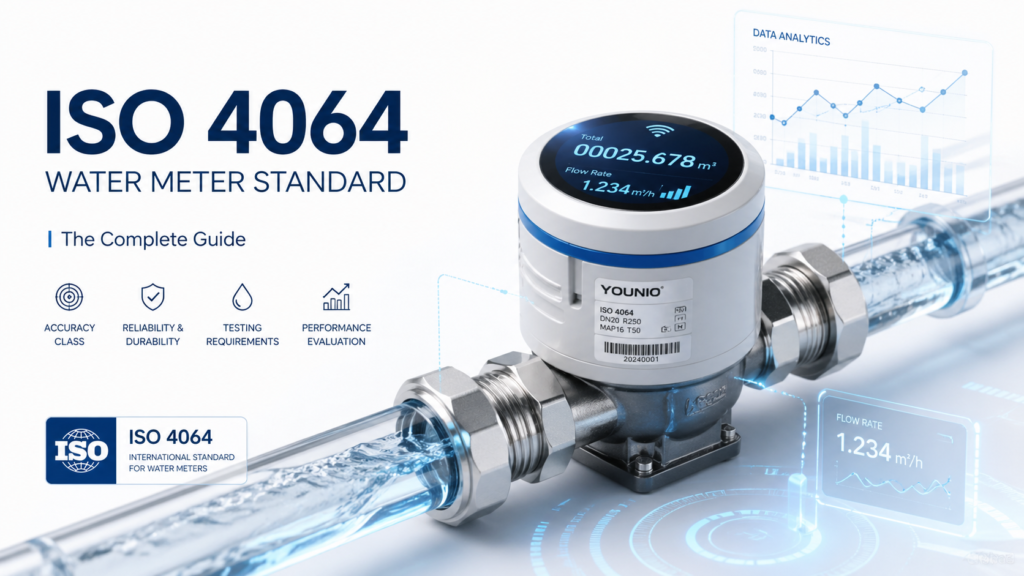
ISO 4064 is structured as a family of standards. 部分 1 covers metrological and technical requirements, 部分 2 covers test methods, 部分 3 covers test report format, 部分 4 covers non-metrological requirements, 和部分 5 covers installation requirements. This matters because accuracy is not only a factory claim. It links product design, test method, report evidence, and field installation.
| ISO 4064 area | What I check | 为什么这很重要 |
|---|---|---|
| 部分 1 | Accuracy class and MPE requirements | It defines what the meter must meet |
| 部分 2 | Test procedure and conditions | It defines how errors are measured |
| 部分 5 | 安装要求 | It affects whether field readings stay valid |
| Type approval certificate | Special installation or flow conditioning rules | It may contain meter-specific requirements |
I also remind project teams that subsequent verification may follow national legal metrology rules, because ISO 4064-1 notes that subsequent verification should be applied according to national regulations. This is important in complaints because a lab retest, a field check, and a legal verification process may not be the same thing.
How Do R Values, Q3/Q4, and Starting Flow Affect Accuracy Claims?
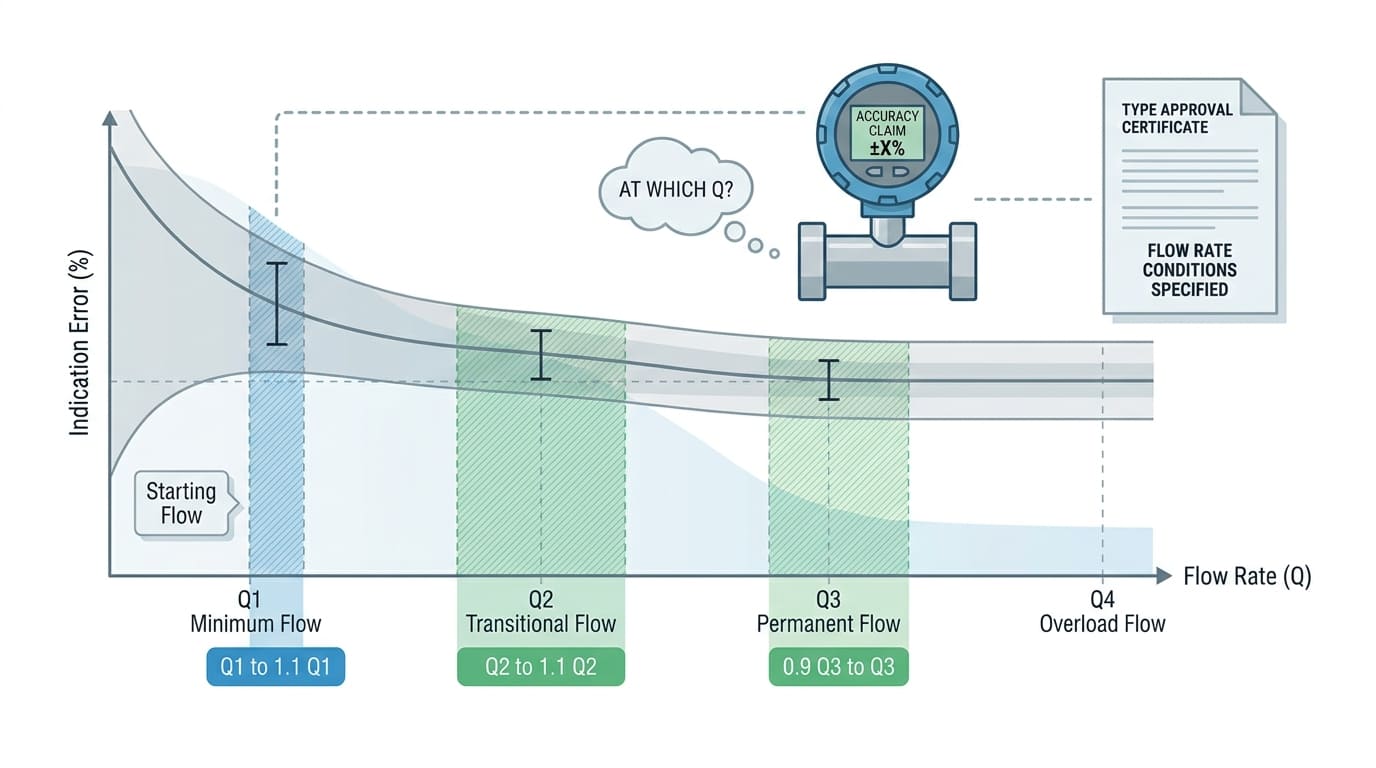
I see many misunderstandings begin with flow terms. Buyers ask for “high accuracy,” but they do not check whether the meter is working near Q1, Q2, 第三季度, or outside its normal range.
ISO 4064 test procedures measure indication errors at defined flow ranges, including Q1 to 1.1 Q1, Q2 to 1.1 Q2, 和 0.9 Q3 to Q3, unless different flow rates are stated in the type approval certificate. That means accuracy claims must be read together with flow rate conditions.

Why I never read R-value alone
In the modern water meter language, R-value is normally understood as the ratio between Q3 and Q1. A higher R-value usually means the meter can measure over a wider range from low flow to permanent flow. But I do not treat R-value as a magic label. I always ask for the actual Q1, Q2, 第三季度, and Q4 values on the datasheet.
The reference text here clearly shows that ISO 4064 testing uses Q1, Q2, and Q3 as defined test flow points. It also shows that alternative flow rates may be specified in the type approval certificate. This is a key point. If the approval file or certificate includes special conditions, I cannot ignore them and only rely on a catalog line.
I also separate “starting flow” from “accuracy flow.” Starting flow is the flow at which the meter begins to move or register. Q1 is the minimum flow rate for accuracy evaluation in the rated framework. A meter may start registering below Q1, but that does not automatically mean it must meet the same error limits there. This distinction prevents many low-flow disputes.
| Term | How I use it in projects | Common mistake |
|---|---|---|
| Q1 | Minimum flow point for accuracy range | Treating any movement below Q1 as certified accuracy |
| Q2 | Transitional flow point | Ignoring the change between low and high zones |
| 第三季度 | 永久流量 | Selecting only by DN and ignoring real demand |
| 第四季度 | Overload flow rate | Treating overload as normal long-term operation |
| Starting flow | Flow where the meter begins to register | Confusing it with Q1 accuracy performance |
Why Does a Test Bench Result Differ from Real-World Conditions?
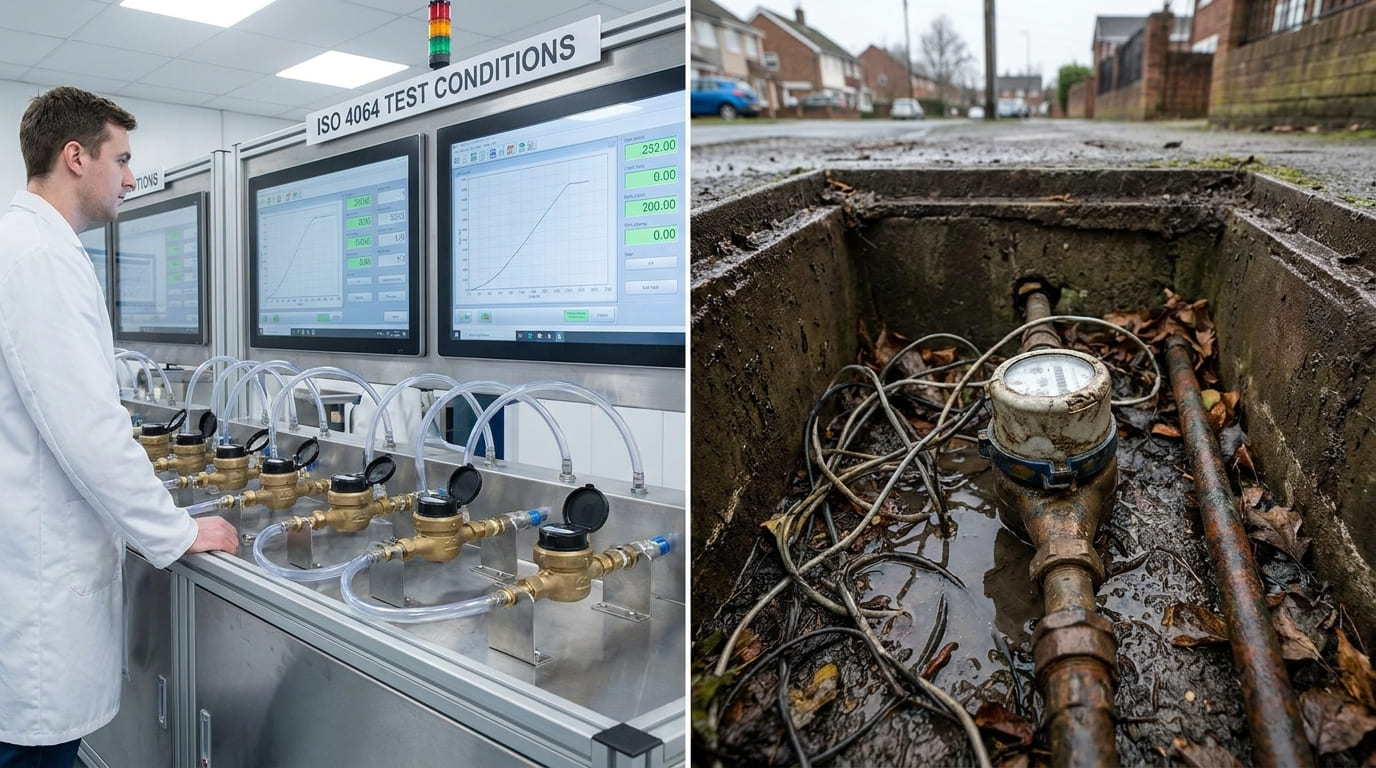
I often hear this sentence: “The meter passed the lab, but the field reading is wrong.” My first answer is simple. The lab and the field are not the same hydraulic world.
ISO 4064 test procedures require controlled conditions such as no significant interaction between meters in series, outlet pressure not below 0.03 兆帕, defined working water temperature ranges, and all other influence factors kept within the meter’s rated operating conditions. Field installations often fail exactly at these points.

What the bench controls that the field often ignores
A test bench is built to remove doubt. It controls water temperature. It controls pressure. It controls test start and stop errors. It controls the layout. It checks the meter at specific flow ranges. It also tries to reduce uncertainty caused by test rig operation.
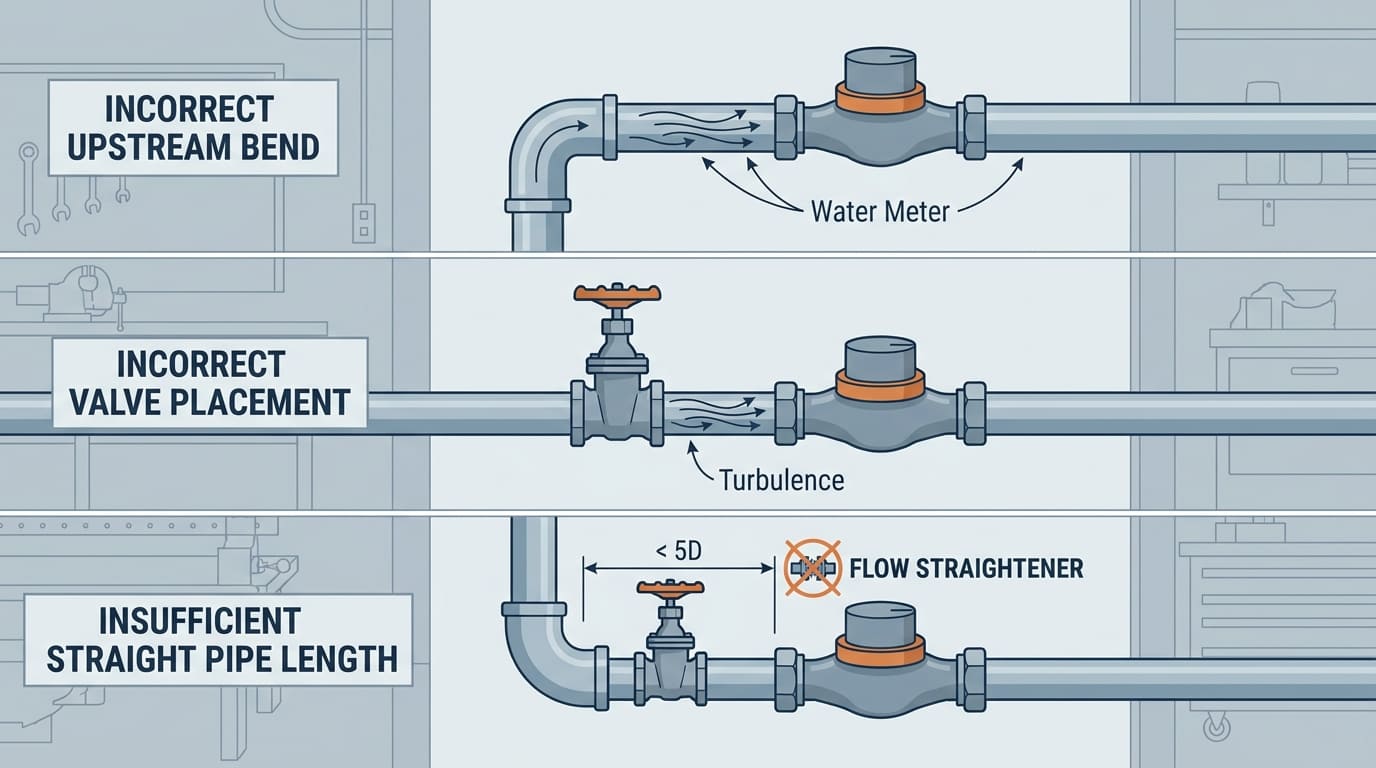
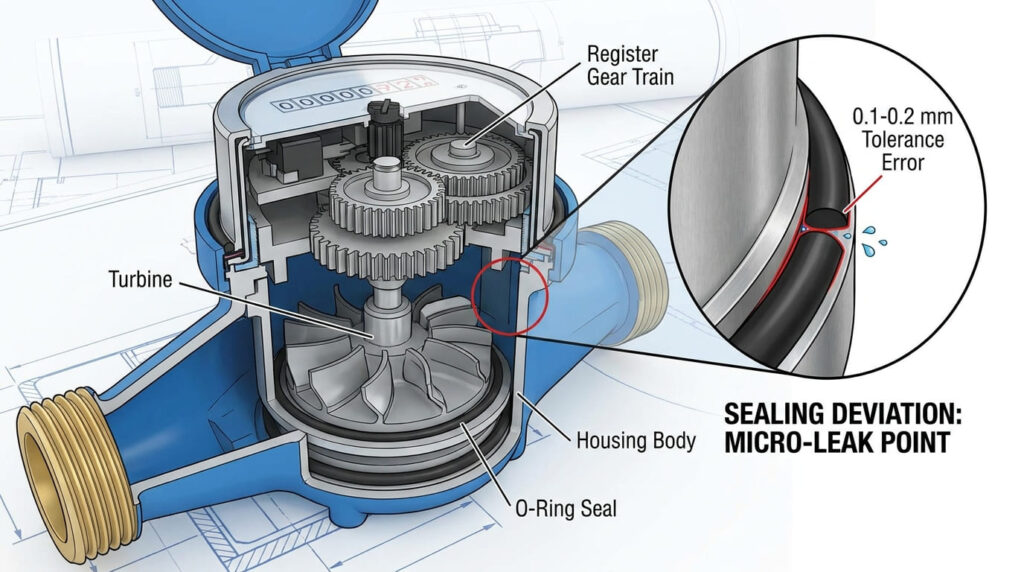
A real site does the opposite unless the project team is careful. The pipe may have a valve too close to the meter. A pump may sit upstream. A bend may create swirl. The chamber may not allow proper leveling. The pipe may contain dirt after repair work. ISO 4064-1 even notes that solid particles can collect in a water meter after upstream pipework work. That is exactly the kind of small site detail that later becomes a large customer complaint.
The biggest difference is this: the bench asks, “Can the meter meet the standard under defined conditions?” The field asks, “Did the project create those conditions?” If the answer is no, then I do not call the first problem meter accuracy. I call it installation risk.
| Test bench condition | Field risk when ignored |
|---|---|
| Outlet pressure controlled | Low pressure or unstable pressure affects behavior |
| Temperature range controlled | Hot or cold site conditions may leave the rated range |
| Influence factors controlled | Real site factors may exceed rated conditions |
| Flow points defined | Field flow may stay outside useful range |
| Test uncertainty reduced | Field complaints may mix meter error and site error |
What Are the Most Common Mis-Install Patterns I See?
Most accuracy complaints I see are not caused by one dramatic failure. They are caused by ordinary installation mistakes repeated many times.
ISO 4064-1 states that if upstream or downstream disturbances from bends, valves, or pumps affect accuracy, the meter must have enough straight pipe lengths, with or without a flow straightener, as specified by the manufacturer. ISO 4064-2 also says some meter types may require flow conditioning and that manufacturer installation requirements must be followed.

The repeated mistakes that create “accuracy” complaints
The first pattern is missing straight pipe. I see this in retrofit projects because the chamber already exists. The installer wants the meter to fit, so the project bends the standard around the site. That often creates disturbed flow near the meter. ISO 4064 is clear that straight lengths or flow straighteners are required when disturbances can affect accuracy, and the manufacturer’s requirements matter.
The second pattern is wrong flow conditioning. Some meter principles need special flow conditioning when measuring errors of indication, and the manufacturer’s recommended installation requirements must be followed. If those requirements are reported in the type approval certificate, I treat them as project rules, not suggestions.
The third pattern is poor leveling. ISO 4064-1 says provision may be made on a water meter to allow correct leveling during installation. 在实践中, this means installers should not guess orientation by eye when the meter design depends on correct position.
The fourth pattern is dirty pipework. ISO 4064-1 notes that solid particles may collect in a water meter after upstream pipework work. I always tell teams to flush and check the line before blaming the meter.
| Mis-install pattern | What I check first | ISO 4064 link |
|---|---|---|
| 无直管段 | Bends, valves, pumps near the meter | Straight lengths may be required |
| No flow conditioning | Manufacturer instructions and certificate | Requirements must be followed |
| Poor leveling | Meter position and chamber layout | Leveling provision may be used |
| Dirty upstream pipe | Recent pipe repair or construction | Particles may collect after pipework |
| Wrong operating condition | 压力, 温度, flow range | Influence factors must stay within rated conditions |
Why Can a Meter Pass the Lab but Still Create a Field Complaint?
I have seen this case many times. A customer complains. The meter returns to the lab. The lab result passes. The customer still insists the field result was wrong.
A lab pass can coexist with a field complaint because ISO 4064 testing holds influence factors within rated operating conditions, while the field may include disturbed flow, poor installation, dirt, or operating conditions outside the meter’s rated limits. The conflict is often not between the customer and the factory. It is between the test condition and the site condition.

Case study 1: The meter passed, but the valve was too close
In one typical case, I would expect the returned meter to pass at Q1, Q2, and Q3 on a proper bench. The complaint may still be real from the customer’s point of view. The issue is that the field pipe had a valve close to the inlet, and the flow profile was not what the meter needed. ISO 4064-1 directly mentions bends, valves, and pumps as upstream or downstream disturbances that may affect accuracy. In that situation, I do not treat the lab report as an insult to the customer. I treat it as evidence that the meter and site must be reviewed separately.
Case study 2: The meter passed, but the site temperature was wrong
Another common case is temperature. ISO 4064-2 gives defined working water temperature ranges for testing, such as 20 °C ± 10 °C for T30 and T50 meters, and other defined ranges for higher temperature classes. If the field condition sits outside what the meter was rated for, I cannot use the lab result alone to explain the complaint.
Case study 3: The meter passed, but the type approval condition was ignored
Some meter types may require flow conditioning, and the manufacturer’s recommended installation requirements must be followed. If the type approval certificate reports those requirements and the project ignores them, the complaint is not a simple factory accuracy issue.
How Should I Design Installations that Meet ISO 4064?
I design ISO 4064-friendly installations by starting from the meter’s rated operating conditions and the manufacturer’s approved installation requirements. I do not start from the available chamber space.
ISO 4064 testing requires influence factors to be held within the rated operating conditions of the meter. ISO 4064-1 also requires sufficient straight pipe lengths or flow straighteners when disturbances from bends, valves, or pumps affect meter accuracy.

My practical design method
第一的, I check the meter selection. I compare Q1, Q2, 第三季度, and expected site flow. I want the normal operating flow to sit in the useful range, not below the meter’s proper measuring zone for most of the day. ISO 4064-2 measures errors at defined ranges around Q1, Q2, and Q3, so those points must connect with the real demand profile.
第二, I check pressure. The ISO 4064-2 test procedure says the outlet pressure of any meter during testing must not be less than 0.03 兆帕, 或者 0.3 酒吧. That does not mean every field problem is solved at that value, but it reminds me that pressure condition is part of reliable measurement.
第三, I check temperature. If the site water temperature does not match the meter’s rated class, I stop and reselect the meter. ISO 4064-2 lists defined working water temperature ranges for different temperature classes during testing.
Fourth, I check pipe layout. If bends, valves, or pumps are near the meter, I follow the manufacturer’s required straight pipe length or flow straightener rule [3]. If another measuring principle needs flow conditioning, I follow the manufacturer’s installation requirements and the type approval certificate.
| Design step | My question | 为什么这很重要 |
|---|---|---|
| 流量范围 | Does site flow match Q1-Q3 use? | Errors are tested at defined flow ranges |
| 压力 | Is pressure inside rated conditions? | Outlet pressure and influence factors matter |
| 温度 | Does water temperature match rating? | Test temperature ranges are defined |
| 管道布置 | Are bends, valves, pumps too close? | Disturbances may affect accuracy |
| Flow conditioning | Does this model need special treatment? | Manufacturer requirements must be followed |
What Practical Accuracy Checklist Should Utilities Use?
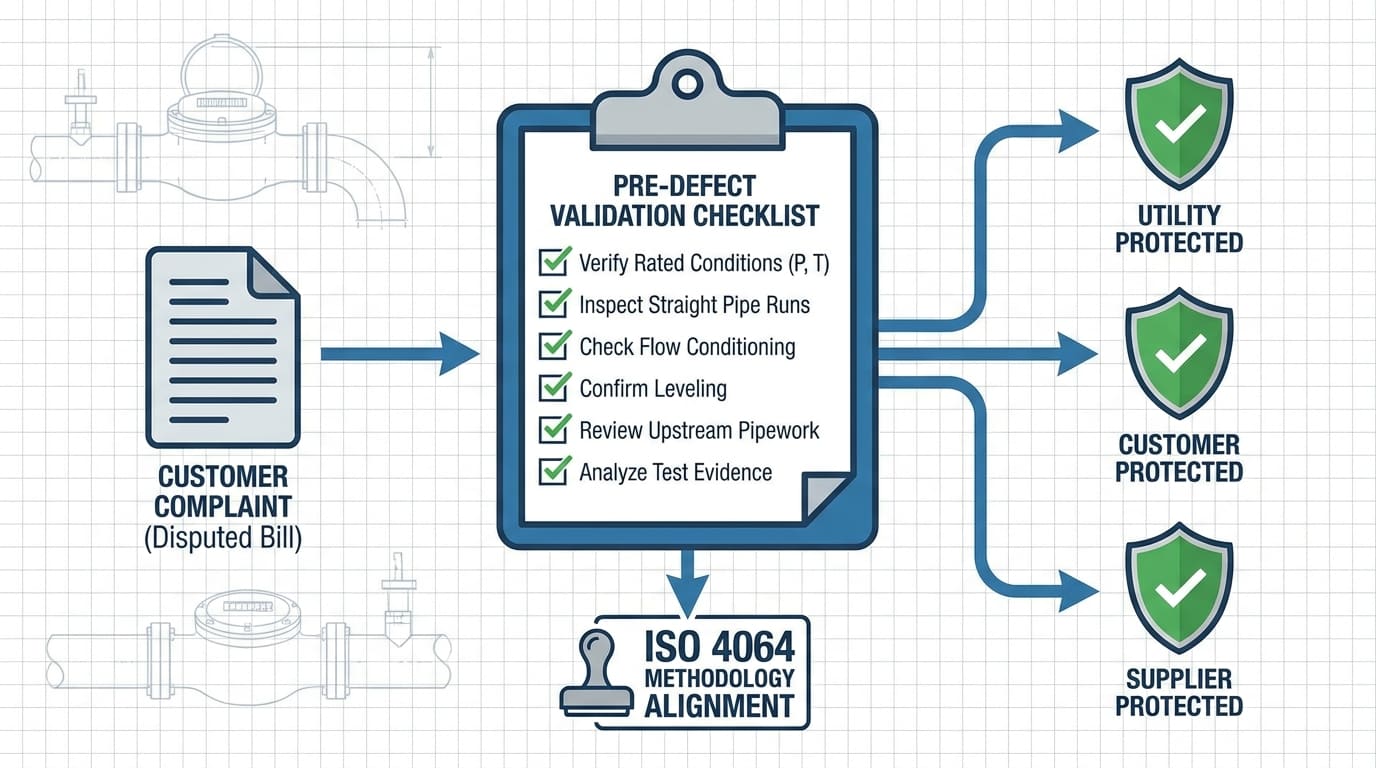
I tell utilities to use a checklist before they accept an accuracy complaint as a product defect. This protects the utility, the customer, and the supplier.
A good checklist should confirm test evidence, rated operating conditions, 压力, 温度, 直管, flow conditioning, leveling, and recent upstream pipework before concluding that a meter has failed. This method matches ISO 4064 better than judging only by a disputed bill.

My field checklist
I would use the following checklist in any project where “accuracy” complaints appear.
| Checklist item | What I ask | Reference basis |
|---|---|---|
| Meter identity | Is this the same model, 尺寸, and approval as specified? | Type approval may define conditions |
| 流量范围 | Is actual flow near Q1, Q2, 第三季度, or outside useful range? | Errors are measured at Q1, Q2, and Q3 ranges |
| 压力 | Is outlet and operating pressure stable and within rating? | Outlet pressure and rated conditions matter |
| 温度 | Is water temperature within the meter’s working range? | Temperature ranges are defined in testing |
| 直管 | Are bends, valves, or pumps too close? | Straight pipe or straightener may be required |
| Flow conditioning | Does the manufacturer require special conditioning? | Requirements must be followed |
| Leveling | Is the meter correctly positioned? | Leveling provision may support correct installation |
| Dirt and debris | Was upstream pipework recently repaired? | Solid particles can collect after upstream work |
| Verification route | Does local law require a specific verification method? | Subsequent verification follows national rules |
Why this checklist reduces false disputes
This checklist helps me separate three different problems. The first problem is a true meter performance issue. The second problem is a wrong installation. The third problem is a mismatch between the meter’s approved use and the field condition. These problems look similar in a complaint email, but they require different actions.
If the meter fails a proper bench test, I treat it as a product or calibration issue. If the meter passes the bench but the field installation has a pump, bend, or valve too close, I treat it as an installation issue. If the site temperature, 压力, or flow stays outside rated conditions, I treat it as an application issue.
This is why I do not like the phrase “the meter is inaccurate” until I see the installation data. ISO 4064 makes accuracy a controlled technical condition, not a casual opinion.
结论
I see many water meter accuracy complaints become clear once I compare the lab conditions with the real installation. ISO 4064 points me to the right questions: flow range, 压力, 温度, rated conditions, 直管, flow conditioning, and installation discipline.