



Ho visto contatori dell'acqua economici creare problemi costosi. La fattura sembrava buona, ma ritorna, test, riparazioni, ritardi, e le sanzioni hanno distrutto il risparmio.
Costo totale di proprietà del contatore dell'acqua Per TCO si intende il costo totale di acquisto, test, accettando, installazione, operativo, riparare, sostituendo, e difendere un contatore durante la sua vita utile. Utilizzo il TCO per confrontare il rischio reale del progetto, non solo il prezzo di acquisto.
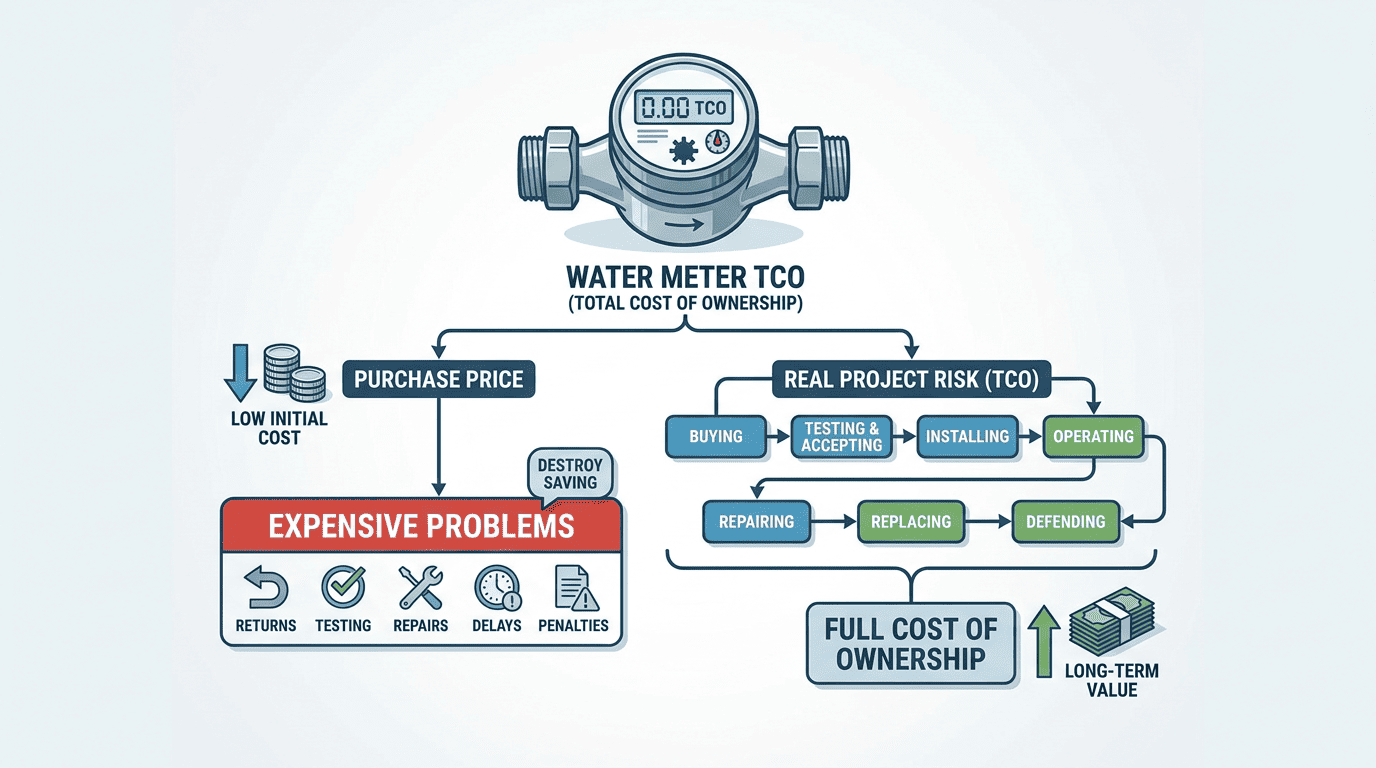
Scrivo questo per i direttori finanziari e i responsabili degli acquisti perché entrambi i team vedono lo stesso progetto da lati diversi. La finanza vede pressioni sul bilancio. L’approvvigionamento vede la pressione dei fornitori. Ho visto entrambe le squadre scegliere l'offerta più bassa perché la tabella sembrava chiara. Dopo, il costo reale è apparso nel trasporto di ritorno, test di terze parti, lavoro sul campo, reclami dei clienti, sanzioni, e ritardi nelle entrate.
Qual è il TCO del costo totale di proprietà del contatore dell'acqua?
Per costo totale di proprietà del contatore dell'acqua, intendo ogni costo causato da un contatore, dalla selezione del fornitore alla sostituzione finale. Il prezzo di acquisto è solo una riga.
Il TCO del contatore dell'acqua include il costo di acquisto diretto, logistica, doveri, certificati, test di accettazione, supporto per l'installazione, gestione dei reclami, ripetere il test, servizio sul campo, rischio di conformità, rifiuto del lotto, ritardo del progetto, e costi di sostituzione a lungo termine.
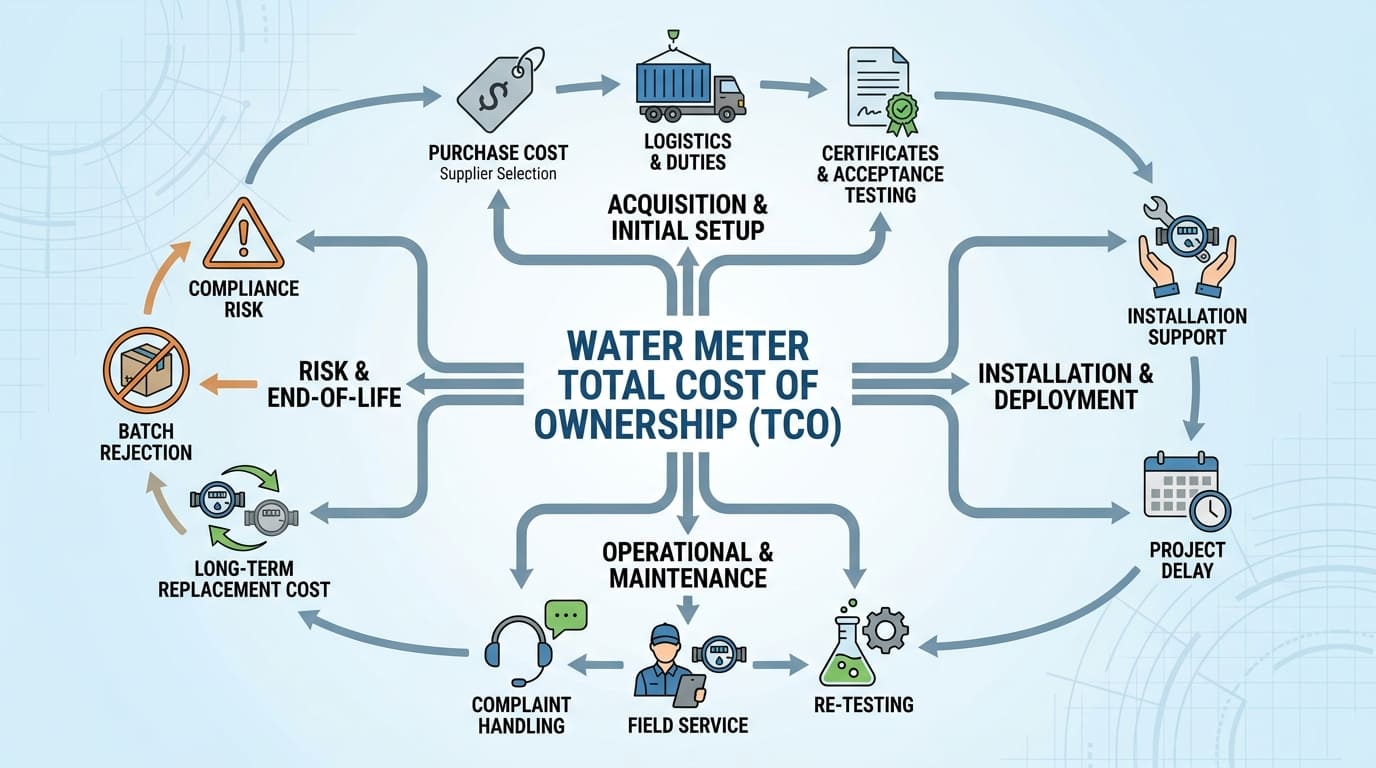
Considero un contatore dell'acqua come un sistema di costi, nemmeno un singolo prodotto
Un contatore dell'acqua non è solo un corpo in ottone, un registro, e un cartone. È un prodotto di misurazione legale. Può includere dispositivi ausiliari come un dispositivo di lettura remota, e tali dispositivi possono essere soggetti a controllo metrologico legale a seconda delle norme nazionali. Questo punto è importante perché un contatore base economico può diventare costoso quando il progetto necessita di lettura remota, accettazione legale, e approvazione del test locale.
Includo anche i costi dei test nel TCO. Iso 4064 descrive il test di contatori d'acqua completi e, dove richiesto, test del trasduttore di misura e del calcolatore come unità separate. Ciò significa che un acquirente potrebbe dover pagare per più di un semplice controllo di fabbrica quando il progetto ha funzioni intelligenti, requisiti degli enti locali, o regole speciali di accettazione.
Utilizzo il TCO perché inserisce i costi nascosti nella stessa tabella del prezzo di acquisto. Un fornitore a basso prezzo potrebbe comunque essere valido. Ma un fornitore a basso prezzo senza controllo materiale, controllo batch, allineamento del banco prova, oppure il supporto ai reclami può spostare i costi dal preventivo del fornitore al budget operativo dell’acquirente.
| Strato di costo | Cosa includo |
|---|---|
| Costo di acquisto | Prezzo al metro, accessori, moduli di comunicazione |
| Costo logistico | Trasporto, assicurazione, doveri, tasse portuali |
| Costo dell'approvazione | Certificati, campioni, test degli enti locali |
| Costo di accettazione | Ispezione in fabbrica, test di terze parti, ripetere il test |
| Costo del fallimento | Ritorni, riparazione, sostituzione, gestione dei reclami |
| Costo del servizio | Visite locali, viaggi internazionali, pezzi di ricambio |
| Costo del ritardo | Installazione ritardata, fatturazione ritardata, rischio contrattuale |
| Costo di conformità | Sanzioni, ricorda, revisione legale, danno alla reputazione |
Quali costi diretti rientrano nel TCO del costo totale di proprietà del contatore dell'acqua?
Comincio con i costi diretti perché sono facili da vedere. Ma non mi fermo mai qui perché i costi diretti possono nascondere il rischio più ampio del progetto.
I costi diretti includono il prezzo di acquisto, spedizione, dazi doganali, certificazione, campioni, confezione, documentazione, ispezione, e preparazione all'accettazione locale. Questi costi sono visibili prima della consegna, quindi dovrebbero essere preventivati prima dell'aggiudicazione del fornitore.
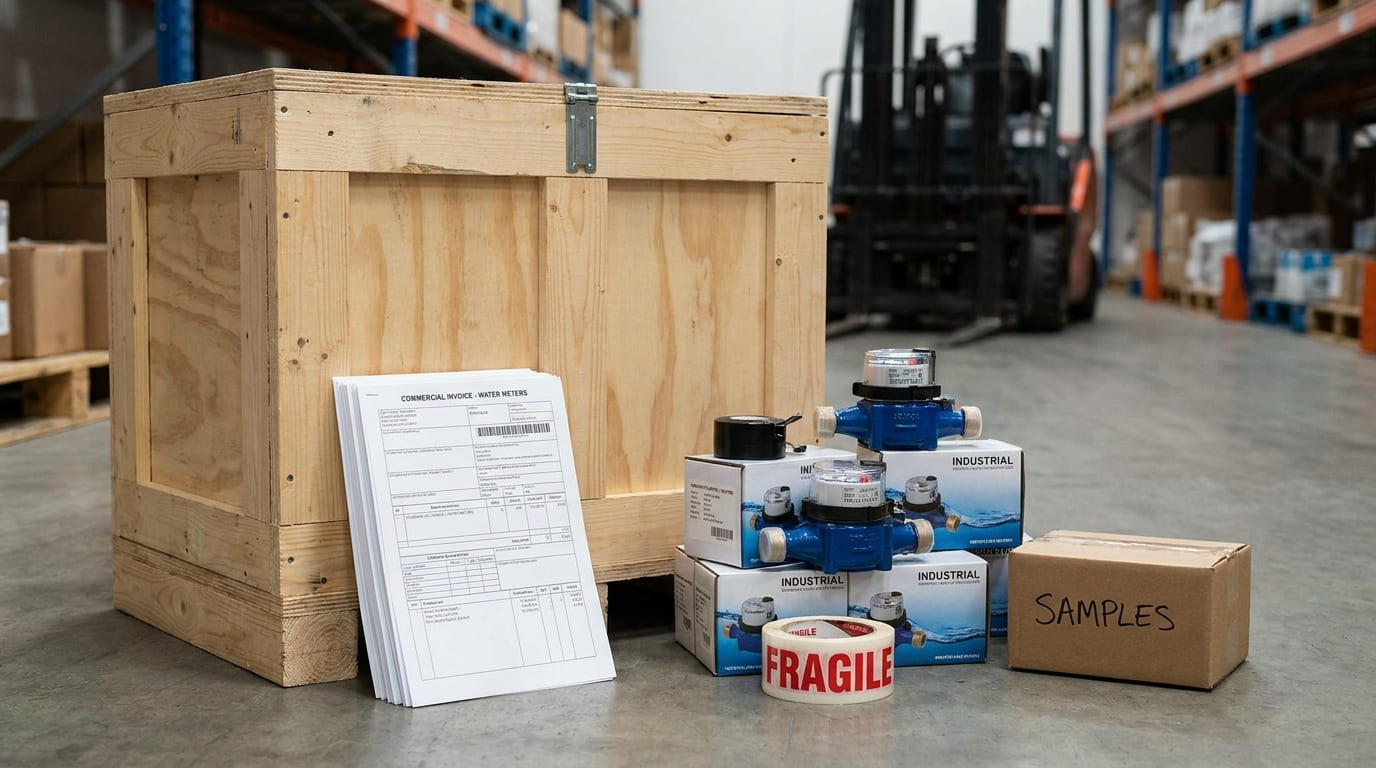
Separo i costi logistici dal prezzo della fattura
Il prezzo della fattura non corrisponde al costo allo sbarco. Aggiungo il trasporto internazionale, trasporto interno, assicurazione, dazi doganali, imposta sul valore aggiunto, spese bancarie, costo dell'ispezione, costo del campione, e costo della documentazione. Aggiungo anche il mantenimento del certificato quando il progetto richiede approvazioni specifiche.
Per contatori intelligenti, Aggiungo i concentratori, dispositivi portatili, Carte SIM, antenne, commissioni della piattaforma, contributi di integrazione, e formazione. Un dispositivo di lettura remota può essere incorporato in modo permanente o aggiunto temporaneamente, e questo rende il sistema di misurazione più ampio del contatore meccanico solo. Se il budget comprende solo il corpo del contatore, il progetto sembrerà economico e funzionerà in modo costoso.
Aggiungo anche il costo di verifica e accettazione. Iso 4064 descrive un test di errore intrinseco in cui le indicazioni del misuratore vengono confrontate in condizioni di riferimento con un dispositivo di riferimento calibrato. Questo mi ricorda che i test non sono un'attività di magazzino casuale. Ha bisogno di attrezzature, persone, tempo, e controllo del metodo.
| Voce di costo diretto | Perché lo includo nel TCO |
|---|---|
| Prezzo unitario | È solo il punto di partenza. |
| Trasporto | I contatori pesanti possono modificare il costo allo sbarco. |
| Dazi e tasse | Influiscono sul deflusso di cassa effettivo. |
| Certificazione | L'accettazione locale potrebbe richiedere una prova. |
| Campioni | I campioni potrebbero richiedere un test completo. |
| Ispezione di terze parti | Riduce il rischio ma aumenta i costi. |
| Documentazione | Tenero, dogana, e gli Authority File necessitano di supporto. |
| Formazione | Un cattivo utilizzo può trasformare buoni contatori in cattivi progetti. |
Costo nascosto 1: In che modo resi e reclami influiscono sul costo totale di proprietà del contatore dell'acqua, TCO??
Ho visto il lotto più economico diventare il lotto più costoso dopo l'inizio dei reclami. La prima lamentela sembrava piccola. Lo schema ripetuto è diventato costoso.
Resi e reclami aumentano il TCO dei contatori dell'acqua grazie alla sostituzione dei contatori, lavoro, trasporto, test, assistenza clienti, fatturazione ritardata, e perdita di fiducia. I dati sui reclami quinquennali sono più utili dell'approvazione di un campione una tantum.
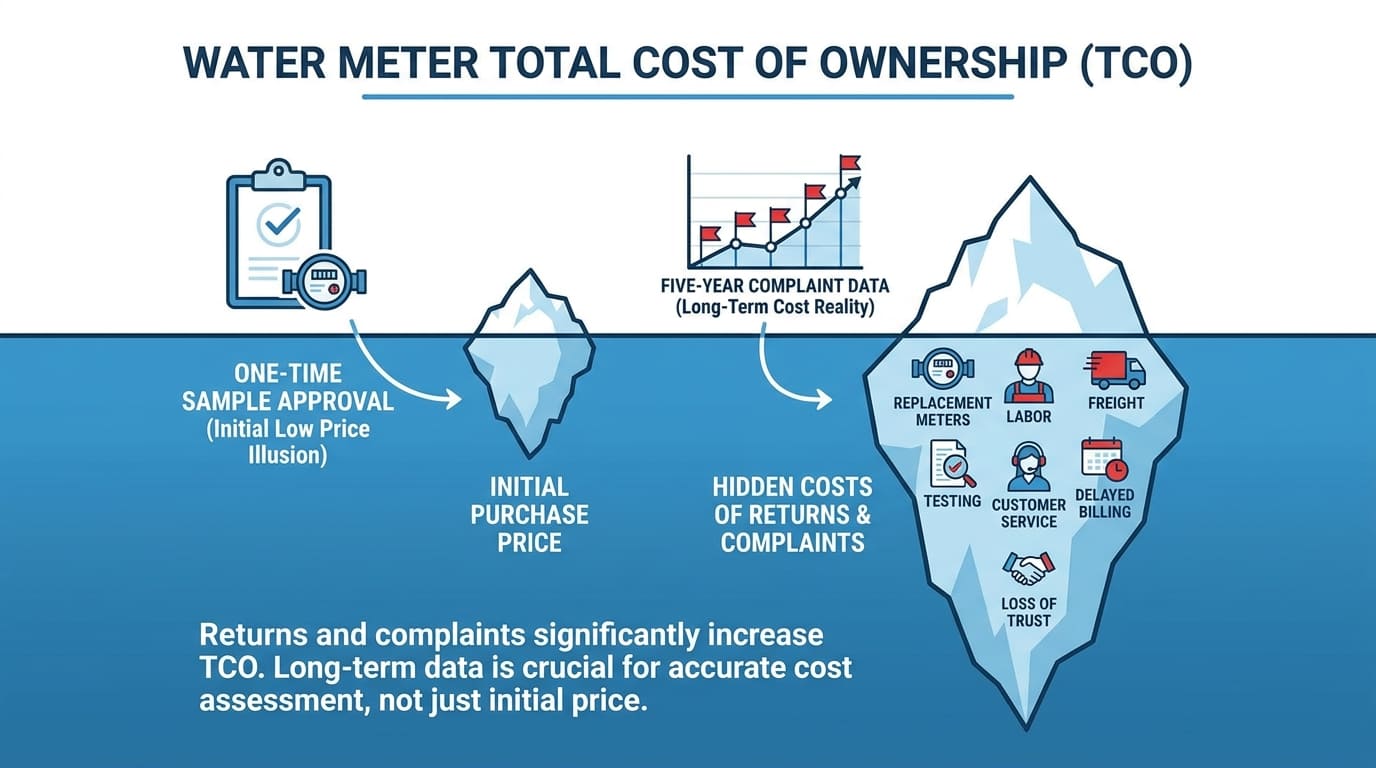
Utilizzo i dati dei reclami quinquennali perché una sola spedizione può ingannarmi
Un campione può passare. Una prima spedizione può andare bene. Un registro dei reclami di cinque anni mostra se il produttore può controllare problemi ripetuti. Chiedo i dati del reclamo per modello, misurare, lotto, modalità di fallimento, componente, condizione del sito, e azione correttiva. Non accetto solo un tasso di reclamo totale.
Un caso nei miei archivi riguardava un lotto di misuratori HTN DN50 di grandi dimensioni. Il prezzo unitario era interessante. Il primo confronto ha fatto sembrare il fornitore competitivo. Ma ritorna, test, e la riparazione ha creato una perdita totale superiore a RMB 60,000. Il risparmio sul prezzo d'acquisto è scomparso. Il costo nascosto proveniva dalla gestione del reso, controlli al banco, pezzi di ricambio, tempo di comunicazione, e la pressione dei clienti.
Anche il costo dei reclami è difficile da spiegare all'interno di un'azienda perché tocca diversi dipartimenti. L'approvvigionamento prevede la negoziazione con i fornitori. La qualità vede i test. Le vendite vedono la pressione dei clienti. La finanza vede pagamenti extra. Il magazzino vede la merce restituita. Quando utilizzo il TCO, Ho messo tutti questi costi in un unico file.
| Costo del reclamo | Dove appare |
|---|---|
| Misuratore sostitutivo | Approvvigionamento o budget del progetto |
| Trasporto di ritorno | Bilancio della logistica |
| Prova al banco | Bilancio di qualità |
| Lavoro sul campo | Budget del servizio o dell'operazione |
| Comunicazione con il cliente | Budget delle vendite o del call center |
| Pagamento ritardato | Flusso di cassa finanziario |
| Danni alla reputazione | Rischio di gare future |
Costo nascosto 2: Perché i nuovi test eseguiti da terzi aumentano il costo totale di proprietà del contatore dell'acqua (TCO).?
Ho visto un lotto fallito creare costi di test maggiori rispetto al budget di ispezione originale. Rifare il test non è mai gratuito, anche quando il fornitore se ne assume la responsabilità.
La ripetizione dei test da parte di terzi aumenta il TCO attraverso le tariffe di laboratorio, trasporto del campione, tempo di attesa, ripetuta revisione interna, e ritardata accettazione. I costi dei test aumentano rapidamente quando il fallimento del batch influisce sull’accettazione legale o contrattuale.
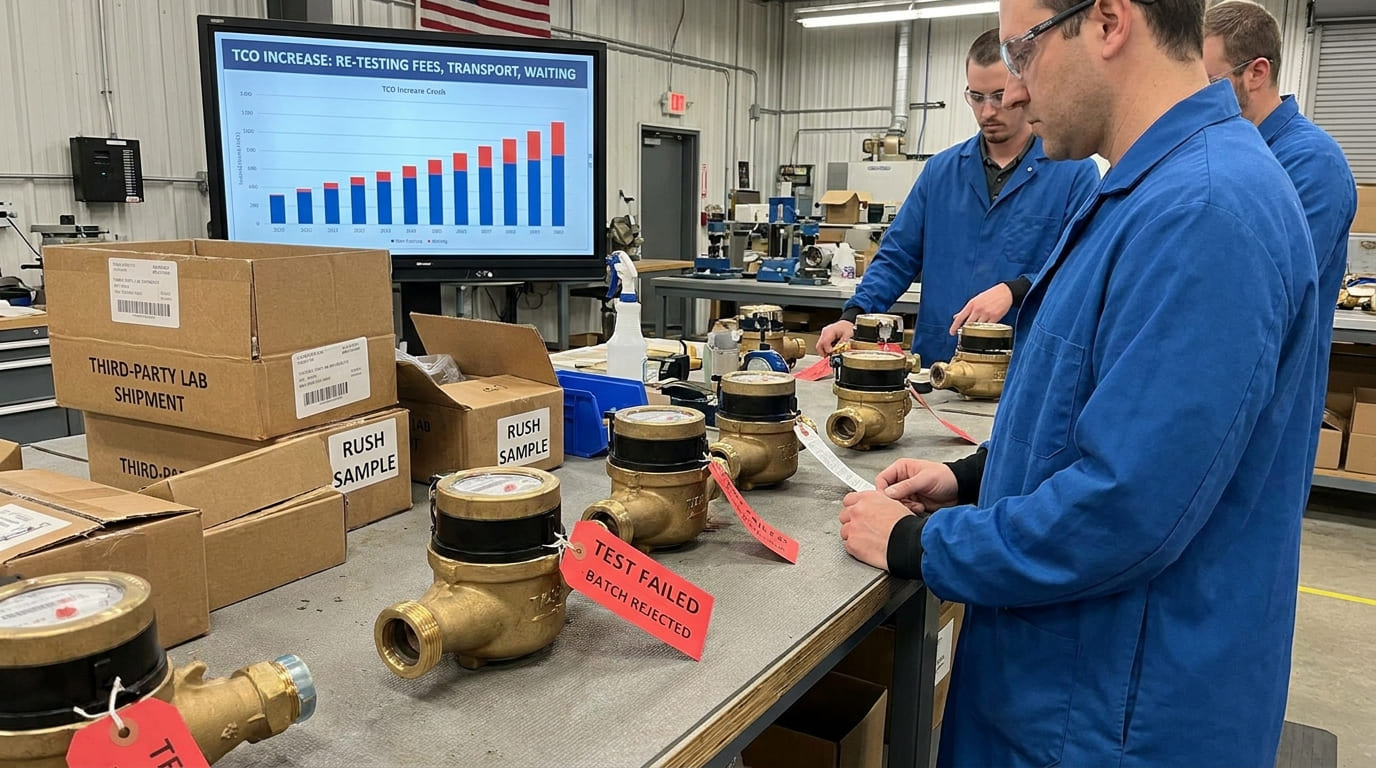
Confronto le condizioni di test di fabbrica con le condizioni di test delle autorità locali
È utile il risultato del test di fabbrica. Ma non sempre ciò equivale all’accettazione da parte delle autorità locali. Iso 4064 spiega che il test dell'errore intrinseco confronta il volume indicato dal misuratore con un dispositivo di riferimento calibrato in condizioni di riferimento. Se la fabbrica e l'autorità locale utilizzano configurazioni diverse, l'acquirente potrebbe dover affrontare discussioni, ripetere i test, e ritardata accettazione.
Iso 4064 dice anche i valori rilevanti, dimensioni, e le osservazioni dovrebbero essere registrate durante i test delle prestazioni. Utilizzo questa idea negli appalti. Chiedo ai fornitori di fornire registrazioni di test chiare, non solo le dichiarazioni “superate”.. Un buon record rende una controversia più facile da risolvere. Un record debole rende ogni fallimento più costoso.
I costi dei nuovi test eseguiti da terzi includono più delle fatture di laboratorio. Include la selezione del campione, sigillatura, spedizione, tempo di attesa, traduzione del rapporto, revisione dell'ingegnere, negoziazione dei fornitori, e talvolta riunioni dei proprietari del progetto. Se il lotto è grande, un nuovo test può anche interrompere l'installazione.
| Ritestare il trigger | Impatto sul TCO |
|---|---|
| Controversia sulla precisione del contatore | Spese di laboratorio e ritardi |
| Dubbio materiale | Test chimici e revisione da parte delle autorità |
| Dubbio sul grado di protezione IP | Prova di immersione o di tenuta |
| Problema di lettura remota | Test del sistema e simulazione del sito |
| Rifiuto batch | Costo di ricampionamento e stoccaggio |
| Mancata corrispondenza del certificato | Revisione legale e tecnica |
Costo nascosto 3: In che modo le visite internazionali di assistenza sul campo influiscono sul costo totale di proprietà del contatore dell'acqua (TCO).?
Ho notato che un viaggio di riparazione costa più del prodotto da riparare. Ciò accade spesso con contatori di grandi dimensioni e progetti di esportazione.
Il servizio sul campo internazionale aggiunge voli, alberghi, visti, trasporto locale, tempo dell'ingegnere, utensili, pezzi di ricambio, traduzione, e costo opportunità. Per alcuni fallimenti, il costo della riparazione può superare il valore dei contatori.
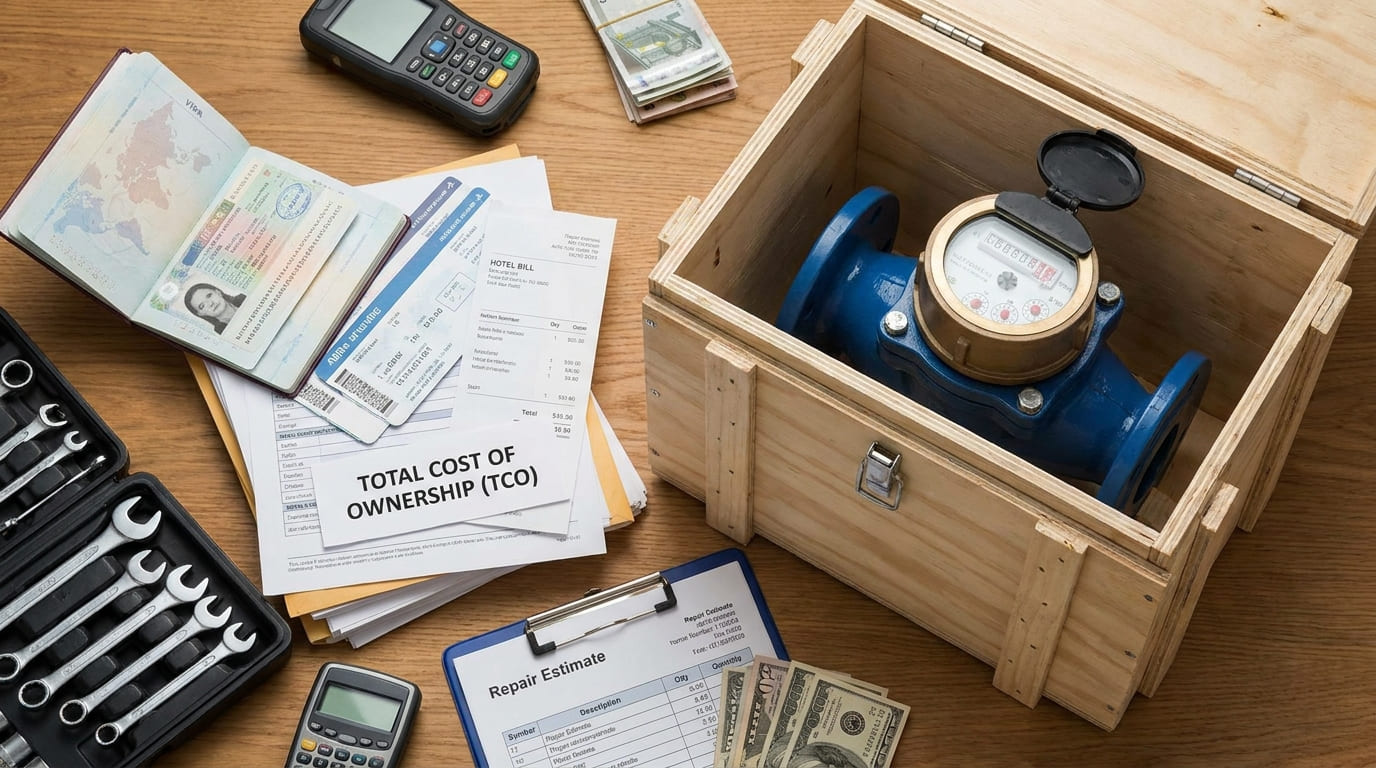
Calcolo l'assistenza sul campo prima di approvare un fornitore a basso prezzo
Un caso da me documentato riguardava metri di grandi dimensioni in Russia. La riparazione stessa non è stata l'unico problema. Il sito richiedeva viaggi internazionali, pianificazione dell'ingegnere, utensili, pezzi di ricambio, e coordinamento locale. Il costo della riparazione è diventato molto superiore al valore del prodotto. Il basso prezzo di acquisto sembrava irrilevante dopo l'inizio del viaggio di servizio.
Questo è il motivo per cui chiedo ai fornitori informazioni sul supporto locale prima di confrontare i prezzi. Se un produttore non ha un partner locale, ogni fallimento grave diventa un caso internazionale. Se il misuratore è un prodotto di grande diametro, anche rispedirlo potrebbe essere costoso o irrealistico.
Per contatori intelligenti, il servizio internazionale può includere anche la diagnosi della piattaforma, controllo del firmware, test di comunicazione, e formazione. I contatori dell'acqua dotati di dispositivi elettronici dovrebbero essere progettati in modo che non si verifichino guasti significativi in presenza di disturbi specifici, e le strutture di controllo fanno parte dei requisiti in molti casi. Ciò significa che il supporto dei contatori intelligenti non riguarda solo la riparazione meccanica. È anche supporto elettronico e dati.
| Articolo di servizio sul campo | Determinante dei costi |
|---|---|
| Volo dell'ingegnere | Costo del viaggio internazionale |
| Hotel e indennità giornaliera | Tempo sul posto |
| Visti e documenti | Ritardo amministrativo |
| Pezzi di ricambio | Spedizione di emergenza |
| Utensili | Requisito speciale di riparazione |
| Traduttore locale | Supporto alla comunicazione |
| Tempi di inattività | Fatturazione persa o progetto ritardato |
Alla ricerca di un fornitore affidabile di contatori dell'acqua?
YOUNIO produce macchinari e ultrasonico contatori d'acqua da DN15 a DN500, Certificato MID e testato ISO 4064. Campioni gratuiti e rapporti sui test di fabbrica disponibili per acquirenti qualificati.
Costo nascosto 4: In che modo le mancanze di conformità e le sanzioni normative incidono sul costo totale di proprietà del contatore dell'acqua?
Ho visto i costi di conformità apparire dopo che l'approvvigionamento aveva ritenuto che la decisione di acquisto fosse terminata. Il contatore era economico, ma la penalità non lo era.
La mancata conformità aumenta il TCO attraverso le sanzioni, rifiuto, ricorda, ricertificazione, test sui materiali, revisione legale, e danni alla reputazione. Le regole sui materiali e sulla costruzione devono essere riviste prima di selezionare il fornitore.
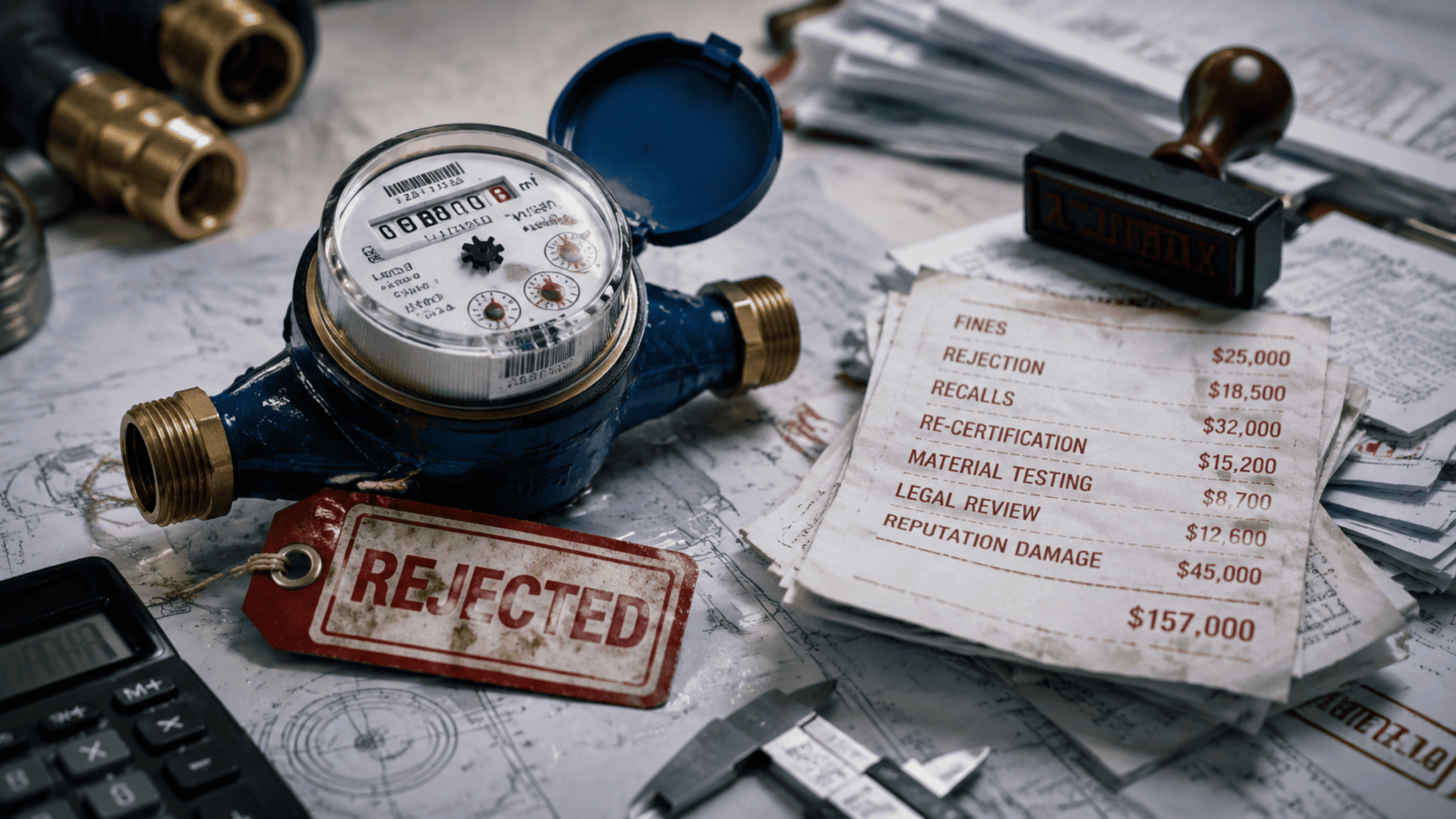
Non tratto mai la conformità dei materiali come un piccolo dettaglio
Un caso nei miei archivi riguardava un contenuto eccessivo di piombo. La multa è arrivata a RMB 52,000. Il problema non era visibile dall'esterno. Il corpo del misuratore sembrava normale. Il prezzo sembrava buono. Ma i costi di conformità non erano inclusi nel prezzo di appalto.
Iso 4064 afferma che i materiali a contatto con l'acqua dovrebbero essere convenzionalmente noti come non tossici, non contaminante, e biologicamente inerte, e richiama anche l'attenzione sulle normative nazionali. Lo leggo come un avvertimento sugli appalti. Un contatore accettabile in un mercato potrebbe comunque non funzionare in un altro mercato se le norme locali sull'acqua potabile o i limiti sui materiali sono diversi.
Iso 4064 richiede inoltre che il contatore dell'acqua completo sia realizzato con materiali resistenti alla corrosione interna ed esterna o protetto da un idoneo trattamento superficiale. Questo requisito influisce sul TCO a lungo termine perché può crearsi corrosione perdita, problemi di aspetto, problemi di pressione, e sostituzione anticipata.
Chiedo rapporti sui materiali per lotto. Chiedo se il corpo è di ottone, composito, acciaio inossidabile, o altro materiale. Chiedo se il materiale è omologato per l'acqua potabile per il mercato di riferimento. Chiedo anche come il fornitore controlla il materiale in entrata. Il fornitore più economico potrebbe non essere a buon mercato se un test sui materiali fallito comporta multe, ricorda, e la sfiducia dei clienti.
| Rischio di conformità | Costo nascosto |
|---|---|
| Errore nel contenuto del lead | Bene, richiamo, revisione dell'autorità |
| Manca l'approvazione locale | Installazione ritardata |
| Mancata corrispondenza del certificato | Gara d'appalto |
| Problema della corrosione | Sostituzione e reclami |
| Materiale non sicuro a contatto con l'acqua | Rischio legale e fiducia pubblica |
| Design antifrode scadente | Controversie sulla fatturazione |
Costo nascosto 5: In che modo i ritardi di progetto dovuti al rifiuto dei lotti aumentano il TCO del costo totale di proprietà del contatore dell'acqua?
Ho visto lotti rifiutati bloccare i programmi di installazione e il flusso di cassa. Il magazzino era pieno, ma il progetto non poteva muoversi.
Il rifiuto dei batch aumenta il TCO del contatore dell'acqua attraverso lo stoccaggio, ripetere il test, produzione sostitutiva, installazione ritardata, fatturazione ritardata, penalità contrattuali, e tempo di gestione aggiuntivo. Un prezzo unitario basso non può compensare un programma di accettazione non riuscito.
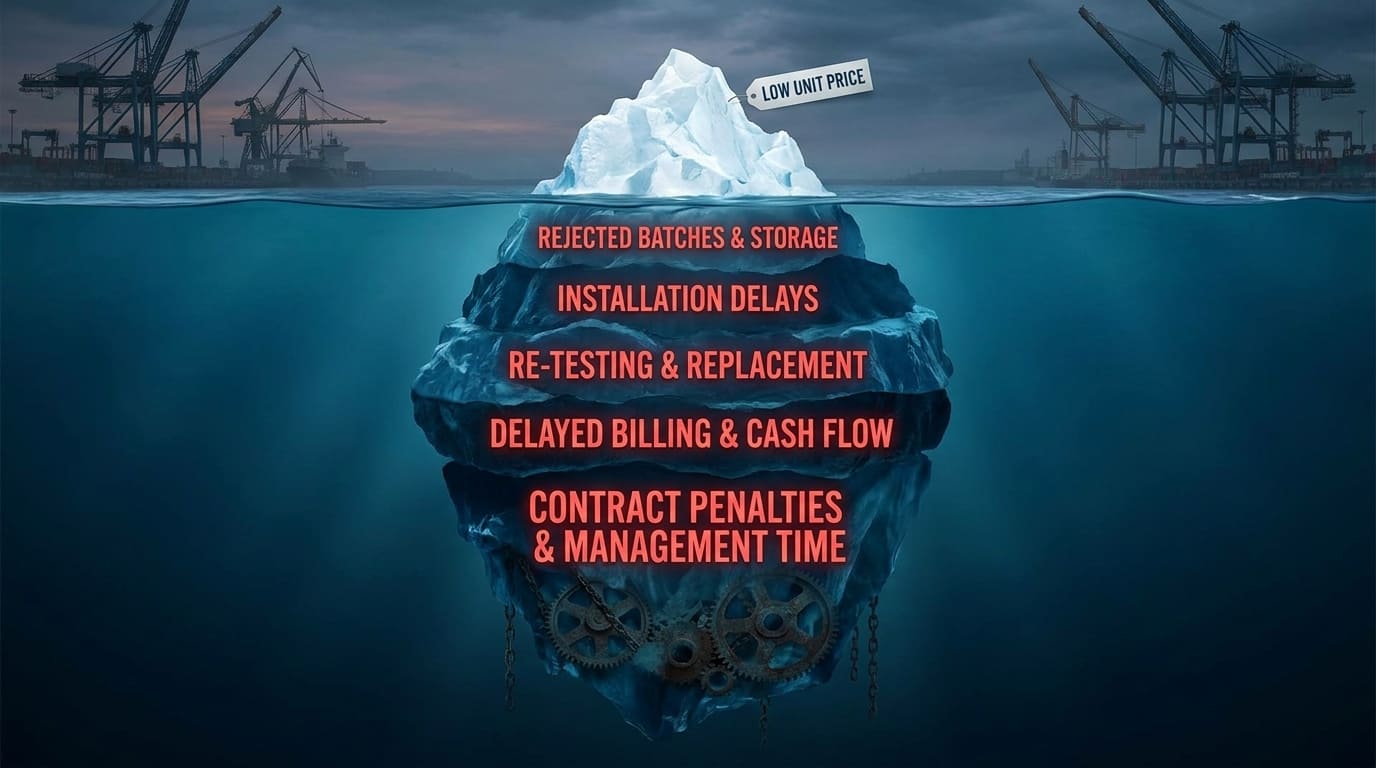
Includo il costo del rifiuto del lotto prima di approvare la produzione di massa
Il rifiuto di un lotto non è solo un problema di qualità. E' una questione di orari. Colpisce le squadre di costruzione, appaltatori di installazione, piani di fatturazione, avvisi ai clienti, e le tappe fondamentali del progetto. Se i contatori vengono importati, il ritardo può incidere anche sullo stoccaggio doganale e sui tempi di spedizione sostitutiva.
Un caso nei miei archivi riguardava una nuova boccola dello stampo che era caduta. La perdita diretta è stata di RMB 65,240. Il prezzo di acquisto era basso, ma il costo del ritiro dei lotti era elevato. Il difetto ha dimostrato che un piccolo componente in un nuovo stampo può creare una grande perdita di progetto quando si ripete in un lotto.
Questo è il motivo per cui chiedo l'approvazione del lotto pilota prima della produzione di massa. Chiedo anche l'ispezione del primo articolo, controlli critici per la qualità, e regole di trattenuta della spedizione. Iso 4064 richiede che i dispositivi di protezione siano verificati come parte dei requisiti del contatore, e i test prestazionali richiedono la registrazione di valori e osservazioni rilevanti. Uso lo stesso pensiero nel controllo batch. Voglio prove scritte prima di lasciare che la quantità aumenti.
Un rifiuto di un lotto può anche ridurre la fiducia interna. La finanza potrebbe mettere in discussione il progetto. L’approvvigionamento può riaprire le discussioni con i fornitori. Il team di progetto potrebbe perdere le finestre di installazione. L'utilità potrebbe ritardare il miglioramento della fatturazione. Questi sono i costi reali, anche se non compaiono sul primo ordine di acquisto.
| Costo del rifiuto batch | Effetto aziendale |
|---|---|
| Magazzinaggio | Costo di magazzino e pressione sullo spazio |
| Nuovo test | Spese di laboratorio e tempi di gestione |
| Produzione sostitutiva | Nuovo termine d'esecuzione |
| Ritardo nell'installazione | Conflitto di programma dell'appaltatore |
| Ritardo nella fatturazione | Successivo miglioramento delle entrate |
| Pena contrattuale | Perdita finanziaria diretta |
| Riunioni interne | Costo del lavoro nascosto |
Come posso creare un semplice modello TCO del costo totale di proprietà del contatore dell'acqua per l'approvvigionamento?
Non ho bisogno di un sistema finanziario complesso per avviare il TCO. Ho bisogno di una tabella chiara che confronti i fornitori sulla base dello stesso ciclo di vita.
Un semplice modello TCO di contatore dell'acqua aggiunge il prezzo di acquisto, costo allo sbarco, costo di approvazione, costo del fallimento, costo del servizio, costo del ritardo, rischio di conformità, e costo di supporto residuo. Il modello dovrebbe confrontare gli scenari, non solo citazioni.
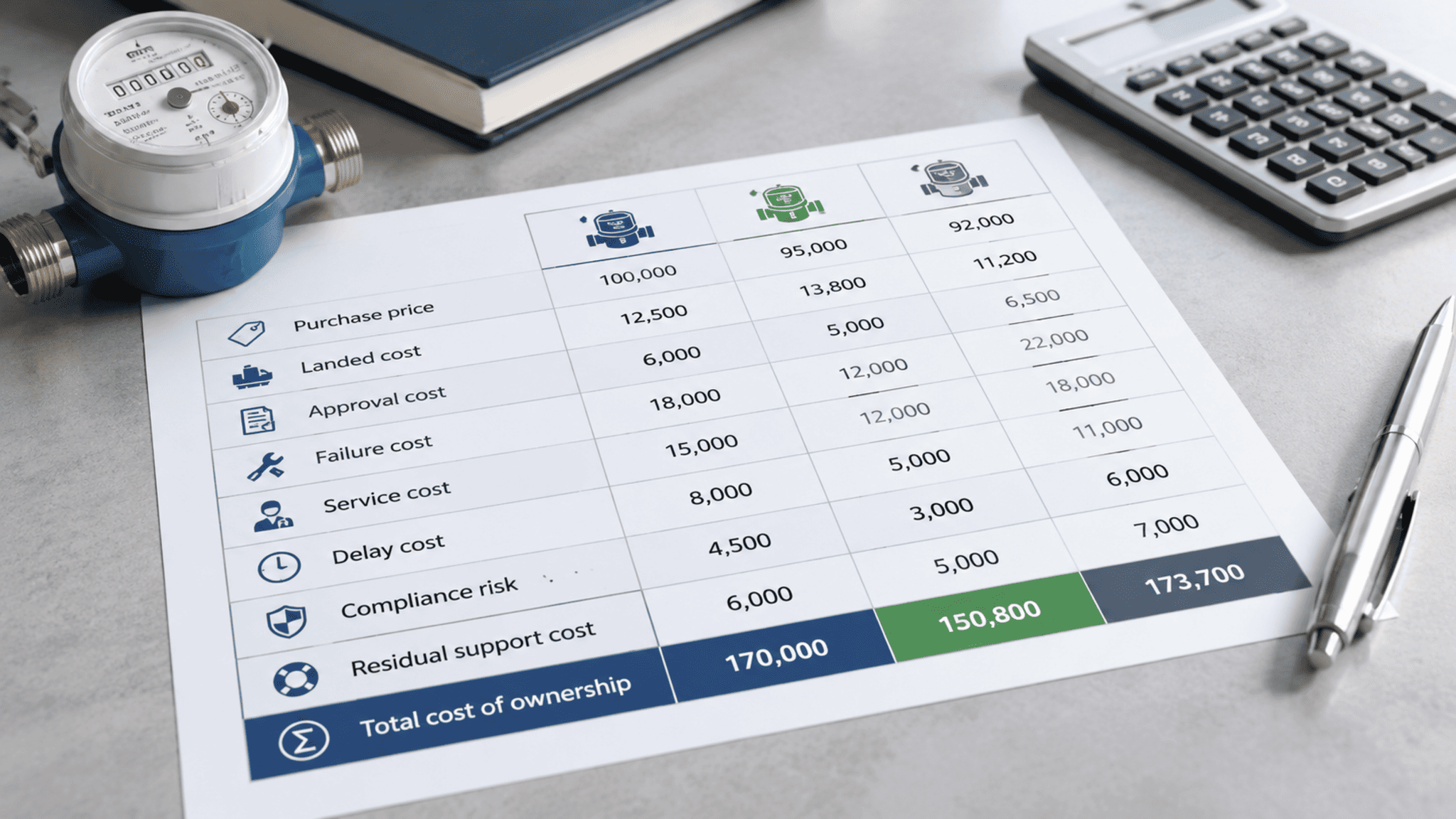
Utilizzo una formula di costo che sia la finanza che gli appalti possono leggere
La mia formula di base è semplice:
Costo totale di proprietà del contatore dell'acqua TCO = costo di acquisto + costo logistico + costo della certificazione + costo di accettazione + costo del supporto all'installazione + costo previsto del reclamo + costo previsto per il nuovo test + costo previsto per l'assistenza sul campo + costo del rischio di conformità + costo del ritardo + costo di sostituzione.
Stimo il costo previsto del reclamo con una semplice percentuale di rischio. Se un fornitore dispone di dati affidabili sui reclami quinquennali, Io uso un fattore di rischio più basso. Se un fornitore non può mostrare la tracciabilità del lotto, Utilizzo un fattore di rischio più elevato. Se il progetto si trova in un mercato normativo rigoroso, Aggiungo più rischi di conformità.
Calcolo anche uno “scenario batch errato”. Questo è il numero che spesso cambia la decisione. Chiedo cosa succede se 5%, 10%, O 20% del lotto necessita di essere nuovamente testato, riparazione, o sostituzione. Chiedo cosa succede se un test di autorità blocca l'accettazione della spedizione. Chiedo cosa succede se una questione materiale crea una penalità.
| Articolo TCO | Fornitore A: prezzo basso | Fornitore B: fornitore controllato |
|---|---|---|
| Prezzo unitario | Inferiore | Più alto |
| Merci e dazi | Uguale o simile | Uguale o simile |
| Supporto per la certificazione | Debole | Forte |
| Costo previsto del reclamo | Più alto | Inferiore |
| Costo previsto per il nuovo test | Più alto | Inferiore |
| Rischio dell'assistenza sul campo | Più alto | Inferiore |
| Rischio di conformità | Più alto | Inferiore |
| Rischio di ritardo | Più alto | Inferiore |
| TCO totale previsto | Potrebbe diventare più alto | Spesso più stabile |
Assegno valori di rischio a tipi di guasto noti
Non pretendo che il rischio possa essere previsto perfettamente. Ma assegno ancora valori di costo. L’obiettivo non è la bellezza matematica. L’obiettivo sono decisioni migliori.
| Tipo di guasto | Costo TCO da stimare |
|---|---|
| Reso e reclamo | Trasporto, lavoro, sostituzione |
| Nuovo test di terze parti | Tassa di laboratorio, campioni, tempo |
| Servizio internazionale | Viaggio, parti, giorni dell'ingegnere |
| Mancata conformità | Bene, richiamo, ricertificazione |
| Rifiuto batch | ritardo, magazzinaggio, sostituzione |
| Guasto del contatore intelligente | supporto della piattaforma, sostituzione del modulo |
| Problema materiale | test, pena, controversia con il fornitore |
Questo modello mi aiuta a spiegare perché un metro è così 5% più economico può essere 20% più costoso dopo i guasti. Mi aiuta anche a dimostrare perché il controllo dei processi dei fornitori ha un valore finanziario.
Come si utilizzano gli argomenti relativi al TCO del costo totale di proprietà del contatore dell'acqua nell'approvazione del budget interno?
Ho imparato che l'approvazione del budget interno richiede un chiaro linguaggio del rischio. I team finanziari non vogliono drammi tecnici. Vogliono la logica dei costi.
Utilizzo le argomentazioni sul TCO dei contatori dell'acqua convertendo i rischi tecnici in scenari finanziari. Mostro il caso migliore, caso normale, e caso di fallimento. Quindi collego la qualità del fornitore al flusso di cassa, sanzioni, costo del reclamo, e ritardo del progetto.
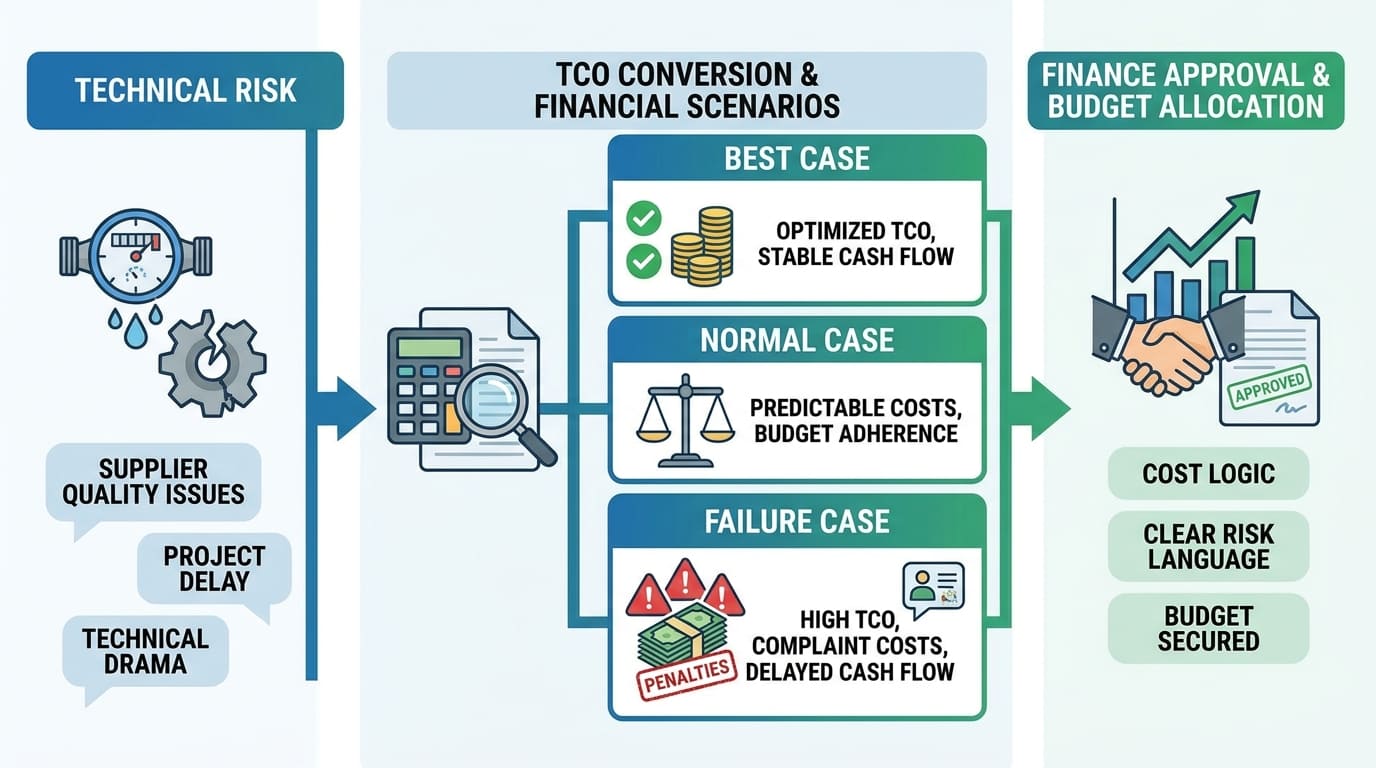
Traduco il rischio tecnico nel linguaggio del CFO
Quando parlo con la finanza, Evito di dire solo, "Questo fornitore è migliore." dico, “Questo fornitore riduce i costi previsti per i nuovi test, rischio del servizio sul campo, esposizione della pena, e ritardare il rischio. Questa frase si adatta al modo di pensare di un CFO.
Utilizzo anche casi reali. Il lotto di metri di grandi dimensioni HTN DN50 ha dimostrato come il prezzo unitario economico possa trasformarsi in più di RMB 60,000 nei rendimenti, test, e riparare. Il caso dei contatori di grandi dimensioni in Russia ha dimostrato come l’assistenza sul campo internazionale possa costare più del valore del prodotto. Il nuovo caso di boccole per stampi ha mostrato come un lotto a basso prezzo possa creare RMB 65,240 nella perdita di richiamo. Il caso del contenuto principale ha mostrato come i costi di conformità possano creare un RMB 52,000 pena.
Collego ciascun caso a una linea di budget. I resi influiscono sui costi operativi. La ripetizione dei test influisce sul costo della qualità. Il servizio internazionale influisce sui costi post-vendita. Le sanzioni legate alla conformità influiscono sui costi legali e normativi. Il rifiuto del batch influisce sul flusso di cassa del progetto.
| Preoccupazione interna | Argomento TCO che utilizzo |
|---|---|
| "Il fornitore migliore è più costoso." | Il prezzo di acquisto è più alto, ma il costo del fallimento previsto è inferiore. |
| “Dobbiamo risparmiare budget quest’anno.” | Un contatore economico può spostare i costi nel budget del servizio del prossimo anno. |
| "Il campione è passato." | Un passaggio campione non elimina il rischio di batch e conformità. |
| "Il fornitore ha un certificato." | Il certificato deve corrispondere alla produzione e alle norme locali. |
| "Il servizio può essere gestito più tardi." | Il servizio internazionale può costare più del valore del contatore. |
| "Il ritardo è improbabile." | Un batch rifiutato può interrompere l'installazione e il miglioramento della fatturazione. |
Mostro la decisione come un'assicurazione contro le perdite note
Non descrivo il TCO come una teoria. Lo descrivo come un'assicurazione contro le categorie di perdite note. Un fornitore controllato non vende solo contatori. Sta riducendo la probabilità di rendimento, ripetere il test, servizio sul campo, sanzioni, e ritardo.
Per un progetto di utilità, Chiedo al team interno di approvare il fornitore con il costo del ciclo di vita previsto più basso, non il prezzo unitario più basso. Questa è una regola più giusta per gli appalti perché dà agli acquirenti il permesso di scegliere la qualità quando la qualità ha una ragione finanziaria.
Conclusione
Utilizzo il TCO del costo totale di proprietà del contatore dell'acqua perché il contatore più economico può diventare il progetto più costoso. Ritorni, ripetere il test, servizio internazionale, sanzioni di ottemperanza, e il rifiuto del lotto deve essere valutato prima dell'aggiudicazione del fornitore. Se desideri creare un confronto del TCO più sicuro per il tuo prossimo appalto, YOUNIO può supportarti con contatori d'acqua certificati, opzioni di misurazione intelligente, documentazione chiara, e discussioni pratiche sui rischi del progetto.
Alla ricerca di un fornitore affidabile di contatori dell'acqua?
YOUNIO produce contatori d'acqua meccanici e ad ultrasuoni da DN15 a DN500, Certificato MID e testato ISO 4064. Campioni gratuiti e rapporti sui test di fabbrica disponibili per acquirenti qualificati.