

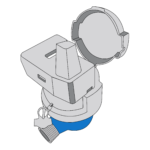

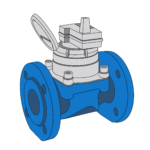

Harsh sites punish vague tenders. 砂, 圧力ショック, and corrosive water return later as “abnormal failures.” I define the environment first.
A harsh environment water meter is not a special label. It is a meter selected for known site stresses, including particles, 水力障害, high pressure, outdoor exposure, chemical water, and communication risk under specified conditions.
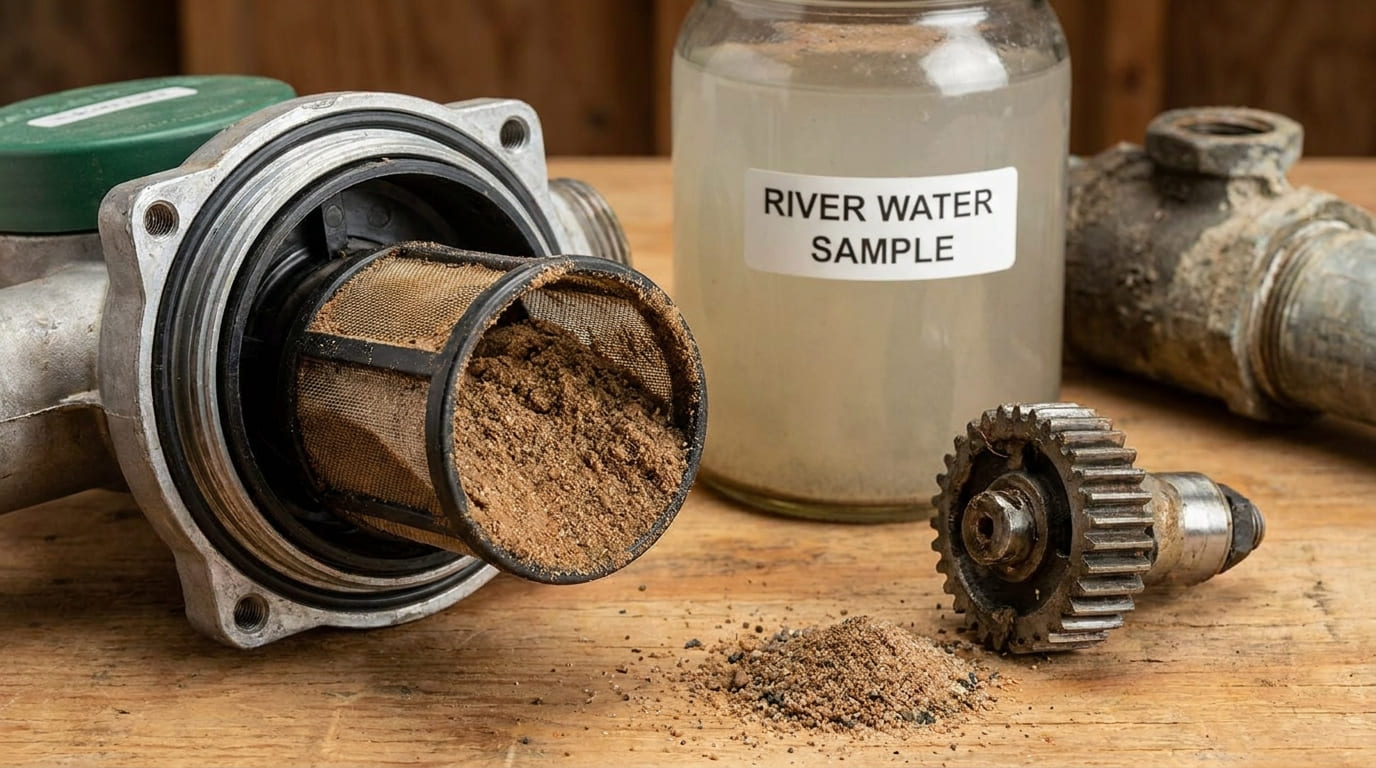
I usually slow the project discussion at this point. Many failures are not mysterious. They are site conditions that were not written clearly in the tender, the datasheet review, or the installation plan.
What Counts as a “Harsh Environment” for Meters?
A normal meter can fail early in an abnormal site. If the site stress is hidden, the complaint looks like a product defect.
A harsh environment includes any condition outside normal protected use: 砂, 沈殿物, dirty water, 圧力ショック, 水力障害, corrosion risk, outdoor exposure, high humidity, 熱, poor signal, or chemically treated water.
How I Define the Boundary Before Selection
I do not start with the meter model. I start with the environment. This is important because ISO 4064 links performance testing to specified environmental and operating conditions, not to a vague idea of “normal use” [6]. The standard also separates climatic and mechanical environmental classes, including class B for fixed meters installed in a building, class O for fixed meters installed outdoors, and class M for mobile meters [4].
電子水道メーター用, I also check the electromagnetic environment. ISO 4064 divides electronic water meters into E1 for protected areas and E2 for areas without special protection [1]. This matters in pump rooms, industrial parks, and outdoor cabinets where electrical equipment may be close to the meter.
実際のプロジェクトでは, I treat the following as harsh conditions:
| Harsh Condition | なぜそれが重要なのか | Tender Item I Ask For |
|---|---|---|
| Sand and sediment | Can collect in the meter and affect movement or sensing | Strainer, flushing plan, water quality statement |
| 高圧 | Can stress body, シール, and joints | PN/MAP rating and pressure test requirement |
| 圧力衝撃 | Can damage seals and create leakage complaints | surge control and installation detail |
| Dirty water | Can increase blockage and wear risk | particle risk and maintenance access |
| Corrosive water | Can attack body or internal parts | material and coating requirement |
| Outdoor heat or humidity | Can affect electronics, シール, そしてディスプレイ | environmental class and IP protection |
| Hydraulic disturbance | Can affect accuracy | straight pipe or flow straightener requirement |
| Poor signal | Can create remote reading complaints | communication survey and gateway plan |
I also look at installation geometry. ISO 4064 states that if accuracy is affected by upstream or downstream disturbances, such as bends, バルブ, またはポンプ, the meter must be provided with sufficient straight pipe lengths, 整流装置の有無にかかわらず, メーカーの指定通り [2]. I see this problem often in compact pump rooms. The meter is installed where it fits, not where the hydraulic condition is stable.
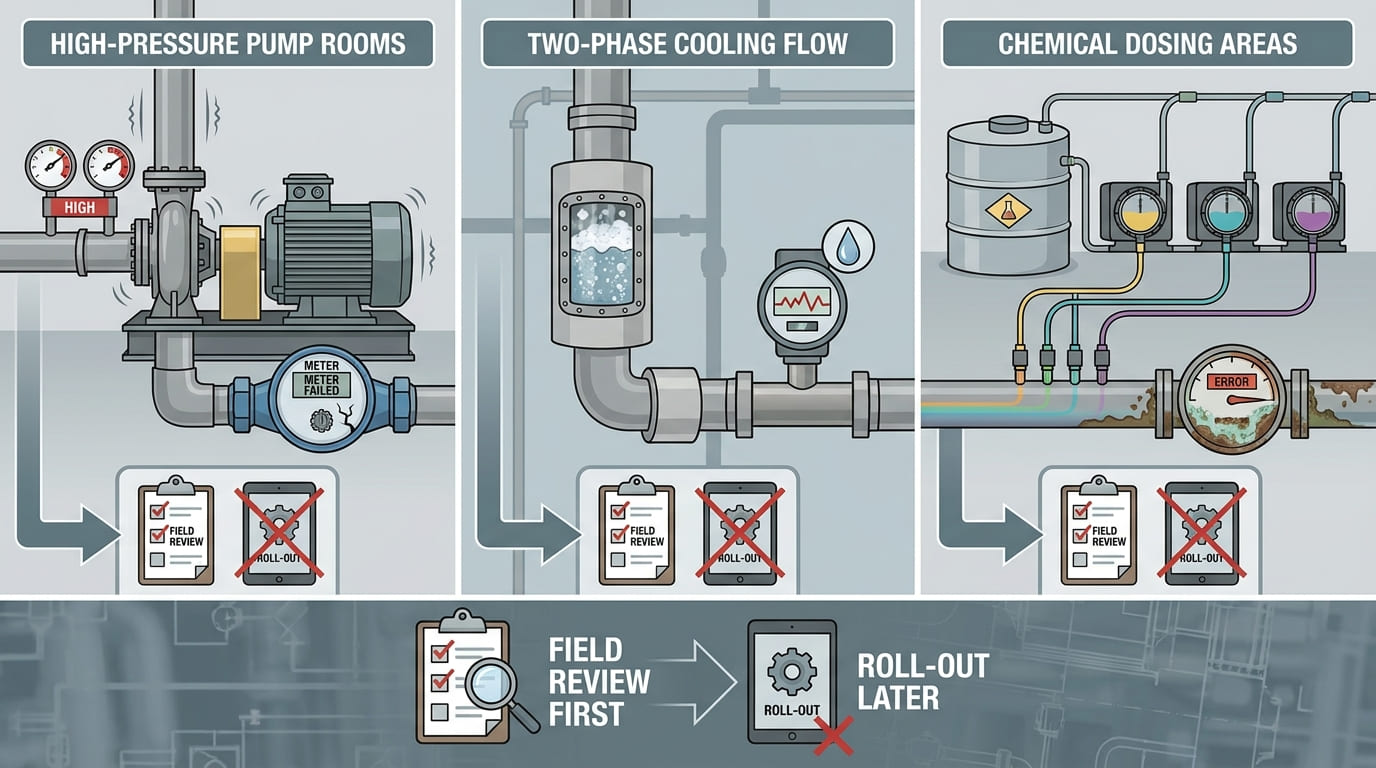
A harsh site is not always a bad site. It is only a risky site when the conditions are not declared. If the tender mentions only DN size and price, the project team may miss water quality, プレッシャー, outdoor exposure, and communication conditions. Those missing items almost always return later as leakage, low reading, no upload, fogged register, blocked mechanism, or abnormal accuracy complaints.
砂, Sediment and Particles: Lessons from the Field?
Sand looks small during installation. 後で, it becomes blockage, 着る, low reading, and repeated service visits. I always ask about pipe flushing.
Sand and sediment can collect in a water meter, especially after upstream pipework activities. A harsh-water project should define flushing, 濾過, メーターの向き, maintenance access, and complaint analysis before installation [2].
What Particles Do to Meter Performance
Particles are one of the most common hidden causes of field complaints. ISO 4064 directly notes that solid particles can collect in a water meter, たとえば上流の配管作業後など [2]. I see this in new developments, irrigation projects, industrial parks, and long transmission lines. The pipe looks ready, but welding slag, 砂, さび, and construction debris are still inside.
機械式メーターの場合, particles can increase friction, block strainers, affect impellers or pistons, and create under-registration. 超音波計用, there are no moving measuring parts, but dirty water can still affect the pipe section, センサー, signal path, and long-term stability. I do not say one technology removes all particle risk. I only say the risk mechanism is different.
I usually divide dirty-water problems into three groups:
| Particle Problem | Typical Field Sign | Practical Control |
|---|---|---|
| Construction debris | early blockage or no reading | flush pipe before installation |
| Sand from source water | repeated blockage or wear | use filtration or suitable meter design |
| Rust and scale | unstable reading over time | inspect old pipe and plan maintenance |
| Muddy intermittent supply | dirty restart after empty pipe | avoid dry-pipe operation where possible |
| Upstream pump disturbance | unstable flow profile | check straight pipe and flow straightener |
The tender should ask more than “anti-sand meter.” That phrase is too vague. I prefer clear questions. What is the expected particle load? Is the water from a borehole, river, desalination system, tank, or old network? Will the line be flushed before meter installation? Is there an upstream strainer? Can the maintenance team open and clean it? Is there enough space to remove the meter?
Installation also matters. 曲がる場合, バルブ, or pumps create disturbance, ISO 4064 requires the manufacturer’s straight pipe guidance to be followed so that installed meter indications remain within the required maximum permissible error limits [2]. A dirty-water site with bad hydraulics creates two risks at the same time. The meter may face both particles and distorted flow.
When complaints appear, I compare the complaint record with the installation date and pipework activity. If many meters fail after a pipeline repair, I do not treat it as random. I check whether particles entered the network. This is why I ask the project owner to keep flushing records, 設置写真, and maintenance notes. The meter supports measurement, but it cannot clean the network alone.
High-Pressure and Pressure-Shock Scenarios?
High pressure is not only a body strength issue. Pressure shock can damage seals, ジョイント, レジスター, そして顧客の信頼. I check surge risk early.
High-pressure water meter selection should define pressure rating, 圧力ショック, pump operation, valve closing behavior, 設置位置, and test conditions. If these are not specified, later leakage or abnormal failure may be misread as a meter defect.
Why High Pressure Must Be Written Clearly
I see high-pressure complaints in booster pump systems, hill zones, industrial supply lines, irrigation networks, and large building basements. The complaint may be “meter leakage,” “broken register,” “strange noise,” or “abnormal reading.” The root cause may be static pressure, 圧力ショック, ポンプサイクリング, valve slam, or poor pipe support.
I do not use only pipe diameter to select the meter. I ask for normal working flow, ピークフロー, 最小流量, 圧力範囲, 温度, そして取り付け状態. The selected meter should match the common flow as closely as possible. メーターが大きすぎる場合, low-flow measurement can suffer. メーターが小さすぎる場合, pressure loss and overload risk can increase.
For high-pressure sites, I separate three questions:
| 質問 | 私が尋ねる理由 |
|---|---|
| What is the normal working pressure? | Confirms body and joint suitability |
| What is the maximum pressure? | Checks pressure rating margin |
| Is there pressure shock? | Identifies surge risk beyond static pressure |
| Are pumps close to the meter? | Checks hydraulic disturbance and vibration |
| Are valves fast-closing? | Checks water hammer risk |
| Is the meter supported properly? | Reduces pipe stress on the meter body |
ISO 4064 includes flow disturbance tests and durability tests as part of performance evaluation areas [3]. It also states that performance tests are intended to verify that water meters perform and function as intended in a specified environment and under specified conditions [6]. I read this as a practical reminder. If the real site includes pressure shock, pump vibration, or unstable flow, those conditions should not be hidden from the supplier.
A pressure-shock problem can look like a product issue. A meter body may be blamed when the actual cause is repeated water hammer. A gasket may be blamed when the pipe has no proper support. A register may be blamed when vibration is continuous. This is why I ask for pressure logger data when the complaint is serious.
スマートメーター向け, I also check whether the electronics are installed in a wet, hot, or exposed location. Environmental testing depends on meter technology and construction, and the relevant tests are applied as appropriate to meet environmental conditions [5]. High pressure and outdoor exposure often appear together in real projects, so I treat the mechanical and electronic risks as one system.
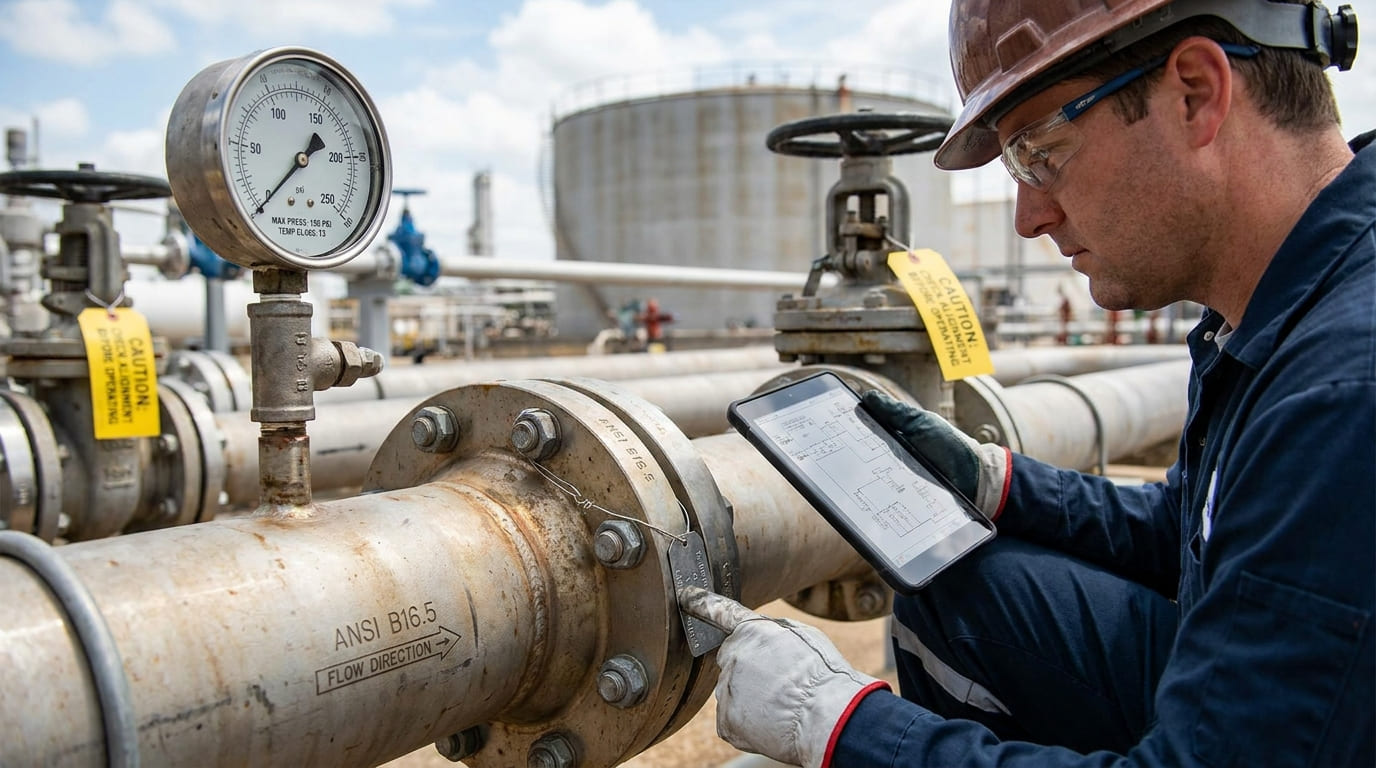
Corrosive and Chemically Treated Water?
Chemical treatment protects water systems, but it can attack unsuitable materials. If chemistry is unknown, the meter becomes the test sample.
For corrosive or chemically treated water, the tender should define water chemistry, disinfectant type, 温度, material compatibility, コーティング, ガスケット材質, and approval requirements. Meter selection must match the actual water condition.
What I Ask Before Choosing Materials
I do not treat “potable water” as a complete water-quality description. Two potable water systems can behave differently. One may use chlorination. Another may use chloramine or other treatment. One may have stable pH. Another may have aggressive water. One may use desalinated water with remineralization. Another may mix borehole and surface water.
Corrosive water can affect the body, threads, ボルト, ガスケット, コーティング, internal metal parts, and electronic sealing. It may not cause immediate failure. It may appear after months as leakage, surface corrosion, stuck parts, discolored water complaints, or moisture inside the register.
I usually request the following information:
| Water Chemistry Item | なぜそれが重要なのか |
|---|---|
| pH range | Indicates acidity or alkalinity risk |
| chloride level | Helps assess corrosion risk |
| disinfectant type | Affects gasket and plastic compatibility |
| 水温 | Changes chemical reaction speed |
| conductivity | Helps assess aggressive water behavior |
| source water | Borehole, seawater desalination, river, tank, or recycled use |
| treatment chemicals | Confirms material compatibility |
The reference standard reminds me that testing conditions should correspond to the environmental conditions to which meters are exposed [1]. ISO 4064 also allows the applicant for type approval to indicate specific environmental conditions based on intended use, and the testing laboratory then carries out performance tests at severity levels corresponding to those conditions [4]. This is relevant when a project is not a standard indoor residential installation.
Material choice should not be guessed. 真鍮, polymer, 複合, ステンレス鋼, coated iron, and different gasket materials all behave differently. I avoid saying one material is always best. I ask which material fits the water chemistry, local approval, 圧力クラス, cost target, and installation habit.
For potable water projects, buyers may also need local sanitary approvals, depending on the market. For industrial water or irrigation, the requirement may be different. The key is to state the water quality in the tender. If the chemistry is not declared, corrosion complaints later become difficult to judge. The supplier may have selected a normal product for abnormal water.
I also ask for sample validation when the water is unusual. A pilot cannot remove all risk, but it can reveal early compatibility issues. I would verify this in a pilot before full rollout, especially when the site combines chemical treatment, 熱, high pressure, and long outdoor exposure.
Material and Design Choices That Survive Harsh Sites?
A strong datasheet is not enough. Harsh sites need matched materials, hydraulic design, 保護, およびメンテナンスアクセス. I compare the whole design.
Meters survive harsh environments when body material, 封印, measuring principle, strainer design, 圧力定格, 環境教室, installation sensitivity, and communication protection match the site conditions.
What I Compare in a Technical Review
When I review a harsh-site meter, I do not only compare price and accuracy class. I compare the design against the site stress. This includes mechanical strength, 耐食性, particle tolerance, 封印, ディスプレイの可視性, communication reliability, and maintenance method.
For dirty water, I check whether the meter has suitable internal geometry and whether an upstream strainer is needed. For disturbed flow, I check the manufacturer’s straight pipe requirement. ISO 4064 states that if bends, バルブ, またはポンプが精度に影響を与える, the meter must be provided with sufficient straight pipe lengths, 整流装置の有無にかかわらず, メーカーの指定通り [2].
For outdoor sites, I check climatic and mechanical environmental classification. ISO 4064 identifies class O for fixed meters installed outdoors, while class B applies to fixed meters installed in buildings [4]. This distinction is important. A meter installed in a roadside chamber, desert cabinet, or humid basement does not face the same environment as a meter in a clean indoor utility room.
電子メーター用, I check electromagnetic class. E1 applies to protected areas, while E2 applies to areas without special protection [1]. 実際のプロジェクトでは, ポンプ場, industrial rooms, and mixed electrical cabinets often need more careful review than simple residential installations.
| Design Area | チェックする内容 | なぜそれが重要なのか |
|---|---|---|
| Body material | 真鍮, polymer, 複合, stainless, coated body | corrosion and pressure suitability |
| Sealing | gasket and register sealing | leakage and moisture resistance |
| Measuring principle | mechanical or ultrasonic | particle and wear behavior |
| Hydraulic design | 直管, フロープロファイル, 圧力損失 | stable accuracy |
| Strainer access | cleanable or replaceable | maintenance practicality |
| Electronics | バッテリー, PCB sealing, 画面 | outdoor and humidity risk |
| コミュニケーション | nb-iot, ロラ, ロラワン, Mバス, RF, 4G カテゴリー 1 | site data collection feasibility |
If the meter is smart, I treat communication as a system. A LoRa water meter may need a concentrator, 電源, local telecom card or SIM card, server, プラットフォーム, and signal testing. An NB-IoT meter needs operator coverage, SIM or eSIM setup, platform compatibility, and a reporting cycle that matches the battery plan. The meter can support remote data collection, but it cannot solve poor signal or missing platform rules alone.
I also check maintenance access. A harsh-site meter that cannot be removed, cleaned, 読む, or replaced easily will create lifecycle cost later. The installation position should allow disassembly, インストール, メンテナンス, and manual reading where required. This is a simple point, but it prevents many complaints.
Project Stories from the Middle East, Africa and Others?
Real projects repeat the same lesson. The problem hidden at tender stage returns later as failure, dispute, or emergency replacement.
In Middle East, アフリカ, and similar harsh regions, common meter issues include sand ingress, outdoor heat, high pressure, intermittent supply, poor pipe flushing, chemical water, and weak communication coverage.
Field Patterns I See Often
I will describe these as project patterns, not as confidential customer cases. The first pattern is sand in new networks. A contractor finishes pipework, installs meters quickly, and starts water supply. Soon, some meters show no reading or low reading. When the team opens the line, they find sand, さび, or construction debris. ISO 4064 warns that solid particles can collect in a water meter, especially after upstream pipework activities [2]. This small note matches many real complaints.
The second pattern is high pressure in elevated zones. A utility may specify meter size and flow, but not pressure shock. インストール後, leakage appears at joints or meter connections. The supplier receives a complaint, but the pressure data shows pump cycling or fast valve closure. この場合, the missing tender item is not only pressure rating. It is pressure behavior.
The third pattern is outdoor exposure. In hot or humid regions, a meter may sit in a chamber, cabinet, or roadside box. If the meter has electronics, the environmental class and sealing design matter. ISO 4064 recognizes different climatic and mechanical classes, including outdoor fixed meters under class O [4]. I therefore ask whether the meter will be indoor, 屋外, submerged, exposed to condensation, or installed near electrical equipment.
The fourth pattern is communication difficulty. In remote villages, 地下室, thick concrete buildings, 工業団地とか, wireless signal can be unstable. A smart meter may measure correctly but fail to upload data. Replacing the meter body may not solve the issue. The project needs signal survey, ゲートウェイの配置, SIM or telecom check, and platform registration.
| Region Pattern | Common Harsh Factor | Typical Complaint | Better Up-Front Control |
|---|---|---|---|
| Desert network | sand and heat | blockage or display aging | フラッシング, strainer, outdoor class |
| Hill zone | high pressure and surge | leakage or damage | pressure data and surge control |
| Borehole supply | sediment and chemistry | wear or corrosion | water analysis and material review |
| 工業団地 | disturbance and EMI | unstable data or reading | straight pipe and E-class review |
| Rural AMI | weak signal | no remote reading | network survey and gateway plan |
I see one consistent rule. If the project team writes the harsh condition clearly, the supplier can propose a better meter, accessory, installation detail, or pilot plan. If the condition is not written, the same issue will return as an “unexpected” complaint.
How to Specify Harsh-Environment Requirements Up-Front?
A vague tender saves time only at the beginning. 後で, it creates claims, replacements, and technical arguments. I write the risk into the specification.
A harsh-environment specification should define water quality, プレッシャー, 流量範囲, installation class, 直管, 粒子, 材料, 保護レベル, 通信方法, テスト書類, maintenance access, and pilot verification.

My Tender Checklist for Harsh Sites
I prefer technical tenders that describe the site before describing the meter. A supplier can only make a suitable proposal if the application boundary is visible. ISO 4064 states that performance tests verify that water meters perform as intended in a specified environment and under specified conditions [6]. This sentence is very practical for procurement. If the environment is not specified, the selection is incomplete.
I include these items in harsh-site specifications:
| Specification Item | What to Write |
|---|---|
| 応用 | 居住の, コマーシャル, 産業, 灌漑, 地区メーター |
| メーターサイズ | DN size and expected normal working flow |
| Flow data | minimum, normal, peak, and overload condition |
| 計測学 | Q3, R値, Q1, 精度クラス, 設置位置 |
| 水質 | 砂, 沈殿物, turbidity, chemistry, disinfectant |
| プレッシャー | normal pressure, maximum pressure, pressure shock risk |
| 温度 | water and ambient temperature range |
| インストール | indoor, 屋外, チャンバー, pit, 壁, vertical or horizontal |
| Hydraulic condition | 直管, 曲がる, バルブ, パンプス, flow straightener |
| 材料 | 体, コーティング, ガスケット, internal parts |
| 保護 | IPレベル, 封印, anti-condensation needs |
| コミュニケーション | ロラ, ロラワン, nb-iot, RF, Mバス, RS485, 4G カテゴリー 1 |
| Data system | ゲートウェイ, SIM, プラットフォーム, 報告サイクル, アラームルール |
| 書類 | datasheet, テストレポート, 証明書, 取付説明書 |
| Pilot | sample size, test period, acceptance criteria |
For flow disturbance, I require the bidder to state straight pipe requirements. ISO 4064 says the water meter must be provided with sufficient straight pipe lengths, 整流装置の有無にかかわらず, メーカーの指定通り, when upstream or downstream disturbances affect accuracy [2]. This avoids arguments after installation.
For outdoor or electronic meters, I ask for environmental class and electromagnetic class. ISO 4064 lists environmental classes for building, 屋外, and mobile meter use [4]. It also divides electronic devices into E1 and E2 electromagnetic environments [1]. These details help consultants and procurement teams compare products under the same boundary.
スマートメータープロジェクト向け, I specify the system. I define how data leaves the meter, whether a concentrator or gateway is needed, whether a SIM card or telecom service is needed, whether external power is needed, and whether the platform can receive the data. I also define the reporting cycle. I do not call scheduled daily uploads “real-time data.”
I also request a complaint response method. The supplier and utility should jointly review complaint data, 敷地状況, 設置記録, lab test results, バッチレコード, and communication logs. This prevents every field problem from becoming a simple blame issue. It also supports design improvement. From 2021 に 2025, I have seen that when a process or design change targets a real root cause, the related complaint curve can drop clearly in later batches.
結論
Specify the harsh environment before ordering: 水質, プレッシャー, 材料, インストール, コミュニケーション, テスト書類, およびメンテナンスアクセス. Hidden conditions become visible complaints later.
これをプロジェクトに適用するには助けが必要です?
メーターサイズを送信してください, ターゲット市場, および認証要件. YOUNIO は技術的なチェックリストを返信します。.