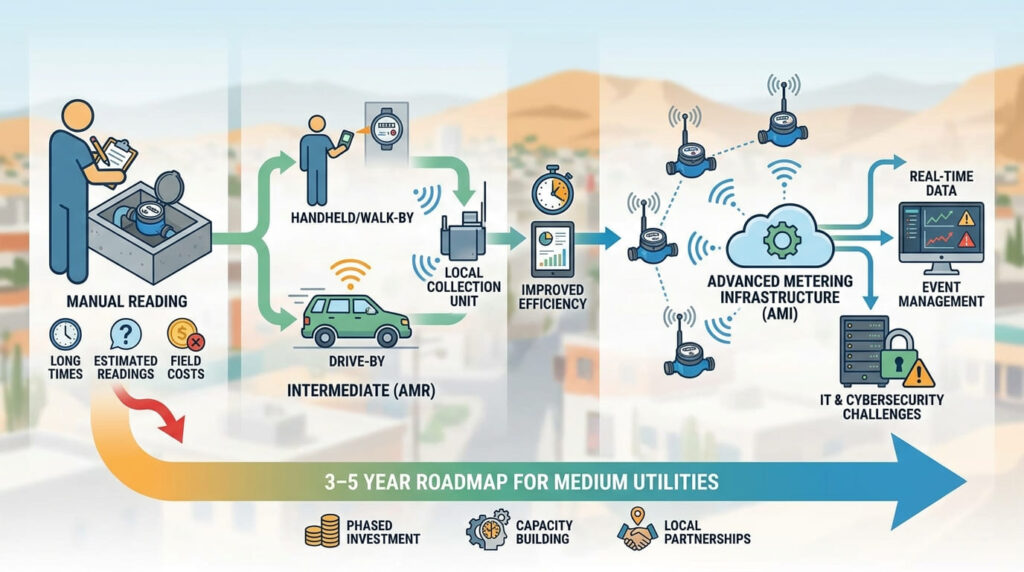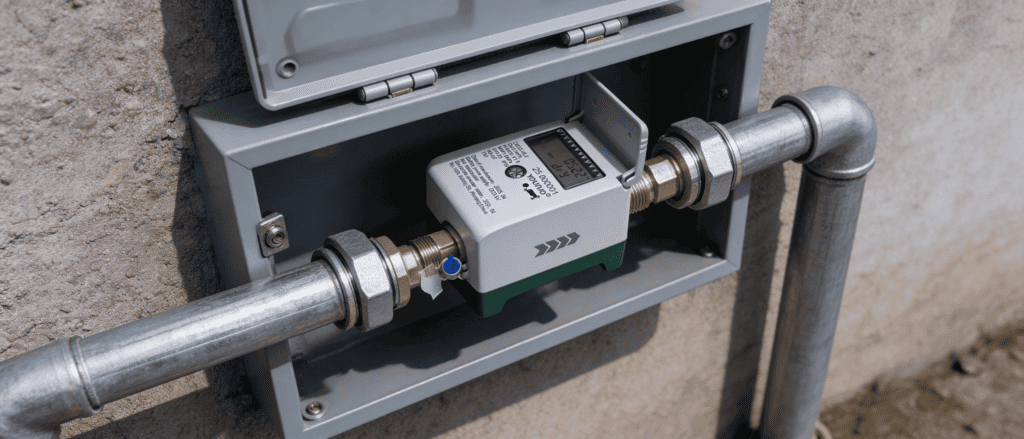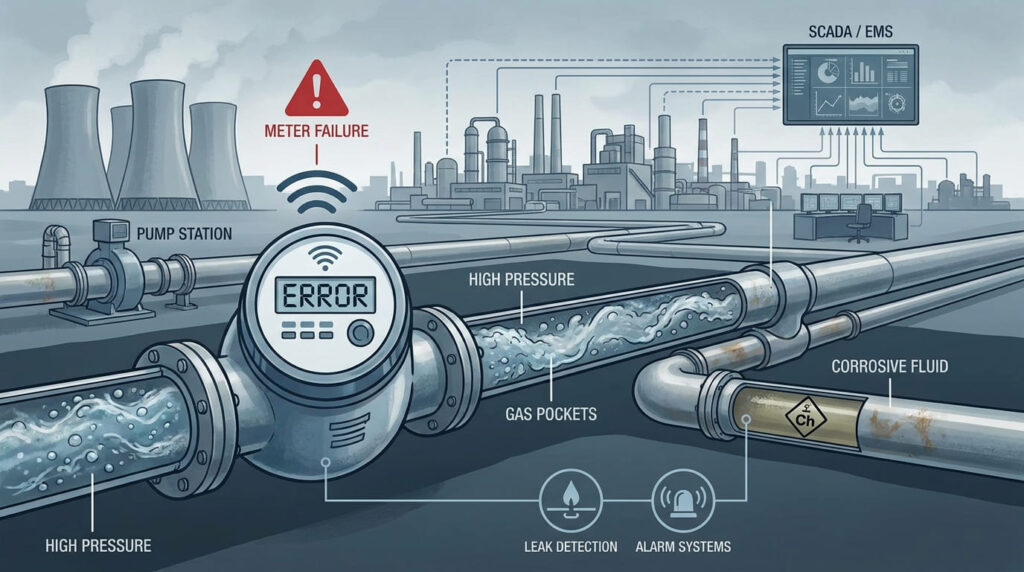




Ik gaf de meter altijd de schuld als de metingen er verkeerd uitzagen. Ik ontdekte dat het echte probleem vaak de locatie was en niet de meter zelf eronder ISO 4064 regels met betrekking tot installatie en voorwaarden.
Als ik moet kiezen tussen multi-jet en single-jet, Ik begin met het stroomprofiel, waterkwaliteit, pijp lay-out, En ISO 4064 installatie vereisten. Het juiste type heeft de juiste omstandigheden nodig om binnen MPE te blijven (Maximaal toegestane fout) grenzen.
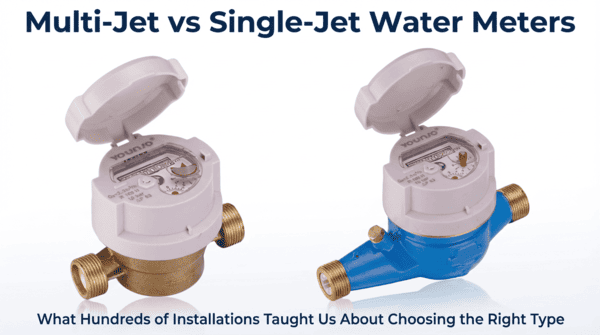
Ik heb beide typen in woningen geïnstalleerd, hotels en fabrieken. Ik heb kamers geopend, ontlucht en de druk gecontroleerd. Ik heb zand en aanslag gezien in filters na nabijgelegen leidingwerk. Ik heb geleerd dat de meeste “onnauwkeurige” klachten afkomstig zijn van genegeerde ISO 4064 installatiebehoeften en niet een defecte meter.
Hoe single-jet-watermeters werken?
Veel mensen denken dat een single-jetmeter eenvoudig en goedkoop is. Dat is waar. Het is ook gevoelig voor omstandigheden ter plaatse als de buis niet stabiel en schoon is.
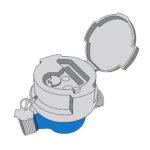
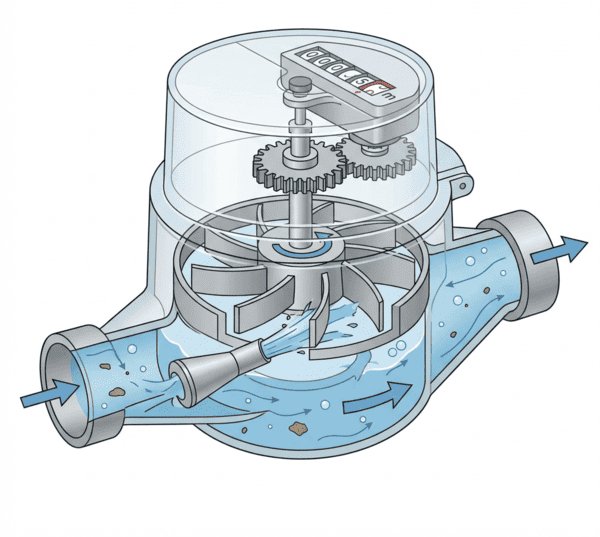
A meter met één straal gebruikt één tangentiële straal dat een waaier aandrijft. Het leest goed bij gemeenschappelijke binnenlandse stromen. Het kan klein zijn, licht, en lage kosten. Het kan last hebben van vuil, lucht of turbulentie komt de kamer binnen. Een goede installatie en schoon water zorgen ervoor dat hij jarenlang goed presteert.
 ")
")
Hoe het single-jet-principe zich gedraagt
Bij een ontwerp met één straal wordt één straal op de waaier geplaatst. Water duwt de waaier met een snelheid die verband houdt met de stroming. De kassa telt beurten. Het ontwerp is eenvoudig. Vaak is de prijs lager. De gevoeligheid kan hoog zijn in het midden van de stroming. De zwakte blijkt uit lucht, zand of kalk komt binnen. Ik heb stroomopwaarts werk zien vullen zeven en kamers met vaste stoffen, en dat verandert de meetwaarden totdat we de meter schoonmaken. Zeefjes helpen, maar goed stroomopwaarts spoelen na onderhoud helpt meer. Als de stroomopwaartse leiding bochten heeft, kleppen of een pomp in de buurt, de stroom kan worden vervormd. De meter heeft dan nodig rechte pijplengtes om de stroming te stabiliseren en voldoe aan de MPE-limieten ter plaatse, zoals de standaard vereist. Tijdens het testen, laboratoria laten lucht ontsnappen, druk controleren en andere invloeden binnen de bedrijfslimieten houden, en we moeten deze omstandigheden weerspiegelen in veldinstallaties om de nauwkeurigheid te beschermen.
| Aspect | Single-Jet-sterkte | Single-Jet-zwakte | Veldtip |
|---|---|---|---|
| Kosten | Lager | — | Gebruik voor grote implementaties |
| Stromingsgevoeligheid | Goed in de middenstroom | Zwakker bij zeer laag debiet | Controleer de vraag van het eerste kwartaal |
| Tolerantie voor vuil | Gematigd | Gevoelig voor zand/aanslag | Spoelen na leidingwerk |
| Installeer behoeften | Rechte lengtes | Lucht bloeden | Ontlucht de meter en stel deze waterpas |
Hoe Multi-Jet-watermeters werken?
Mensen kiezen voor multi-jet als ze stabiele metingen over een groter bereik willen. Het ontwerp verspreidt de stroming en vermindert de puntbelastingen op de waaier.
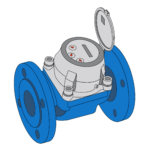
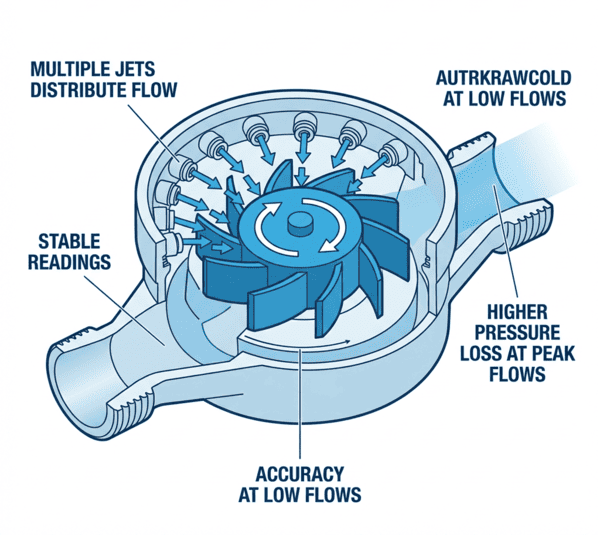
A multi-jetmeter gebruikt verschillende kleine jets die gelijkmatig op de waaier slaan. De stroomverdeling verbetert de stabiliteit en kan de impact van turbulentie verminderen. Het behoudt vaak een goede nauwkeurigheid bij lage stromen. Het kan hoger worden weergegeven drukverlies bij piekdebieten vanwege geometrie en schermen.
Hoe multijet de stroom stabiliseert
Bij een ontwerp met meerdere jets zijn er veel jets rond de waaier geplaatst. Elke jet draagt een klein momentum bij. De waaier draait op een evenwichtige manier. Deze balans verbetert de leesstabiliteit wanneer de stroomopwaartse lay-out niet ideaal is. Ik heb multijetmeters gebruikt in gebouwen met ellebogen en T-stukken in de buurt van de kamer. De rechte lengtes doen er nog steeds toe, en ISO 4064 vraagt om voldoende rechte pijp of een stroomgelijkrichter,zodat de geïnstalleerde meter voldoet aan de MPE ter plaatse. Wanneer we dit negeren, de veldnauwkeurigheid neemt af, zelfs met een multijet. Tijdens testen, we meten fouten op gedefinieerde bereiken zoals Q1, Q2 en Q3 (OIML-stroomsnelheden) terwijl wij de druk erboven houden 0.03 MPa, en we houden andere invloeden binnen de nominale omstandigheden. Ik vraag mijn teams om deze eenvoudige controles te kopiëren bij veldcontroles. Wij laten lucht ontsnappen, wij bevestigen de uitlaatdruk, en we bevestigen dat de temperatuur binnen de classificatie ligt. Deze kleine stappen weerspiegelen het laboratorium en beschermen de meting.
| Aspect | Multi-Jet-sterkte | Multi-Jet-zwakte | Veldtip |
|---|---|---|---|
| Laag nauwkeurigheid van de stroom | Vaak beter | — | Valideer Q1-patronen |
| Behandeling van turbulentie | Verbeterd | Heeft rechte lengtes nodig | Voeg indien nodig een stijltang toe |
| Drukverlies | Gematigd | Kan stijgen bij piekdebiet | Controleer ontwerpverlies |
| Tolerantie voor vuil | Betere schermen | Schermen kunnen verstopt raken | Onderhoud plannen |
ISO 4064 Vereisten die vaak worden genegeerd?
Ik zie drie veel voorkomende missers: rechte pijp, ontluchting en uitlaatdruk. Iedereen kan metingen buiten de MPE-limieten duwen.
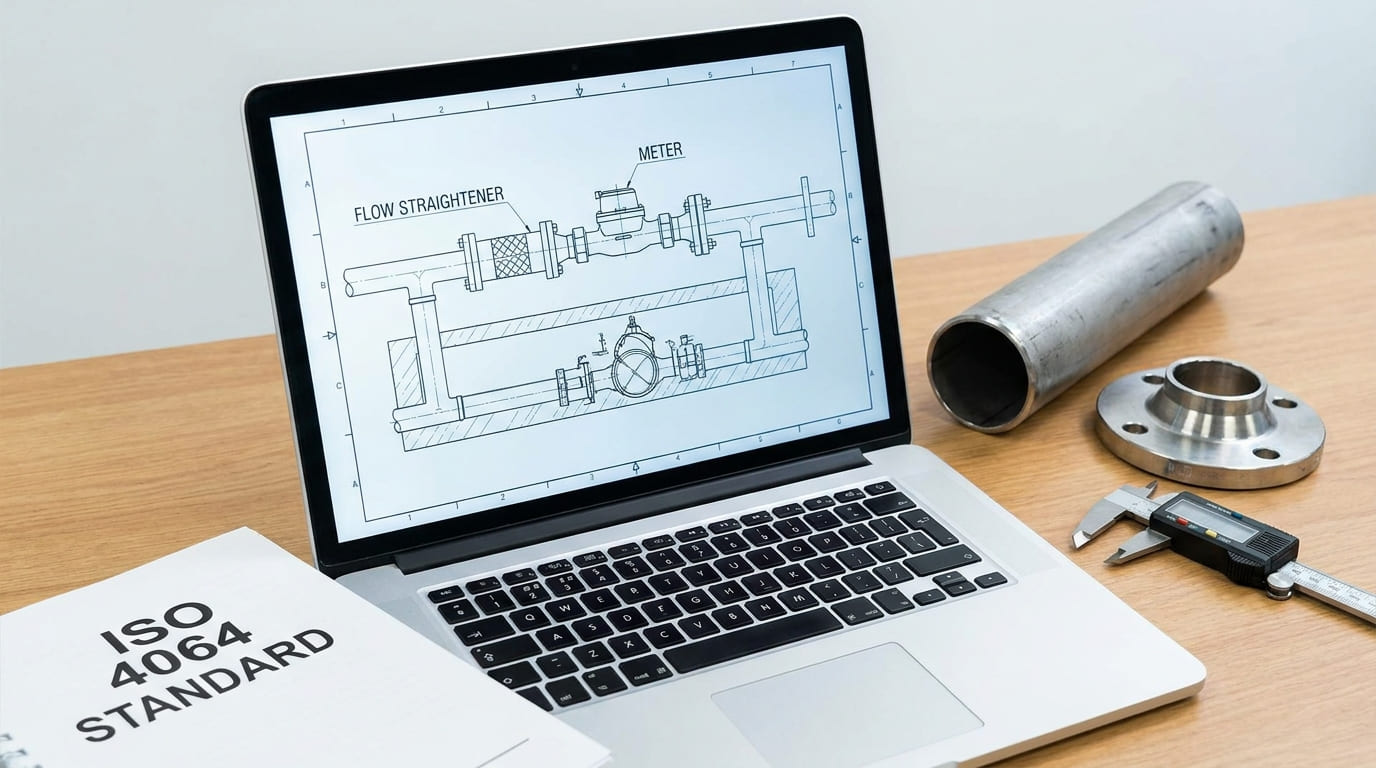
ISO 4064 vereist rechte pijplengtes of een richter wanneer stroomopwaartse of stroomafwaartse verstoringen de nauwkeurigheid beïnvloeden, dus geïnstalleerde meters voldoen aan de MPE-limieten voor hun klasse. De testregels vereisen ook het laten ontsnappen van lucht en het beheersen van trillingen, en houden uitlaatdruk hierboven 0.03 MPa met invloeden binnen nominale omstandigheden. Andere meetprincipes vereisen mogelijk ook stromingsconditionering, en de fabrikant’s installatie-instructies zijn van toepassing.
De regels die metingen terugbrengen binnen MPE
Ik gebruik ISO 4064 als mijn checklist voor het veld, omdat het eenvoudig en direct is. De norm vraagt om een rechte buis of een stroomgelijkrichter bij bochten, kleppen of pompen veroorzaken storingen, zodat de geïnstalleerde meter binnen MPE blijft. De testrichtlijnen vragen ons om lucht te laten ontsnappen en trillingen en schokken te vermijden, die valse starts of stops bij het opvangen van water voorkomt en de indicatie beschermt. De procedure stelt ook de minimale uitlaatdruk in op 0.03 MPa en repareert stroombereiken voor foutcontroles zoals Q1, Q2 en Q3, terwijl alle invloedsfactoren binnen de nominale omstandigheden moeten blijven. Als een meter een elektronische transducer gebruikt, de totalisatietest zonder stroming bevestigt dat er geen kruip is als het water statisch is. Andere meetprincipes kunnen stromingsconditionering vereisen en moeten de installatieregels van de fabrikant volgen, die op het certificaat moet staan. Wanneer we deze basisprincipes ter plaatse spiegelen, de meeste ‘onnauwkeurige’ klachten verdwijnen.
| Vereiste | Wat het controleert | Veldrisico indien genegeerd |
|---|---|---|
| Rechte pijp of stijltang | Stabiliteit van het stromingsprofiel | Bias en hoge spreiding |
| Lucht bloeden | Nauwkeurigheid starten/stoppen | Valse tellingen, kruipen |
| Uitlaatdruk ≥ 0.03 MPa | Cavitatie, luchtzakken | Onregelmatige metingen |
| Invloedslimieten aangehouden | Herhaalbaarheid | Onstabiele gegevens |
Nauwkeurigheid en drukverlies in echte installaties?
De nauwkeurigheid is afhankelijk van het stromingsprofiel, lucht, druk en vuil. Drukverlies is afhankelijk van de geometrie, schermen en vraagpieken.
ISO 4064 meet fouten bij gedefinieerde debieten en vereist een uitlaatdruk daarboven 0.03 MPa met alle invloedsfactoren binnen nominale omstandigheden, en dat moeten we in het veld weerspiegelen. Als er op een locatie bochten of pompen in de buurt van de meter zijn, rechte pijp of een stijltang is nodig om te houden geïnstalleerde indicaties binnen MPE-limieten. Luchtontluchting en trillingscontrole zijn ook van belang voor stabiele metingen.
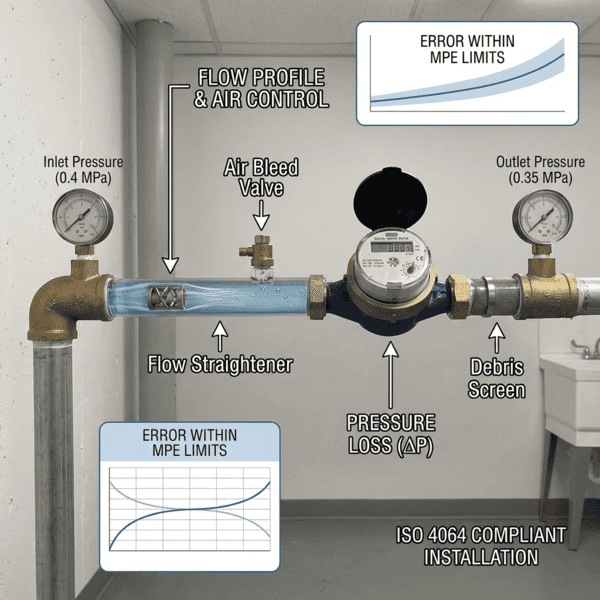
Wat de nauwkeurigheid en drukverlies ter plaatse verandert
Ik beoordeel de nauwkeurigheid op basis van hoe de site past bij een rustige laboratoriumopstelling. Het laboratorium houdt de uitlaatdruk erboven 0.03 MPa, houdt de temperatuur binnen de nominale banden, en meet fouten in Q1, Q2 en Q3 variëren terwijl alle invloeden binnen de perken blijven. Het laboratorium laat lucht ontsnappen en isoleert trillingen, wat drift bij het begin en einde van de test voorkomt. Ter plaatse, ellebogen, kleppen en T-stukken kunnen werveling of asymmetrie veroorzaken. ISO 4064 In dergelijke gevallen zijn rechte pijplengtes of een richter nodig, zodat de geïnstalleerde meter voldoet aan MPE. Een single-jet kan een lager drukverlies vertonen bij typische binnenlandse stromen vanwege een eenvoudiger traject. Een multijet kan de nauwkeurigheid beter behouden bij een laag debiet, maar kan hoger zijn drukverlies bij piekvraag vanwege meerdere jets en fijnere zeven. De juiste keuze hangt af van het vraagprofiel en het acceptabele drukverlies, niet alleen catalogusnummers.
| Factor | Nauwkeurigheidseffect | Drukverlieseffect | Wat ik controleer |
|---|---|---|---|
| Stroomopwaartse verstoringen | Turbulentie → bias | Klein tot matig | Rechte lengtes |
| Lucht in pijp | Valse tellingen | Variabel | Ontluchtingsprocedure |
| Uitlaatdruk | Cavitatie risico | Mogelijk | ≥ 0.03 MPa |
| Brokstukken | Verstopping, sleuren | Opstaan | Zeefstatus |
Op zoek naar een betrouwbare leverancier van watermeters?
YOUNIO produceert mechanische en ultrasone watermeters van DN15 tot DN500, MID-gecertificeerd en ISO-getest 4064. Gratis monsters en fabriekstestrapporten beschikbaar.
Typische gebruiksscenario's voor Single-Jet?
Single-jet is geschikt voor veel eenvoudige huishoudelijke locaties met schoon water en een stabiele stroming. Het werkt goed als de budgetten krap zijn en het onderhoud licht is.
Ik gebruik single-jet in appartementen en kleine huizen met een constante vraag en schoon aanbod. Ik vermijd het op locaties met zwaar puin of sterke stroomopwaartse verstoringen. Ik controleer de stroombereiken en drukverlieslimieten. Ik voeg een rechte pijp toe en laat lucht ontsnappen om de nauwkeurigheid te beschermen, zoals de standaard verwacht.
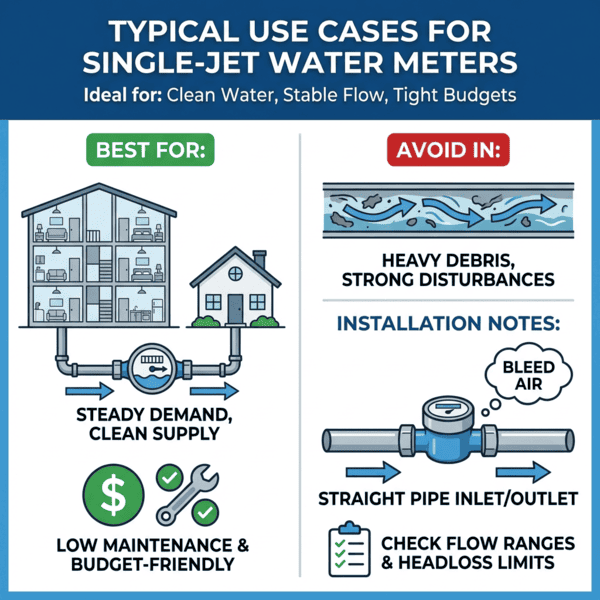
Waar singlejet in de praktijk uitblinkt
Ik geef de voorkeur aan enkelstraalmeters voor gebouwen met eenvoudige stootborden en standaardarmaturen. De stroom is matig. De pijp is recht genoeg. Het water is schoon. De installateurs kunnen een eenvoudige checklist volgen. We ontluchten na installatie. We zorgen ervoor dat we schokken of trillingen vermijden terwijl we de kleppen sluiten, wat de voorzorgsmaatregelen op de testbank weerspiegelt. Ik bevestig ook de uitlaatdruk op normale bedrijfsniveaus, en ik controleer of de vraag meestal niet onder het eerste kwartaal blijft, waardoor grenswaarden worden vermeden. Als de baan een bocht heeft direct bij de inlaat, Ik voeg een rechte pijp of een stijltang toe om aan de geïnstalleerde MPE te voldoen. Wanneer stroomopwaartse werkzaamheden plaatsvinden, Ik plan het doorspoelen omdat vaste stoffen zich na het leidingwerk in de filters verzamelen, en dat kan de waaier vertragen of stoppen. Met deze eenvoudige gewoonten, single-jet-meters geven betrouwbare metingen en houden het drukverlies op een acceptabel niveau voor woningen.
| Sitetype | Waarom Single Jet | Wat ik verifieer |
|---|---|---|
| Appartementen | Kosten en eenvoud | Rechte pijp, lucht bloeden |
| Kleine huizen | Stabiele stromen | Q1/Q3-bereiken |
| Retrofit | Gemakkelijke vervanging | Uitlaatdruk |
| Schone waterzones | Minder puinrisico | Zeefcontrole |
Typische gebruiksscenario's voor Multi-Jet?
Multijet is geschikt voor bredere stroombereiken en locaties met meer turbulentierisico. Het ondersteunt betrouwbare metingen wanneer de lay-out bezet is.
Ik gebruik multijet in gebouwen voor gemengd gebruik, hotels en gebieden met variabele stromen. Ik voeg nog steeds een rechte pijp of een stijltang toe. Ik laat lucht ontsnappen en controleer trillingen. Ik bevestig de uitlaatdruk en de werkelijke vraag tegen Q-bereiken van de testmethode.
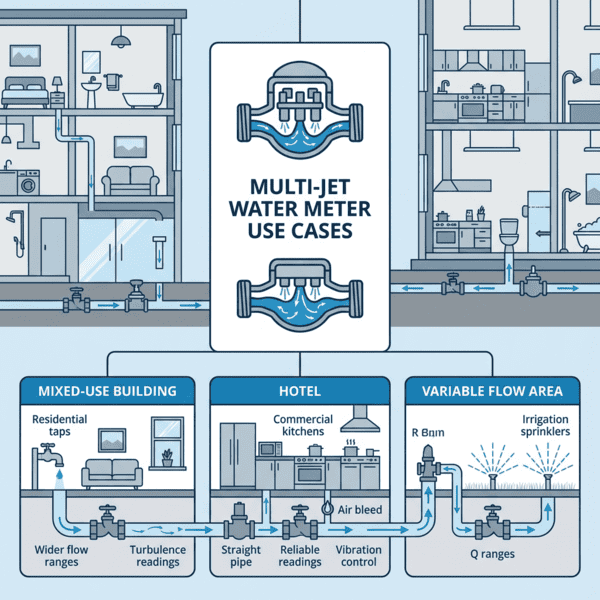
Waar multi-jet nauwkeurigheid in alle patronen garandeert
Multijetmeters helpen wanneer een laag debiet een groot deel van het dagelijks gebruik uitmaakt. Hotels en ziekenhuizen hebben vaak 's nachts last van lekkages of kleine armaturen. De multijet-waaier blijft stabiel omdat de jets de kracht gelijkmatig verdelen. Dit neemt de noodzaak van rechte buizen niet weg. ISO 4064 vraagt om rechte lengtes of een stijltang wanneer er sprake is van verstoringen, dus geïnstalleerde indicaties blijven binnen MPE. Ik controleer de uitlaatdruk en verifieer de teststroombereiken om de vraag ter plaatse af te stemmen op de Q1, Q2- en Q3-banden gebruikt bij foutcontroles in het laboratorium. Ik laat ook lucht ontsnappen en voorkom schokken tijdens de installatie, die de richtlijnen van de testbank volgt. Wanneer het stroomopwaartse werk eindigt, Ik spoel leidingen door om vuil te verwijderen, omdat vaste stoffen zich binnen enkele meters ophopen na leidingwerk, en dat kan klachten opleveren als het niet wordt schoongemaakt. Met deze gewoonten, multi-jetmeters leveren stabiele gegevens die aansluiten bij de factureringsbehoeften.
| Sitetype | Waarom Multi-Jet | Wat ik verifieer |
|---|---|---|
| Hotels | Lage stromingsgevoeligheid | Nacht stroompatroon |
| Gemengd gebruik | Tolerantie voor turbulentie | Rechte lengtes |
| Ziekenhuizen | Stabiele lage stromen | Q1-nauwkeurigheid |
| Drukke spruitstukken | Gedistribueerde jets | Stijltang optie |
Veel voorkomende installatiefouten die we in het veld tegenkomen?
Ik zie dezelfde fouten bij herhaalopdrachten. Elke fout kan duidelijk worden opgelost als we de standaard- en basissitecontroles respecteren.
De eerste fout is dat er geen rechte pijp is waar bochten of kleppen voorkomen. ISO 4064 zegt dat de geïnstalleerde meter rechte lengtes of een richter moet hebben, zodat deze voldoet aan MPE. De tweede fout is dat de lucht niet wegstroomt, waarvoor testprocedures waarschuwen om valse tellingen en schokeffecten te voorkomen. De derde fout is het negeren van de uitlaatdruk- en invloedslimieten die worden gebruikt bij foutcontroles in het laboratorium.
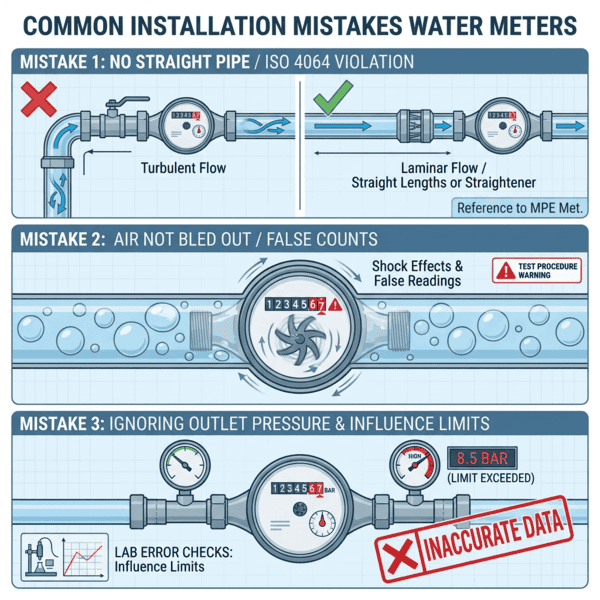
De recidivisten en hoe we deze oplossen
Ik houd een eenvoudige lijst bij. Als de meter vlak na een bocht of klep zit, Ik voeg een rechte pijp toe. De norm is duidelijk dat stroomopwaartse en stroomafwaartse verstoringen rechte stukken of een richter vereisen, zodat de geïnstalleerde indicaties voldoen aan MPE. Als de waarde er bij het opstarten hoog uitziet, Ik laat lucht ontsnappen. De ISO-procedure herinnert ons eraan lucht te zuiveren en trillingen en schokken te vermijden, wat de tellingen aan het begin en einde van de test kan vertekenen. Als de site onregelmatige metingen weergeeft, Ik controleer de uitlaatdruk en bevestig dat de temperatuur en andere invloeden binnen de bedrijfslimieten liggen, zoals in de laboratoriummethode die de minimale uitlaatdruk en stroomfoutbereiken instelt. Na stroomopwaartse werkzaamheden, Ik spoel lijnen door omdat vaste stoffen zich in de meter verzamelen. Ik heb meters geopend en na leidingwerk zand en kalk aangetroffen. Deze oplossingen zijn eenvoudig. Ze werken.
| Fout | Symptoom | Repareren |
|---|---|---|
| Geen rechte pijp | Vooroordeel, verstrooien | Voeg een rechte lengte of stijltang toe |
| Lucht is binnen gebleven | Kruipen, valse tellingen | Lucht laten ontsnappen, langzaam bijvullen |
| Lage uitlaatdruk | Cavitatie, lawaai | Stabiliseer druk ≥ 0.03 MPa |
| Puin na werkzaamheden | Verstopping | Spoelen, schone zeef |
Hoe u met vertrouwen het juiste type kiest?
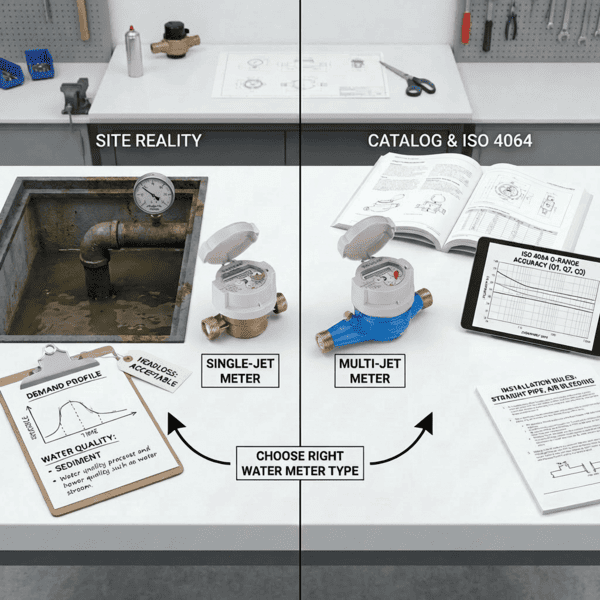
Ik kies eerst op siterealiteit en vervolgens op catalogus. Ik volg de ISO-regels bij de installatie, testbereiken, en invloed uitoefenen op de controles.
Ik begin met vraagprofielen en acceptabel hoofdverlies. Ik controleer de waterkwaliteit en de leidingindeling. Ik koppel single-jet of multi-jet aan deze feiten. Ik ben van plan om een rechte pijp te nemen, lucht bloeden, en uitlaatdrukcontroles, omdat deze erin gebakken zijn ISO 4064 test- en installatieregels. Ik volg de installatie-instructies van de maker voor speciale principes, indien gebruikt. Ik bevestig het laboratoriumtestprogramma en de referenties, zodat het team de nauwkeurigheid van het Q-bereik begrijpt (Q1, Vraag 2, Q3) en documentbehoeften.
Een simpele, herhaalbaar selectiepad
Voor elk project gebruik ik een kort pad. Ik verzamel echte stroomgegevens van een pilot of facturen uit het verleden. Ik heb een acceptabel hoofdverlies ingesteld. Ik beoordeel de waterkwaliteit en de werkzaamheden stroomopwaarts. Als de site schoon en eenvoudig is, single-jet kan het meest efficiënt zijn. Als een laag debiet gebruikelijk is of het turbulentierisico groot is, Ik neig naar multijet. Vervolgens vergrendel ik de basisprincipes van de installatie. ISO 4064 vereist een rechte pijp of een richter als er sprake is van storingen, dus geïnstalleerde metingen voldoen aan MPE. De laboratoriummethode vereist het laten ontsnappen van lucht en het vermijden van schokken en trillingen, dus ik bouw die stappen in mijn veldchecklist. Ik verifieer de uitlaatdruk en houd de invloedsfactoren binnen de meterwaarden, wat de foutcontroles van de teststroom bij Q1 weerspiegelt, Q2 en Q3. Als het project speciale sensoren gebruikt, Ik volg de installatieregels van de fabrikant en eventuele stromingsconditioneringsbehoeften. Ik stem het testprogramma en de documenten ook af op de referenties van de standaard ter verificatie, zodat iedereen de nauwkeurigheidsbasis kent.
| Stap | Waarom het ertoe doet | Hulpmiddel |
|---|---|---|
| Vraagprofiel | Overeenkomen met Q-bereiken | Pilot loggen |
| Hoofdverliesdoelstelling | Comfort en hydrauliek | Ontwerplimieten |
| Waterkwaliteit | Risico van puin | Spoelplan |
| Indeling van de pijp | Stabiliteit van de stroom | Rechte pijp |
| Lucht en druk | Opstartstabiliteit | Bloeden en peilen |
| Normen in kaart brengen | MPE-verzekering | ISO 4064 controlelijst |
Conclusie
De meeste “onnauwkeurige” klachten komen van installatieomstandigheden die ISO negeren 4064, niet van het metertype. Kies op siterealiteit en volg de eenvoudige regels.
Op zoek naar een betrouwbare leverancier van watermeters?
YOUNIO produceert mechanische en ultrasone watermeters van DN15 tot DN500, MID-gecertificeerd en ISO-getest 4064. Gratis monsters en fabriekstestrapporten beschikbaar.