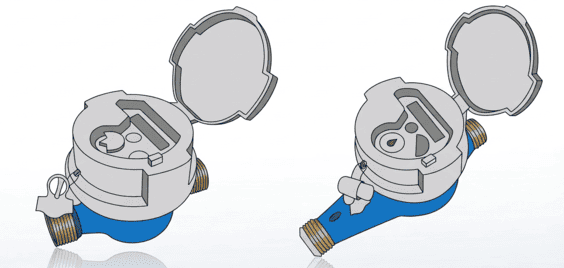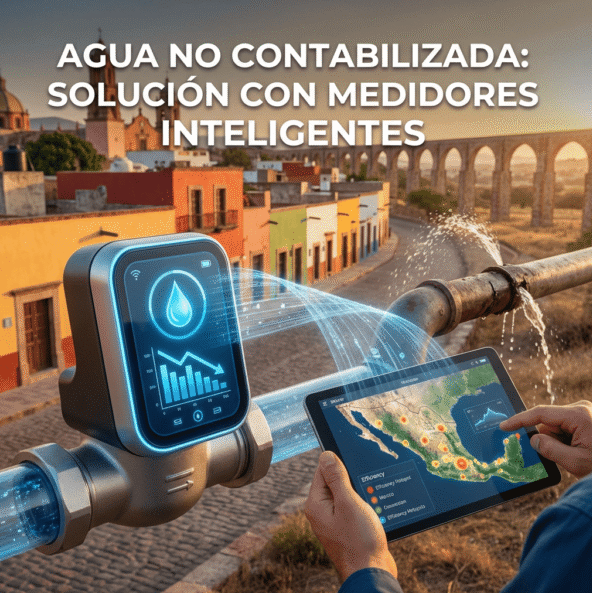

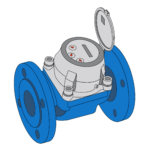

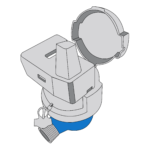

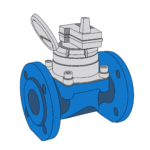

Фермеры не теряют сна 0.5% точность. Они теряют сон, когда метр захлебывается песком, перестает вращаться, или блокирует всю ирригационную линию перед сбором урожая.
Я вижу, что первая жалоба фермеров на счетчики оросительной воды в сельском хозяйстве редко связана с точностью.. Это песок, ил, засорение, и жесткий уход. Хороший план полива должен соответствовать ферме, не лаборатория.
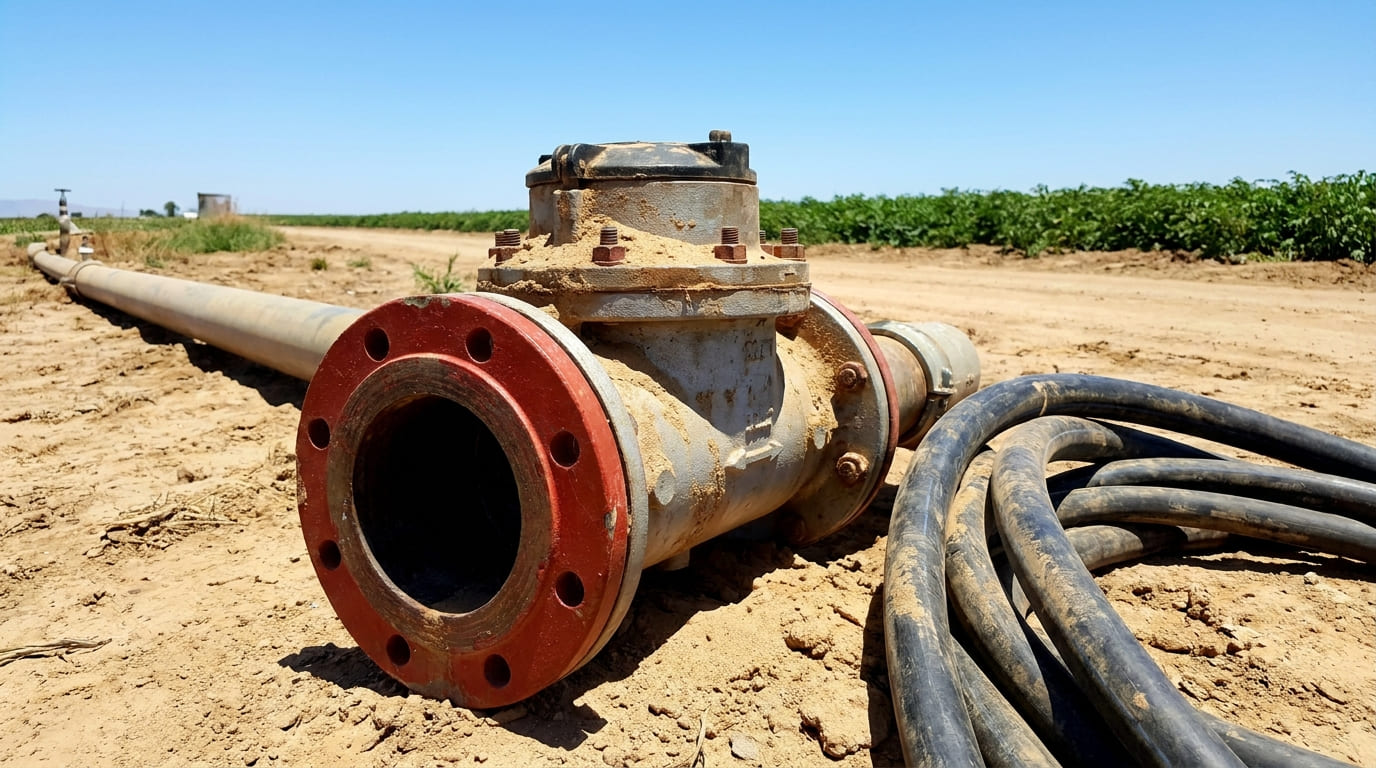
работаю с коммунальными службами, дистрибьюторы, и менеджеры ферм во многих странах. Я замечаю ту же закономерность. Счетчик, который отлично выглядит при стендовых испытаниях в чистой трубе, может быстро выйти из строя на пыльной насосной станции с речной водой и долгим течением воды.. В этом посте, Я делюсь тем, что на самом деле вижу на фермах., ошибки, с которыми я постоянно сталкиваюсь, и простые правила, которые я даю своим клиентам.
Почему сегодня измерения ирригации имеют большее значение?
Вода больше не является бесплатным ресурсом для большинства ферм. Я вижу давление со стороны регуляторов, рост затрат на перекачку, и ужесточение квот на воду во многих регионах.
Я использую ирригационные счетчики, чтобы превращать воду в данные. С данными о потоке, Я могу выставлять честные счета, устанавливать квоты, найти утечки, и сравнить поля. Без данных, каждое решение — это предположение, и каждый спор становится эмоциональным.
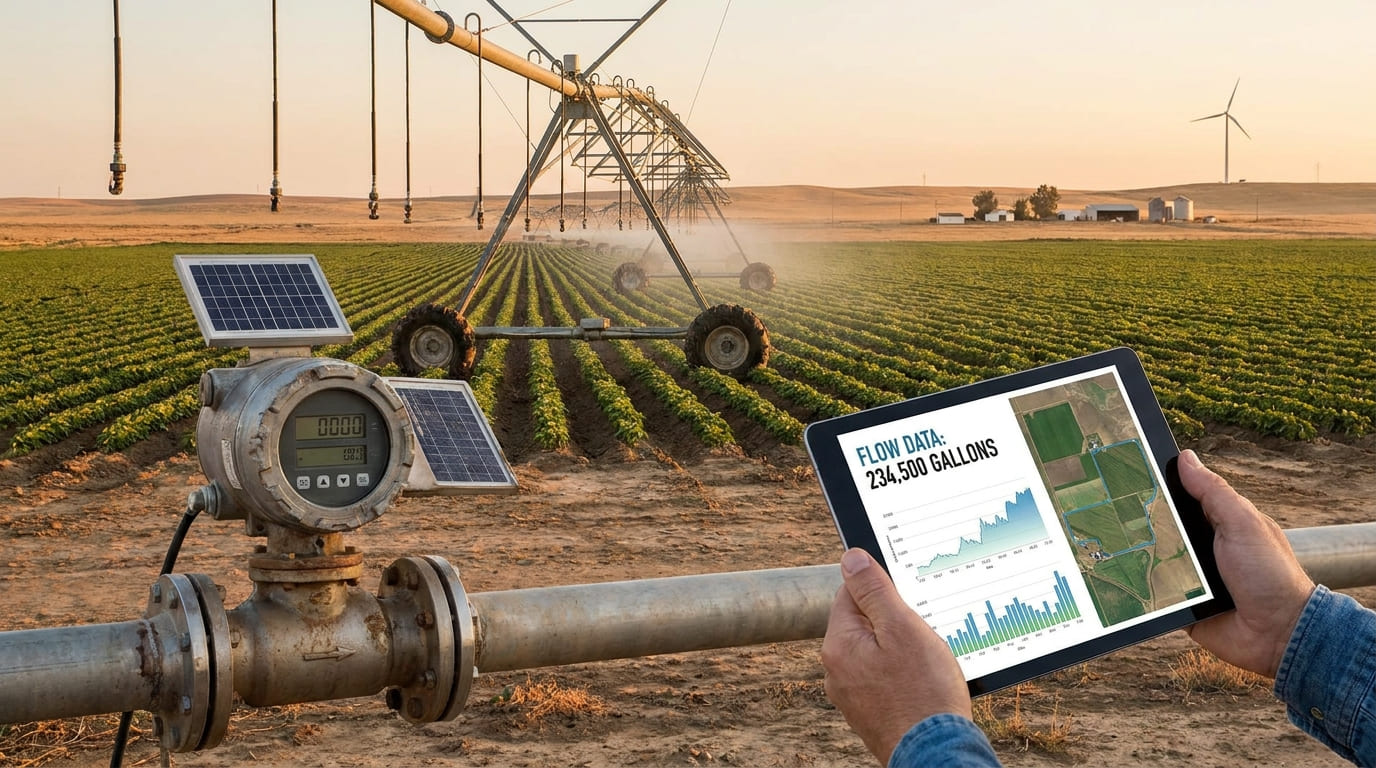
Что меняется, когда ферма начинает проводить измерения
Я заметил три явных изменения после того, как ферма установила правильные счетчики.. Первый, время работы насоса становится видимым. Второй, события утечки обнаруживаются раньше. Третий, споры между пользователями на одном канале быстро прекращаются. Интеллектуальные счетчики помогают, поскольку они могут активно сообщать об аномальной информации из сети трубопроводов через систему беспроводного мониторинга., что снижает необходимость ежедневных ручных проверок. A smart ультразвуковой meter can also detect long running water as a leak and long large flow as a possible pipe burst, с порогами потока и времени, установленными оператором. Для руководителя фермы, эти сигналы тревоги могут означать разницу между небольшим ремонтом и затопленным полем.. Я также вижу лучшее планирование, потому что совокупный поток, мгновенный расход, рабочее время, и дата видны в меню счетчика.
| Выгода | Что я вижу на фермах | Источник данных на счетчике |
|---|---|---|
| Честный биллинг | Меньше споров пользователей | Совокупный поток (м³) |
| Обнаружение утечек | Более быстрый ремонт | Сигнализация длинного потока |
| Предупреждение о взрыве | Меньше повреждений в поле | Сигнализация большого расхода |
| Планирование | Лучшее планирование помпы | Рабочее время (час) |
Типичные схемы ирригационной системы и расположение счетчиков?
Оросительная сеть – это не городской водопровод. Я вижу открытые каналы, насосные станции, фильтры, основные линии, вспомогательная сеть, и боковые отводы капельного или разбрызгивателя.
Я устанавливаю счетчики полива там, где поток стабильный., труба полна, и воздух не может задерживаться внутри. Плохая позиция даст случайные показания., даже если глюкометр идеален в лаборатории.
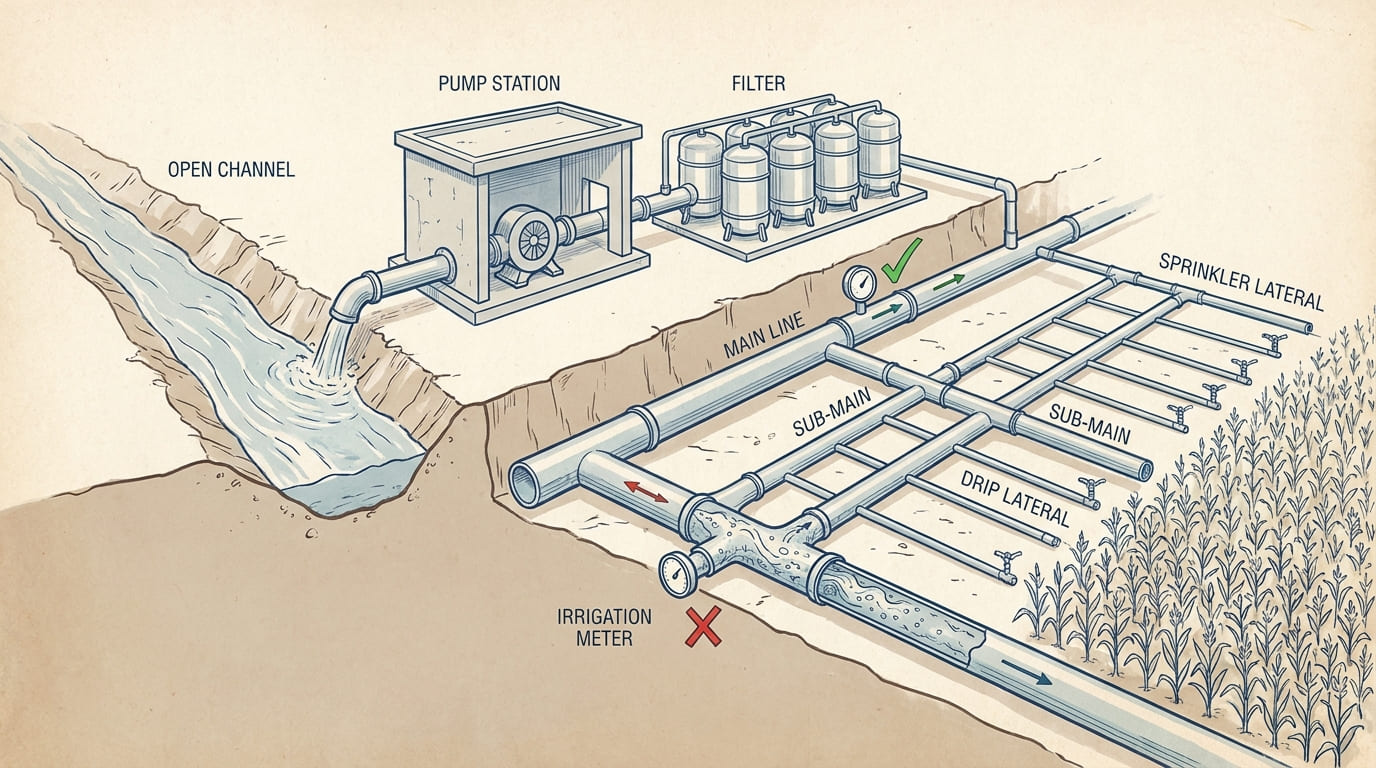
Куда я ставлю счетчик и почему
Я следую простому правилу. Счетчик должен находиться в полной трубе со стабильным расходом.. Направляющая ультразвукового счетчика прозрачна.: счетчик следует устанавливать в вертикальном трубопроводе для восходящего или наклонно-восходящего потока., за которым следует горизонтальный трубопровод, и мне следует избегать нисходящего потока, чтобы предотвратить образование воздушных карманов.. Я также избегаю самой высокой точки конвейера., потому что там собираются пузырьки и вызывают аномальные измерения. На настоящей ферме, это значит я не ставлю счетчик сразу после выхода насоса, не на вершине холма, и не только после резкого поворота. Я также держу установку в порядке: концентрическое выравнивание между прибором и трубопроводом, с затяжкой резьбы подходящим ключом. Установка должна соответствовать инженерному проекту объекта., и изменения без разрешения инженера не допускаются.
| Точка макета | Хорошая практика | Распространенная плохая практика |
|---|---|---|
| После насоса | Leave прямая труба, затем метр | Счетчик прямо на выходе из насоса |
| вершина холма | Избегать | Метр в самой высокой точке |
| Вертикальный поток | Предпочтителен восходящий поток | Нисходящий поток с воздушными карманами |
| Изгибы | Прямые участки до/после | Метр сразу после поворота |
Песок, Ил и частицы: Что они делают со счетчиками?
Речная вода, колодезная вода, и пластовые воды несут песок и ил. Я считаю это врагом номер один счетчиков орошения на фермах..
Я рассматриваю частицы как основной входной параметр для ирригационного счетчика.. Фильтры из песочных блоков, изнашивает механические детали, и нарушает путь сигнала. Предварительная фильтрация и правильный тип расходомера имеют большее значение, чем небольшой выигрыш в классе точности..
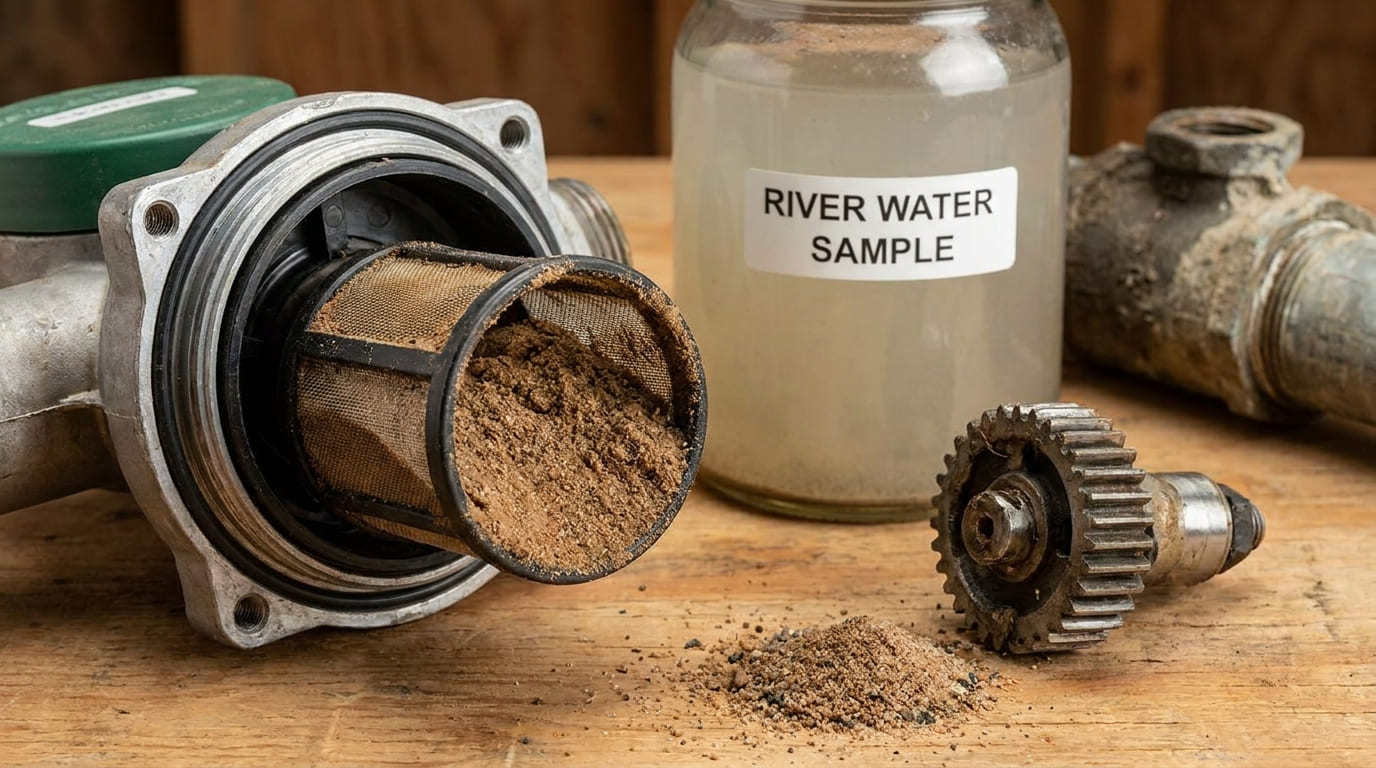
Как частицы ломают или обманывают измерительный прибор
Я разделил повреждения на две группы. Первый – механический.. Песок шлифует подшипники, заклинивает рабочие колеса, и носит измерительную камеру. Второе — помехи измерения. Даже немеханический интеллектуальный счетчик может показывать странные данные, если частицы и воздух влияют на состояние трубы.. В инструкции к ультразвуковому счетчику перечислено несколько причин ненормального или случайного биения показаний счетчика холодной воды.: неправильное положение установки, установка на нижнем уровне воды, слишком короткие передние и задние прямые участки, большой изгиб, или большой диаметр трубы перед счетчиком. На линии фермерского насоса, все четыре состояния часто появляются вместе. Я также смотрю на случай без воды. Когда нет воды в трубопроводе и нет сигнала на датчике, система сообщает и сохраняет информацию об ошибках и аварийных сигналах, что помогает мне ловить события сухого хода во время запуска орошения.
| Риск | Mechanical meter impact | Умный ультразвуковой измеритель воздействия |
|---|---|---|
| Песок | Носить, варенье | Помехи сигнала, если труба не заполнена |
| Ил | Шкала, медленный ответ | Датчик засоряется со временем |
| Воздушные карманы | Неправильное чтение | Случайные данные |
| Сухой пробег | Трудно обнаружить | Автомобильная сигнализация |
Ищем надежного поставщика счетчиков воды?
YOUNIO производит механические и ультразвуковые счетчики воды от DN15 до DN500., Сертифицирован MID и протестирован по стандарту ISO 4064. Бесплатные образцы и отчеты о заводских испытаниях доступны квалифицированным покупателям..
Распространенные ошибки при установке и эксплуатации на фермах?
Большинство жалоб на ферму, которые я получаю, не запускаются со счетчиком.. Они начинаются с установки и привычек повседневной эксплуатации, связанных с ней..
Я вижу одни и те же ошибки снова и снова: неправильное направление потока, отсутствуют прямые участки, неправильное хранение, игнорируются сигналы о низком заряде батареи, и полевой персонал меняет настройку, не сообщая об этом инженеру. Each one creates fake "meter failures."
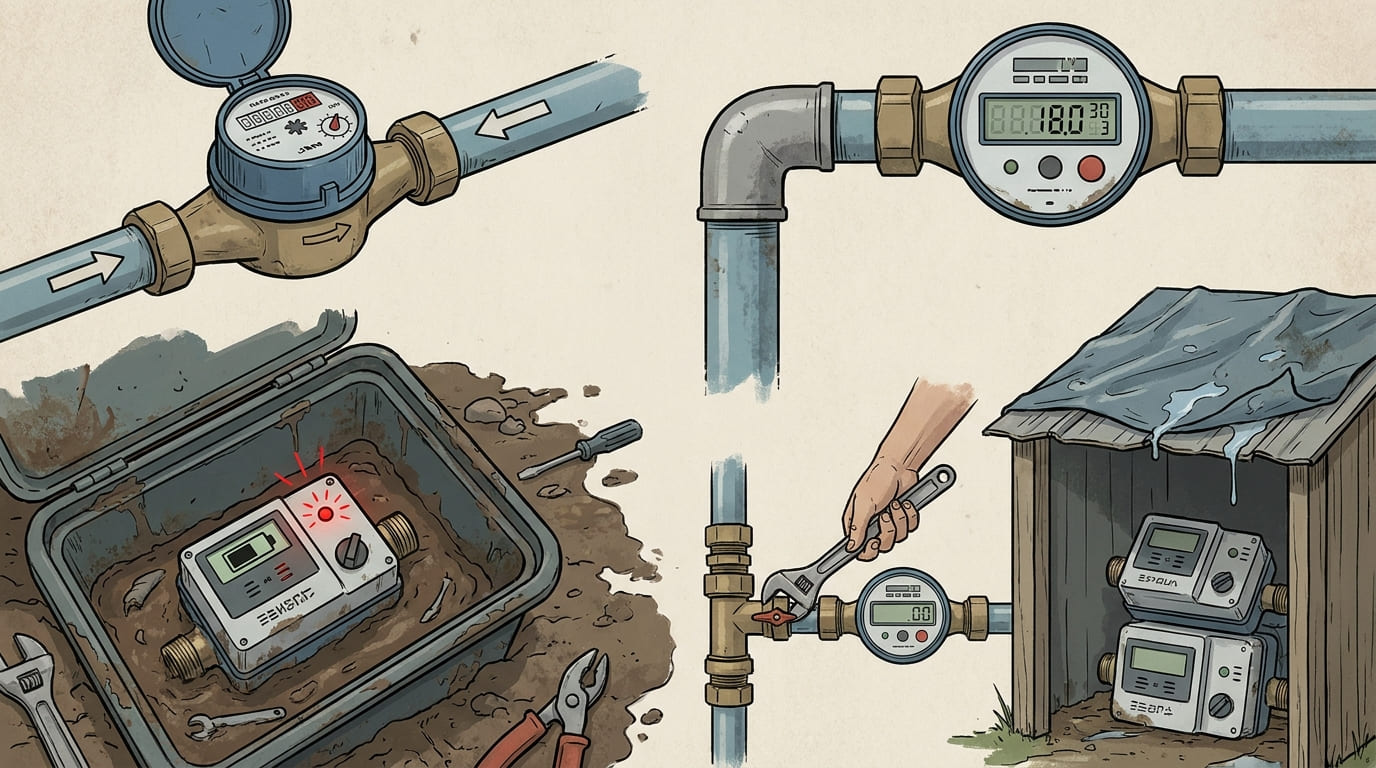
Ошибки, которые я встречаю на реальных фермах
Я всегда начинаю с проверки основ. Если счетчик показывает отрицательный результат, руководство по устранению неполадок является прямым: проверьте, не изменилось ли направление потока, а если нет, немедленно свяжитесь с поставщиком. Я часто вижу обратную установку на фермах., потому что расположение насосов меняется в зависимости от сезона. Встречаю и случайные данные, вызванные установкой при пониженном уровне воды или коротких прямых участках перед счетчиком.. Другой распространенный случай — низкий заряд батареи., который следует заменить как можно скорее после появления значка низкого заряда батареи.. Для хранения, многие фермы держат счетчики в сарае с высокой температурой или агрессивными химикатами.. Правило ясно: оригинальная упаковка, температура окружающей среды 5–40°C, воздух без агрессивных газов, и штабелирование не более пяти коробок в высоту. Я также настаиваю на том, что установка должна соответствовать профессиональному инженерному проекту., без изменений без разрешения инженера.
| Ошибка | Эффект | Правильное действие |
|---|---|---|
| Обратный поток | Негативное чтение | Сначала проверьте направление |
| Короткий прямой участок | Случайные данные | Перепроектировать расположение труб |
| Метр в самой высокой точке | Воздушные карманы | Перейти в стабильный раздел |
| Игнорированный сигнал батареи | Потеря данных | Замените батарею заранее |
| Неправильное хранение | Поврежденные счетчики | Следуйте правилу 5–40°C. |
Тематические исследования: Как учет изменил поведение ферм?
Цифры меняют поведение быстрее, чем разговоры. Я видел, как фермеры часами спорили, затем примите факты, когда счетчик покажет реальный расход.
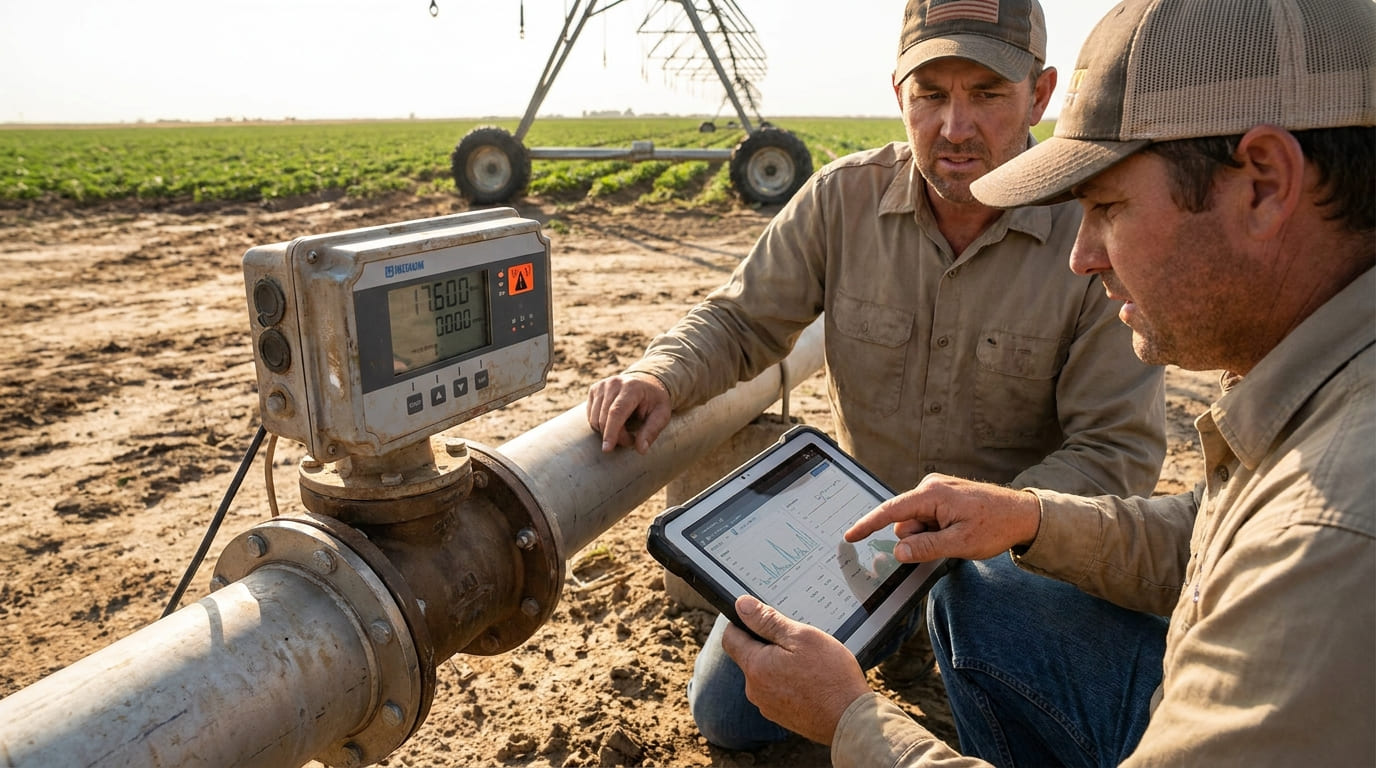
Я использую реальные примеры, чтобы показать, как счетчики орошения меняют привычки фермеров.. С четкими данными о расходе и историей сигналов тревоги, фермы сокращают чрезмерный полив, ловить утечки быстрее, и лучше планируйте время работы насоса.
Что я наблюдаю после развертывания
Я описываю типичные шаблоны, которые вижу в проектах.. В одном шаблоне, a farm used to run pumps "by feel." После установки умных счетчиков, менеджеры могли читать мгновенный поток, совокупный поток, рабочее время, и дату прямо из меню глюкометра с помощью магнитного стержня. Время работы насоса сократилось, потому что команда наконец увидела реальную продолжительность работы. Во втором шаблоне, утечка в заглубленной подводящей магистрали продолжалась несколько недель. После обновления, умный счетчик показал, что вода течет в течение длительного времени, такой как 24 часы, и система активно сообщила об ошибке и подала сигнал тревоги. Ферма нашла утечку за один день. В третьем шаблоне, внезапный взрыв в магистрали вызвал сигнал тревоги о большом расходе, и система сохранила и сообщила об ошибке. Для удаленных ферм, интеграция с беспроводным сборщиком данных GSM сформировала систему беспроводного мониторинга и позволила сэкономить множество посещений объекта..
| Перед измерением | После измерения | Используемая функция счетчика |
|---|---|---|
| Насос работает на ощупь | Насос работает по графику | Рабочее время (час) |
| Утечки обнаружены поздно | Утечки нашли быстро | Сигнализация длинного потока |
| Нет предупреждения о взрыве | Пакетная сигнализация | Сигнализация большого расхода |
| Посещения сайта вручную | Удаленный мониторинг | Беспроводная система GSM |
Выбор типов счетчиков для различных систем орошения?
Один тип счетчика не может охватить каждую ферму. Я сопоставляю счетчик с качеством воды, размер трубы, диапазон расхода, и бюджет.
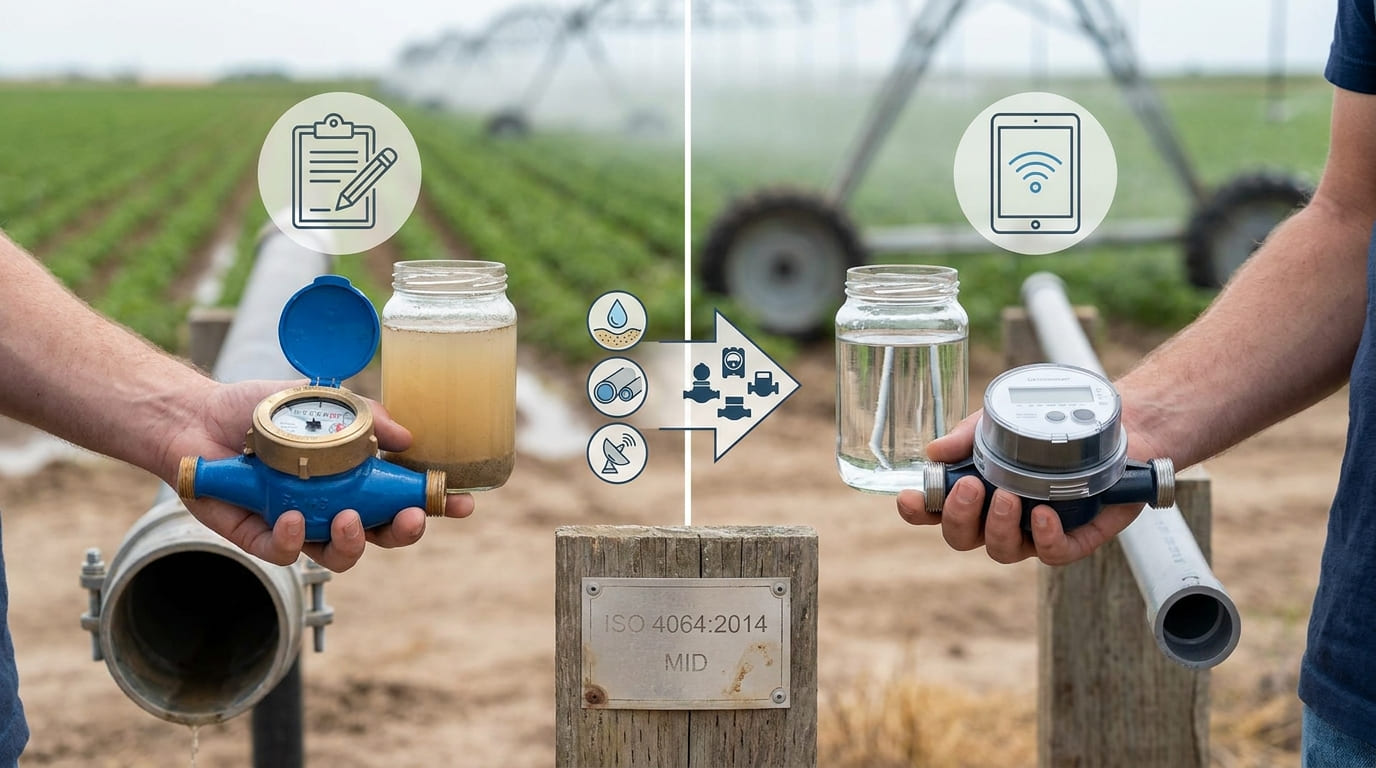
Я выбираю типы счетчиков по трем входам: качество воды (хорошо очистить против. песчаная река), размер трубы и диапазон расхода, и потребность в данных (местное чтение против. удаленный мониторинг). Выбор также должен соответствовать таким стандартам, как Iso 4064:2014 и СРЕДНИЙ.
Как я сопоставляю счетчик с настройкой
Я исхожу из качества воды. Для чистой воды, многие типы счетчиков работают. Для песчаной или илистой воды, Я предпочитаю конструкции счетчиков с меньшим количеством движущихся частей и хорошей устойчивостью к частицам., плюс соответствующий фильтр на входе. Я также проверяю стандарты. The ultrasonic meters I work with are designed around Iso 4064:2014, МОЗМ Р49-2013, СРЕДНИЙ, и китайский ГБ/Т 778.1/2/3-2007 для измерения расхода в закрытых заполненных трубопроводах, требования к установке, и методы испытаний. Эти стандарты дают мне общий язык с тендерными комитетами и лабораториями.. Для удаленных ферм, Я предлагаю умные варианты. Интеллектуальный ультразвуковой счетчик может подключаться к беспроводному сборщику данных GSM и формировать систему беспроводного мониторинга., поэтому об аномальных сетевых событиях активно сообщается. Версия LoRa может подключаться к концентратору и обслуживать большие жилые или фермерские помещения без тяжелой проводки..
| Настраивать | Приоритет | Вариант связи |
|---|---|---|
| Чистая колодезная вода, маленькая ферма | Простой, бюджетный | Местное чтение |
| Песчаная речная вода | Допуск частиц + фильтр | Местный или Лора |
| Большая удаленная ферма | Удаленный мониторинг | GSM беспроводной |
| Проект районного масштаба | Соответствие стандартам | Iso 4064 / MID-совместимый |
Простые процедуры технического обслуживания для фермеров?
Сложная инструкция не поможет занятому фермеру. Я использую короткий, повторяемые процедуры, которые полевой персонал может выполнять без специальной подготовки.
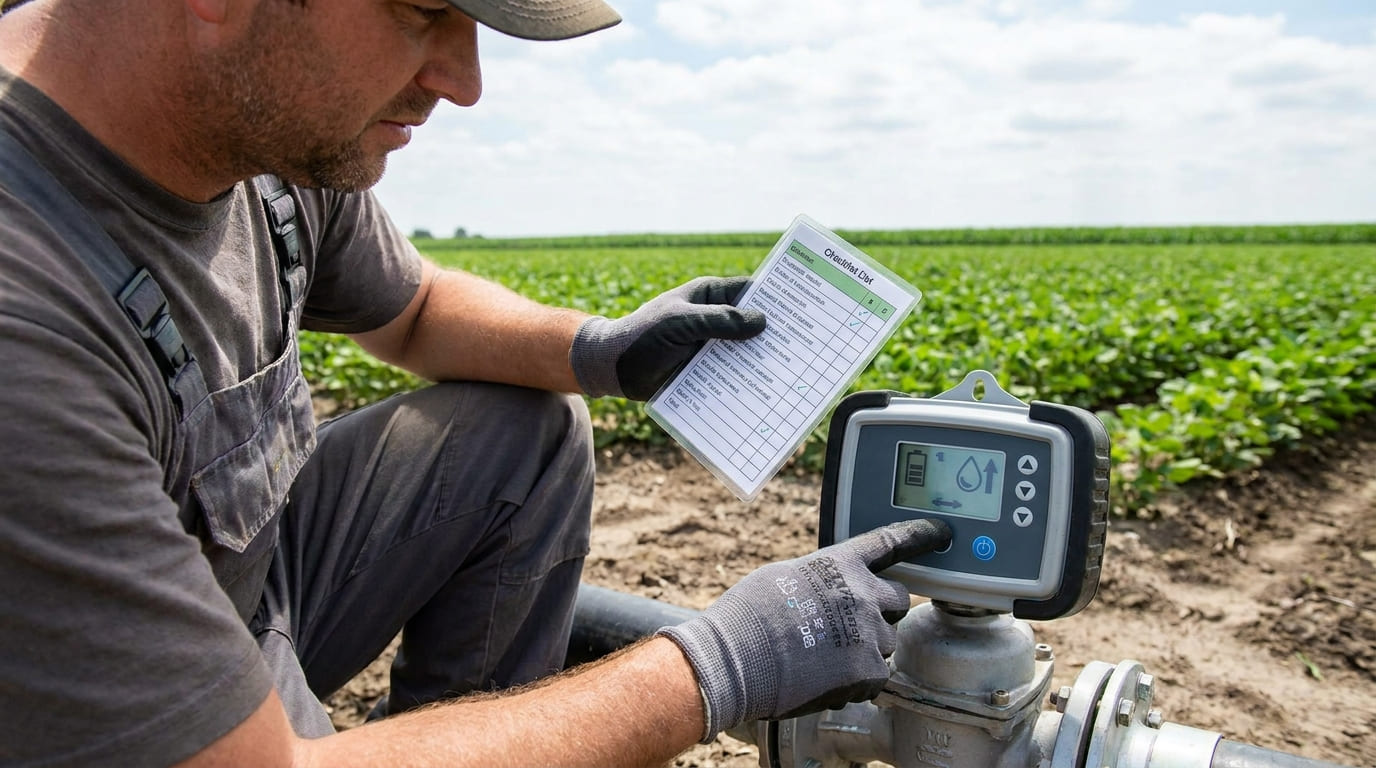
Я даю фермам короткую процедуру обслуживания: проверить значок батареи, проверить направление потока, проверить наполненность трубы, просмотреть сигналы тревоги, и обеспечьте условия хранения. Эти пять шагов позволяют заранее выявить большинство реальных сбоев..
Рутина, которую я рекомендую
Я намеренно делаю распорядок простым. Первый, Я прошу персонал еженедельно читать меню счетчика с помощью магнитного стержня и проверять мгновенный расход., совокупный поток, рабочее время, и дата. Второй, Я прошу их проверить значок разряженной батареи и заменить батарею, как только он появится.. Третий, Я прошу их следить за отрицательными показаниями и сначала проверять направление потока, прежде чем звонить в службу поддержки.. Четвертый, Я прошу их немедленно сообщать о сигналах тревоги при большом или большом расходе., потому что это встроенные сигналы утечки и всплеска. Пятый, Прошу хранить запасные счетчики в оригинальной упаковке при температуре 5–40°C и вдали от агрессивных газов., при штабелировании не более пяти ящиков. Для интеллектуальных счетчиков NB-IoT, инфракрасный пишущий пишущий компьютер может проводить диагностику на месте, не влияя на срок службы батареи, что упрощает проверку на местах. Также напоминаю хозяйствам не демонтировать счетчик с расходом, но без сигнала температуры.; вместо этого им следует связаться с поставщиком.
| Обычный шаг | Частота | Что я ищу |
|---|---|---|
| Чтение меню | Еженедельно | Расход и время работы |
| Проверка батареи | Еженедельно | Значок низкого заряда батареи |
| Проверка направления | При каждом будильнике | Негативное чтение |
| Обзор сигналов тревоги | Ежедневно | Утечка / пакетные сигналы |
| Проверка хранилища | Ежемесячно | 5–40°С, сухой, сложены ≤5 |
Заключение
Для ферм, настоящая проблема счетчика полива — не в точности. Это песок, установка, и привычки — и простые процедуры плюс правильный тип счетчика решают большую часть проблем..
Ищем надежного поставщика счетчиков воды?
YOUNIO производит механические и ультразвуковые счетчики воды от DN15 до DN500., Сертифицирован MID и протестирован по стандарту ISO 4064. Бесплатные образцы и отчеты о заводских испытаниях доступны квалифицированным покупателям..