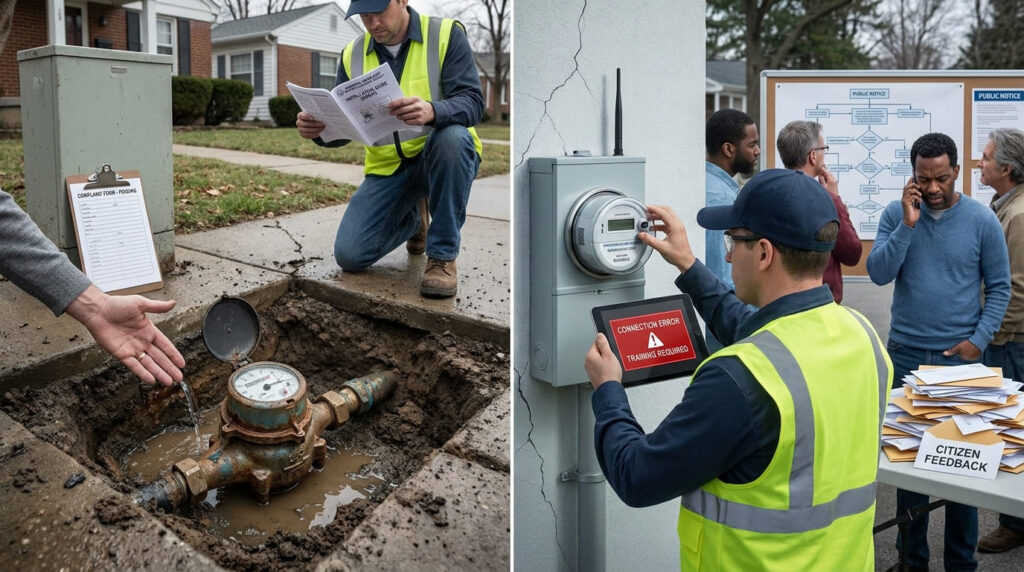
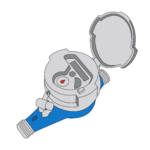
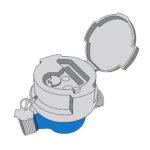

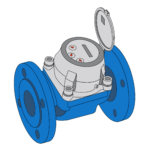

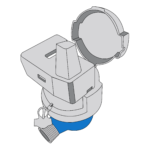


Счетчики воды выглядят просто, но я видел, как небольшие ошибки при выборе приводили к спорам по поводу счетов, сомнения по поводу утечки, и сбои при установке.
Я рассматриваю водомер как измерительное устройство, которое фиксирует, сколько воды проходит через трубу.. Это помогает пользователям платить справедливо, помогает коммунальным предприятиям управлять поставками, и помогает проектным группам контролировать потери воды с помощью более точных данных.
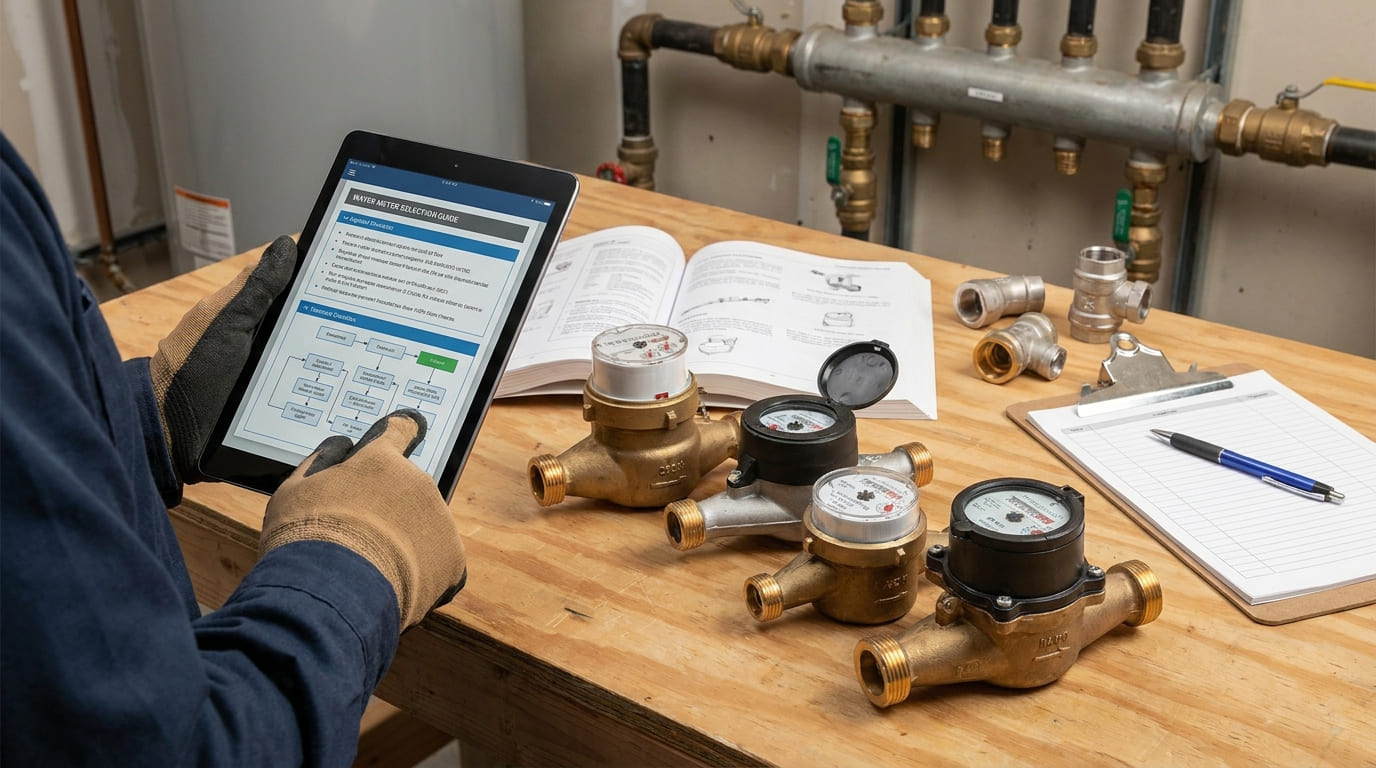
Я не отношусь к счетчику воды как к небольшому аксессуару на трубе.. Я рассматриваю это как первую точку данных в системе управления водными ресурсами.. Если я выберу это хорошо, пользователь получает справедливый счет, а коммунальное предприятие получает полезные данные о потреблении. Если я выберу это плохо, весь проект может столкнуться с жалобами, переделка, и проблемы с длительным обслуживанием.
Что такое счетчик воды?
Водосчетчик – это устройство, измеряющее объем воды, потребляемой домом., здание, фабрика, ирригационная линия, или муниципальная сеть.
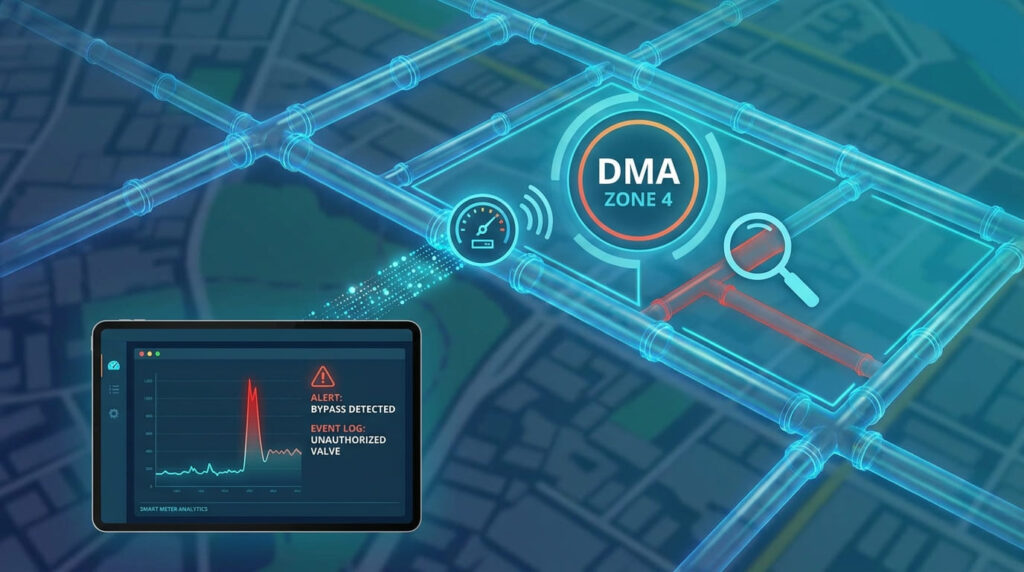
Я использую счетчики воды, чтобы превратить расход воды в читаемую цифру.. Это число может появиться в механическом реестре., цифровой дисплей, или платформа для удаленного чтения. В базовых проектах, Мне нужно только стабильное локальное чтение. В умных проектах, Мне также может понадобиться удаленное чтение, управление клапаном, функции сигнализации, или записи событий.
Меня также волнует, насколько счетчик соответствует реальной системе водоснабжения.. Размер счетчика следует выбирать таким образом, чтобы нормальный расход воды оставался близким к обычному рабочему расходу., не только максимально возможный поток. Я следую этому правилу, потому что слишком большие счетчики могут пропустить расход низкого расхода., и расходомеры меньшего размера могут привести к потере давления или преждевременному износу..
В моей повседневной работе, Обычно я задаю три вопроса, прежде чем сравнивать цены на счетчики.:
| Вопрос | Почему я это спрашиваю |
|---|---|
| Каково реальное применение? | Дом, торговый центр, фабрика, и муниципальная магистраль не используют воду одинаково. |
| Какой нормальный поток? | Счетчик должен хорошо работать в наиболее распространенных условиях расхода.. |
| Какие данные нужны пользователю? | Ручной счетчик, АМР-метр, и умный счетчик решают различные проблемы. |
Как работают счетчики воды?
Счетчик воды работает, измеряя расход воды и преобразуя этот расход в показания объема..
В механических счетчиках обычно используются движущиеся части.. Вода толкает крыльчатку, турбина, поршень, или диск. Затем движение преобразуется в показания общего объема.. Электронные счетчики используют датчики, такие как ультразвуковые или электромагнитные измерения, для расчета потока без одинаковых механических вращающихся частей.
Я всегда напоминаю себе, что принцип работы — это только часть решения.. Среда установки также влияет на производительность.. Счетчик воды должен быть установлен в месте, удобном для демонтажа., установка, и чтение вручную. Этот пункт звучит просто, но я видел, как многие проекты проваливались из-за того, что счетчик был установлен в узкой камере, за стеной, или в положении, когда дисплей не может быть прочитан.
Я также проверяю качество и температуру воды.. Коррозионную жидкость нельзя подавать в счетчик воды., и горячая вода не должна подаваться в счетчик холодной воды. Это основное правило, но это часто игнорируется, когда проектная группа пытается использовать одну модель счетчика для каждой линии..
Каковы основные типы счетчиков воды?
Я обычно делю счетчики воды на три группы.: механические счетчики воды, механические счетчики с электронными модулями, и полностью электронные счетчики воды.
У каждой группы есть свое лучшее применение.. Я не говорю, что один тип всегда лучше другого.. Я смотрю на цель проекта, диапазон расхода, место для установки, навык обслуживания, и потребность в удаленных данных.
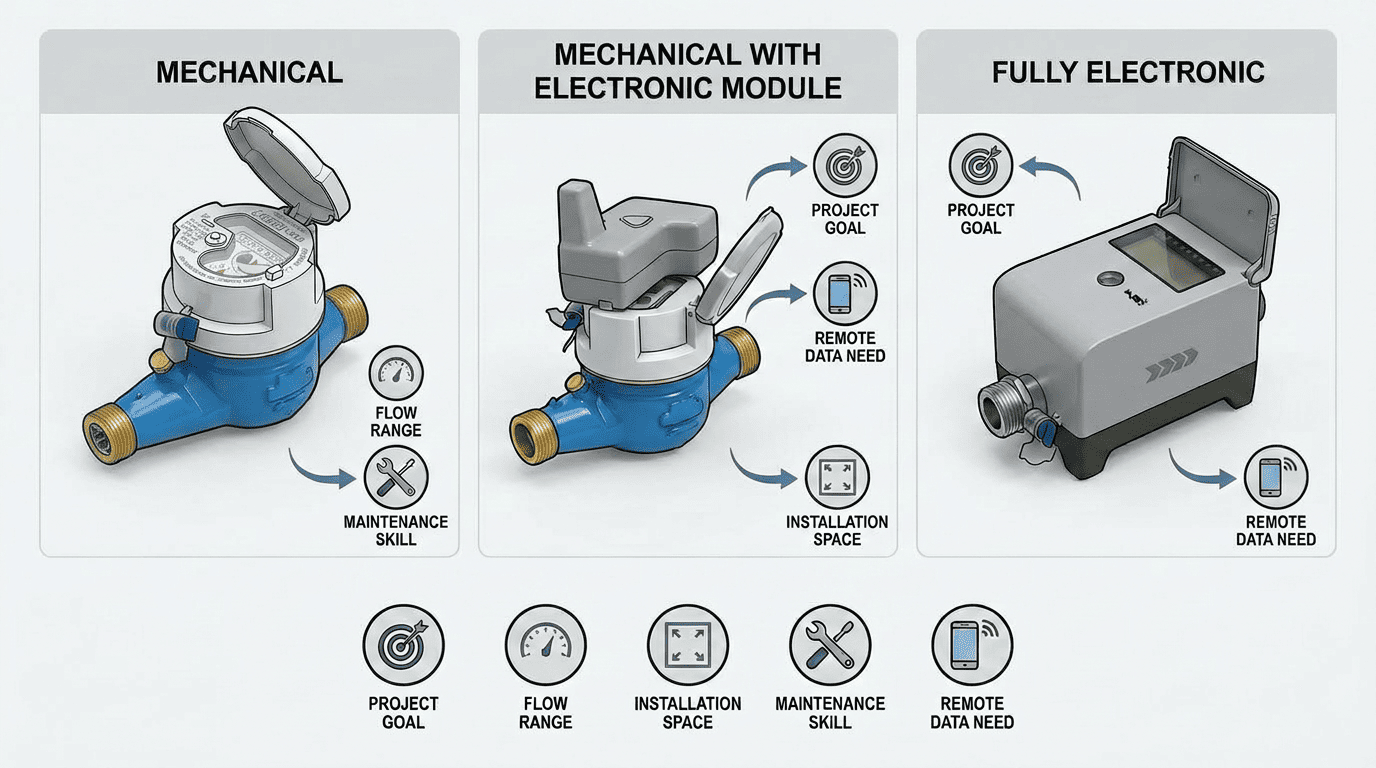
Механические счетчики воды
Механические счетчики воды используются уже много лет.. Я до сих пор использую их во многих проектах, потому что они зрелые., легко понять, и рентабельный.
Обычно я разделяю механические счетчики на измерители скорости и объемные счетчики..
Измерители скорости измеряют скорость воды и на основе этой скорости рассчитывают объем.. К распространенным измерителям скорости относятся одноструйные измерители., многоструйные счетчики, счетчики Вольтмана, и комбинированные счетчики.
Объемные счетчики измеряют фактический объем воды в измерительной камере.. Обычные объемные счетчики включают ротационные поршневые счетчики и счетчики с нутирующим диском..
| Тип механического счетчика | Типичное использование |
|---|---|
| Одноструйный счетчик | Дома и небольшие коммерческие помещения |
| Многоструйный счетчик | Домашние и коммерческие пользователи, которым нужна большая стабильность |
| Метр Вольтмана | Большой поток, промышленные пользователи, и магистральные трубопроводы |
| Комбинированный счетчик | Сайты как с очень низким, так и с очень высоким потоком |
| Роторно-поршневой счетчик | Чувствительность к низкому расходу в жилых и коммерческих целях |
| Нутирующий дисковый счетчик | Жилое и небольшое коммерческое использование |
Эти счетчики я подбираю исходя из реального расхода, не только размер трубы. Труба может быть DN50., но нормальный расход может быть значительно ниже пропускной способности трубы. Если я буду следовать только размеру трубы, Я могу выбрать счетчик, который выглядит правильно, но работает плохо..
Сухой, Влажный, и полусухие регистры
Я также проверяю, является ли счетчик сухого типа., мокрый тип, или полусухой тип.
Счетчик сухого типа обеспечивает изоляцию счетчика от воды.. Мне нравится этот дизайн, когда важны четкость чтения и меньший риск запотевания..
Счетчик мокрого типа позволяет воде контактировать с зоной учета.. Это может быть просто и экономично, но он может быть более чувствителен к грязной воде, замораживание, или долгосрочная ясность чтения.
Между этими двумя конструкциями стоит полусухой счетчик.. Я использую его, когда проекту нужен баланс между стоимостью и надежностью чтения..
Я уделяю особое внимание морозным условиям.. В периоды заморозков, водомер и труба должны быть обернуты, а впускной клапан воды должен быть закрыт, когда счетчик не используется, чтобы снизить риск повреждения от замерзания.. Это важно для наружных счетчиков., настенные счетчики, и счетчиковые коробки в холодных регионах.
Что такое счетчик воды с электронным модулем?
Счетчик воды с электронным модулем обычно представляет собой механический счетчик плюс цифровой блок считывания или связи..
Я рассматриваю это как практический средний путь. Счетчик все еще может измерять с помощью механического движения., но электронный модуль может поддерживать удаленное чтение, вывод данных, предоплаченный контроль, управление клапаном, функции сигнализации, или записи событий.
Например, Некоторые системы водосчетчиков с предоплатой включают в себя логику сигнализации о низком количестве воды.. Звуковой сигнал блока дисплея может звучать при низком уровне оставшейся воды., и зуммер можно отключить, нажав кнопку в течение определенного времени. В некоторых системах, когда оставшийся объем воды достигает нуля, счетчик воды может закрыть клапан и отключить зуммер. Я считаю, что этот тип функции полезен для предоплаченного жилья., аренда недвижимости, и проекты контролируемого водоснабжения.
Некоторые системы также могут регистрировать события помех магнитного поля.. Я считаю это полезным, поскольку попытки взлома и аномальные условия эксплуатации могут вызвать споры между пользователем и оператором..
Я до сих пор тщательно проверяю монтажную дисциплину. При установке счетчиков воды с водосберегающими или клапанными функциями., На входе воды следует использовать соответствующие специальные соединения труб, чтобы уменьшить вращение счетчика, вызванное колебаниями давления воды.. Если повреждение произошло из-за несоблюдения установщиком мер предосторожности при установке, Ответственность должен нести установщик.
Что такое полностью электронные счетчики воды?
Полностью электронные счетчики воды измеряют расход с помощью электронных методов измерения вместо традиционных механических движущихся частей..
Два основных типа, которые я использую в этой группе, — это ультразвуковые счетчики воды и электромагнитные счетчики воды..
Ультразвуковые счетчики воды
Ультразвуковой счетчик воды использует звуковые волны для измерения скорости потока.. Мне нравятся ультразвуковые счетчики, когда проект требует чувствительности к низкому расходу., цифровой дисплей, удаленное чтение, и долгосрочные стабильные данные.
Поскольку в ультразвуковых счетчиках не используется традиционное рабочее колесо., они могут уменьшить механический износ. Их часто используют в проектах умных жилых домов., Коммерческий учет, районный учет, и цифровизация ЖКХ.
Электромагнитные счетчики воды
Электромагнитный счетчик воды измеряет расход с помощью электромагнитной индукции.. Я часто рассматриваю этот тип для труб большего размера., техническая вода, сточные воды, или линии, где может быть больше твердых частиц или сложные условия потока.
Я еще проверяю, пригодна ли жидкость для электромагнитных измерений.. я еще проверяю питание, заземление, состояние трубы, и требования к выводу данных. В промышленных проектах, Я отношусь к качеству установки как к части выбора счетчика., не как отдельная задача.
Как выбрать правильный счетчик воды?
Я выбираю счетчик воды, сопоставляя его с реальными условиями работы..
Я начинаю с приложения. Дом, отель, больница, школа, фабрика, и ирригационная система имеют разное поведение потока.. Затем я проверяю размер трубы, нормальный поток, пиковый расход, давление, температура воды, качество воды, положение установки, метод чтения, и потребность в общении.
В справочнике указано, что калибр счетчика следует выбирать исходя из принципа приближения расхода воды к обычному расходу.. Я использую это как одно из своих главных правил, потому что счетчик должен быть точным в том диапазоне расхода, в котором он работает большую часть времени..
Я также проверяю номинальные условия работы. В справочном материале перечислены элементы рабочих условий, такие как диапазон расхода., температура окружающей среды, температура воды по счетчикам холодной воды, влажность окружающей среды, и давление воды. Я не отношусь к этим предметам как к украшению каталога.. Я отношусь к ним как к точкам принятия.
| Фактор выбора | Мой чек |
|---|---|
| Приложение | Жилой, коммерческий, промышленное, муниципальный, или орошение |
| Нормальный поток | Поток, который происходит большую часть времени |
| Пиковый поток | Максимальный расход, который должен выдержать счетчик |
| Необходимость точности | Базовый биллинг или высокоточный контроль |
| Качество воды | Чистая вода, песок, осадок, или коррозионный риск |
| Температура | Холодная вода или горячая вода |
| Давление | Нормальное давление и колебания давления |
| Положение установки | Крытый, открытый, камера, стена, или трубопроводное помещение |
| Метод чтения | Руководство, пульс, М-автобус, Лора, Nb-iot, или платформа |
| План обслуживания | Легкий доступ, запчасти, и цикл замены |
Каких правил установки я придерживаюсь??
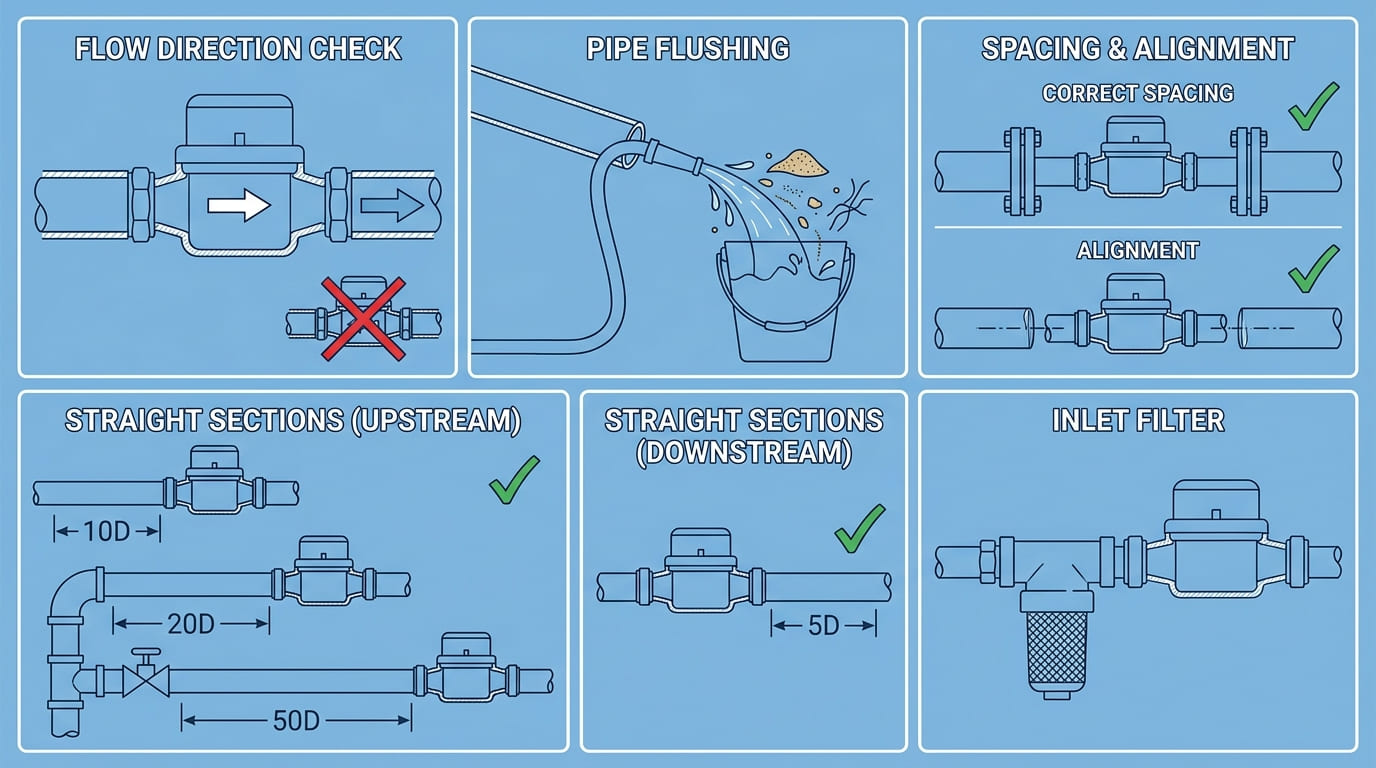
Я рассматриваю установку как часть точности измерения..
Счетчик следует устанавливать в соответствии с указаниями на табличке или крышке., а стрелка на корпусе должна совпадать с направлением потока воды в трубопроводе.. Если счетчик установлен в неправильном направлении, чтение может быть неправильным, система может подать сигнал тревоги, или счетчик может быть поврежден.
Я также промываю новые трубы перед установкой счетчика.. Трубу следует очистить от песка., осадок, конопляное волокно, и другой мусор до установки водомера, чтобы счетчик не был поврежден посторонними материалами.
Я проверяю расстояние между трубами и длину соединения.. Если расстояние между трубами больше длины подключения счетчика, расстояние между трубами должно быть скорректировано в соответствии с длиной подсоединения счетчика.. Если расстояние не исправлено, слишком большое расстояние может привести к поломке резьбовых концов., повредить стыки труб, или повредить накидную гайку.
Я также проверяю соосность труб.. Если трубы на обоих концах водомера не находятся на одной оси, трубы следует отрегулировать так, чтобы они соответствовали установочному размеру счетчика..
Для точности, Я держу правильные прямые участки трубы. В общем, прямой участок трубы выше 10D должен оставаться перед счетчиком, а прямой участок трубы выше 5D следует оставить после счетчика. В справочном материале также сказано, что локти, тройники, шишки, и насосов следует избегать, насколько это возможно, вблизи счетчика.. Если перед счетчиком стоит труба уменьшенного диаметра, восходящий прямой участок должен быть более 15D. Если перед счетчиком имеется колено под углом 90 градусов, восходящий прямой участок должен быть выше 20D. Если перед счетчиком стоит полуоткрытый кран, восходящий прямой участок должен быть выше 50D.
Я тоже рассматриваю фильтры. В справочном материале указана установка фильтра на входе воды в разделе «Среда установки».. Я использую фильтры, когда вода может содержать песок., ржавчина, или мусор из труб.
Каковы преимущества счетчиков воды?
Я считаю, что счетчики воды полезны как для пользователей, так и для коммунальных предприятий..
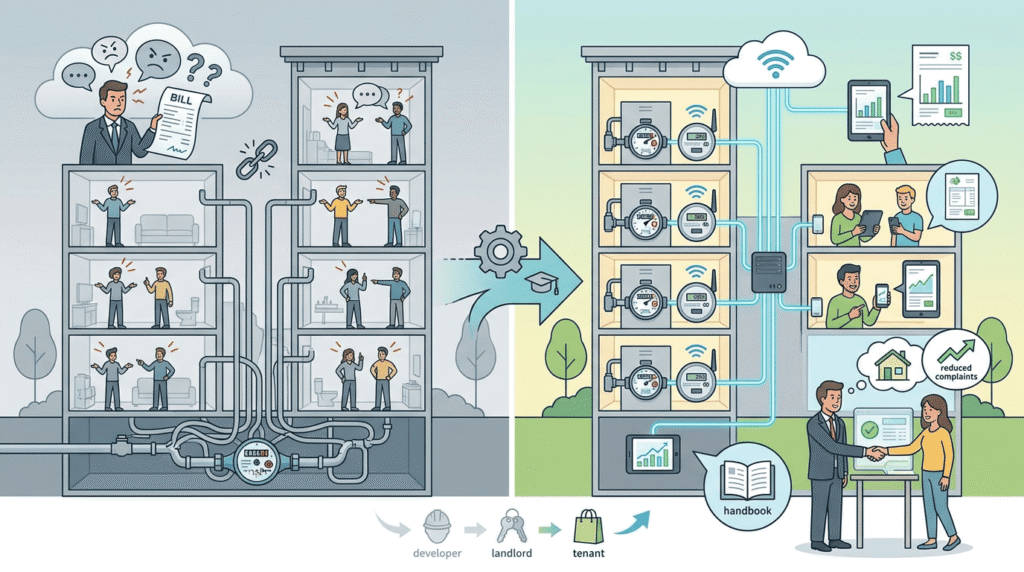
Для пользователей, счетчики делают выставление счетов более прозрачным. Пользователь может увидеть потребление и понять, является ли использование нормальным.. Для коммунальных услуг, счетчики поддерживают справедливое выставление счетов, сетевое планирование, контроль утечек, и управление спросом.
Умные или электронные счетчики повышают ценность. Они могут поддерживать удаленные данные, тревожные сообщения, предоплаченный контроль, и записи событий. Функции сигнализации о низком количестве воды и запись магнитных помех могут помочь операторам управлять ситуациями с предоплатой и защитой от несанкционированного доступа..
Я также рассматриваю счетчики воды как инструмент сохранения. Когда пользователи могут видеть, сколько воды они потребляют, они часто меняют привычки. Они могут устранить утечки быстрее., сократить отходы, и используйте воду более ответственно.
Каких распространенных ошибок я стараюсь избегать?
Я стараюсь избежать пяти ошибок.
Первый, Я избегаю выбора счетчика только по диаметру трубы. Счетчик должен соответствовать общему расходу., не только размер трубы.
Второй, Я избегаю игнорирования температуры воды. Горячую воду нельзя подавать в счетчик холодной воды.
Третий, Я избегаю неудачных положений установки. Счетчик должен быть удобен для разборки., установка, и чтение вручную.
Четвертый, Я избегаю грязных труб. Новые трубы следует промыть начисто перед установкой счетчика..
Пятый, Я избегаю коротких прямых участков трубы возле колен., тройники, шишки, насосы, и полуоткрытые клапаны, поскольку эти условия могут нарушить поток и повлиять на измерения..
Часто задаваемые вопросы
Как часто нужно менять счетчик воды?
Обычно я рассматриваю замену счетчика в зависимости от типа счетчика., качество воды, уровень использования, требования к точности, и местные правила. Механические счетчики часто требуют замены раньше, чем полностью электронные счетчики., но реальный ответ зависит от полевых условий.
Как я могу узнать, верен ли мой счетчик воды??
Сначала проверяю, правильно ли установлен счетчик, выровнен, покрасневший, и соответствует нормальному диапазону расхода. Затем я проверяю, имеет ли труба достаточную прямую длину и есть ли колена., клапаны, или насосы расположены слишком близко к счетчику.
Можно ли установить счетчик воды самостоятельно?
Я не рекомендую самостоятельную установку, если человек не обучен. Неправильная установка может привести к перекручиванию корпуса, повредить суставы, создать утечку, или повлиять на измерение. В справочном материале указано, что ущерб, вызванный несоблюдением строгих мер предосторожности при установке, должен нести установщик..
Можно ли установить счетчик воды в помещении или на улице?
Да, но я проверяю доступ, риск замерзания, влажность, защита, и удобство чтения. Место установки должно обеспечивать легкую разборку., установка, и ручное считывание показаний счетчика .
Как я могу уменьшить потребление воды?
Я начинаю с регулярного снятия показаний счетчика воды.. Потом проверяю герметичность, ремонт капающих светильников, используйте эффективные приборы, и отслеживать аномальные тенденции потребления. Если счетчик поддерживает сигналы тревоги или удаленные данные, Я использую эти функции, чтобы быстрее находить мусор..
Заключение
Я выбираю счетчики воды по реальному расходу, условия площадки, потребности в точности, правила установки, и требования к данным. Хороший счетчик не только точен. Это также подходит, читаемый, ремонтопригодный, и правильно установлен.