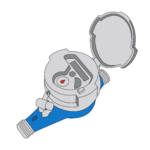

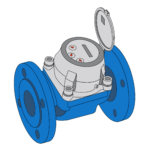



Водоканалы ежегодно теряют доходы из-за потоков, которые были доставлены, но не были выставлены счета. Не вижу этой проблемы только в трубной сети. Я часто вижу это на границе измерения малого расхода счетчика..
Ультразвуковые счетчики воды R400 могут способствовать снижению нерентабельного расхода воды, поскольку они уменьшают измеряемый диапазон низкого расхода.. Для счетчика DN15 с Q3 = 2.5 м³/ч, R80 дает Q1 = 31.25 л/ч, в то время как R400 дает Q1 = 6.25 л/ч. Сравнение должно проводиться для одного и того же размера счетчика и значения Q3..
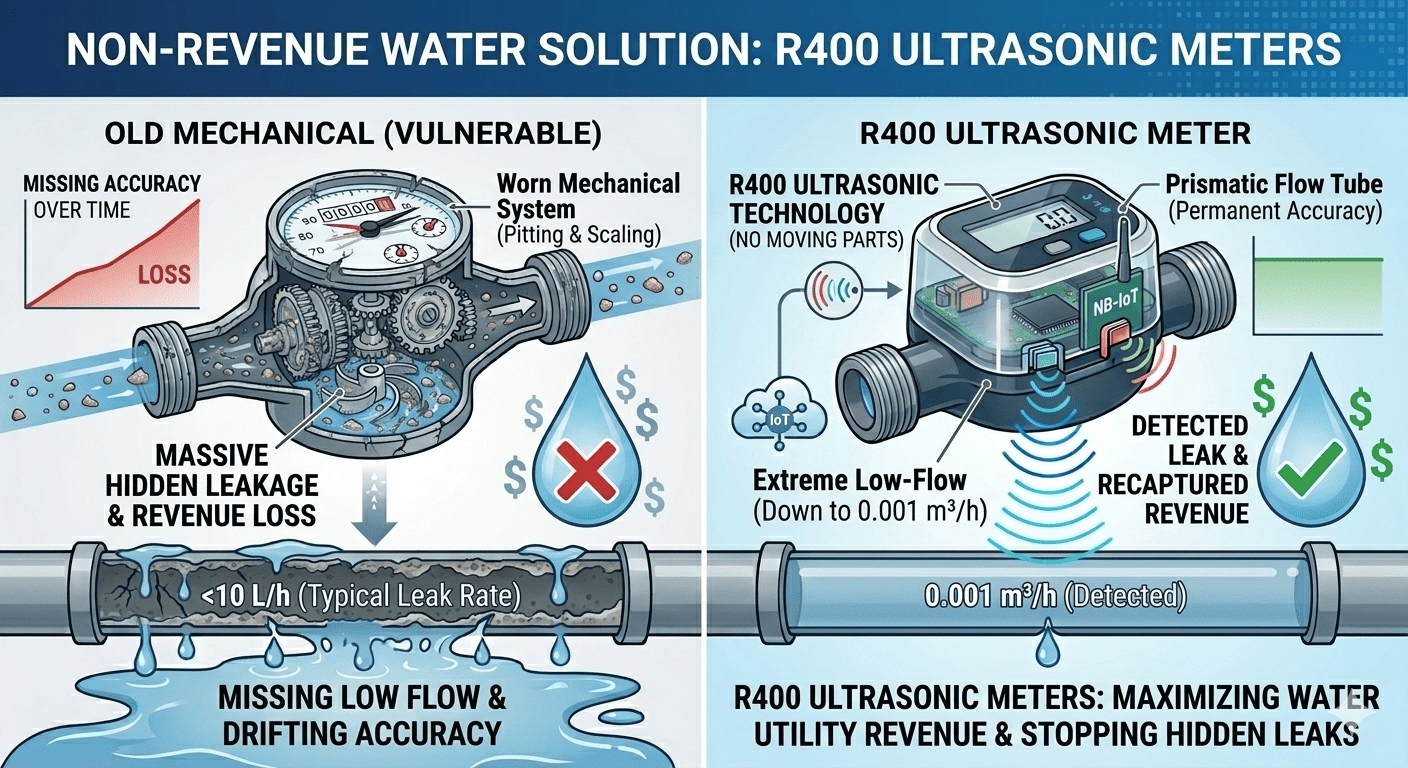
Многие люди впервые обращают внимание на замену труб., зональность давления, или ремонтные бригады, когда они обсуждают NRW. Я согласен, что эти действия имеют значение. Я также считаю, что выбор счетчика необходимо проверить заранее.. Труба может правильно подавать воду, но коммунальное предприятие все равно может потерять доход, если счетчик не сможет регистрировать или точно измерять низкие расходы..
Первая граница — начальный расход.. Это минимальный расход, при котором счетчик вообще начинает реагировать.. Ниже этой точки, счетчик показывает ноль. Вторая граница – Q1. Под ISO 4064 / Метрологическая основа OIML R49, Q1 — минимальный расход сертифицированного диапазона измерения., и счетчик должен соответствовать требуемым правилам погрешностей в своих номинальных зонах..
Для этой статьи, В качестве базы сравнения я использую бытовой счетчик DN15.. В таблице спецификаций продукции YOUNIO указан DN15 с Q3 = 2.5 м³/ч в параметрах производительности. Как только Q3 будет исправлен, значение R становится значимым.
Почему стандартные механические счетчики так много пропускают скрытое малорасходное потребление?
Механическому счетчику требуется достаточная сила воды для перемещения его измерительных частей.. Если поток слишком мал, счетчик может не запуститься или работать за пределами сертифицированного диапазона точности..
Для механического счетчика DN15 R80 с Q3 = 2.5 м³/ч, существуют две разные границы низкого расхода. Начальный расход — это абсолютный минимум.. Ниже этого порога, механическое движение не реагирует и счетчик показывает ноль. Граница Q1 другая. Он отмечает самый низкий расход в пределах определенного метрологического диапазона..
Для DN15 с Q3 = 2.5 м³/ч:
| Параметр | Механический счетчик R80 | Ультразвуковой измеритель R400 |
|---|---|---|
| Q3 | 2,500 л/ч | 2,500 л/ч |
| Значение R | 80 | 400 |
| Q1 = Q3 ÷ R | 31.25 л/ч | 6.25 л/ч |
| Разница в границах первого квартала | — | 25 л/ч ниже |
Это означает, что счетчику R400 не нужны расплывчатые заявления, подтверждающие его ценность.. Математики достаточно. Под тем же DN15 и Q3 = 2.5 м³/ч состояние, счетчик R400 перемещает границу Q1 от 31.25 л/ч до 6.25 л/ч.
Начальный расход и Q1 — это не одно и то же.
Я не смешиваю начальный расход и Q1 в технических обсуждениях.. Они описывают разные точки.
| Индикатор | Значение | Почему это важно |
|---|---|---|
| Начальный расход | Точка, в которой счетчик начинает регистрировать любой объем | Ниже этой точки, потребление может происходить, пока счетчик показывает ноль |
| 1 квартал | Минимальный расход сертифицированного диапазона измерения | Ниже этой точки, возможно, счетчик не находится в заявленном диапазоне точности. |
| Значение R | Q3 разделить на Q1 | Более высокое значение R означает более низкий Q1, когда Q3 такой же. |
Бытовой ультразвуковой интеллектуальный счетчик воды YOUNIO описывается как статический счетчик воды, использующий технологию ультразвукового измерения для жилых помещений.. В тех же материалах продукта указано, что он имеет широкий диапазон измерений Q3/Q1 = R400.. В материалах также описывается сверхнизкий стартовый поток до 0.002 м³/ч, что равно 2 л/ч, в зависимости от конфигурации продукта и условий испытаний.
В поле сравнения, Я все еще привязываю дискуссию к размеру в один метр.. Для Ду15, опубликованная таблица производительности дает Q3 = 2.5 м³/ч. За 400 руб., Q1 становится 2.5 ÷ 400 = 0.00625 м³/ч, или 6.25 л/ч. С 80 руб., Q1 становится 31.25 л/ч. Именно этот недостаток точности при малых расходах имеет значение в работе NRW..
Математика, лежащая в основе возмещаемого дохода от выставления счетов
Я не обещаю, что один только счетчик может убрать NRW.. Счетчик не может устранить течь трубы. Счетчик сам по себе не может остановить незаконное использование. Счетчик может сделать видимым только большее потребление при низком расходе., если установка и система данных поддерживают это.
Вот простой пример утилиты с 50,000 DN15 жилые соединения:
| Предположение | Ценить |
|---|---|
| Ранее не зарегистрированное потребление низкого расхода на соединение | 5 л/ч |
| Период малого потока в день | 8 часы |
| Количество жилых подключений | 50,000 |
| Annual volume | 50,000 × 5 × 8 × 365 ÷ 1,000 = 730,000 m³/year |
| Water tariff | $0.50/м³ |
| Potential recoverable billing revenue | $365,000/year |
This is an illustrative calculation. Actual recovery depends on the network flow profile, connection age, pressure conditions, meter age, user behavior, and tariff structure. I use this example only to show the method. The business case should be built from local night-flow data and meter test results.
How Does Ultrasonic Measurement Reduce Wear-Related Under-Registration?
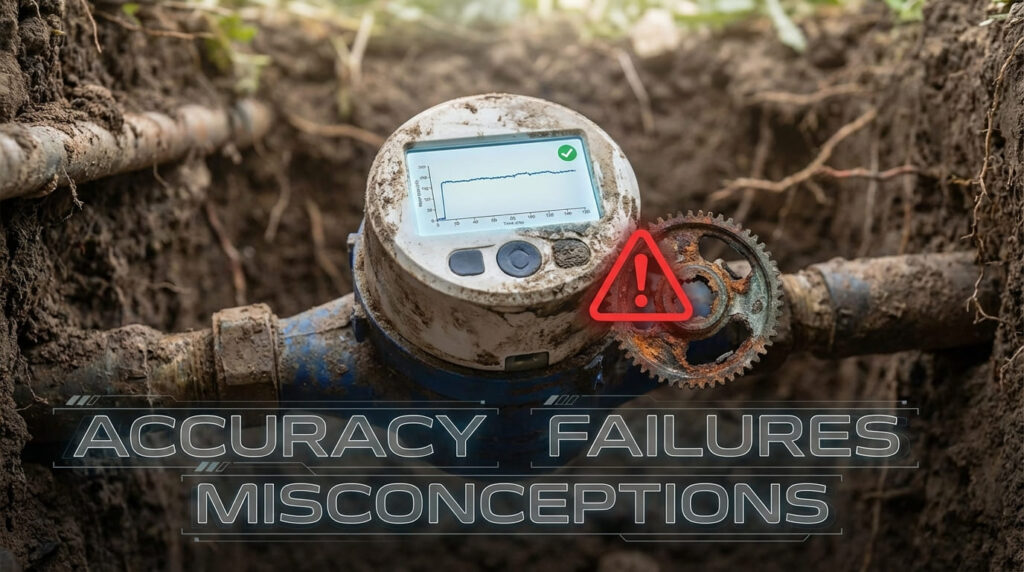
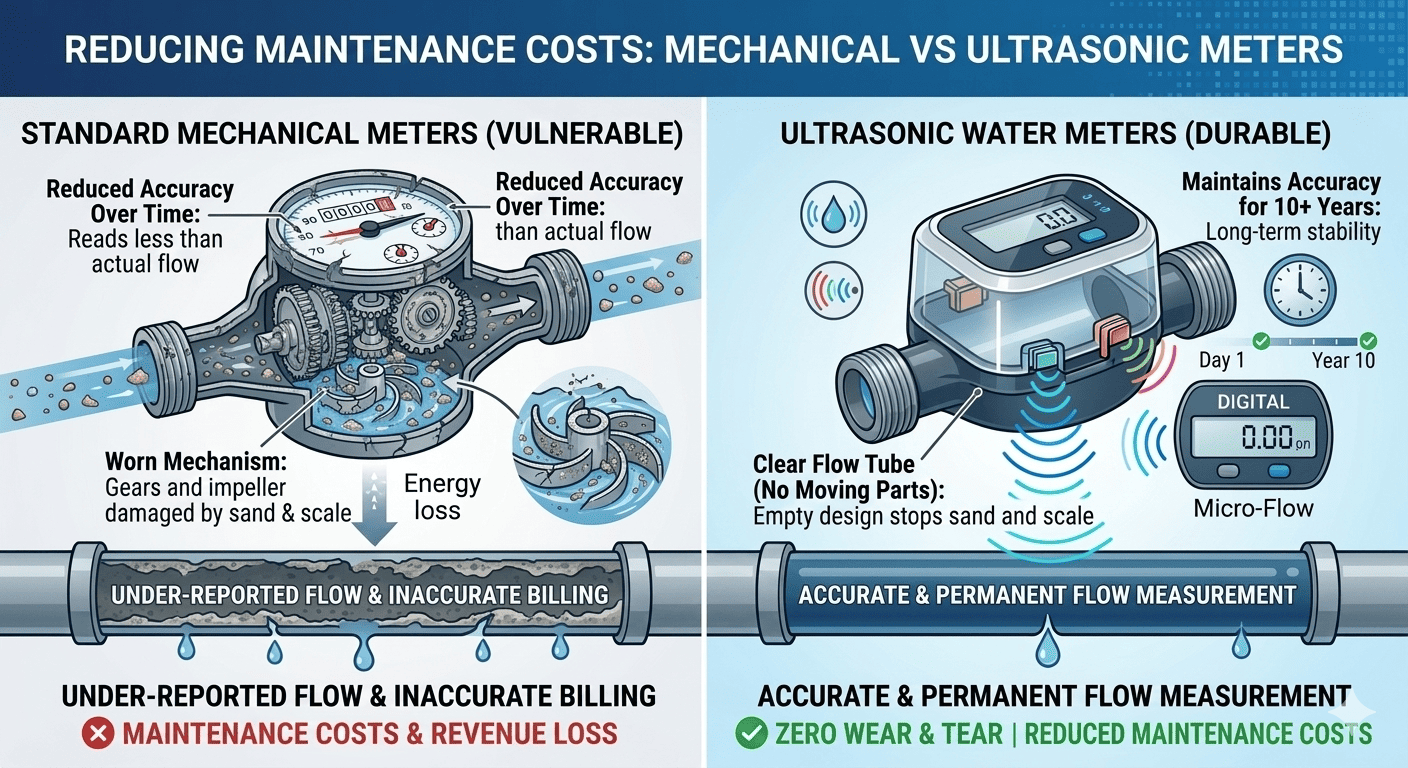
Mechanical meters contain moving parts. These parts can wear, slow down, or jam when water contains sand, шкала, или другие частицы. I do not treat this only as a maintenance issue. I treat it as a long-term revenue risk.
An ultrasonic meter uses static measurement technology. The YOUNIO residential meter is described as a static water meter that operates on ultrasonic measurement technology. В материалах продукта также указано, что он не содержит изнашиваемых частей и обеспечивает превосходную долговременную стабильность и надежность..
Практическая проблема с грязной водой
Я часто вижу, что механические счетчики сталкиваются с тяжелыми водными условиями.. Песок может попасть в счетчик. Масштаб может накапливаться. Мелкие частицы могут повредить измерительную камеру или рабочее колесо.. Через некоторое время, это может снизить чувствительность измерителя, особенно при низком расходе.
Ультразвуковое измерение уменьшает путь механического износа, поскольку измерение не зависит от вращающегося колеса.. Счетчик измеряет расход с помощью ультразвуковых сигналов, проходящих через водный путь.. Это не означает, что счетчик может игнорировать все проблемы на объекте.. Качество воды, состояние трубы, положение установки, и полноценная работа по-прежнему имеют значение. Однако отсутствие изнашиваемых измерительных деталей устраняет одну из основных причин долгосрочной механической деградации..
В материалах продукта YOUNIO также описана вакуумная электронная полость, предотвращающая запотевание стекла.. Я считаю это полезным во влажных ямах и на открытом воздухе., где читаемость дисплея и электронная защита могут повлиять на качество выездного обслуживания.
| Фактор деградации | Риск механического счетчика | Преимущество ультразвукового счетчика |
|---|---|---|
| Песок или частицы | Движущиеся части могут изнашиваться или заклинивать. | Отсутствие изнашиваемых измерительных частей |
| Образование накипи | Измерение деталей может замедляться | Статическое ультразвуковое измерение снижает риск механического трения |
| Длительный срок службы | Точность может дрейфовать из-за механического износа. | Материалы изделия обеспечивают долговременную стабильность и надежность. |
| Влажное состояние ямы | Видимость реестра может снизиться | Пылесос для электронной полости помогает предотвратить запотевание стекла |
Как данные Интернета вещей помогают коммунальным предприятиям действовать раньше?
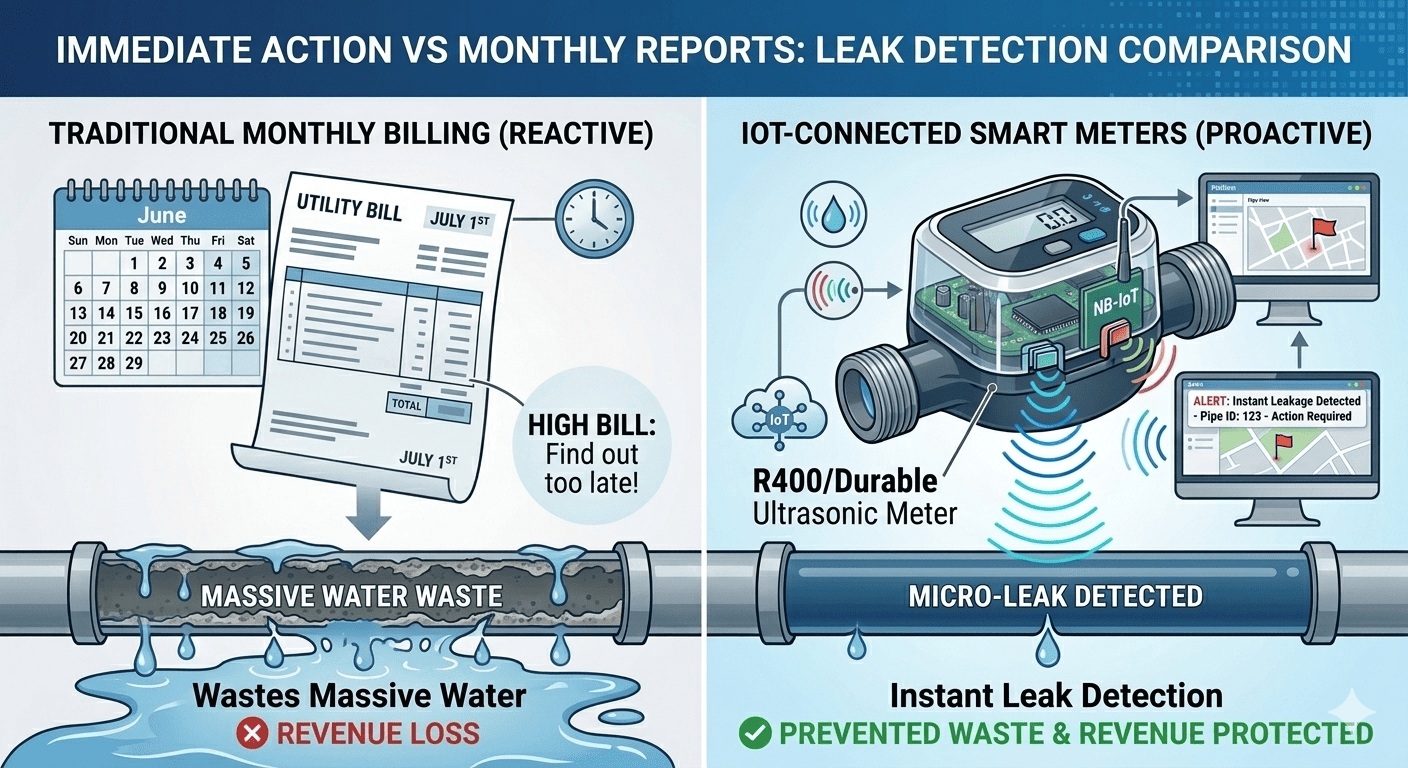
Ручное чтение дает отложенное представление о сети.. Утечка может начаться сегодня, но коммунальное предприятие может увидеть результат только в следующем платежном цикле.. Я использую интеллектуальные счетчики, чтобы сократить эту задержку..
Бытовые ультразвуковые интеллектуальные счетчики воды YOUNIO интегрированы с широким спектром технологий Интернета вещей для различных сценариев применения.. В материалах к изделию также перечислены варианты связи, такие как M-BUS., RS485, пульс, и NB-IoT. Это делает счетчик полезным не только как измерительный прибор., но также в качестве точки полевых данных в системе AMR или AMI..
От позднего обнаружения к раннему предупреждению
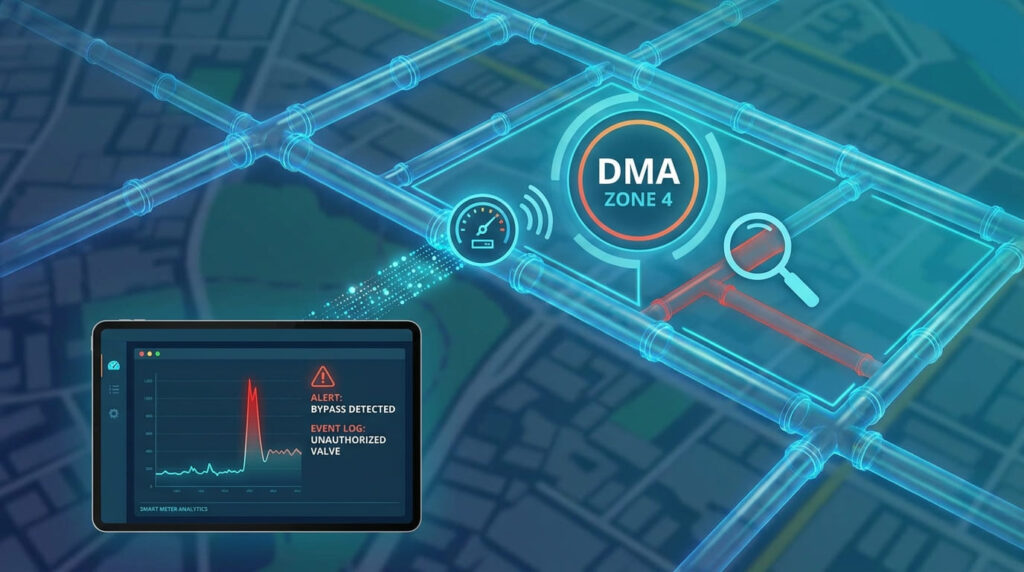
Интеллектуальный ультразвуковой счетчик может поддерживать обнаружение утечек и обнаружение сухости труб., на основе материалов изделия. Он также может поддерживать двунаправленное измерение расхода, чтобы помочь выявить аномальный обратный поток или условия, связанные с несанкционированным вмешательством..
Я не называю это «мгновенным решением проблем». Счетчик отправляет данные. Утилите все еще нужна платформа, правила тревоги, полевые бригады, и процесс ответа. Но более качественные данные могут сократить время между аномальным потоком и оперативными действиями..
В материалах продукта также указано, что ЖК-дисплей может отображать совокупный объем., мгновенный расход, и богатая информация о тревогах. Это важно, поскольку выездным специалистам может потребоваться проверка локального дисплея во время ввода в эксплуатацию., обслуживание, или расследование жалобы.
| Функция данных | Традиционное ручное измерение | Интеллектуальный ультразвуковой учет |
|---|---|---|
| Видимость утечек | Часто встречается после цикла чтения | Поддерживается обнаружение утечек |
| Состояние сухой трубы | Трудно идентифицировать удаленно | Поддерживается обнаружение сухой трубы |
| Обратный поток или тампер | Обычно требуется осмотр места | Поддерживается двунаправленное измерение расхода |
| Доступ к данным | Ручное чтение | М-БУС, RS485, пульс, и перечислены варианты NB-IoT |
| Локальный дисплей | Базовый регистр | ЖК-дисплей с громкостью, поток, и информация о тревогах |
Почему закупки должны выходить за рамки закупочной цены?
Низкая закупочная цена может выглядеть привлекательно во время оценки тендера.. Я понимаю это давление. Но я также знаю, что самая низкая цена за единицу не всегда означает самую низкую стоимость жизненного цикла..
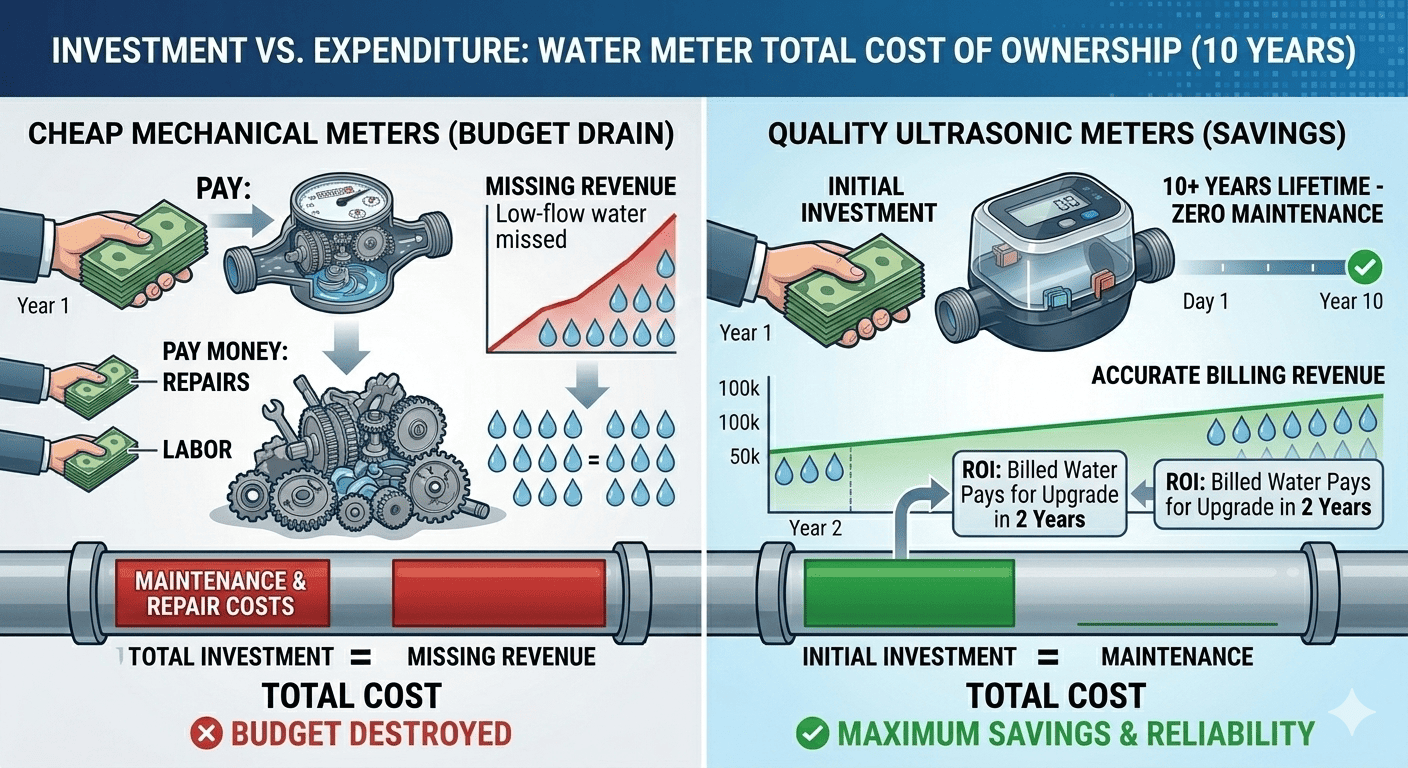
Программа замены счетчика должна учитывать покупную цену., точность при низком расходе, срок службы месторождения, производительность батареи, уровень защиты, стоимость связи, грузовик катится, обработка жалоб, и готовность платформы данных.
В материалах продукта YOUNIO бытовой ультразвуковой счетчик описывается как работающий от батареи со сроком службы более 10 годы. В материалах изделия также указан уровень защиты IP68 при погружении в воду.. Эти два момента имеют значение, поскольку многие бытовые счетчики работают во влажных камерах., открытые ямы, или места, где замена батареи стоит дорого.
Общая стоимость владения требует местных данных
Я не говорю, что каждый проект ультразвукового счетчика R400 окупается в течение определенного времени.. Срок окупаемости зависит от местного тарифа, количество событий низкого расхода, meter age, профиль давления, поведение утечки, стоимость связи, и стоимость рабочей силы.
Хороший бизнес-кейс должен начинаться с пилотного проекта. Я бы протестировал выборочную группу соединений DN15.. Я бы сравнил показания старых счетчиков, новые показания счетчиков, узоры ночного течения, сигналы тревоги, жалобы клиентов, и данные лабораторной проверки. Затем я бы масштабировал проект на основе измеренных результатов., не по общему требованию.
| Категория стоимости | Риск механического счетчика | Рассмотрение ультразвукового расходомера R400 |
|---|---|---|
| Выставление счетов с низким расходом | Более высокий риск недостаточной регистрации при низком расходе | R400 снижает Q1, когда Q3 фиксирован |
| Механический износ | Движущиеся части могут ухудшиться | В материалах изделия отсутствуют изнашиваемые детали. |
| Обслуживание аккумуляторов | Зависит от типа счетчика | Больше, чем 10 Заявленный срок службы батареи лет |
| Затопление камеры | Уровень защиты варьируется | Заявлена защита от погружения IP68 |
| Значение данных | Ручные или ограниченные данные | Поддерживаются варианты интеграции и связи с Интернетом вещей |
| рентабельность инвестиций | Зависит от данных сайта | Должен рассчитываться на основе местного расхода и тарифных условий. |
Какие полевые условия необходимо проверить перед использованием расходомеров R400 в программе NRW?
400 рандов – это не волшебная этикетка.. Я проверяю полевые условия до того, как ожидаю результатов.
Первый, Я проверяю размер счетчика и Q3. Я не сравниваю R80 и R400 абстрактно.. Сначала я выбираю размер на один метр. Для Ду15, Я использую Q3 = 2.5 м³/ч в качестве основы при выборе этой спецификации.
Второй, Я проверяю Q1. Если счетчик стоит 400 рандов и Q3 = 2.5 м³/ч, тогда Q1 6.25 л/ч. Если счетчик R80 и Q3 = 2.5 м³/ч, тогда Q1 31.25 л/ч. Это справедливое сравнение.
Третий, Я проверяю начальный расход. Материалы YOUNIO описывают сверхнизкий стартовый поток до 0.002 м³/ч, равный 2 л/ч, в характеристиках продукта. Если в проекте используется другое внутреннее или проверенное на практике начальное значение расхода, Я бы опубликовал это значение вместе с условием теста..
Четвертый, Проверяю класс монтажа и состояние труб. Высокоточный счетчик все еще требует правильной установки. Во время измерения труба должна оставаться полной.. Обнаружение сухости труб может помочь выявить аномальные условия, но он не может заменить правильную гидравлическую конструкцию.
Пятый, Я проверяю связь и головную систему. Интеллектуальный счетчик может предоставлять более подробные данные сигналов тревоги., но утилите нужна платформа, которая сможет принимать, магазин, классифицировать, и действовать на основе этих данных. В противном случае, функции сигнализации становятся неиспользуемыми функциями.
Заключение
Ультразвуковые счетчики R400 решают проблему NRW на метрологическом уровне.. Для DN15 с Q3 = 2.5 м³/ч, они уменьшают Q1 с 31.25 л/ч до R80 до 6.25 л/ч до 400 р.. Технология наиболее эффективна, когда в тендере указан размер метра., Q3, 1 квартал, начальный расход, состояние установки, срок службы батареи, метод связи, и обработка данных тревог.