
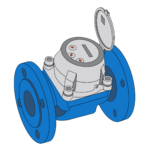


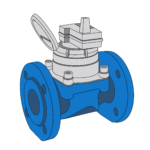

Water meter complaints often start early. Details pass through many hands, then site reality disappears. I prefer direct technical alignment before shipment.
Working directly with a water meter manufacturer often reduces complaints and total cost because the factory and utility can align site conditions, meter design, 安裝規則, 標記, 測試報告, and after-sales evidence without repeated information loss.
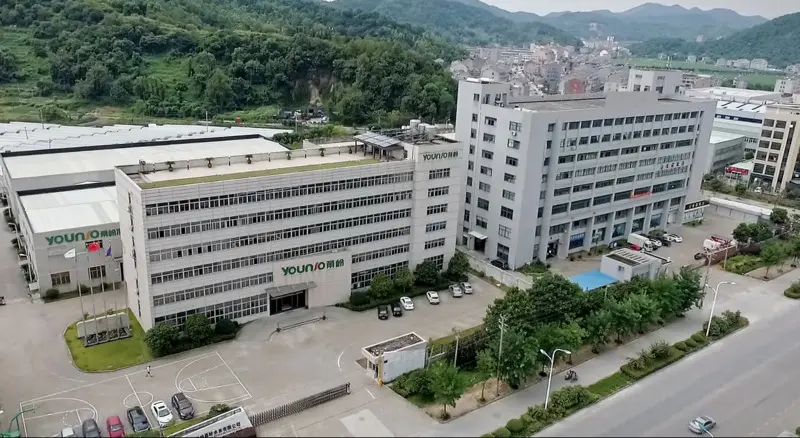
I do not say every project must remove all local partners. Many agents and distributors add real value. But when technical information moves through too many layers, the risk of distortion rises. The people who usually understand the operating conditions best are the utility and the manufacturer.
What Are Typical Supply Chains: 製造商, Agent, 經銷商?
A supply chain can look simple. But every added layer can separate the factory from the real site problem. I map the route first.
Typical water meter supply chains include manufacturer-direct, manufacturer-to-agent, manufacturer-to-distributor, and multi-layer trading routes. Each route affects technical communication, document control, 投訴處理, and lifecycle cost.
I Compare the Route Before I Compare the Price
I usually draw the supply chain on one page. The map shows who selects the meter, who confirms the standard, who checks site conditions, who signs the tender, who imports the goods, who installs the meters, and who handles complaints.
In a simple direct route, the utility or project owner speaks with the water meter manufacturer. The factory receives the real technical requirement. It can ask about pipe layout, 安裝位置, 流量剖面, 壓力條件, 水質, 通訊方式, and certificate needs. This is often faster when the project includes DN15 residential meters, DN50 commercial meters, DN100 Woltman meters, or smart AMR/AMI meters.
In an agent route, the agent may support language, 海關, local service, and business coordination. This can be useful. But the agent must transfer technical information accurately.
In a distributor route, the distributor may hold stock and provide local support. This is also valuable. But if the distributor sells a standard catalogue item into a special hydraulic condition, complaints may appear later.
| Supply Route | 力量 | 主要風險 |
|---|---|---|
| Direct manufacturer route | fast technical alignment | needs buyer technical involvement |
| 製造商 + local agent | local coordination | possible message filtering |
| 製造商 + distributor | stock and local service | product may be selected too generally |
| Multi-layer route | wide commercial reach | responsibility can become unclear |
I do not judge the route by title. I judge it by information quality.
A water meter is not only a commodity. ISO 4064 requires attention to installation, 方向, 標記, 壓力, 溫度等級, and installation sensitivity class where applicable [4]. If these details do not travel correctly through the supply chain, the lowest purchase price can become a high complaint cost.
Where Does Information Get Lost or Distorted?
Information does not usually disappear at once. It changes in small steps until the factory receives a simplified version of the problem.
Information gets lost when site conditions, 安裝佈局, 水質, flow disturbance, certificate needs, meter markings, and communication requirements are shortened into vague purchasing language such as “standard water meter.”
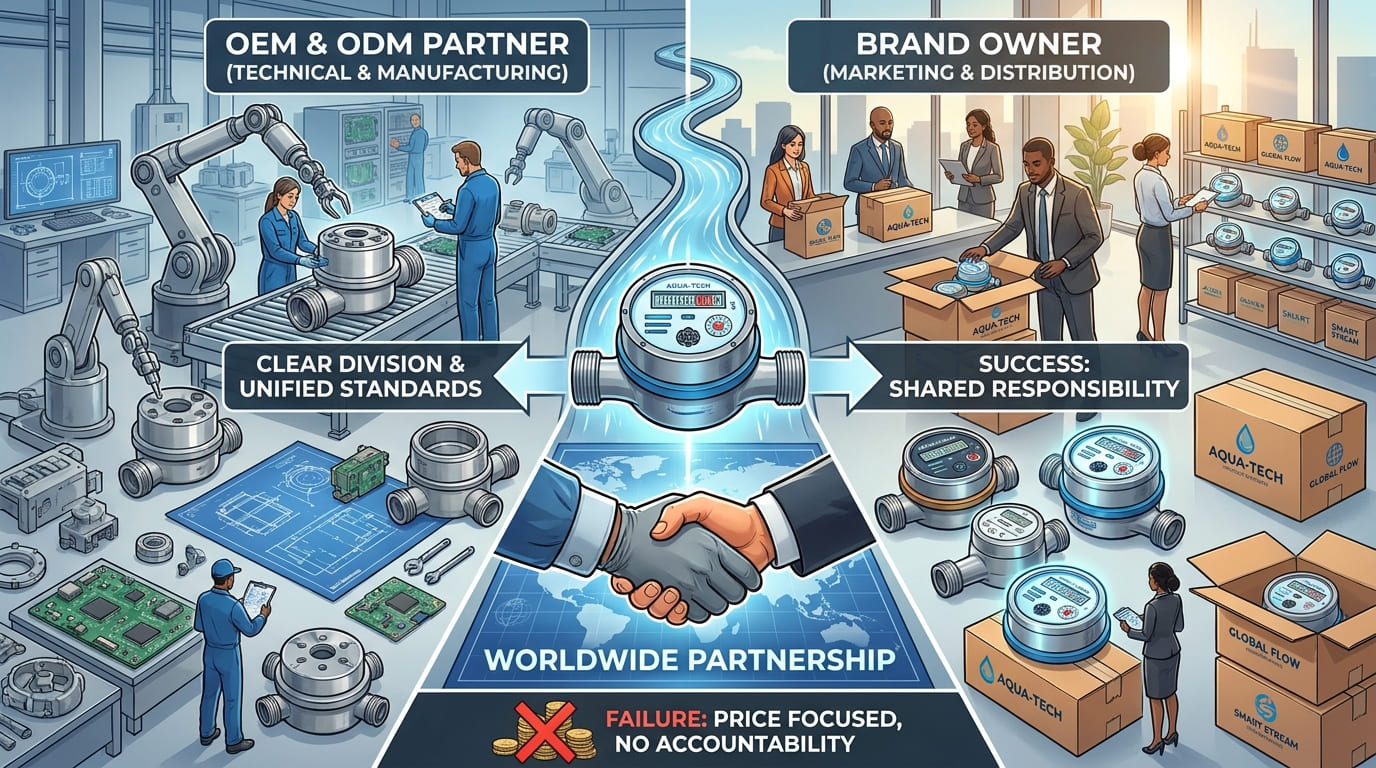
The Missing Details Are Often the Expensive Details
I see the same pattern in many projects. The utility says the site has pumps, 手肘, 部分關閉的閥門, limited meter box space, or signal problems. The installer summarizes it. The distributor converts it into a product inquiry. The agent asks for a price. The manufacturer finally receives only “DN20 smart meter, best price.”
That is where risk begins.
Flow disturbance is a good example. ISO 4064 explains that upstream disturbance can come from bends, 發球檯, 閥門, 或泵浦, and non-volumetric meters should be installed according to the manufacturer’s instructions [2]. It also says the connecting pipework should match the meter connection diameter, and a flow straightener may be needed when necessary [2]. If this information is removed from the discussion, the selected meter may be technically correct in the catalogue but poorly matched to the installation.
Another example is straight pipe length. ISO 4064 states that if meter accuracy is affected by upstream or downstream disturbances, the meter should have enough straight pipe lengths, 有或沒有整流器, 依照製造商的規定 [1]. If the factory never sees the site layout, it cannot warn the buyer early.
| Lost Detail | What It Becomes | Possible Complaint |
|---|---|---|
| Pump near meter | “normal installation” | unstable reading |
| 部分關閉的閥門 | “standard pipe” | indication error concern |
| Limited meter box | “DN15 meter” | impossible maintenance access |
| Need for H/V orientation | “any position” | wrong installation |
| Local marking rule | “normal label” | acceptance dispute |
| 訊號弱 | “NB-IoT required” | 遠端抄表失敗 |
Information loss also affects documents. ISO 4064 lists markings such as manufacturer name or trademark, 製造年份, 序號, flow direction arrow, maximum admissible pressure where applicable, installation orientation marks, 溫度等級, 壓力損失等級, and installation sensitivity class where they differ from defaults [4]. If a tender or import file ignores these markings, a project may face acceptance delay even when the meter itself is suitable.
This is why I prefer direct technical communication. It keeps the uncomfortable details in the discussion.
How Do Too Many Middlemen Complicate Complaint Cases?
A complaint is already stressful. It becomes worse when nobody knows who changed the requirement, approved the sample, or explained the installation rule.
Too many middlemen complicate complaints because evidence becomes scattered. The utility has site data, the installer has photos, the distributor has sales records, and the manufacturer has batch and test records.
I Need One Evidence Chain, Not Five Opinions
When a customer complains about low reading, high reading, no remote data, 縮合, display visibility, or leakage at connection points, I do not start with blame. I start with evidence.
The utility may have pressure records, consumption history, 安裝照片, and customer complaints. The installer may know whether the meter was installed in the correct direction and whether the pipe was flushed. The distributor may know which batch was delivered. The manufacturer may have the serial number, calibration record, assembly record, and product configuration.
When these parties are separated by too many layers, complaint handling becomes slow. One person asks for photos. Another asks for test data. A third person argues about warranty. A fourth person does not know the installation condition. The root cause stays unclear.
Many complaints are not purely product failures. ISO 4064 notes that solid particles can collect in a water meter, for example after work on upstream pipework [1]. If pipework was repaired before installation and the line was not flushed well, the complaint may look like a meter issue. Direct communication helps the factory ask about this early.
Flow disturbance also matters. ISO 4064 explains that velocity-profile distortion can be caused by obstruction, such as a partly closed valve or a misaligned flange joint [2]. Swirl can be caused by bends in different planes or by bends combined with eccentric reducers or partly closed valves [6]. These conditions are often visible at the site, but not visible in a purchase order.
| Complaint Type | Evidence Needed | Who Usually Has It |
|---|---|---|
| Accuracy dispute | 測試報告, site layout, flow condition | factory and utility |
| Display issue | 照片, condensation condition, product design | utility and factory |
| 遠端抄表失敗 | 訊號測試, platform logs, meter ID | 公用事業, integrator, 工廠 |
| Installation leakage | fitting photos, torque, 墊片, 管道狀況 | installer and utility |
| Acceptance dispute | 標記, 證書, serial list | importer and factory |
ISO 4064 also requires the display to be readily accessible to the customer without using tools [3]. If the meter is installed where the display cannot be read, the complaint may be caused by installation design, not meter manufacturing.
Direct factory contact does not remove the need for a local service team. But it shortens the evidence path.
What Are the Benefits of Direct Technical Communication?
Direct communication saves time because technical questions reach the people who can answer them. It also reduces wrong assumptions before production.
The main benefits of direct technical communication are clearer meter selection, better installation guidance, faster document correction, better complaint analysis, and fewer repeated explanations between utility, 工廠, and service teams.
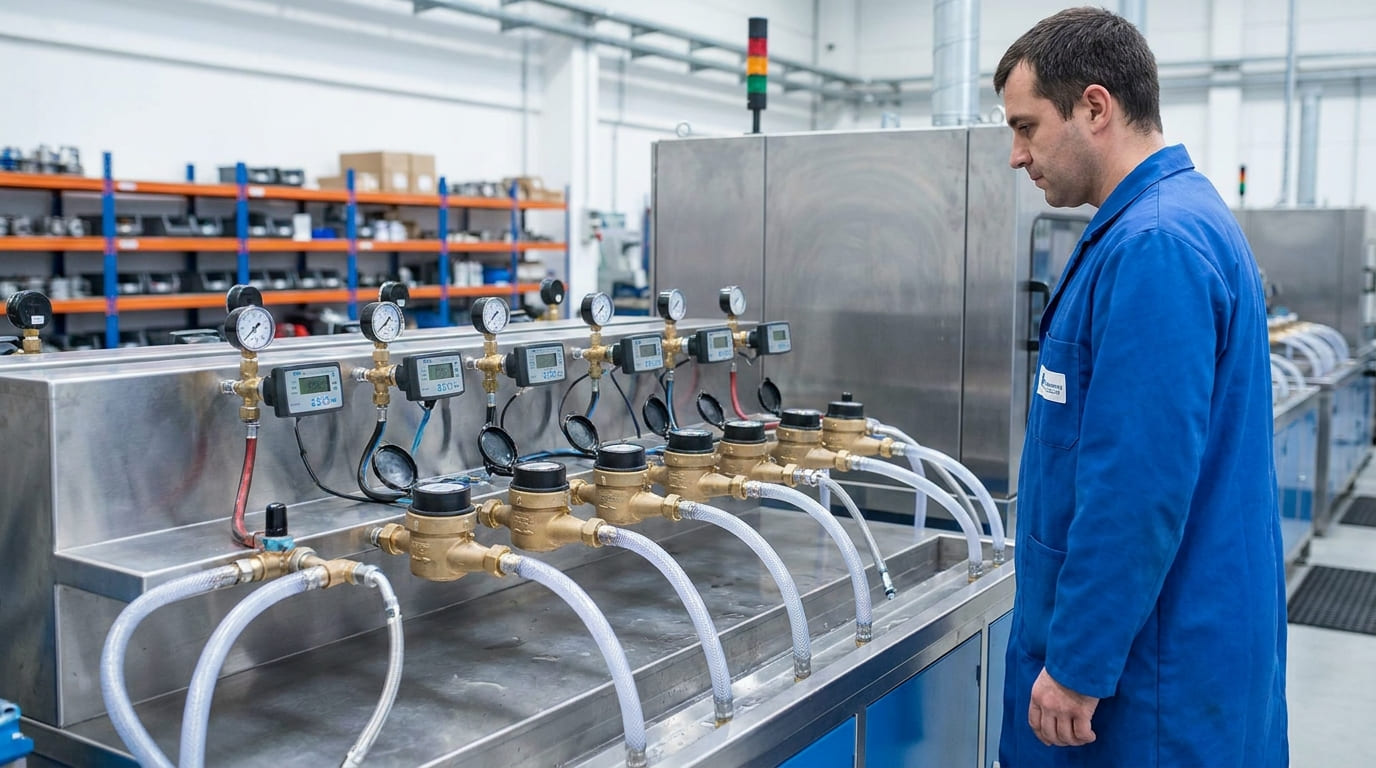
I Want the Factory to Hear the Site Problem Directly
I ask many practical questions before recommending a water meter. Is the project residential, 商業的, 工業的, 灌溉, or district metering? 正常流量是多少? What is the pipe condition? Is there sand or scale? Is the installation horizontal or vertical? Is there enough straight pipe? Is remote reading required? Which platform receives the data?
These questions are easier when the utility and manufacturer talk directly.
If the site has upstream disturbance, the manufacturer can explain whether straight pipe or a flow straightener is needed. ISO 4064 says the meter should be provided with sufficient straight pipe lengths, 有或沒有整流器, as specified by the manufacturer when disturbances affect accuracy [1]. ISO 4064 also says non-volumetric meters should be installed according to the manufacturer’s instructions when upstream disturbance comes from bends, 發球檯, 閥門, 或泵浦 [2].
If the project needs special markings, the manufacturer can confirm what can be marked on the meter body, 登記, 標籤, and packaging. ISO 4064 lists required or conditional markings such as manufacturer name, 製造年份, 序號, direction of flow, maximum admissible pressure, orientation marks, 溫度等級, 壓力損失等級, and installation sensitivity class [4].
If the project includes remote reading, direct communication helps define what the meter does and what the system must do. ISO 4064 recognizes remote reading devices as ancillary devices, and such devices may be subject to legal metrological control depending on national legislation [5]. This matters when the project uses M-Bus, 射頻, 洛拉, 洛萬, nb-iot, RS485, 脈衝, or 4G Cat.1.
| Direct Question | 為什麼它很重要 |
|---|---|
| What is the real flow profile? | avoids wrong meter sizing |
| What are the upstream fittings? | checks disturbance and straight pipe needs |
| What markings are required? | prevents acceptance disputes |
| What documents are needed? | reduces customs and tender delays |
| What communication path is used? | avoids remote reading assumptions |
| Who handles alarms? | prevents unused smart functions |
Direct communication does not mean every buyer must become a metrology expert. It means the factory can ask the right questions before the wrong meter is installed.
How Does Direct Cooperation Help in Design and After-Sales?
Design mistakes become after-sales costs. Direct cooperation helps the project team correct design decisions before they create complaints.
Direct cooperation helps design and after-sales by linking meter selection, 安裝要求, smart communication, test documents, 序列可追溯性, and complaint evidence into one technical process.
I Treat After-Sales as Something Designed Before Shipment
After-sales does not begin when a complaint arrives. It begins when the meter model, installation method, document file, and communication system are selected.
In design, direct cooperation helps match the meter to the application. Pipe diameter alone should not decide meter size. I check normal flow, 尖峰流量, low-flow behavior, 壓力條件, 水質, 和維護訪問. If the meter is non-volumetric and the pipe layout includes bends, 閥門, 發球檯, 泵浦, or reducers, I check whether manufacturer instructions require straight pipe or flow conditioning [2][6].
In after-sales, direct cooperation helps build a complete evidence chain. The factory can connect a serial number to production and test records. The utility can connect that serial number to installation photos, customer account data, and consumption history. This is much stronger than a general email saying “many meters have problems.”
Display and access are also design issues. ISO 4064 states that the indicating device should be protected by a transparent window, and a suitable cover may be provided for additional protection [3]. It also states that the meter shall be fitted with a metrologically controlled display that is readily accessible to the customer without using tools [3]. If the design hides the meter in a place where nobody can read or service it, after-sales cost will rise.
| 專案階段 | Direct Cooperation Action | Complaint Reduction Effect |
|---|---|---|
| 設計 | confirm meter type and sizing basis | fewer wrong applications |
| Installation planning | review direction, 位置, 直管 | fewer installation disputes |
| 文件 | align certificates, 標籤, 手冊 | fewer acceptance delays |
| 智慧系統 | define gateway, SIM卡, 平台, 報告週期 | fewer remote reading failures |
| Batch delivery | connect serial numbers to sites | faster root-cause analysis |
| Complaint handling | share site data and factory records | faster technical closure |
對於智慧電錶, direct cooperation is even more important. Remote reading is not only a meter feature. It requires network coverage, concentrator or gateway conditions where applicable, 平台整合, correct meter registration, and field response rules. 儀表支援工作, but it does not replace project management.
This is one of the strongest direct water meter manufacturer benefits. The same people who designed the meter can help explain its limits.
What Hybrid Models Still Keep You Close to the Factory?
Direct cooperation does not always mean bypassing every local partner. A good hybrid model can combine local service with factory technical control.
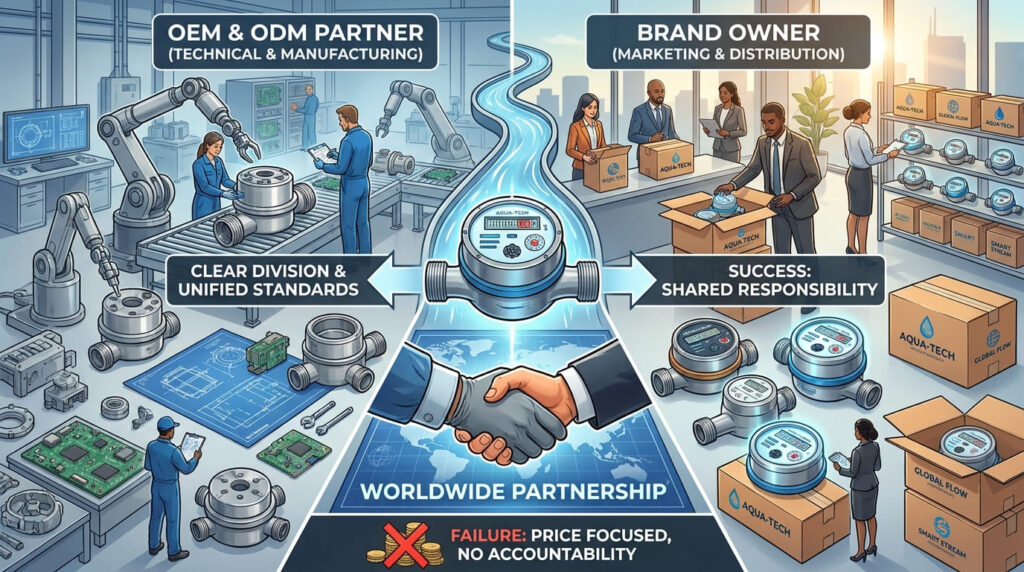
Hybrid models work well when local agents or distributors handle language, 後勤, stock, and field service while the manufacturer remains involved in specifications, 文件, 測試, 安裝規則, and complaint analysis.
I Prefer Local Service Plus Factory Visibility
A strong local partner can be valuable. They understand local language, customs clearance, utility relationships, installation teams, and emergency response. I do not advise every buyer to ignore that value.
But I want the manufacturer to stay close to the technical side. The factory should review tender parameters, 圖紙, 公尺尺寸, 第三季, R值, Q1 where relevant, 安裝位置, marking requirements, 證書範圍, and communication method. The local partner should not filter these details into only price and delivery.
例如, if the utility plans to install meters after a pump station, the manufacturer should see that layout. ISO 4064 states that upstream disturbance caused by bends, 發球檯, 閥門, or pumps can affect the accuracy of non-volumetric water meters [2]. If the local agent hides this detail because it seems “too technical,” the project may carry avoidable risk.
A hybrid model can also protect after-sales. The local partner can visit the site quickly. The manufacturer can interpret batch records, product design, test standards, 及安裝要求. The utility can provide operating data and photos. 一起, the team can identify whether the issue is product, 安裝, 水質, 溝通, or usage.
| Hybrid Role | Local Partner | 製造商 |
|---|---|---|
| Language and customs | primary | support documents |
| Tender specification | 支援 | technical confirmation |
| 儀表選型 | local input | final technical check |
| 安裝培訓 | local delivery | factory manual and guidance |
| Complaint visit | first response | root-cause support |
| 系列可追溯性 | collect field data | match factory records |
| 智慧系統 | local deployment | protocol and device support |
The best hybrid model has no hidden wall between utility and factory. The local partner remains useful, but technical facts remain visible.
This model often gives the best balance between direct water meter manufacturer benefits and local service speed.
What Questions Should You Ask Before Choosing Your Supply Route?
The cheapest route may become expensive if it blocks technical information. I ask supply-route questions before signing the contract.
Before choosing a supply route, ask who confirms specifications, who reviews site conditions, who owns documents, who supports installation, who handles complaints, and whether the manufacturer can join technical discussions directly.
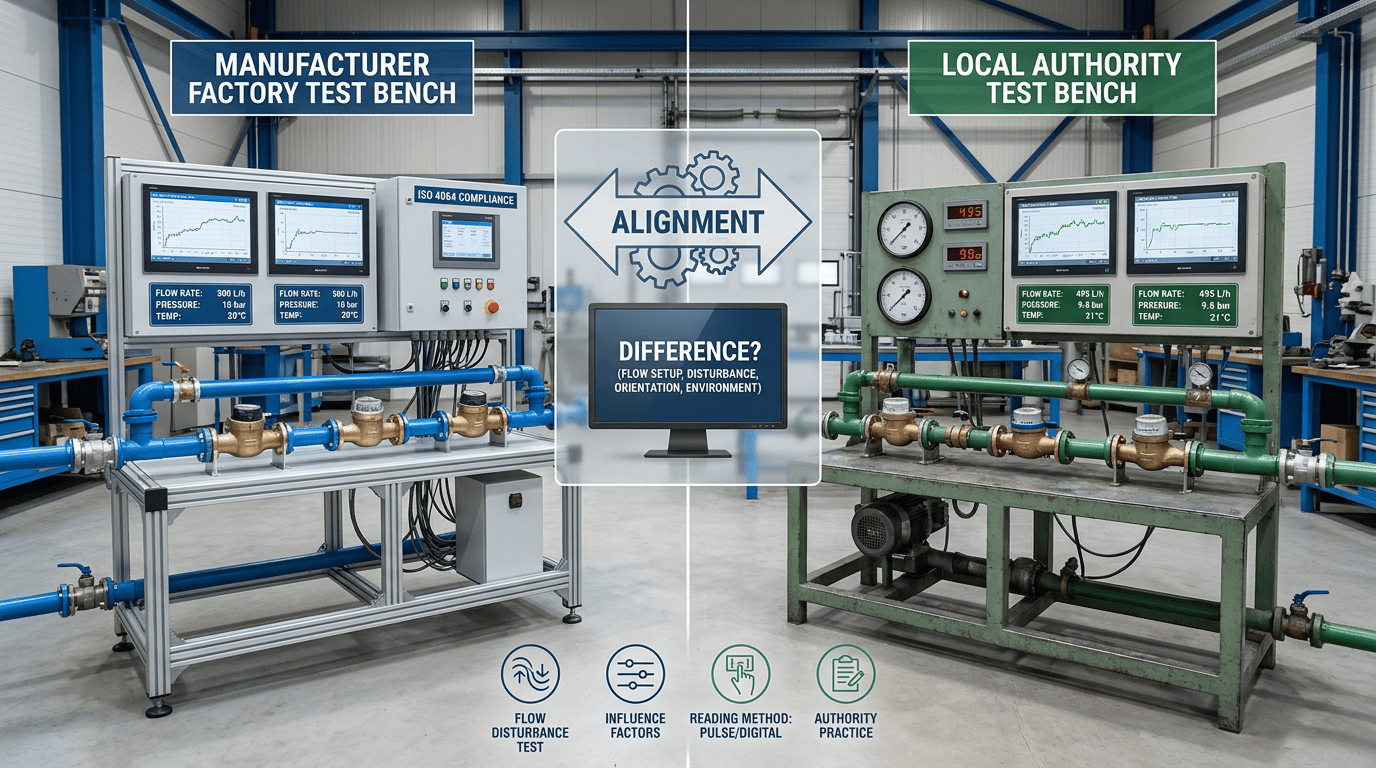
My Supply Route Checklist
I use a checklist before I decide whether a project should use direct manufacturer cooperation, a local agent, a distributor, or a hybrid model.
第一的, I ask who understands the real site. If the utility has pressure data, pipe drawings, 安裝照片, and communication survey results, the manufacturer should be allowed to review them. If the site has disturbances from bends, 閥門, 泵浦, 減速器, or partly closed valves, this information should not stop at the sales layer [2][6].
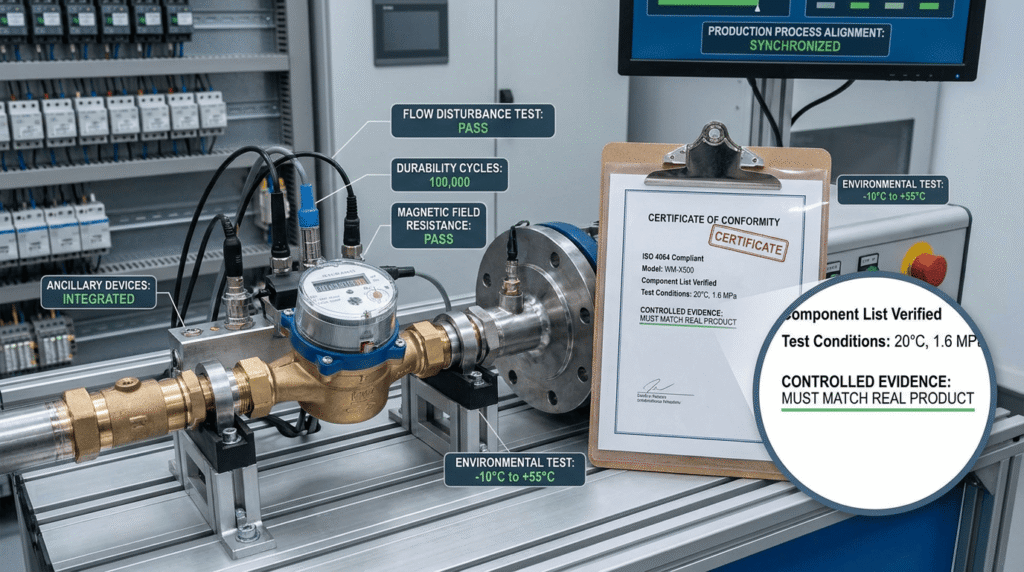
第二, I ask who controls the technical documents. The document file should include datasheets, 證書, 測試報告, installation manuals, marking drawings, serial number lists, communication documents, and packaging approvals. ISO 4064 marking requirements show why document control matters, because details such as flow direction, 序號, manufacturer mark, 溫度等級, 壓力損失等級, and installation sensitivity class may be checked during acceptance [4].
第三, I ask who handles after-sales evidence. A good route should allow the utility and manufacturer to compare field photos, 安裝記錄, complaint data, lab test results, 批次記錄, and communication logs. If all evidence must pass through several commercial layers, the response becomes slower.
| 問題 | Good Sign |
|---|---|
| Can the factory review site conditions? | yes, before final model selection |
| Can the utility speak with factory engineers? | yes, at least for technical meetings |
| Who confirms installation requirements? | manufacturer and utility together |
| Who owns certificate and report control? | clearly defined in contract |
| Who receives complaint evidence? | factory and local service team |
| Who checks smart communication setup? | system integrator and manufacturer |
| Can serial numbers be traced to sites? | yes, from delivery to installation |
| Are local partners technically trained? | yes, with factory support |
I also ask whether the route supports training. Installers need to know flow direction, 位置, 直管需求, 全管道運行, meter box access, and communication initialization. These are not small details. ISO 4064 notes that installation conditions and manufacturer instructions matter when disturbances can affect water meter indication [1][2].
The right supply route is not always the shortest route. It is the route that keeps technical truth intact.
結論
Choose the route that keeps the utility, 工廠, site data, 文件, and complaint evidence connected. That is where total cost usually falls.
Discuss an OEM/ODM water meter project
Send your target market, 通徑範圍, certification requirement, and estimated volume. YOUNIO will reply with a scope and document checklist.